
VS

Fiat Scudo vs VW Transporter Transporter – Which model is better for everyday use?

Everyday use, family trips or long-distance drives – here’s where the differences show.
Discover whether Fiat Scudo or VW Transporter Transporter fits your lifestyle better.

In the competitive world of commercial vehicles, the Fiat Scudo and the VW Transporter stand out as two robust options for businesses seeking reliable cargo vans. Both vehicles offer impressive specifications, innovative features, and varied powertrains, catering to the diverse needs of the automotive market. In this article, we will delve into a comprehensive comparison of these two models, focusing on technical aspects, innovations, and performance metrics.
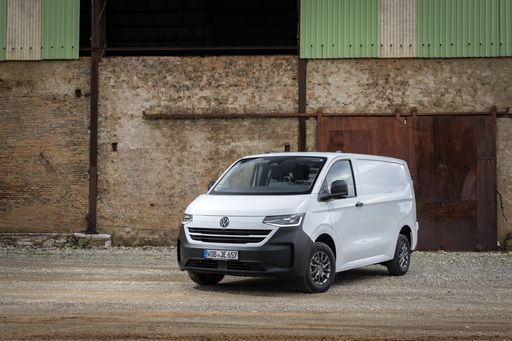
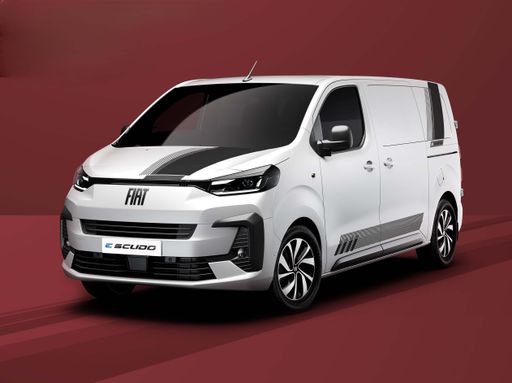
Engine Options and Performance

The Fiat Scudo boasts a versatile lineup, offering diesel and electric engine options. The diesel range includes power outputs from 100 to 180 HP, providing a maximum torque of up to 400 Nm. This range ensures that users have adequate options depending on their load requirements and fuel economy preferences.

On the other hand, the VW Transporter features a slightly broader range of power outputs, with options spanning from 110 to a powerful 286 HP. The Transporter's diesel engines also deliver impressive torque figures, peaking at 415 Nm, which can be paired with front-wheel, all-wheel, or rear-wheel drive configurations, providing flexibility for various driving conditions.

Fuel Efficiency and Consumption

In terms of fuel efficiency, the Fiat Scudo excels with diesel consumption figures ranging from 6.5 to 7.8 L/100km, while its electric variants consume between 23.6 and 27 kWh/100km, with an electric range that can reach up to 352 km. This makes the Scudo a compelling choice for businesses looking to minimize fuel expenses and reduce their carbon footprint.

The VW Transporter presents competitive figures as well, with diesel consumption between 7.1 and 8.4 L/100km. For electric models, consumption ranges from 21.9 to 24.4 kWh/100km, although its electric range is significantly lower, with a maximum reach of only 331 km. Thus, while the Transporter may be more powerful, it slightly lags behind the Scudo regarding fuel economy.

Interior Comfort and Capacity

Both models focus on user comfort, providing spacious interiors and thoughtful design. The Fiat Scudo seats up to six occupants in various configurations, while the VW Transporter also accommodates up to five. Both vans offer ample cargo space, but the Scudo's payload capacity can reach up to 1333 kg, slightly edging out the Transporter's maximum load, which hovers around 1204 kg.

Interior amenities vary, with both manufacturers focusing on practical layouts, but the Transporter offers more advanced infotainment options and driver-assistance systems, reflecting its position as a premium offering in the market.

Innovative Features and Technology

Innovation is key in the commercial vehicle sector, and both the Fiat Scudo and VW Transporter rise to the challenge. The Scudo emphasizes efficiency with its electric variants and user-friendly technology, including various transmission options, from manual to automatic. It also boasts configurations for smoother driving experiences in urban settings.

The VW Transporter, known for its sophisticated technological interface, includes advanced connectivity options, driver assistance systems, and other features aimed at improving safety and comfort. Its digital cockpit delivers a modern driving experience, keeping it ahead in terms of user convenience.

Conclusion: Which One to Choose?

Choosing between the Fiat Scudo and VW Transporter ultimately depends on specific business needs. If fuel efficiency and payload capacity are top priorities, the Scudo presents a strong case with its efficient engines and superior cargo space. However, for those seeking advanced technology and premium features, the VW Transporter stands out as a versatile and robust option with superior power offerings.

In the end, both models deliver on the promise of reliability, efficiency, and versatility, making them worthy contenders in the commercial vehicle segment. Whether you opt for the Scudo or the Transporter, both choices will serve you well in the demanding world of business logistics.

Here’s where it gets real: The technical differences in detail

Costs and Efficiency:

When it comes to price and running costs, the biggest differences usually appear. This is often where you see which car fits your budget better in the long run.

Fiat Scudo has a evident advantage in terms of price – it starts at 30900 £, while the VW Transporter Transporter costs 37500 £. That’s a price difference of around 6609 £.

Fuel consumption also shows a difference: Fiat Scudo manages with 6.20 L and is therefore slightly more efficient than the VW Transporter Transporter with 7.10 L. The difference is about 0.90 L per 100 km.

In terms of energy consumption, the advantage goes to the VW Transporter Transporter: with 21.90 kWh per 100 km, it’s barely noticeable more efficient than the Fiat Scudo with 23.60 kWh. That’s a difference of about 1.70 kWh.

As for range, the Fiat Scudo performs slight better – achieving up to 352 km, about 21 km more than the VW Transporter Transporter.

Engine and Performance:

Power, torque and acceleration say a lot about how a car feels on the road. This is where you see which model delivers more driving dynamics.

When it comes to engine power, the VW Transporter Transporter has a evident edge – offering 286 HP compared to 180 HP. That’s roughly 106 HP more horsepower.

In acceleration from 0 to 100 km/h, the VW Transporter Transporter is convincingly quicker – completing the sprint in 7.40 s, while the Fiat Scudo takes 10.50 s. That’s about 3.10 s faster.

In terms of top speed, the VW Transporter Transporter performs to a small extent better – reaching 150 km/h, while the Fiat Scudo tops out at 130 km/h. The difference is around 20 km/h.

There’s also a difference in torque: VW Transporter Transporter pulls barely noticeable stronger with 415 Nm compared to 400 Nm. That’s about 15 Nm difference.

Space and Everyday Use:

Cabin size, boot volume and payload all play a role in everyday practicality. Here, comfort and flexibility make the difference.

Seats: Fiat Scudo offers slightly more seating capacity – 6 vs 5.

In curb weight, Fiat Scudo is slight lighter – 1722 kg compared to 1872 kg. The difference is around 150 kg.

When it comes to payload, Fiat Scudo noticeable takes the win – 1805 kg compared to 1259 kg. That’s a difference of about 546 kg.

Who wins the race?

The VW Transporter Transporter proves to be wins by a narrow margin and therefore becomes our DriveDuel Champion!
VW Transporter Transporter is the better all-rounder in this comparison.

from about £37,500
default

VW Transporter Transporter

  • Engine Type : Diesel, Plugin Hybrid, Electric
  • Transmission : Manuel, Automatic
  • Drive Type : Front-Wheel Drive, All-Wheel Drive, Rear-Wheel Drive
  • Power HP : 110 - 286 HP
  • Consumption L/100km : 7.1 - 8.4 L
  • Consumption kWh/100km : 21.9 - 24.4 kWh
  • Electric Range : 56 - 331 km

Fiat Scudo

The Fiat Scudo stands out as a versatile and practical choice for those in need of a reliable van, offering a blend of comfort and functionality. Its design is focused on meeting the demands of both urban and long-distance driving, ensuring a smooth and responsive experience. With a spacious interior and robust build, the Scudo is tailored for diverse professional needs, making it a valued asset for businesses and individuals alike.

details

VW Transporter Transporter

The VW Transporter, a versatile favourite among commercial vehicles, combines practicality with modern design. Its spacious interior offers ample room for both passengers and cargo, making it a reliable choice for businesses and families alike. The vehicle's strong build and advanced technology ensure a smooth and efficient driving experience in various conditions.

details
Fiat Scudo
VW Transporter Transporter

Costs and Consumption

Price
30900 - 51300 £
Price
37500 - 60800 £
Consumption L/100km
6.2 - 6.5 L
Consumption L/100km
7.1 - 8.4 L
Consumption kWh/100km
23.6 - 24 kWh
Consumption kWh/100km
21.9 - 24.4 kWh
Electric Range
221 - 352 km
Electric Range
56 - 331 km
Battery Capacity
-
Battery Capacity
11.8 - 63.8 kWh
co2
0 - 172 g/km
co2
0 - 220 g/km
Fuel tank capacity
69 L
Fuel tank capacity
55 L

Dimensions and Body

Body Type
Cargo Van
Body Type
Cargo Van
Seats
2 - 6
Seats
2 - 5
Doors
4
Doors
4 - 5
Curb weight
1722 - 2260 kg
Curb weight
1872 - 2462 kg
Trunk capacity
-
Trunk capacity
-
Length
4980 - 5330 mm
Length
5050 - 5450 mm
Width
1920 mm
Width
2032 mm
Height
1895 - 1935 mm
Height
1966 - 1985 mm
Max trunk capacity
5300 - 6600 L
Max trunk capacity
-
Payload
840 - 1805 kg
Payload
755 - 1259 kg

Engine and Performance

Engine Type
Electric, Diesel
Engine Type
Diesel, Plugin Hybrid, Electric
Transmission
Automatic, Manuel
Transmission
Manuel, Automatic
Transmission Detail
Reduction Gearbox, Manual Gearbox, Automatic Gearbox
Transmission Detail
Manual Gearbox, Automatic Gearbox
Drive Type
Front-Wheel Drive
Drive Type
Front-Wheel Drive, All-Wheel Drive, Rear-Wheel Drive
Power HP
120 - 180 HP
Power HP
110 - 286 HP
Acceleration 0-100km/h
10.5 - 11.2 s
Acceleration 0-100km/h
7.4 - 16.9 s
Max Speed
130 km/h
Max Speed
112 - 150 km/h
Torque
260 - 400 Nm
Torque
310 - 415 Nm
Number of Cylinders
4
Number of Cylinders
4
Power kW
88 - 132 kW
Power kW
81 - 210 kW
Engine capacity
1499 - 2184 cm3
Engine capacity
1996 - 2488 cm3

General

Model Year
2024 - 2025
Model Year
2025
CO2 Efficiency Class
A, F
CO2 Efficiency Class
G, A
Brand
Fiat
Brand
VW
What drive types are available for the Fiat Scudo?

The Fiat Scudo is offered with Front-Wheel Drive.

The prices and data displayed are estimates based on German list prices and may vary by country. This information is not legally binding.








