VS

Fiat Tipo Hatchback vs Hyundai i30 Wagon comparison

Compare performance (130 HP vs 150 HP), boot space and price (19,700 £ vs 25,400 £ ) at a glance. Find out which car is the better choice for you – Fiat Tipo Hatchback or Hyundai i30 Wagon?

Fiat Tipo Hatchback vs Hyundai i30 Wagon: Key differences

Fiat Tipo Hatchback

  • noticeably cheaper
  • markedly more efficient
  • only slightly quicker 0–100 km/h

Hyundai i30 Wagon

4.3 (2 Reviews)
rate
  • moderately more power
  • only slightly lighter
  • markedly more trunk space

All details on performance, efficiency, range and trunk space can be found in the technical comparison below – including user reviews for both models.

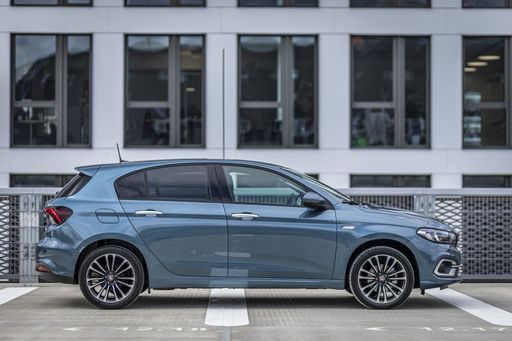
Tipo Hatchback

The Ultimate Showdown: Fiat Tipo Hatchback vs. Hyundai i30 Kombi

In a world where hatchbacks and wagons are becoming the go-to choice for many drivers, the Fiat Tipo Hatchback and the Hyundai i30 Kombi stand out as two commendable options in the segment. Both are packed with features and innovations, making them suitable for a variety of lifestyles, from family outings to urban commuting. In this article, we will delve into a detailed comparison of these two models, focusing on their technical aspects, innovations, and overall performance.
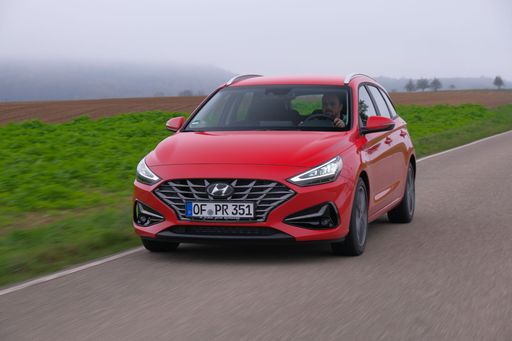
i30 Wagon

Design and Dimensions

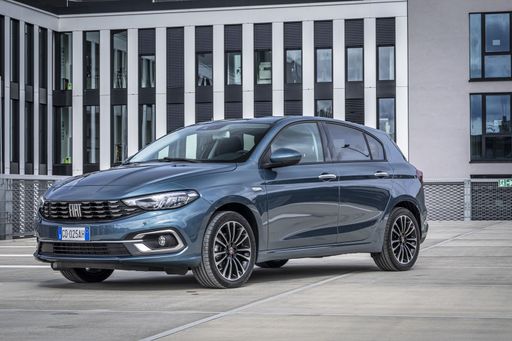
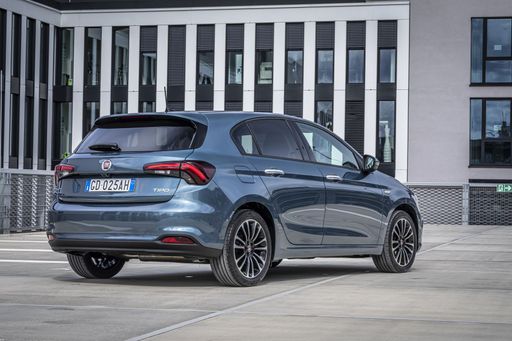
The Fiat Tipo Hatchback offers a sleek and modern design with compact dimensions that make it ideal for city driving. Measuring 4368 mm in length, 1792 mm in width, and 1495 mm in height, the Tipo is designed to fit seamlessly into urban environments. It features a sizable trunk capacity of 440 liters, providing ample space for everyday needs.

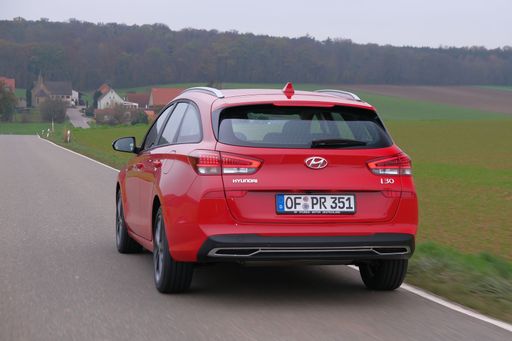
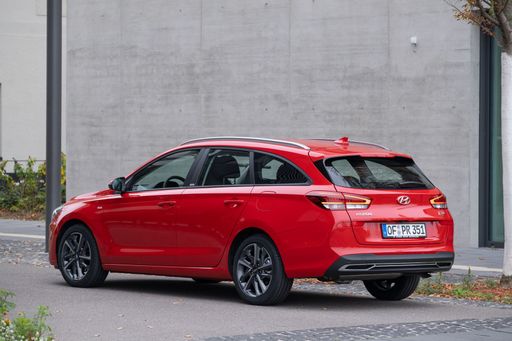
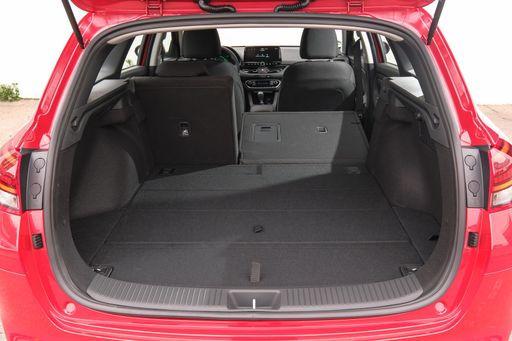
On the other hand, the Hyundai i30 Kombi, with its body type classified as a wagon, emphasizes practicality without sacrificing style. The i30 Kombi is larger than the Tipo, with dimensions of 4585 mm in length, 1795 mm in width, and 1475 mm in height. It boasts a significantly larger trunk capacity of 602 liters, making it perfect for families or those needing extra space for travel and activities.

Tipo Hatchback

Performance and Efficiency

Performance enthusiasts will find attractive options in both models. The Fiat Tipo Hatchback comes with a choice between a Petrol MHEV engine or a Diesel engine, offering up to 130 HP and a maximum torque of 320 Nm. This power translates to a zippy acceleration of 0-100 km/h in as little as 8.8 seconds for the more powerful variants and a top speed of 208 km/h.

The Hyundai i30 Kombi offers more variety under the hood with both petrol and Petrol MHEV engines. Its top-performing variant produces 140 HP and a torque of 253 Nm, achieving 0-100 km/h in 9.8 seconds. While slightly less powerful than the Tipo, the i30 Kombi offers enhanced fuel efficiency, with consumption rates ranging from 5.6 to 5.9 L/100 km.

i30 Wagon

Innovations and Technology

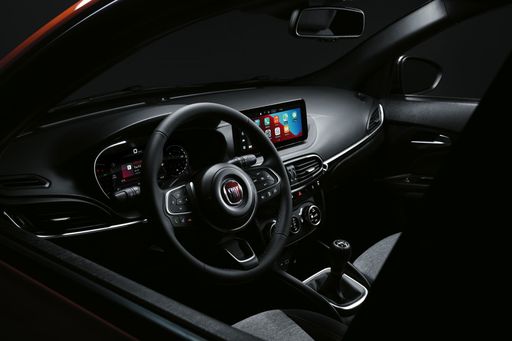
Fiat has equipped the Tipo with a variety of technological features aimed at enhancing the driving experience. The car's interior offers connectivity options and user-friendly interfaces, ensuring passengers remain entertained and informed throughout the journey. Safety technologies, such as advanced driver assistance systems, further solidify its appeal.

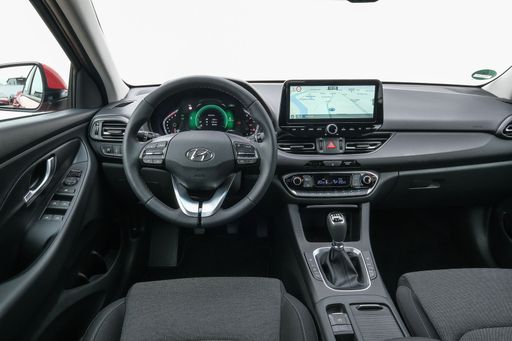
On the technology front, the Hyundai i30 Kombi shines with its advanced safety and connectivity features, making it one of the best-equipped cars in its segment. The i30 Kombi includes state-of-the-art driver assistance technologies and smart connectivity solutions, ensuring a safe and enjoyable drive for all passengers.

Tipo Hatchback

Conclusion

Choosing between the Fiat Tipo Hatchback and the Hyundai i30 Kombi ultimately depends on your specific needs and preferences. The Fiat Tipo Hatchback delivers a punchy performance and is perfect for those looking for a compact and stylish vehicle with enough power for spirited driving.

Conversely, the Hyundai i30 Kombi offers more cargo space and advanced technology, making it a brilliant choice for families or anyone in need of practicality without compromising on tech-savvy features.

Both models showcase significant improvements and innovations in their class, demonstrating that drivers no longer have to compromise between functionality and style when it comes to hatchbacks and wagons in 2024.

Here’s where it gets real: The technical differences in detail

Tipo Hatchback

Costs and Efficiency:

Price and efficiency are often the first things buyers look at. Here it becomes clear which model has the long-term edge – whether at the pump, the plug, or in purchase price.

Fiat Tipo Hatchback is noticeably cheaper – starting at 19,700 £ , while the Hyundai i30 Wagon costs 25,400 £ . That’s a price difference of around 5,709 £.

Fuel consumption also shows a difference: the Fiat Tipo Hatchback uses 4.7 L/100km and is markedly more efficient than the Hyundai i30 Wagon with 5.9 L/100km. The difference is about 1.2 L/100km.

i30 Wagon

Engine and Performance:

Under the bonnet, it becomes clear which model is tuned for sportiness and which one takes the lead when you hit the accelerator.

When it comes to engine power, the Hyundai i30 Wagon offers moderately more power – delivering 150 HP compared to 130 HP. That’s roughly 20 HP more horsepower.

When accelerating from 0 to 100 km/h, the Fiat Tipo Hatchback is only slightly quicker – completing the sprint in 8.8 s, while the Hyundai i30 Wagon takes 9.1 s. That’s about 0.3 s quicker.

There’s also a difference in torque: the Fiat Tipo Hatchback delivers markedly more torque with 320 Nm compared to 250 Nm. That’s about 70 Nm more.

Tipo Hatchback

Space and Everyday Use:

Beyond pure performance, interior space and usability matter most in daily life. This is where you see which car is more practical and versatile.

Both vehicles offer seating for 5 people.

In terms of curb weight, Hyundai i30 Wagon is only slightly lighter – 1,340 kg compared to 1,415 kg. The difference is around 75 kg.

Looking at boot space, the Hyundai i30 Wagon offers markedly more boot space – 602 L compared to 440 L. That’s a difference of about 162 L.

When it comes to payload, the Hyundai i30 Wagon carries somewhat more – 490 kg compared to 425 kg. That’s a difference of about 65 kg.

Who wins the race in the data check?

The Fiat Tipo Hatchback is barely ahead in the objective data comparison.
This result only shows which model scores more points on paper – not which of the two cars feels right for you.

from £19,700
Tipo Hatchback

Fiat Tipo Hatchback

  • Engine Type : Petrol MHEV, Diesel
  • Transmission : Automatic, Manuel
  • Drive Type : Front-Wheel Drive
  • Power HP : 130 HP
  • Consumption L/100km : 4.7 - 5.4 L/100km
Fiat Tipo Hatchback
Hyundai i30 Wagon

Costs and Consumption

View detailed analysis

Engine and Performance

View detailed analysis

Dimensions and Body

View detailed analysis

Fiat Tipo Hatchback

The Fiat Tipo is a sensible, spacious hatchback that prides itself on practical charm and everyday usability, perfect for buyers who want straightforward value rather than runway drama. It won’t turn heads for flash, but its comfortable ride, clever interior space and low-stress nature make it a smart, grown-up choice with a wink of character.

details

Hyundai i30 Wagon

The Hyundai i30 Wagon is a practical family hauler that pairs roomy, sensible packaging with clean, modern lines and a surprisingly composed chassis. Comfortable, well-equipped and priced to make rivals sweat, it quietly ticks the boxes for daily life and weekend escapes while still managing a little grin on twisty roads.

details
Fiat Tipo Hatchback
Hyundai i30 Wagon

Costs and Consumption

Price
19,700 - 25,700 £
Price
25,400 - 32,300 £
Consumption L/100km
4.7 - 5.4 L/100km
Consumption L/100km
5.9 - 6.3 L/100km
Consumption kWh/100km
-
Consumption kWh/100km
-
Electric Range
-
Electric Range
-
Battery Capacity
-
Battery Capacity
-
co2
122 - 125 g/km
co2
134 - 142 g/km
Fuel tank capacity
50 L
Fuel tank capacity
-

Dimensions and Body

Body Type
Hatchback
Body Type
Estate
Seats
5
Seats
5
Doors
5
Doors
-
Curb weight
1,415 - 1,425 kg
Curb weight
1,340 - 1,460 kg
Trunk capacity
440 L
Trunk capacity
602 L
Length
4,368 mm
Length
-
Width
1,792 mm
Width
1,795 mm
Height
1,495 mm
Height
-
Max trunk capacity
-
Max trunk capacity
-
Payload
425 kg
Payload
450 - 490 kg

Engine and Performance

Engine Type
Petrol MHEV, Diesel
Engine Type
Petrol
Transmission
Automatic, Manuel
Transmission
Manuel, Automatic
Transmission Detail
Dual-Clutch Automatic, Manual Gearbox
Transmission Detail
Manual Gearbox, Dual-Clutch Automatic
Drive Type
Front-Wheel Drive
Drive Type
Front-Wheel Drive
Power HP
130 HP
Power HP
115 - 150 HP
Acceleration 0-100km/h
8.8 - 9.8 s
Acceleration 0-100km/h
9.1 - 11.9 s
Max Speed
207 - 208 km/h
Max Speed
-
Torque
240 - 320 Nm
Torque
172 - 250 Nm
Number of Cylinders
4
Number of Cylinders
3 - 4
Power kW
96 kW
Power kW
85 - 110 kW
Engine capacity
1,469 - 1,598 cm3
Engine capacity
998 - 1,598 cm3

General

Model Year
2,024
Model Year
2,026
CO2 Efficiency Class
D
CO2 Efficiency Class
D, E
Brand
Fiat
Brand
Hyundai
DriveDuel uses data analysis and artificial intelligence to evaluate vehicle data and create content. Content is regularly reviewed and improved. The displayed prices are estimates based on German list prices, adjusted to the respective country’s VAT. Country-specific registration taxes are not included. This information is not legally binding.