VS

Fiat Tipo Wagon vs Ford Focus Turnier comparison

Compare performance (130 HP vs 280 HP), boot space and price (21000 £ vs 28500 £ ) at a glance. Find out which car is the better choice for you – Fiat Tipo Wagon or Ford Focus Turnier?

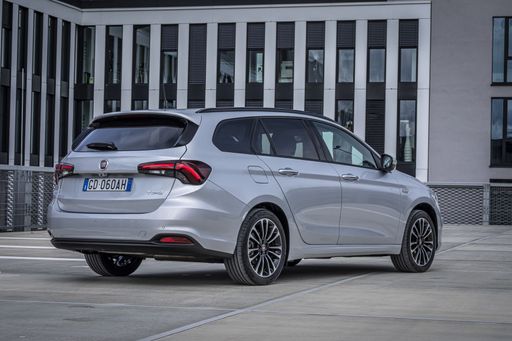
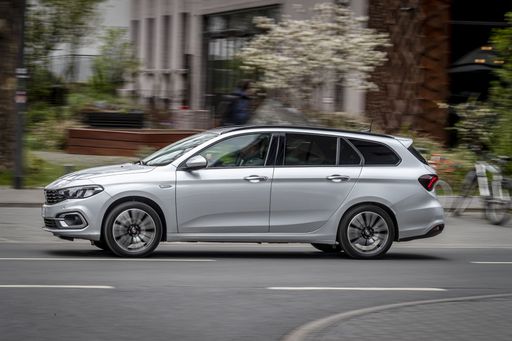
Tipo Wagon

Fiat Tipo Station Wagon vs. Ford Focus Turnier: A Battle of the Wagons

In the realm of station wagons, practicality often meets performance in an intriguing dance. Today, we delve into a comparison that pits the Italian flair of the 2024 Fiat Tipo Station Wagon against the robust engineering of the Ford Focus Turnier. Both models stand as strong contenders in the station wagon segment, but each brings its own distinct flavor and innovation to the table. Let's break down the technicalities and innovations to see which wagon stands out in the race for supremacy.
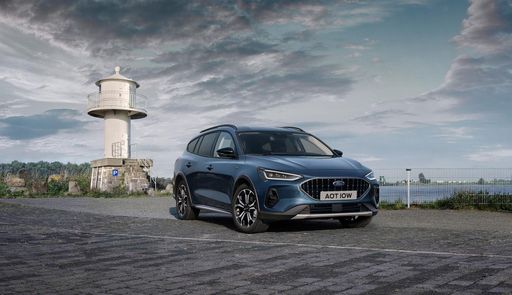
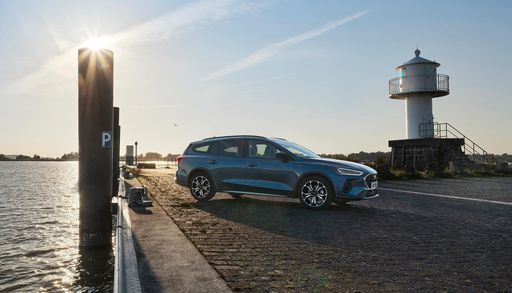
Focus Turnier

Power and Performance

The Fiat Tipo Station Wagon boasts an engine lineup comprising petrol mild-hybrid (MHEV) and diesel options, with power outputs reaching up to 130 HP. The type of transmission includes both manual and Dual-Clutch Automatic (DCT), driving the front wheels. With a torque of up to 320 Nm and acceleration from 0 to 100 km/h in approximately 9.1 seconds, the Tipo combines efficiency and spirited driving dynamics.

In contrast, the Ford Focus Turnier presents a broader array of engines: petrol MHEV, diesel, and traditional petrol engines. Power ranges significantly from 115 to 280 HP. Ford offers several transmission options, including manual, DCT, and Automatic Gearbox, all coupled with front-wheel drive. The Focus Turnier also introduces a high-performance variant that can accelerate from 0 to 100 km/h in a brisk 5.8 seconds, showing its ability to thrill enthusiasts who crave more speed and responsiveness.

Tipo Wagon

Fuel Efficiency and Emissions

Fuel efficiency is a priority for many wagon consumers. The Tipo demonstrates commendable consumption rates, with as low as 4.7 L/100km for its diesel variant, making it a cost-effective choice for long drives. Its CO2 emissions range from 122 to 125 g/km, aligning with Energy Efficiency Class D.

The Focus Turnier, while offering diverse power outputs, maintains competitive efficiency in its lower-powered engines, with consumption as little as 5.0 L/100km. However, the CO2 emissions can vary substantially, depending entirely on the chosen engine, from an efficient 120 g/km to a more substantial 183 g/km, placing it within D and G efficiency classes respectively.

Focus Turnier

Dimensions and Practicality

When it comes to dimensions, the Tipo Station Wagon sports a length of 4,571 mm, a width of 1,792 mm, and a height of 1,514 mm, resulting in a confident road presence. The Fiat's trunk offers a generous 550 liters of cargo space, making it highly practical for families or those who frequently travel with lots of luggage.

The Ford Focus Turnier is slightly longer at 4,693 mm and wider, emphasizing its spacious nature. Its trunk space stands out with an impressive 608 liters, and in some variations, even up to 635 liters. This factor alone makes the Focus Turnier an attractive option for those valuing maximum cargo capacity.

Tipo Wagon

Innovation and Design

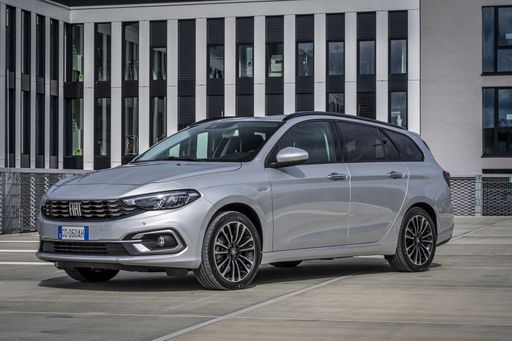
Fiat brings Italian design flair to the Tipo, ensuring the wagon maintains a sleek, modern look despite its practicality, while integrating features that enhance comfort for all five occupants.

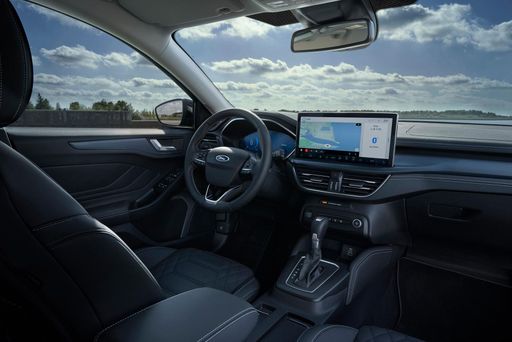
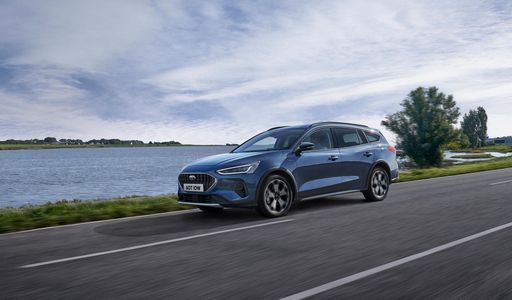
On the other hand, Ford's Focus Turnier resonates with technological prowess, often being equipped with the latest tech upgrades depending on the model year and variant. Its interior and exterior designs have been refreshed to present a more dynamic, athletic appearance.

Focus Turnier

Conclusion: Choosing the Right Wagon

The decision between the Fiat Tipo Station Wagon and the Ford Focus Turnier ultimately rests on individual preferences. The Tipo is an optimal choice for those seeking reliable efficiency and a hint of Italian elegance at a competitive price point. Meanwhile, the Focus Turnier appeals to those who desire a more extensive engine lineup, offering both high performance and remarkable practicality.

In the end, it is the blend of personal taste, practicality, and desired performance that will determine the ideal wagon for each driver. Both vehicles promise to deliver a blend of comfort, efficiency, and driving enjoyment to suit a myriad of needs. Choose wisely, for both wagons carry their unique charm and innovative approaches to the modern driving experience.

Fiat Tipo Wagon vs Ford Focus Turnier: Key differences

Fiat Tipo Wagon

  • noticeable cheaper
  • hardly perceptible more efficient

Ford Focus Turnier

  • significantly more power
  • clearly quicker from 0–100 km/h
  • hardly perceptible lighter
  • slightly more trunk space

Here’s where it gets real: The technical differences in detail

Costs and Efficiency:

When it comes to price and running costs, the biggest differences usually appear. This is often where you see which car fits your budget better in the long run.

Fiat Tipo Wagon has a noticeable advantage in terms of price – it starts at 21000 £ , while the Ford Focus Turnier costs 28500 £ . That’s a price difference of around 7551 £.

Fuel consumption also shows a difference: Fiat Tipo Wagon manages with 4.70 L and is therefore hardly perceptible more efficient than the Ford Focus Turnier with 5 L. The difference is about 0.30 L per 100 km.

Engine and Performance:

Power, torque and acceleration say a lot about how a car feels on the road. This is where you see which model delivers more driving dynamics.

When it comes to engine power, the Ford Focus Turnier has a significantly edge – offering 280 HP compared to 130 HP. That’s roughly 150 HP more horsepower.

In acceleration from 0 to 100 km/h, the Ford Focus Turnier is clearly quicker – completing the sprint in 5.80 s, while the Fiat Tipo Wagon takes 9.10 s. That’s about 3.30 s faster.

In terms of top speed, the Ford Focus Turnier performs a bit better – reaching 250 km/h, while the Fiat Tipo Wagon tops out at 207 km/h. The difference is around 43 km/h.

There’s also a difference in torque: Ford Focus Turnier pulls distinct stronger with 420 Nm compared to 320 Nm. That’s about 100 Nm difference.

Space and Everyday Use:

Cabin size, boot volume and payload all play a role in everyday practicality. Here, comfort and flexibility make the difference.

Both vehicles offer seating for 5 people.

In curb weight, Ford Focus Turnier is hardly perceptible lighter – 1413 kg compared to 1455 kg. The difference is around 42 kg.

In terms of boot space, the Ford Focus Turnier offers slightly more room – 635 L compared to 550 L. That’s a difference of about 85 L.

When it comes to payload, Ford Focus Turnier slightly takes the win – 557 kg compared to 475 kg. That’s a difference of about 82 kg.

Who wins the race in the data check?

The Ford Focus Turnier is far ahead overall in the objective data comparison.
This result only shows which model scores more points on paper – not which of the two cars feels right for you.

Fiat Tipo Wagon
Ford Focus Turnier

Costs and Consumption

View detailed analysis

Engine and Performance

View detailed analysis

Dimensions and Body

View detailed analysis
from about £28,500
Focus Turnier

Ford Focus Turnier

  • Engine Type : Petrol MHEV, Diesel, Petrol
  • Transmission : Manuel, Automatic
  • Drive Type : Front-Wheel Drive
  • Power HP : 115 - 280 HP
  • Consumption L/100km : 5 - 8 L

Fiat Tipo Wagon

The Fiat Tipo Estate is a no-nonsense family wagon that focuses on practicality and value, with surprisingly generous load space and comfortable seats for long trips. It won't win style awards, but its sensible kit, simple controls and low running costs make it a smart, unfussy choice for buyers who want function over flash.

details

Ford Focus Turnier

The Ford Focus Estate packs practical, family-friendly space into a compact, poised package that feels sharper and more grown-up than its price suggests. It steers with tidy composure, offers sensible interior flexibility, and is perfect for buyers who want everyday usability without turning into a moving van.

details
Fiat Tipo Wagon
Ford Focus Turnier

Costs and Consumption

Price
21000 - 27000 £
Price
28500 - 39900 £
Consumption L/100km
4.7 - 5.4 L
Consumption L/100km
5 - 8 L
Consumption kWh/100km
-
Consumption kWh/100km
-
Electric Range
-
Electric Range
-
Battery Capacity
-
Battery Capacity
-
co2
122 - 125 g/km
co2
120 - 183 g/km
Fuel tank capacity
50 L
Fuel tank capacity
52 L

Dimensions and Body

Body Type
Estate
Body Type
Estate
Seats
5
Seats
5
Doors
5
Doors
5
Curb weight
1455 - 1470 kg
Curb weight
1413 - 1563 kg
Trunk capacity
550 L
Trunk capacity
608 - 635 L
Length
4571 mm
Length
4672 - 4693 mm
Width
1792 mm
Width
1825 - 1844 mm
Height
1514 mm
Height
1459 - 1504 mm
Max trunk capacity
-
Max trunk capacity
1653 L
Payload
475 kg
Payload
523 - 557 kg

Engine and Performance

Engine Type
Petrol MHEV, Diesel
Engine Type
Petrol MHEV, Diesel, Petrol
Transmission
Automatic, Manuel
Transmission
Manuel, Automatic
Transmission Detail
Dual-Clutch Automatic, Manual Gearbox
Transmission Detail
Manual Gearbox, Dual-Clutch Automatic, Automatic Gearbox
Drive Type
Front-Wheel Drive
Drive Type
Front-Wheel Drive
Power HP
130 HP
Power HP
115 - 280 HP
Acceleration 0-100km/h
9.1 - 10.1 s
Acceleration 0-100km/h
5.8 - 12.1 s
Max Speed
206 - 207 km/h
Max Speed
184 - 250 km/h
Torque
240 - 320 Nm
Torque
170 - 420 Nm
Number of Cylinders
4
Number of Cylinders
3 - 4
Power kW
96 kW
Power kW
85 - 206 kW
Engine capacity
1469 - 1598 cm3
Engine capacity
999 - 2261 cm3

General

Model Year
2024
Model Year
2023 - 2024
CO2 Efficiency Class
D
CO2 Efficiency Class
D, G
Brand
Fiat
Brand
Ford
What drivetrain options does the Fiat Tipo Wagon have?

Available configurations include Front-Wheel Drive.

The prices shown are estimates based on German list prices, adjusted for local VAT. Local registration taxes (e.g. NoVA, BPM or CO2 malus) are not included. This information is not legally binding.