
 Deutschland
 France
 Nederland
 Great Britain
 Sverige
 Norge
Norge Danmark
 Suomi
Suomi Italia
 Polska
 España
VS
Hyundai IONIQ 6 vs VW Touran – Which one offers the better deal?
Compare performance, boot capacity, efficiency and price at a glance.
Find out which car is the better choice for you – Hyundai IONIQ 6 or VW Touran?
IONIQ 6
@ Hyundai Motor Company
Costs and Efficiency:
Looking at overall running costs, both models reveal some interesting differences in everyday economy.
VW Touran has a barely noticeable advantage in terms of price – it starts at 35400 £, while the Hyundai IONIQ 6 costs 37600 £. That’s a price difference of around 2233 £.
Touran
@ Volkswagen AG / VW Media
Engine and Performance:
Power, torque and acceleration are the classic benchmarks for car enthusiasts – and here, some clear differences start to show.
When it comes to engine power, the Hyundai IONIQ 6 has a decisively edge – offering 650 HP compared to 150 HP. That’s roughly 500 HP more horsepower.
In acceleration from 0 to 100 km/h, the Hyundai IONIQ 6 is convincingly quicker – completing the sprint in 3.20 s, while the VW Touran takes 8.90 s. That’s about 5.70 s faster.
In terms of top speed, the Hyundai IONIQ 6 performs a bit better – reaching 257 km/h, while the VW Touran tops out at 209 km/h. The difference is around 48 km/h.
There’s also a difference in torque: Hyundai IONIQ 6 pulls convincingly stronger with 770 Nm compared to 360 Nm. That’s about 410 Nm difference.
IONIQ 6
@ Hyundai Motor Company
Space and Everyday Use:
Cabin size, boot volume and payload all play a role in everyday practicality. Here, comfort and flexibility make the difference.
Both vehicles offer seating for 5 people.
In curb weight, VW Touran is evident lighter – 1520 kg compared to 1850 kg. The difference is around 330 kg.
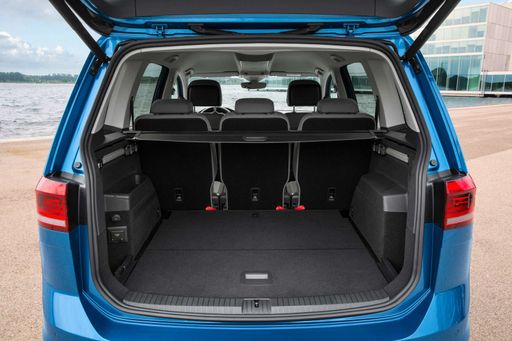
In terms of boot space, the VW Touran offers convincingly more room – 834 L compared to 401 L. That’s a difference of about 433 L.
When it comes to payload, VW Touran distinct takes the win – 601 kg compared to 430 kg. That’s a difference of about 171 kg.
Who wins the race?
The Hyundai IONIQ 6 proves to be is largely superior and therefore becomes our DriveDuel Champion!
Hyundai IONIQ 6 is the better all-rounder in this comparison.
from about £37,600
 @ Hyundai Motor Company
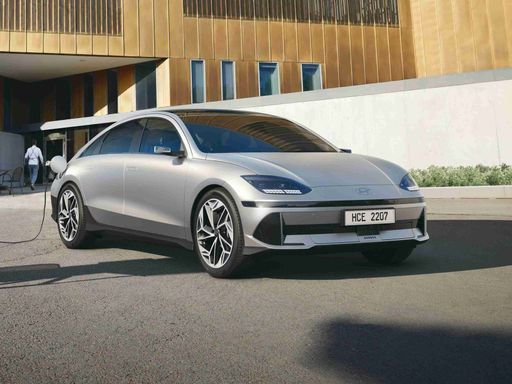
Hyundai IONIQ 6
Hyundai IONIQ 6
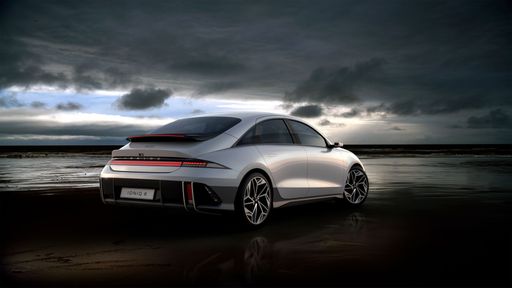
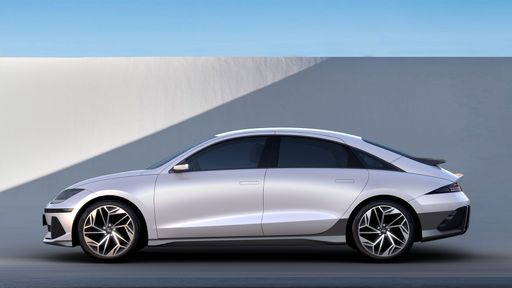
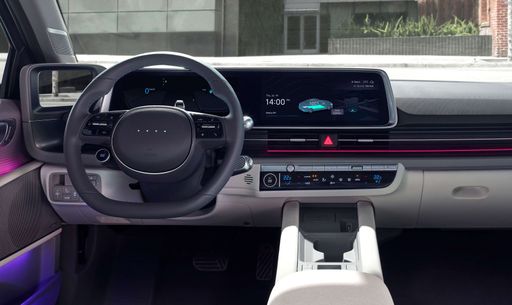
The Hyundai IONIQ 6 merges futuristic design with eco-friendly technology, offering a glimpse into the future of electric mobility. Its sleek silhouette and aerodynamic profile are sure to capture attention on the road, while the interior provides a seamless blend of comfort and cutting-edge digital features. With a focus on efficiency and sustainability, this model represents a significant step forward in the evolution of electric vehicles.
details
@ Hyundai Motor Company
 @ Hyundai Motor Company
 @ Hyundai Motor Company
 @ Hyundai Motor Company
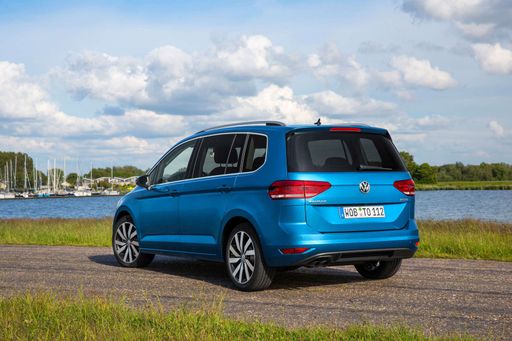
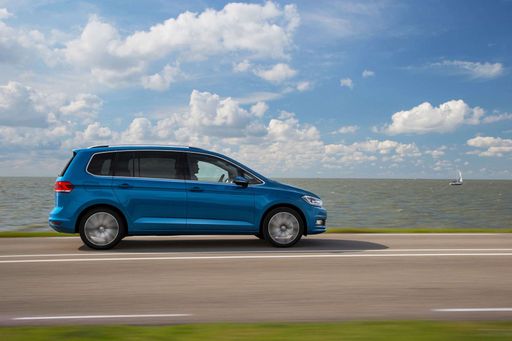
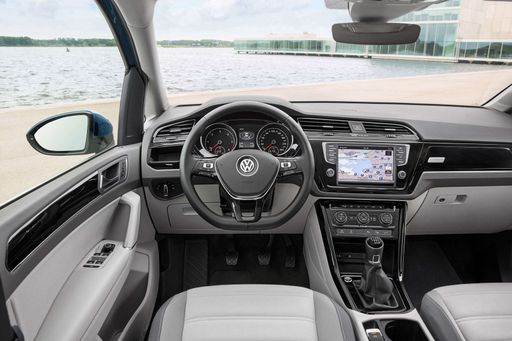
VW Touran
The VW Touran is a sensible family people‑carrier that mixes practical packaging with tidy, German-built refinement, making everyday life with kids and shopping feel a lot less chaotic. If you want a reliable, no-nonsense companion that drives with surprising poise and values usefulness over flash, the Touran is a very persuasive choice.
details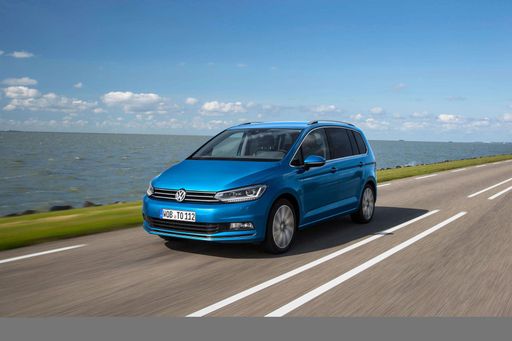 @ Volkswagen AG / VW Media
 @ Volkswagen AG / VW Media
 @ Volkswagen AG / VW Media
 @ Volkswagen AG / VW Media
 @ Volkswagen AG / VW Media
Hyundai IONIQ 6
VW Touran
|
@ Hyundai Motor Company
|
@ Volkswagen AG / VW Media
|
|
|
|
Costs and Consumption |
|
|---|---|
|
Price
37600 - 64300 £
|
Price
35400 - 43900 £
|
|
Consumption L/100km
-
|
Consumption L/100km
5.2 - 6.5 L
|
|
Consumption kWh/100km
13.9 - 15.1 kWh
|
Consumption kWh/100km
-
|
|
Electric Range
429 - 614 km
|
Electric Range
-
|
|
Battery Capacity
53 - 84 kWh
|
Battery Capacity
-
|
|
co2
0 g/km
|
co2
136 - 149 g/km
|
|
Fuel tank capacity
-
|
Fuel tank capacity
58 L
|
Dimensions and Body |
|
|---|---|
|
Body Type
Hatchback
|
Body Type
MPV
|
|
Seats
5
|
Seats
5
|
|
Doors
4
|
Doors
5
|
|
Curb weight
1850 - 2095 kg
|
Curb weight
1520 - 1631 kg
|
|
Trunk capacity
401 L
|
Trunk capacity
834 L
|
|
Length
4855 - 4935 mm
|
Length
4527 mm
|
|
Width
1880 - 1940 mm
|
Width
1829 mm
|
|
Height
1495 mm
|
Height
1668 mm
|
|
Max trunk capacity
-
|
Max trunk capacity
1980 L
|
|
Payload
425 - 430 kg
|
Payload
590 - 601 kg
|
Engine and Performance |
|
|---|---|
|
Engine Type
Electric
|
Engine Type
Petrol, Diesel
|
|
Transmission
Automatic
|
Transmission
Manuel, Automatic
|
|
Transmission Detail
Reduction Gearbox
|
Transmission Detail
Manual Gearbox, Dual-Clutch Automatic
|
|
Drive Type
Rear-Wheel Drive, All-Wheel Drive
|
Drive Type
Front-Wheel Drive
|
|
Power HP
151 - 650 HP
|
Power HP
122 - 150 HP
|
|
Acceleration 0-100km/h
3.2 - 8.8 s
|
Acceleration 0-100km/h
8.9 - 10.8 s
|
|
Max Speed
185 - 257 km/h
|
Max Speed
195 - 209 km/h
|
|
Torque
350 - 770 Nm
|
Torque
250 - 360 Nm
|
|
Number of Cylinders
-
|
Number of Cylinders
4
|
|
Power kW
111 - 478 kW
|
Power kW
90 - 110 kW
|
|
Engine capacity
-
|
Engine capacity
1498 - 1968 cm3
|
General |
|
|---|---|
|
Model Year
2022 - 2025
|
Model Year
2024 - 2025
|
|
CO2 Efficiency Class
A
|
CO2 Efficiency Class
E
|
|
Brand
Hyundai
|
Brand
VW
|
What drive types are available for the Hyundai IONIQ 6?
Available configurations include Rear-Wheel Drive or All-Wheel Drive.
The prices and data displayed are estimates based on German list prices and may vary by country. This information is not legally binding.