
 Deutschland
 France
 Nederland
 Great Britain
 Sverige
 Danmark
 Suomi
Suomi Italia
 Polska
 Česko
Česko España
VS
Jeep Grand Cherokee vs Toyota Land Cruiser comparison
Compare performance (380 HP vs 205 HP), boot space and price (85,600 £ vs 72,000 £ ) at a glance. Find out which car is the better choice for you – Jeep Grand Cherokee or Toyota Land Cruiser?
Grand Cherokee
Costs and Efficiency:
Looking at overall running costs, both models reveal some interesting differences in everyday economy.
Toyota Land Cruiser is moderately cheaper – starting at 72,000 £ , while the Jeep Grand Cherokee costs 85,600 £ . That’s a price difference of around 13,637 £.
Fuel consumption also shows a difference: the Jeep Grand Cherokee uses 2.9 L/100km and is considerably more efficient than the Toyota Land Cruiser with 10.6 L/100km. The difference is about 7.7 L/100km.
Land Cruiser
Engine and Performance:
Power, torque and acceleration say a lot about how a car feels on the road. This is where you see which model delivers more driving dynamics.
When it comes to engine power, the Jeep Grand Cherokee offers significantly more power – delivering 380 HP compared to 205 HP. That’s roughly 175 HP more horsepower.
When accelerating from 0 to 100 km/h, the Jeep Grand Cherokee is considerably quicker – completing the sprint in 6.3 s, while the Toyota Land Cruiser takes 12.3 s. That’s about 6 s quicker.
There’s also a difference in torque: the Jeep Grand Cherokee delivers visibly more torque with 637 Nm compared to 500 Nm. That’s about 137 Nm more.
Grand Cherokee
Space and Everyday Use:
Beyond pure performance, interior space and usability matter most in daily life. This is where you see which car is more practical and versatile.
Seats: Toyota Land Cruiser offers more seats – 7 vs 5.
In terms of curb weight, Toyota Land Cruiser is very slightly lighter – 2,415 kg compared to 2,434 kg. The difference is around 19 kg.
Looking at boot space, the Toyota Land Cruiser offers noticeably more boot space – 742 L compared to 520 L. That’s a difference of about 222 L.
When it comes to payload, the Toyota Land Cruiser carries somewhat more – 750 kg compared to 641 kg. That’s a difference of about 109 kg.
Who wins the race in the data check?
The Jeep Grand Cherokee is clearly superior overall in the objective data comparison.
This result only shows which model scores more points on paper – not which of the two cars feels right for you.
£85,628
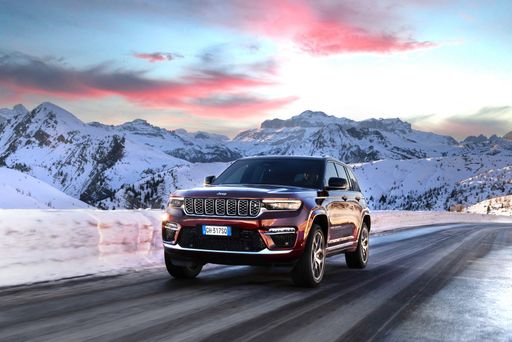
Jeep Grand Cherokee
Jeep Grand Cherokee
Toyota Land Cruiser
Costs and Consumption
View detailed analysis
View detailed analysis
Engine and Performance
View detailed analysis
View detailed analysis
Dimensions and Body
View detailed analysis
View detailed analysis
Jeep Grand Cherokee
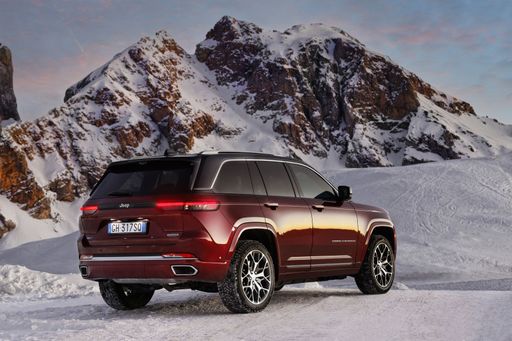
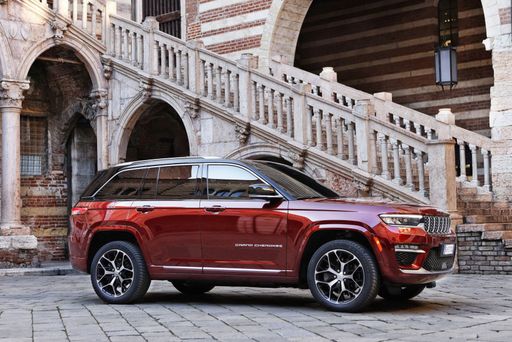
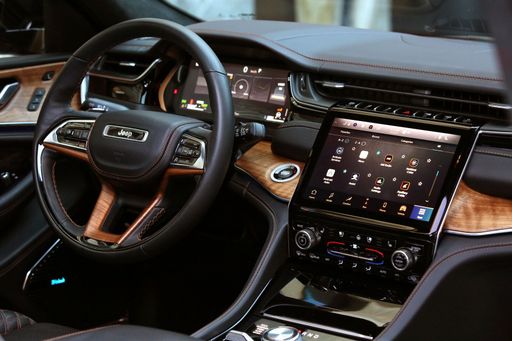
The Jeep Grand Cherokee wears its trail-ready roots proudly while wrapping them in a surprisingly civilized and upscale package, so it can tackle rough tracks and the school run with the same swagger. Inside, plush materials and intuitive tech make it a comfortable place to spend time, giving buyers a practical yet characterful SUV that doesn’t take itself too seriously.
details
Toyota Land Cruiser
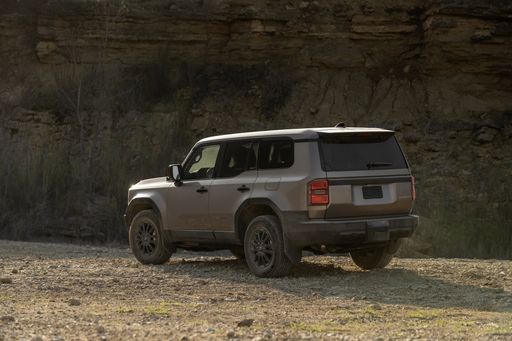
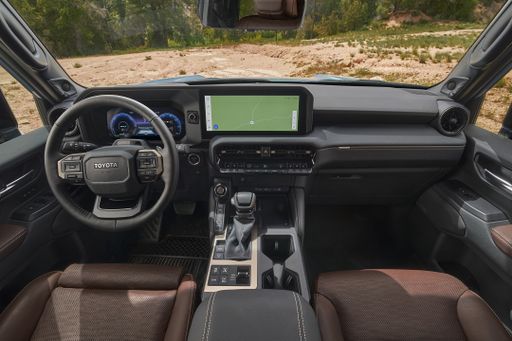
The Toyota Land Cruiser is the kind of SUV that makes you feel ready to abandon the map and take the long way home, with legendary go-anywhere capability wrapped in reassuringly solid build quality. Inside it's surprisingly comfortable and grown-up — a practical luxury for buyers who want reliability and presence rather than fleeting flash.
details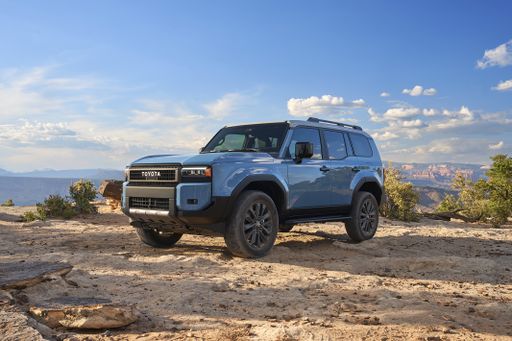
Jeep Grand Cherokee
Toyota Land Cruiser
Costs and Consumption |
|
|---|---|
|
Price
85,600 £
|
Price
72,000 - 79,700 £
|
|
Consumption L/100km
2.9 L/100km
|
Consumption L/100km
10.6 - 10.7 L/100km
|
|
Consumption kWh/100km
-
|
Consumption kWh/100km
-
|
|
Electric Range
45 km
|
Electric Range
-
|
|
Battery Capacity
-
|
Battery Capacity
-
|
|
co2
65 g/km
|
co2
278 - 282 g/km
|
|
Fuel tank capacity
-
|
Fuel tank capacity
-
|
Dimensions and Body |
|
|---|---|
|
Body Type
SUV
|
Body Type
Off-Roader
|
|
Seats
5
|
Seats
5 - 7
|
|
Doors
-
|
Doors
-
|
|
Curb weight
2,434 kg
|
Curb weight
2,415 - 2,450 kg
|
|
Trunk capacity
520 L
|
Trunk capacity
143 - 742 L
|
|
Length
-
|
Length
-
|
|
Width
1,968 mm
|
Width
1,980 mm
|
|
Height
-
|
Height
-
|
|
Max trunk capacity
-
|
Max trunk capacity
-
|
|
Payload
641 kg
|
Payload
685 - 750 kg
|
Engine and Performance |
|
|---|---|
|
Engine Type
Plug-in Hybrid
|
Engine Type
Diesel MHEV
|
|
Transmission
Automatic
|
Transmission
Automatic
|
|
Transmission Detail
Automatic Gearbox
|
Transmission Detail
Automatic Gearbox
|
|
Drive Type
All-Wheel Drive
|
Drive Type
All-Wheel Drive
|
|
Power HP
380 HP
|
Power HP
205 HP
|
|
Acceleration 0-100km/h
6.3 s
|
Acceleration 0-100km/h
12.3 s
|
|
Max Speed
-
|
Max Speed
-
|
|
Torque
637 Nm
|
Torque
500 Nm
|
|
Number of Cylinders
4
|
Number of Cylinders
4
|
|
Power kW
280 kW
|
Power kW
151 kW
|
|
Engine capacity
1,995 cm3
|
Engine capacity
2,755 cm3
|
General |
|
|---|---|
|
Model Year
2024
|
Model Year
2025
|
|
CO2 Efficiency Class
B
|
CO2 Efficiency Class
G
|
|
Brand
Jeep
|
Brand
Toyota
|
DriveDuel uses data analysis and artificial intelligence to evaluate vehicle data and create content. Content is regularly reviewed and improved.
The displayed prices are estimates based on German list prices, adjusted to the respective country’s VAT. Country-specific registration taxes are not included. This information is not legally binding.