VS

Kia Ceed Sportswagon vs Toyota Corolla Touring Sports - Differences and prices compared

Compare performance (140 HP vs 178 HP), boot space and price (24300 £ vs 29600 £ ) at a glance. Find out which car is the better choice for you – Kia Ceed Sportswagon or Toyota Corolla Touring Sports?

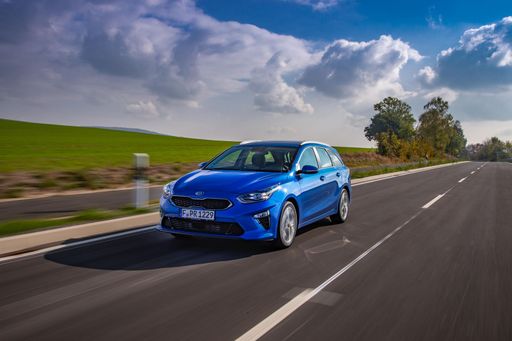
Ceed Sportswagon

Introduction: A Clash of Wagons

The automotive landscape is rich with choices for consumers seeking functional yet stylish vehicles. The Kia Ceed Sportswagon and the Toyota Corolla Touring Sports are two formidable contenders in the wagon segment. While both promise practicality and innovation, they each bring their unique strengths to the table. In this comparison, we’ll dive into the technical aspects of both models to help you make an informed decision.

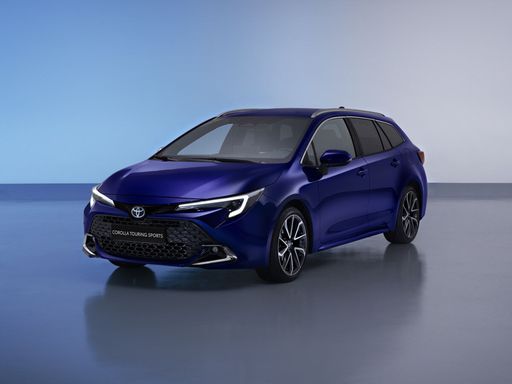
Corolla Touring Sports

Design and Dimensions

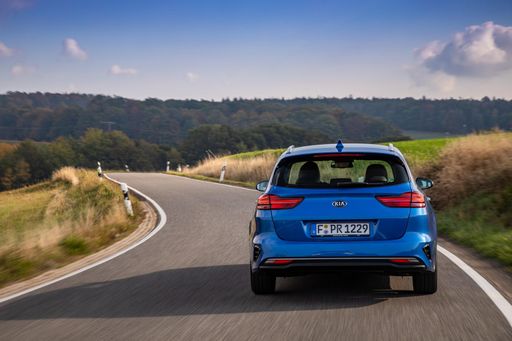
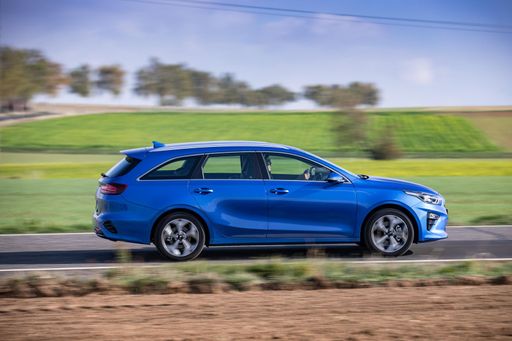
When it comes to design, both wagons boast appealing aesthetics. The Kia Ceed Sportswagon features a bold and sporty silhouette that is complemented by a range of vibrant colors, making it stand out in a crowd. Measuring 4,600 mm in length, 1,800 mm in width, and 1,465 mm in height, it offers ample space for passengers and luggage.

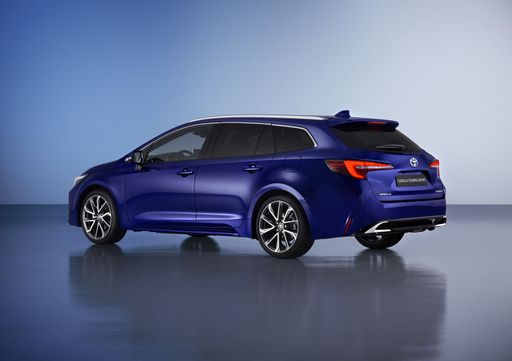
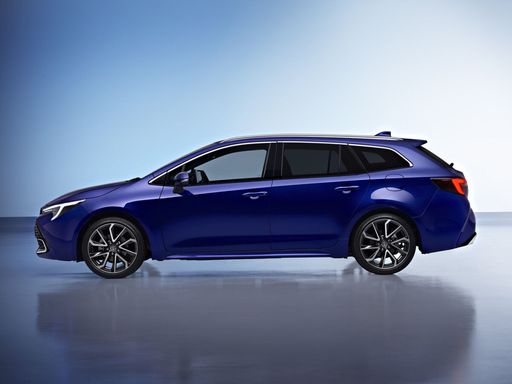
In contrast, the Toyota Corolla Touring Sports is a bit longer at 4,650 mm while slightly narrower at 1,790 mm and lower at 1,435 mm. This gives it a sleek appearance with a focus on aerodynamics, enhancing its efficiency. Both models offer five doors and seating for five, ensuring practicality for family outings or daily commutes.

Ceed Sportswagon

Powertrain Performance

Under the hood, performance characteristics differ significantly. The Kia Ceed Sportswagon offers a choice of petrol and mild-hybrid engines, with power options ranging from 100 to 140 HP. The more robust engine can achieve 0-100 km/h in just 9.7 seconds, reaching a maximum speed of 197 km/h. However, fuel consumption can be a concern, as it ranges between 6 and 6.4 L/100 km, translating to CO2 emissions of 137 to 146 g/km.

The Toyota Corolla Touring Sports, on the other hand, utilizes a full hybrid engine that produces up to 196 HP. With an impressive acceleration of 0-100 km/h in just 7.5 seconds, it is quicker than the Ceed, while offering better fuel efficiency with consumption figures of 4.4 to 4.6 L/100 km and low CO2 emissions at 100 g/km. This marks a clear advantage in terms of both performance and eco-friendliness.

Corolla Touring Sports

Transmission and Handling

The Kia Ceed Sportswagon comes with a choice between an automatic dual-clutch transmission and a manual gearbox, providing a personalized driving experience. Front-wheel drive enhances its control and stability on various road conditions.

Conversely, the Toyota Corolla Touring Sports is equipped with a continuously variable transmission (CVT), contributing to a smoother driving experience, particularly in urban settings. Like the Ceed, it also features front-wheel drive which aids in its handling capabilities.

Ceed Sportswagon

Interior Comfort and Technology

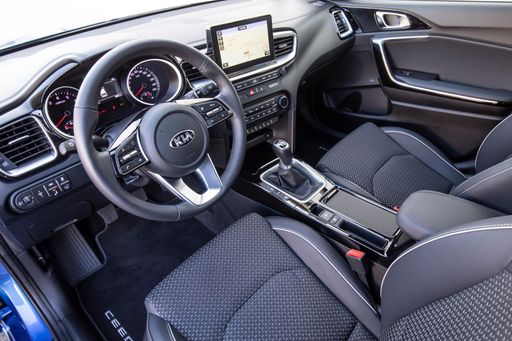
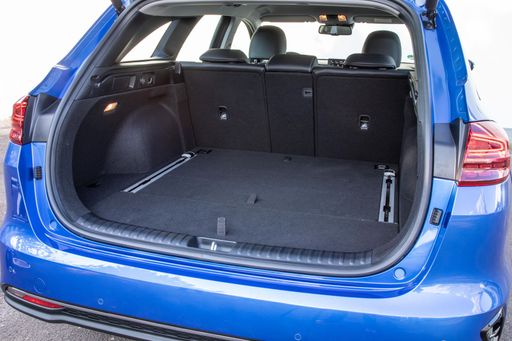
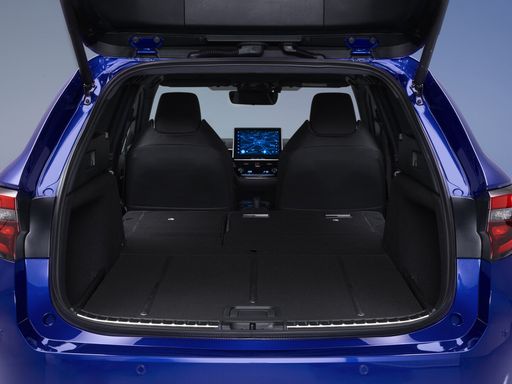
Inside, both models prioritize comfort and functionality. The Kia Ceed Sportswagon offers a spacious cabin with an impressive trunk capacity ranging from 512 to 625 liters, depending on the configuration. Key technical features include a multi-media system with smartphone connectivity, enhancing the driving experience with modern conveniences.

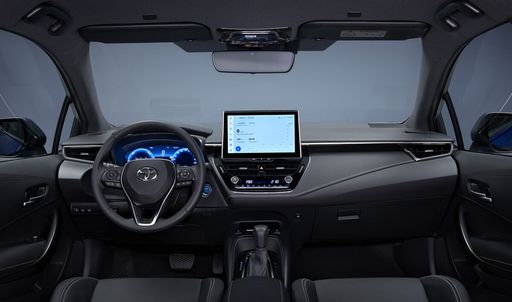
The Toyota Corolla Touring Sports also excels in interior design, featuring a trunk capacity of 581 to 596 liters. Its cabin hosts a modern infotainment system with advanced connectivity options. Toyota has ensured that the ergonomics and materials used provide a premium feel throughout the cabin.

Corolla Touring Sports

Safety Innovations

Safety is another area where both cars shine. The Kia Ceed Sportswagon comes equipped with a suite of advanced safety features, including electronic stability control, multiple airbags, and various driver assistance technologies.

In comparison, the Toyota Corolla Touring Sports incorporates the Toyota Safety Sense technology, which includes pre-collision systems and lane departure alerts, aiming to create a more secure driving environment. Both vehicles have earned high safety ratings, ensuring peace of mind for drivers and passengers alike.

Ceed Sportswagon

Conclusion: Choosing Your Wagon

Both the Kia Ceed Sportswagon and the Toyota Corolla Touring Sports offer compelling packages in the wagon segment. If you seek a sporty design with a variety of engine options, the Ceed may be your choice. However, if fuel efficiency, performance, and innovative safety features are your top priorities, the Corolla Touring Sports stands out.

Ultimately, the best choice will depend on your specific needs and preferences. Each vehicle exhibits strengths that cater to a diverse range of drivers, making them worthy competitors in the modern automotive arena.

Kia Ceed Sportswagon

Toyota Corolla Touring Sports

4.7 (1 Reviews)
rate

Here’s where it gets real: The technical differences in detail

Corolla Touring Sports

Costs and Efficiency:

When it comes to price and running costs, the biggest differences usually appear. This is often where you see which car fits your budget better in the long run.

Kia Ceed Sportswagon has a evident advantage in terms of price – it starts at 24300 £ , while the Toyota Corolla Touring Sports costs 29600 £ . That’s a price difference of around 5271 £.

Fuel consumption also shows a difference: Toyota Corolla Touring Sports manages with 4.40 L and is therefore distinct more efficient than the Kia Ceed Sportswagon with 6 L. The difference is about 1.60 L per 100 km.

Ceed Sportswagon

Engine and Performance:

Under the bonnet, it becomes clear which model is tuned for sportiness and which one takes the lead when you hit the accelerator.

When it comes to engine power, the Toyota Corolla Touring Sports has a noticeable edge – offering 178 HP compared to 140 HP. That’s roughly 38 HP more horsepower.

In acceleration from 0 to 100 km/h, the Toyota Corolla Touring Sports is distinct quicker – completing the sprint in 7.50 s, while the Kia Ceed Sportswagon takes 9.70 s. That’s about 2.20 s faster.

In terms of top speed, the Kia Ceed Sportswagon performs barely noticeable better – reaching 197 km/h, while the Toyota Corolla Touring Sports tops out at 180 km/h. The difference is around 17 km/h.

Corolla Touring Sports

Space and Everyday Use:

Whether family car or daily driver – which one offers more room, flexibility and comfort?

Both vehicles offer seating for 5 people.

In curb weight, Kia Ceed Sportswagon is somewhat lighter – 1335 kg compared to 1485 kg. The difference is around 150 kg.

In terms of boot space, the Kia Ceed Sportswagon offers minimal more room – 625 L compared to 596 L. That’s a difference of about 29 L.

In maximum load capacity, the Toyota Corolla Touring Sports performs barely noticeable better – up to 1606 L, which is about 61 L more than the Kia Ceed Sportswagon.

When it comes to payload, Kia Ceed Sportswagon hardly perceptible takes the win – 485 kg compared to 440 kg. That’s a difference of about 45 kg.

Who wins the race in the data check?

The Toyota Corolla Touring Sports sits well ahead of its rival in the objective data comparison.
This result only shows which model scores more points on paper – not which of the two cars feels right for you.

Kia Ceed Sportswagon
Toyota Corolla Touring Sports

Costs and Consumption

View detailed analysis

Engine and Performance

View detailed analysis

Dimensions and Body

View detailed analysis
from about £29,600
Corolla Touring Sports

Toyota Corolla Touring Sports

  • Engine Type : Full Hybrid
  • Transmission : Automatic
  • Drive Type : Front-Wheel Drive
  • Power HP : 140 - 178 HP
  • Consumption L/100km : 4.40 L

Kia Ceed Sportswagon

The Kia Ceed Sportswagon is a sensible and surprisingly stylish family wagon that turns daily chores into a bit less of a grind. Practical, comfortable and packed with thoughtful touches where they matter, it’s a smart choice for buyers who want usefulness without sacrificing personality.

details

Toyota Corolla Touring Sports

4.7 (1 Reviews)
rate

The Toyota Corolla Touring Sports is a sensible yet stylish estate that blends everyday practicality with Toyota's trademark reliability, making it the kind of car that quietly gets on with family life without drama. Inside it's cleverly packaged for luggage and kids' gear and feels calm and comfortable on the road — sensible rather than flashy, but with enough character to make daily drives more enjoyable.

details
Kia Ceed Sportswagon
Toyota Corolla Touring Sports

Costs and Consumption

Price
24300 - 29100 £
Price
29600 - 36400 £
Consumption L/100km
6 - 6.4 L
Consumption L/100km
4.40 L
Consumption kWh/100km
-
Consumption kWh/100km
-
Electric Range
-
Electric Range
-
Battery Capacity
-
Battery Capacity
-
co2
137 - 146 g/km
co2
100 g/km
Fuel tank capacity
50 L
Fuel tank capacity
43 L

Dimensions and Body

Body Type
Estate
Body Type
Estate
Seats
5
Seats
5
Doors
5
Doors
5
Curb weight
1335 - 1437 kg
Curb weight
1485 - 1515 kg
Trunk capacity
512 - 625 L
Trunk capacity
581 - 596 L
Length
4605 mm
Length
4650 mm
Width
1800 mm
Width
1790 mm
Height
1422 mm
Height
1435 mm
Max trunk capacity
1545 L
Max trunk capacity
1591 - 1606 L
Payload
455 - 485 kg
Payload
400 - 440 kg

Engine and Performance

Engine Type
Petrol, Petrol MHEV
Engine Type
Full Hybrid
Transmission
Automatic, Manuel
Transmission
Automatic
Transmission Detail
Dual-Clutch Automatic, Manual Gearbox
Transmission Detail
CVT
Drive Type
Front-Wheel Drive
Drive Type
Front-Wheel Drive
Power HP
100 - 140 HP
Power HP
140 - 178 HP
Acceleration 0-100km/h
9.7 - 13.5 s
Acceleration 0-100km/h
7.5 - 9.2 s
Max Speed
197 km/h
Max Speed
180 km/h
Torque
172 - 253 Nm
Torque
-
Number of Cylinders
3 - 4
Number of Cylinders
4
Power kW
74 - 103 kW
Power kW
103 - 131 kW
Engine capacity
998 - 1482 cm3
Engine capacity
1798 - 1987 cm3

General

Model Year
2024
Model Year
2025
CO2 Efficiency Class
E
CO2 Efficiency Class
C
Brand
Kia
Brand
Toyota
Is the Kia Ceed Sportswagon offered with different drivetrains?

The Kia Ceed Sportswagon is available as Front-Wheel Drive.

The prices shown are estimates based on German list prices, adjusted for local VAT. Local registration taxes (e.g. NoVA, BPM or CO2 malus) are not included. This information is not legally binding.