VS

Land Rover Range Rover Velar vs BMW X5 comparison

Compare performance (404 HP vs 625 HP), boot space and price (62,000 £ vs 77,600 £ ) at a glance. Find out which car is the better choice for you – Land Rover Range Rover Velar or BMW X5?

Land Rover Range Rover Velar vs BMW X5: Key differences

Land Rover Range Rover Velar

  • noticeably cheaper
  • moderately lighter
details

BMW X5

3.6 (1 Reviews)
rate
  • markedly more power
  • considerably more efficient
  • substantially more electric range
  • markedly quicker 0–100 km/h
  • slightly more trunk space
details

All details on performance, efficiency, range and trunk space can be found in the technical comparison below – including user reviews for both models.

By Achim Sedelmaier

Range Rover Velar

BMW X5 vs. Land Rover Range Rover Velar: The Battle of the Premium SUVs

The luxury SUV segment is fiercely competitive, with automakers vying for the perfect blend of performance, comfort, and innovation. Two worthy contenders in this category are the BMW X5 and the Land Rover Range Rover Velar. Let's dive into the technical aspects and innovations that set these vehicles apart from each other.
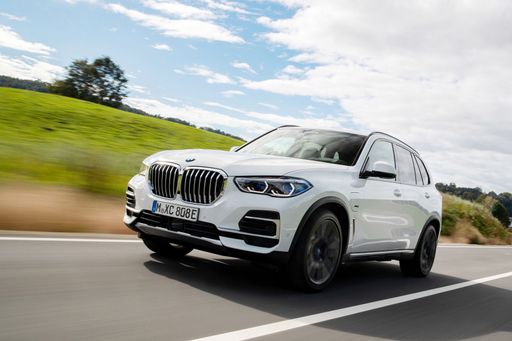
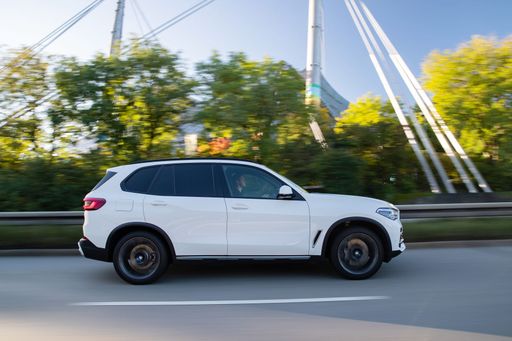
X5

Powertrain and Performance

Under the hood, both the BMW X5 and Range Rover Velar boast a variety of engine types, from diesel MHEV (Mild Hybrid Electric Vehicle) and petrol MHEV options to plugin hybrids. The BMW X5 offers a wide range of power outputs, from 298 HP to a staggering 625 HP. This power translates to impressive acceleration, with the fastest model achieving 0-100 km/h in just 3.9 seconds. The Velar, on the other hand, offers power ranging from 204 HP to 404 HP, reaching 0-100 km/h in a competitive 5.4 seconds.

Range Rover Velar

Efficiency and Sustainability

In terms of fuel efficiency, the BMW X5's plugin hybrid variant offers an exceptional consumption rate of only 0.9 L/100 km and boasts an electric range of 97 km, thanks to its 25.7 kWh battery. In contrast, the Range Rover Velar's plugin hybrid offers fuel consumption of 1.9 L/100 km with an electric range of 61 km, driven by a 15.4 kWh battery. Although both vehicles strive for eco-friendliness, the BMW X5 takes the lead in electric driving range and battery capacity.

X5

Dimensions and Practicality

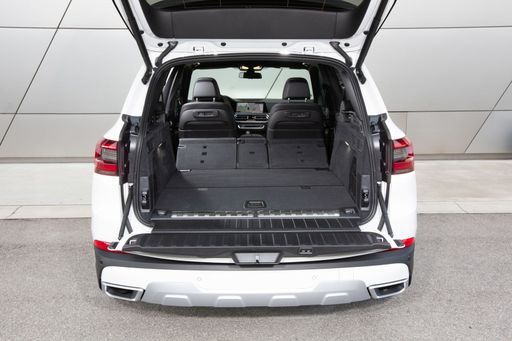
When it comes to size, the BMW X5 measures between 4935 mm and 4948 mm in length, with a width of 2004 mm to 2015 mm and a height of 1765 mm to 1762 mm. The Range Rover Velar is slightly more compact, stretching 4797 mm in length, 1933 mm in width, and standing 1657 mm to 1665 mm tall. Both SUVs provide ample space with the X5 offering up to 650 liters of trunk capacity compared to the Velar's 552 liters. This makes the BMW a slightly better option for those prioritizing cargo space.

Range Rover Velar

Technological Innovations

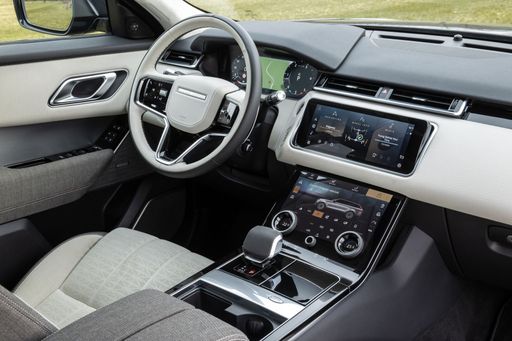
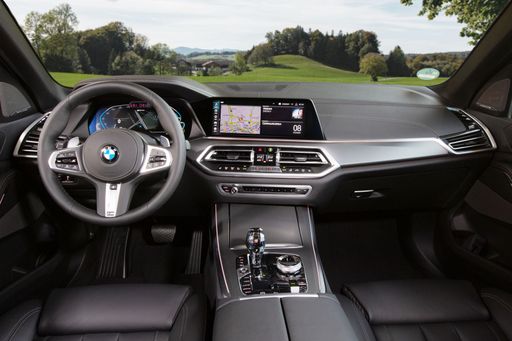
Both SUVs come equipped with cutting-edge technology designed to enhance driving experience and comfort. BMW's X5 features advanced driver assistance systems, a high-definition display for the infotainment system, and customizable driving modes that adapt to various terrains and preferences. The Range Rover Velar is no slouch in this department, offering a sleek dual-screen setup for infotainment and climate control, Terrain Response 2 technology for off-road adventures, and an array of safety features.

X5

A Closer Look at Pricing and Value

In terms of pricing, both SUVs cater to the premium market, where quality comes at a cost. However, the value is evident in the comprehensive packages they provide, from powerful engines and sustainable options to state-of-the-art technology and luxurious interiors.

Range Rover Velar

The Final Verdict

The choice between the BMW X5 and the Range Rover Velar largely comes down to personal preferences and priorities. If electric range, power variety, and trunk capacity are decisive factors, the BMW X5 might be the better fit. However, for those who seek a bold design, advanced off-road capabilities, and a technology-laden cabin, the Range Rover Velar stands out. Both represent excellent choices in the premium SUV sector, offering the reliability and luxury that these brands are known for.

Here’s where it gets real: The technical differences in detail

Range Rover Velar

Costs and Efficiency:

Price and efficiency are often the first things buyers look at. Here it becomes clear which model has the long-term edge – whether at the pump, the plug, or in purchase price.

Land Rover Range Rover Velar is noticeably cheaper – starting at 62,000 £ , while the BMW X5 costs 77,600 £ . That’s a price difference of around 15,600 £.

Fuel consumption also shows a difference: the BMW X5 uses 3 L/100km and is considerably more efficient than the Land Rover Range Rover Velar with 4.5 L/100km. The difference is about 1.5 L/100km.

As for electric range, the BMW X5 offers substantially more range – reaching up to 105 km, about 47 km more than the Land Rover Range Rover Velar.

X5

Engine and Performance:

Under the bonnet, it becomes clear which model is tuned for sportiness and which one takes the lead when you hit the accelerator.

When it comes to engine power, the BMW X5 offers markedly more power – delivering 625 HP compared to 404 HP. That’s roughly 221 HP more horsepower.

When accelerating from 0 to 100 km/h, the BMW X5 is markedly quicker – completing the sprint in 3.9 s, while the Land Rover Range Rover Velar takes 5.4 s. That’s about 1.5 s quicker.

There’s also a difference in torque: the BMW X5 delivers somewhat more torque with 750 Nm compared to 650 Nm. That’s about 100 Nm more.

Range Rover Velar

Space and Everyday Use:

Whether family car or daily driver – which one offers more room, flexibility and comfort?

Both vehicles offer seating for 5 people.

In terms of curb weight, Land Rover Range Rover Velar is moderately lighter – 2,003 kg compared to 2,240 kg. The difference is around 237 kg.

Looking at boot space, the BMW X5 offers slightly more boot space – 650 L compared to 552 L. That’s a difference of about 98 L.

When it comes to payload, the BMW X5 carries somewhat more – 705 kg compared to 587 kg. That’s a difference of about 118 kg.

Who wins the race in the data check?

The BMW X5 holds a decisive overall lead in the objective data comparison.
This result only shows which model scores more points on paper – not which of the two cars feels right for you.

from £77,600
X5

BMW X5

  • Engine Type Petrol MHEV, Diesel MHEV, Plugin Hybrid
  • Transmission Automatic
  • Drive Type All-Wheel Drive
  • Power HP 298 - 625 HP
  • Consumption L/100km 3 - 12.8 L/100km
  • Electric Range 105 km
Land Rover Range Rover Velar
BMW X5

Costs and Consumption

View detailed analysis

Engine and Performance

View detailed analysis

Dimensions and Body

View detailed analysis

Land Rover Range Rover Velar

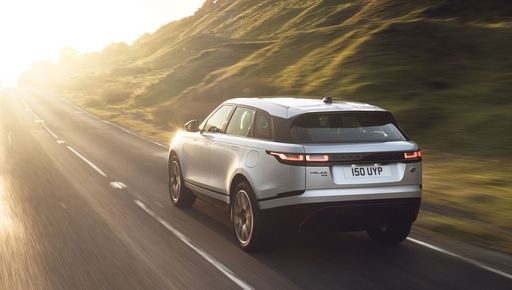
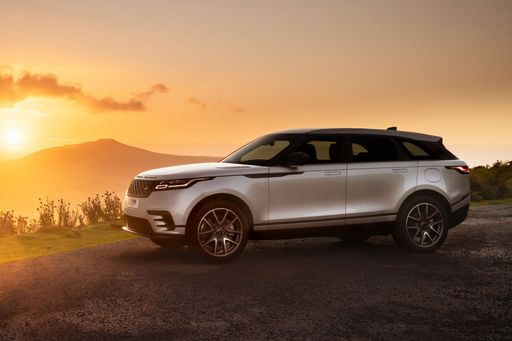
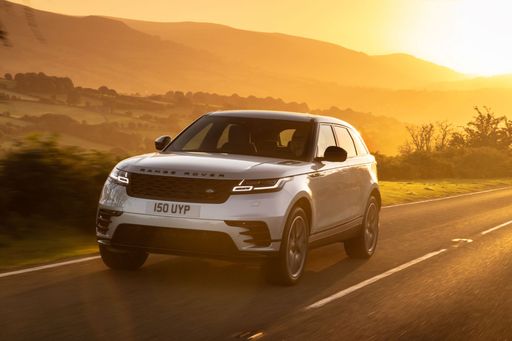
The Range Rover Velar marries sleek, pared-back styling with genuine off-road poise, so it looks at home in the city yet won’t flinch at rougher roads. Inside, a luxurious, tech-forward cabin pampers occupants while keeping the driving experience confidently in command — and yes, it somehow makes an SUV feel undeniably chic.

details

BMW X5

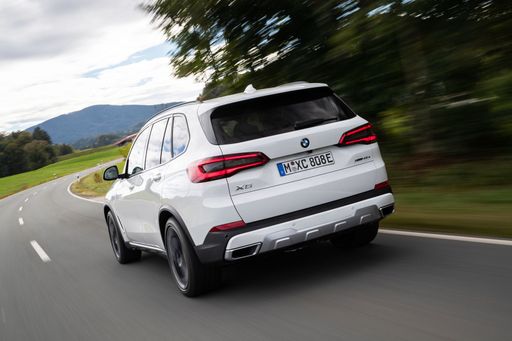
The BMW X5 blends athletic handling with a roomy, premium interior, feeling equally at home on twisty country roads and the school-run car park. Its executive-lounge cabin and confident road presence make it a tempting choice for buyers who want comfort, capability and just a little bit of bragging rights.

details
Land Rover Range Rover Velar
BMW X5

Costs and Consumption

Price
62,000 - 87,400 £
Price
77,600 - 144,400 £
Consumption L/100km
4.5 - 10 L/100km
Consumption L/100km
3 - 12.8 L/100km
Consumption kWh/100km
-
Consumption kWh/100km
-
Electric Range
58 km
Electric Range
105 km
Battery Capacity
-
Battery Capacity
-
co2
103 - 228 g/km
co2
68 - 289 g/km
Fuel tank capacity
-
Fuel tank capacity
-

Dimensions and Body

Body Type
SUV
Body Type
SUV
Seats
5
Seats
5
Doors
-
Doors
-
Curb weight
2,003 - 2,280 kg
Curb weight
2,240 - 2,495 kg
Trunk capacity
503 - 552 L
Trunk capacity
500 - 650 L
Length
-
Length
-
Width
1,933 mm
Width
2,004 - 2,015 mm
Height
-
Height
-
Max trunk capacity
-
Max trunk capacity
-
Payload
460 - 587 kg
Payload
565 - 705 kg

Engine and Performance

Engine Type
Petrol MHEV, Plugin Hybrid, Diesel MHEV
Engine Type
Petrol MHEV, Diesel MHEV, Plugin Hybrid
Transmission
Automatic
Transmission
Automatic
Transmission Detail
Automatic Gearbox
Transmission Detail
Automatic Gearbox
Drive Type
All-Wheel Drive
Drive Type
All-Wheel Drive
Power HP
204 - 404 HP
Power HP
298 - 625 HP
Acceleration 0-100km/h
5.4 - 8.3 s
Acceleration 0-100km/h
3.9 - 6.1 s
Max Speed
-
Max Speed
-
Torque
430 - 650 Nm
Torque
540 - 750 Nm
Number of Cylinders
4 - 6
Number of Cylinders
6 - 8
Power kW
150 - 297 kW
Power kW
219 - 460 kW
Engine capacity
1,997 - 2,997 cm3
Engine capacity
2,993 - 4,395 cm3

General

Model Year
2,025 - 2,026
Model Year
2025
CO2 Efficiency Class
G, C, F
CO2 Efficiency Class
G, B
Brand
Land Rover
Brand
BMW
DriveDuel uses data analysis and artificial intelligence to evaluate vehicle data and create content. Content is regularly reviewed and improved. The displayed prices are estimates based on German list prices, adjusted to the respective country’s VAT. Country-specific registration taxes are not included. This information is not legally binding.