@ Lexus / Toyota Motor Corporation
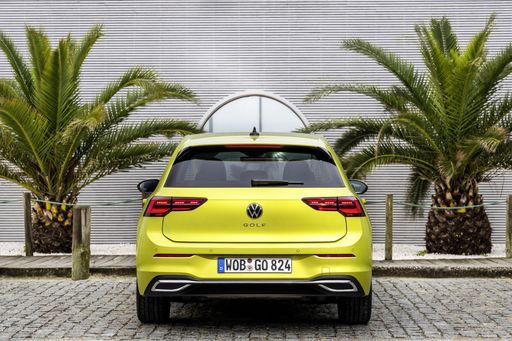
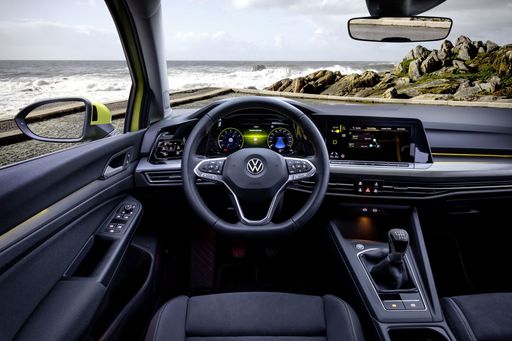
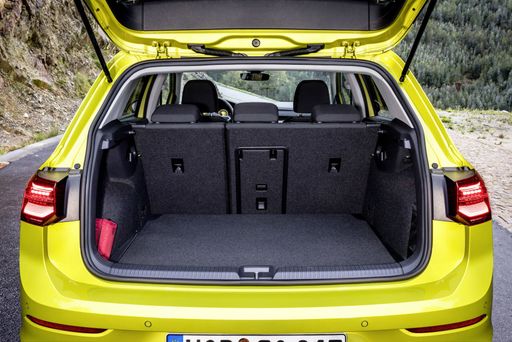
@ Volkswagen AG / VW Media
VS

Lexus LBX vs VW Golf – Which one offers the better deal?

Both models have their strengths – but which one suits you more?
Compare performance, efficiency, price and space directly: Lexus LBX or VW Golf?

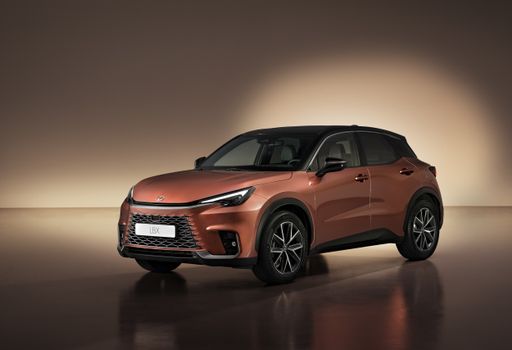
LBX @ Lexus / Toyota Motor Corporation

The Compact Clash: Lexus LBX vs VW Golf

In the world of compact vehicles, the competition is fierce. Enter the Lexus LBX and the Volkswagen Golf, two giants in their own right, each bringing a unique set of features to the table. The 2024 models offer a fresh spin on their classic designs, focusing on both innovation and efficiency. Let's dive into what makes these cars tick and how they set themselves apart in the competitive compact market.

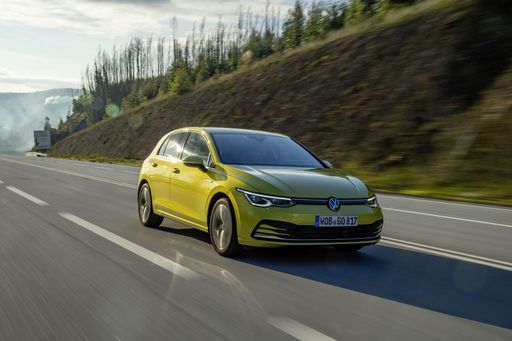
Golf @ Volkswagen AG / VW Media

Design and Dimensions

The Lexus LBX steps into the spotlight with its SUV-inspired silhouette. With dimensions of 4190 mm in length, 1825 mm in width, and 1560 mm in height, it's built to deliver presence and practicality. Its five-door configuration provides easy access, making it an appealing choice for families or those needing extra trunk space.

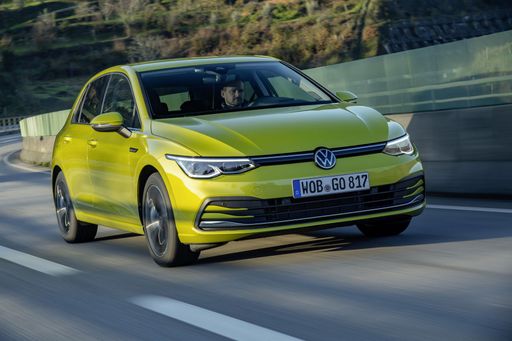
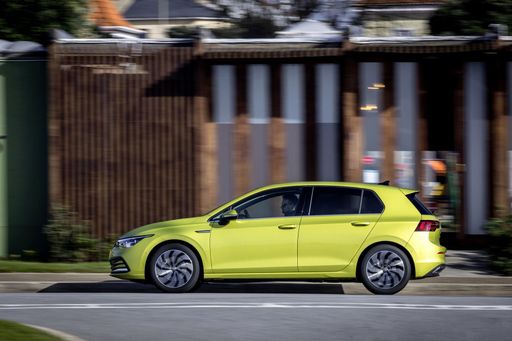
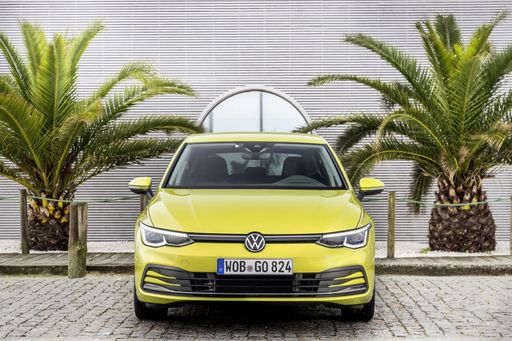
The VW Golf maintains its iconic hatchback design, offering three lengths ranging from 4282 mm to 4292 mm, a consistent width of 1789 mm, and height variations between 1456 mm and 1483 mm. Its more compact dimensions contribute to a nimble driving experience, ideal for urban settings.

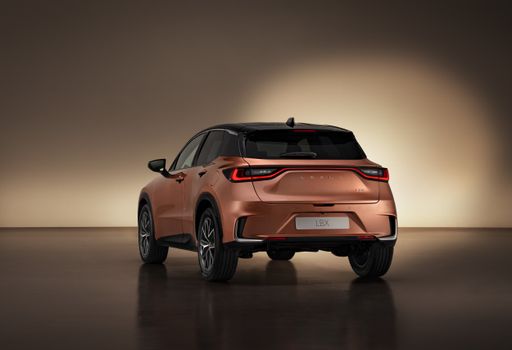
LBX @ Lexus / Toyota Motor Corporation

Powertrain and Performance

Under the hood, the Lexus LBX boasts a full hybrid engine paired with a CVT automatic transmission. It delivers 136 HP (100 kW) and a torque of 185 Nm, with acceleration from 0-100 km/h in around 9.2 to 9.6 seconds, depending on the drive type. The front-wheel and all-wheel-drive options offer flexibility for different driving needs, while its CO2 efficiency class C keeps emissions in check.

The VW Golf offers a broader array of engine types, including petrol, diesel, mild hybrid (MHEV), and plug-in hybrid variants. The power spectrum is impressive, ranging from 116 HP to a robust 333 HP, with corresponding torques up to 420 Nm. Acceleration times vary, with some models capable of sprinting from 0 to 100 km/h in just 4.6 seconds. This diversity allows the Golf to cater to a wide spectrum of driving preferences.

Golf @ Volkswagen AG / VW Media

Efficiency and Environment

The Lexus LBX shines in the efficiency department, boasting consumption figures between 4.5 and 4.8 L/100km and CO2 emissions from 102 to 109 g/km. Its 36-liter fuel tank complements its efficiency, ideal for those who prioritize long-distance travels with fewer refueling stops.

For the VW Golf, fuel consumption ranges from a remarkably economical 0.3 L/100km for its plug-in hybrid variants to around 8.5 L/100km on more performance-oriented models. The electric range for the plug-in hybrids extends up to 143 km. The fuel tank capacities, varying from 40 to 50 liters, and battery capacity of 19.7 kWh for hybrids, ensure that this vehicle supports both traditional and modern energy needs.

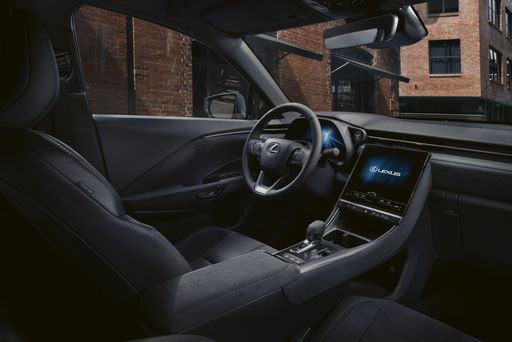
LBX @ Lexus / Toyota Motor Corporation

Comfort and Utility

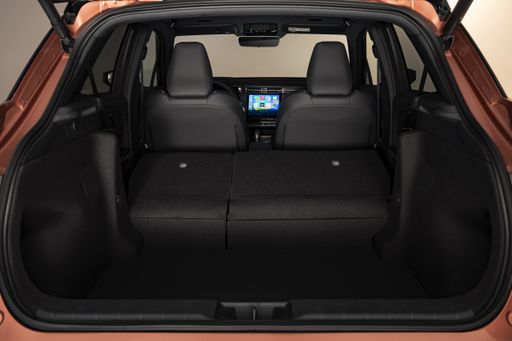
Lexus's LBX, with its four-seat design, emphasizes a luxurious and personal environment. The trunk offers a capacity from 255 to 332 liters, catering to varying storage needs without compromising on passenger space.

Meanwhile, the VW Golf seats five comfortably, made possible by its well-designed interior layout. Its trunk capacity from 273 to 381 liters ensures ample room for luggage or gear, making it a versatile choice for active lifestyles.

Golf @ Volkswagen AG / VW Media

Conclusion

Both the Lexus LBX and VW Golf offer compelling arguments for their place in the modern auto market. While the LBX combines luxury, hybrid efficiency, and SUV styling, the Golf provides unmatched versatility with a wide range of powertrains and configurations. Choosing between these two would depend largely on your lifestyle and preference—luxurious hybrid efficiency or a versatile, performance-oriented hatchback.

Ultimately, both vehicles represent forward-thinking approaches synonymous with their brands, continuing their legacies into the modern era with innovation at their core.

Here’s where it gets real: The technical differences in detail

LBX @ Lexus / Toyota Motor Corporation

Costs and Efficiency:

Looking at overall running costs, both models reveal some interesting differences in everyday economy.

VW Golf has a a bit advantage in terms of price – it starts at 25200 £, while the Lexus LBX costs 28300 £. That’s a price difference of around 3082 £.

Fuel consumption also shows a difference: VW Golf manages with 1.10 L and is therefore clearly more efficient than the Lexus LBX with 4.50 L. The difference is about 3.40 L per 100 km.

Golf @ Volkswagen AG / VW Media

Engine and Performance:

Under the bonnet, it becomes clear which model is tuned for sportiness and which one takes the lead when you hit the accelerator.

When it comes to engine power, the VW Golf has a decisively edge – offering 333 HP compared to 136 HP. That’s roughly 197 HP more horsepower.

In acceleration from 0 to 100 km/h, the VW Golf is decisively quicker – completing the sprint in 4.60 s, while the Lexus LBX takes 9.20 s. That’s about 4.60 s faster.

In terms of top speed, the VW Golf performs clearly perceptible better – reaching 270 km/h, while the Lexus LBX tops out at 170 km/h. The difference is around 100 km/h.

There’s also a difference in torque: VW Golf pulls convincingly stronger with 420 Nm compared to 185 Nm. That’s about 235 Nm difference.

Space and Everyday Use:

Cabin size, boot volume and payload all play a role in everyday practicality. Here, comfort and flexibility make the difference.

Both vehicles offer seating for 5 people.

In curb weight, Lexus LBX is minimal lighter – 1280 kg compared to 1307 kg. The difference is around 27 kg.

In terms of boot space, the VW Golf offers slightly more room – 381 L compared to 332 L. That’s a difference of about 49 L.

In maximum load capacity, the VW Golf performs a bit better – up to 1237 L, which is about 243 L more than the Lexus LBX.

When it comes to payload, VW Golf slight takes the win – 508 kg compared to 475 kg. That’s a difference of about 33 kg.

Who comes out on top?

Overall, the VW Golf shows itself to be wins the duel decisively and secures the title of DriveDuel Champion.
It convinces with the more balanced overall package and proves to be the more versatile choice for everyday use.

from about £25,200
Golf @ Volkswagen AG / VW Media

VW Golf

  • Engine Type : Petrol MHEV, Petrol, Diesel, Plugin Hybrid
  • Transmission : Automatic, Manuel
  • Drive Type : Front-Wheel Drive, All-Wheel Drive
  • Power HP : 116 - 333 HP
  • Consumption L/100km : 1.1 - 8.1 L
  • Electric Range : 131 - 143 km

Lexus LBX

The Lexus LBX wraps premium touches and a surprisingly spacious cabin into a compact crossover that’s perfectly at home in town or heading out on longer drives. It wears the badge with quiet confidence, serving up a refined ride and clever packaging for buyers who want Lexus polish without shouting for attention.

details

VW Golf

The VW Golf remains the everyman’s favourite — cleverly balanced, composed and just posh enough to feel grown-up without pretending to be something it’s not. It slips through town and eats up longer trips with a refined cabin, practical layout and a kindly, capable character that turns everyday driving into something a little bit special.

details
Lexus LBX
VW Golf
LBX @ Lexus / Toyota Motor Corporation
Golf @ Volkswagen AG / VW Media

Costs and Consumption

Price
28300 - 40000 £
Price
25200 - 47600 £
Consumption L/100km
4.5 - 4.8 L
Consumption L/100km
1.1 - 8.1 L
Consumption kWh/100km
-
Consumption kWh/100km
-
Electric Range
-
Electric Range
131 - 143 km
Battery Capacity
-
Battery Capacity
19.70 kWh
co2
102 - 110 g/km
co2
25 - 184 g/km
Fuel tank capacity
36 L
Fuel tank capacity
40 - 55 L

Dimensions and Body

Body Type
SUV
Body Type
Hatchback
Seats
5
Seats
5
Doors
5
Doors
5
Curb weight
1280 - 1365 kg
Curb weight
1307 - 1662 kg
Trunk capacity
255 - 332 L
Trunk capacity
273 - 381 L
Length
4190 mm
Length
4282 - 4296 mm
Width
1825 mm
Width
1789 mm
Height
1560 mm
Height
1454 - 1483 mm
Max trunk capacity
992 - 994 L
Max trunk capacity
1129 - 1237 L
Payload
455 - 475 kg
Payload
438 - 508 kg

Engine and Performance

Engine Type
Full Hybrid
Engine Type
Petrol MHEV, Petrol, Diesel, Plugin Hybrid
Transmission
Automatic
Transmission
Automatic, Manuel
Transmission Detail
CVT
Transmission Detail
Dual-Clutch Automatic, Manual Gearbox
Drive Type
Front-Wheel Drive, All-Wheel Drive
Drive Type
Front-Wheel Drive, All-Wheel Drive
Power HP
136 HP
Power HP
116 - 333 HP
Acceleration 0-100km/h
9.2 - 9.6 s
Acceleration 0-100km/h
4.6 - 10.2 s
Max Speed
170 km/h
Max Speed
202 - 270 km/h
Torque
185 Nm
Torque
220 - 420 Nm
Number of Cylinders
3
Number of Cylinders
4
Power kW
100 kW
Power kW
85 - 245 kW
Engine capacity
1490 cm3
Engine capacity
1498 - 1984 cm3

General

Model Year
2025
Model Year
2024 - 2025
CO2 Efficiency Class
C
CO2 Efficiency Class
D, F, G, C, B
Brand
Lexus
Brand
VW
What drivetrain options does the Lexus LBX have?

Available configurations include Front-Wheel Drive or All-Wheel Drive.

The prices and data displayed are estimates based on German list prices and may vary by country. This information is not legally binding.