VS

Lotus Emeya vs Lotus Eletre comparison

Compare performance (918 HP vs 918 HP), boot space and price (92,600 £ vs 85,700 £ ) at a glance. Find out which car is the better choice for you – Lotus Emeya or Lotus Eletre?

Lotus Emeya vs Lotus Eletre: Key differences

Lotus Emeya

4.6 (1 Reviews)
rate
  • noticeably more efficient
  • very slightly more electric range
  • marginally quicker 0–100 km/h
  • marginally lighter
details

Lotus Eletre

  • barely cheaper
  • visibly more trunk space
details

By Achim Sedelmaier

Emeya

Lotus Eletre VS Lotus Emeya: which one fits your garage and your life?

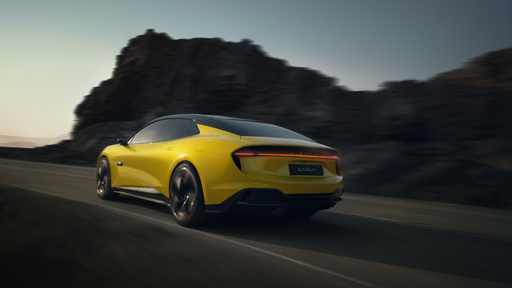
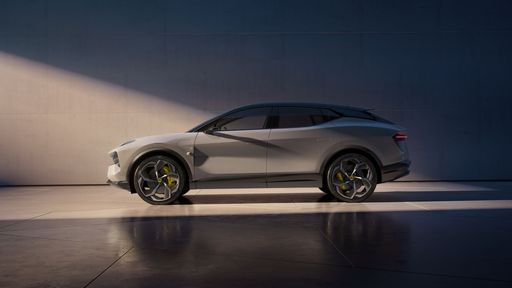
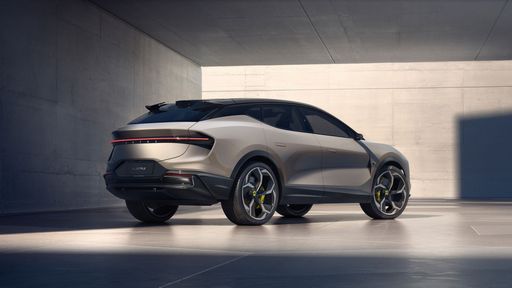
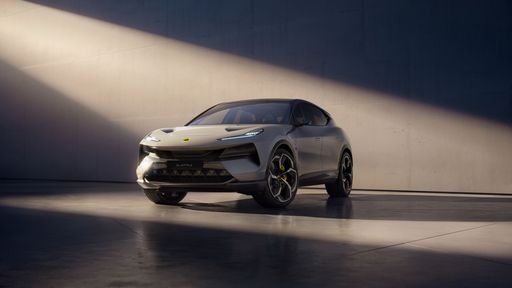
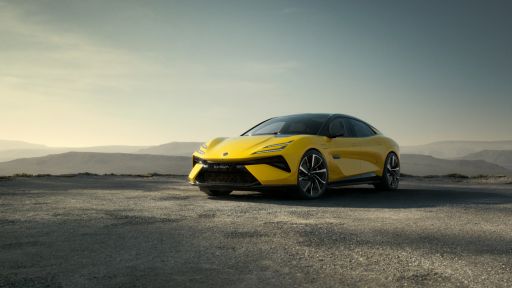
Lotus Eletre VS Lotus Emeya is the matchup between a theatrical, performance‑leaning SUV and a composed, high‑tech electric GT. The Eletre announces itself with bold styling, roomy rear seats and a chassis that masks its weight better than you’d expect, while the Emeya trades theatricality for a hushed, GT‑like presence and class‑leading charging speed. Both feel unmistakably premium inside, but they aim at different emotional notes: the Eletre wants to be seen and driven hard, the Emeya wants to eat motorway miles in silence. Read on to see which trade‑offs matter most for your use case before we dive into the numbers.
Eletre

Character and driving feel: sporty SUV versus serene GT

The Lotus Eletre drives like a big, confident SUV that still has sporting ambitions — steering is precise and the body control is unexpectedly taut for the size, so it teases-out fun on a twisting road. The Lotus Emeya, by contrast, behaves like a true electric grand tourer: supremely composed, quieter at speed and designed to erase fatigue rather than enliven you. If you want sharper steering and the sensation of momentum under your hands, the Eletre will feel more engaging; if you prefer effortless high‑speed calm and acoustic insulation, the Emeya is the one that soothes. Each car hides its mass differently: Eletre with sharper responses, Emeya with damping and refinement.

Emeya

Cabin feel and perceived quality: drama versus calm luxury

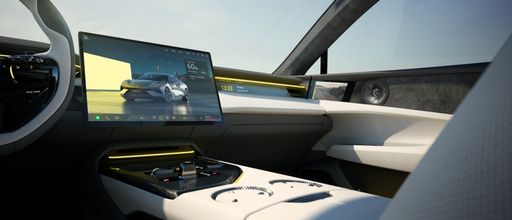
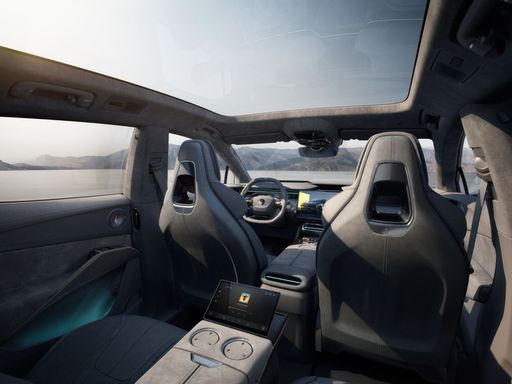
Step into the Eletre and the interior feels like theatre — dramatic shapes, tactile materials and a layout that prioritises presence and tech showmanship. The Emeya’s cabin shifts the mood toward quiet refinement: materials read a touch more classical luxury, the electronics and sound system aim to be seamless, and the overall impression is less theatrical and more grown‑up. Both cabins are high quality, but the difference matters in daily life: the Eletre makes a statement every time you open the door, while the Emeya rewards those who value composure and audiophile levels of polish. Small control ergonomics diverge too — the Eletre’s compact icons and buried menu items can be fiddly, whereas the Emeya generally feels more settled in its human interface.

Eletre

Comfort and long‑distance behavior: endurance versus assertiveness

On long drives the Emeya’s temperament is near ideal for mileage collectors — it isolates road and wind noise, so motorway miles arrive with less fatigue and with very brief charging interruptions. The Eletre covers distance confidently as well, but its suspension and ride at low speeds can feel firmer and more reactive, which becomes noticeable in town or on broken surfaces after a long stint. Charging behaviour influences real-world touring: the Emeya’s ultra‑short stops make trip planning simpler, while the Eletre’s fast charging still keeps journeys efficient but may demand a touch more attention to consumption. In practice, pick the Emeya if motorway serenity and the shortest possible downtime matter most; pick the Eletre if you want a more engaging cruiser that still handles long hauls competently.

Emeya

Practicality and city usability: boot space, seats and parking trade‑offs

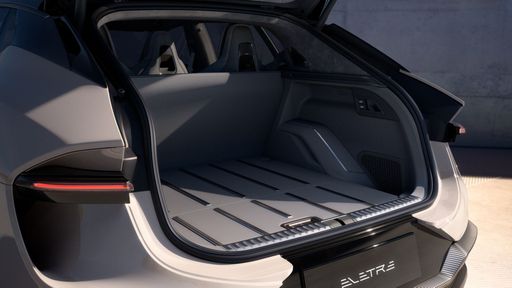
Practical differences are immediate: the Eletre’s packaging gives you a larger, more usable load bay and a helpful front trunk that keeps cables and kit organised, making it the better choice for families with frequent luggage or weekend gear. The Emeya’s liftback is clever and daily‑friendly, but its loading sill and slightly higher rear floor make bulky items trickier to stow; it still serves a family well but with a different geometry. In tight urban conditions both feel big — the Emeya’s length and the Eletre’s width demand respect — yet the Eletre’s steering precision and camera systems make manoeuvres feel more direct despite its bulk. If you park in narrow garages often, neither is effortless, but the Eletre rewards drivers who value cabin space and boot depth, while the Emeya rewards those who prioritise a more conventional trunk and easier everyday access through five doors.

Eletre

Who should buy which: clear fits and useful compromises

If your priorities are showmanship, rear‑seat comfort and a boot that swallows family kit, the Lotus Eletre will align better with that checklist — it’s for buyers who want Lotus drama without sacrificing usable space. If you live to cover long distances in quiet luxury, want the shortest possible charging interruptions and care about an exceptionally refined cabin and sound system, the Lotus Emeya is the more natural choice. Both cars come with trade‑offs: the Eletre leans into engagement at the cost of some city comfort and efficiency, while the Emeya trades a bit of sporting fizz for utter motorway composure and charging convenience. Use these fit signals to decide which set of compromises you prefer before moving on to the technical numbers and detailed spec comparison.

Here’s where it gets real: The technical differences in detail

Emeya

Costs and Efficiency:

Price and efficiency are often the first things buyers look at. Here it becomes clear which model has the long-term edge – whether at the pump, the plug, or in purchase price.

Lotus Eletre is barely cheaper – starting at 85,700 £ , while the Lotus Emeya costs 92,600 £ . That’s a price difference of around 6,857 £.

In terms of energy consumption, the Lotus Emeya is noticeably more efficient: consuming 18.7 kWh/100km compared to 22.5 kWh/100km for the Lotus Eletre. That’s a difference of about 3.8 kWh/100km.

As for electric range, the Lotus Emeya offers very slightly more range – reaching up to 580 km, about 10 km more than the Lotus Eletre.

Eletre

Engine and Performance:

Under the bonnet, it becomes clear which model is tuned for sportiness and which one takes the lead when you hit the accelerator.

Both models deliver identical power – 918 HP each.

When accelerating from 0 to 100 km/h, the Lotus Emeya is marginally quicker – completing the sprint in 2.8 s, while the Lotus Eletre takes 3 s. That’s about 0.2 s quicker.

Looking at top speed, the Lotus Eletre is barely faster – reaching 265 km/h, while the Lotus Emeya tops out at 256 km/h. The difference is around 9 km/h.

Both models offer the same torque – 985 Nm.

Emeya

Space and Everyday Use:

Cabin size, boot volume and payload all play a role in everyday practicality. Here, comfort and flexibility make the difference.

Both vehicles offer seating for 5 people.

In terms of curb weight, Lotus Emeya is marginally lighter – 2,555 kg compared to 2,565 kg. The difference is around 10 kg.

Looking at boot space, the Lotus Eletre offers visibly more boot space – 688 L compared to 509 L. That’s a difference of about 179 L.

For maximum load capacity, the Lotus Eletre offers very slightly more capacity – up to 1,532 L, about 144 L more than the Lotus Emeya.

When it comes to payload, the Lotus Emeya carries slightly more – 545 kg compared to 485 kg. That’s a difference of about 60 kg.

Who wins the race in the data check?

The Lotus Eletre is barely ahead in the objective data comparison.
This result only shows which model scores more points on paper – not which of the two cars feels right for you.

from £85,700
Eletre

Lotus Eletre

  • Engine Type : Electric
  • Transmission : Automatic
  • Drive Type : All-Wheel Drive
  • Power HP : 612 - 918 HP
  • Consumption kWh/100km : 22.5 - 28.3 kWh/100km
  • Electric Range : 450 - 570 km
Lotus Emeya
Lotus Eletre

Costs and Consumption

View detailed analysis

Engine and Performance

View detailed analysis

Dimensions and Body

View detailed analysis

Lotus Emeya

The Lotus Emeya arrives as a sleek electric grand tourer that manages to marry Lotus' trademark razor-sharp handling with enough practicality for daily life, so you can enjoy a corner with a grin and still fit the shopping. Inside it feels surprisingly grown-up — plush materials, smart tech and a driver-focused cockpit make it a tempting choice for buyers who want electric performance without losing the joy of driving.

details

Lotus Eletre

The Lotus Eletre is a bold, electric SUV that finally lets Lotus step into the luxury EV arena without losing the brand's famed focus on razor-sharp handling and driver engagement. Inside, it pairs a futuristic, tech-heavy cabin with surprising comfort and poise — think of a sports car in evening wear, ready to sprint yet polite enough for the school run.

details
Lotus Emeya
Lotus Eletre

Costs and Consumption

Price
92,600 - 138,000 £
Price
85,700 - 138,000 £
Consumption L/100km
-
Consumption L/100km
-
Consumption kWh/100km
18.7 - 22.4 kWh/100km
Consumption kWh/100km
22.5 - 28.3 kWh/100km
Electric Range
485 - 580 km
Electric Range
450 - 570 km
Battery Capacity
98.9 kWh
Battery Capacity
109 kWh
co2
0 g/km
co2
0 g/km
Fuel tank capacity
-
Fuel tank capacity
-

Dimensions and Body

Body Type
Hatchback
Body Type
SUV
Seats
5
Seats
5
Doors
5
Doors
4
Curb weight
2,555 - 2,650 kg
Curb weight
2,565 - 2,745 kg
Trunk capacity
509 L
Trunk capacity
688 L
Length
5,139 mm
Length
5,103 mm
Width
2,005 mm
Width
2,060 mm
Height
1,459 mm
Height
1,630 mm
Max trunk capacity
1,388 L
Max trunk capacity
1,532 L
Payload
450 - 545 kg
Payload
405 - 485 kg

Engine and Performance

Engine Type
Electric
Engine Type
Electric
Transmission
Automatic
Transmission
Automatic
Transmission Detail
Reduction Gearbox
Transmission Detail
Reduction Gearbox
Drive Type
All-Wheel Drive
Drive Type
All-Wheel Drive
Power HP
612 - 918 HP
Power HP
612 - 918 HP
Acceleration 0-100km/h
2.8 - 4.2 s
Acceleration 0-100km/h
3 - 4.5 s
Max Speed
250 - 256 km/h
Max Speed
258 - 265 km/h
Torque
710 - 985 Nm
Torque
710 - 985 Nm
Number of Cylinders
-
Number of Cylinders
-
Power kW
450 - 675 kW
Power kW
450 - 675 kW
Engine capacity
-
Engine capacity
-

General

Model Year
2025
Model Year
2025
CO2 Efficiency Class
A
CO2 Efficiency Class
A
Brand
Lotus
Brand
Lotus
DriveDuel uses data analysis and artificial intelligence to evaluate vehicle data and create content. Content is regularly reviewed and improved. The displayed prices are estimates based on German list prices, adjusted to the respective country’s VAT. Country-specific registration taxes are not included. This information is not legally binding.