
VS

Maxus Deliver 9 vs Renault Master Bus comparison

Compare performance (204 HP vs 180 HP), boot space and price (38,700 £ vs 36,600 £ ) at a glance. Find out which car is the better choice for you – Maxus Deliver 9 or Renault Master Bus?

Maxus Deliver 9 vs Renault Master Bus: Key differences

Maxus Deliver 9

  • a bit more power
details

Renault Master Bus

  • barely cheaper
  • barely more efficient
  • only slightly lighter
details

By Achim Sedelmaier

Deliver 9

Overview: two pragmatic approaches to moving people and goods

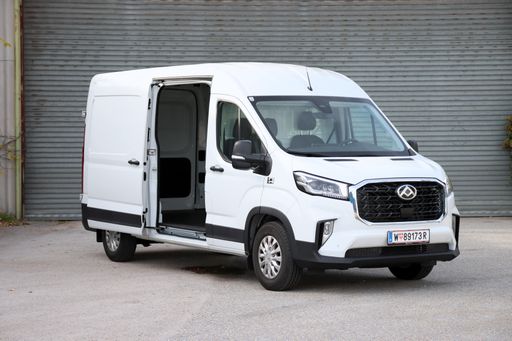
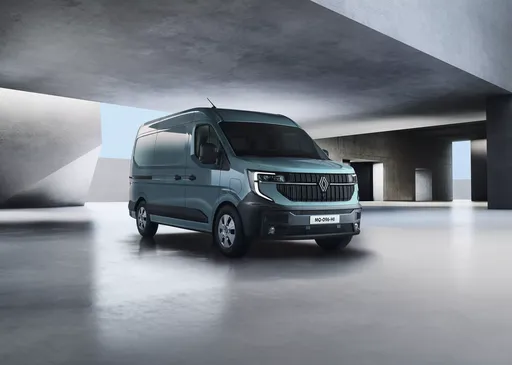
Renault Master Bus and Maxus Deliver 9 start from the same brief — dependable, work-focused transport — but they pursue very different priorities in execution. The Renault Master Bus is unmistakably a people‑mover with passenger-first ergonomics and a modern cockpit, while the Maxus Deliver 9 is built around cargo volume, simplicity and a sharp value proposition. If you search engines, you’ll often see this framed as Renault Master Bus VS Maxus Deliver 9, but the practical question for buyers is whether you need seats or cubic metres more. Each side makes trade-offs: the Master prioritises passenger comfort and safety systems, the Deliver 9 prioritises load space, warranty length and a lower entry proposition. Read on for how those choices play out in daily use and fleet life.
Master Bus

Character and driving behaviour: composed people‑mover versus workmanlike van

On the road the Renault Master Bus feels like a large van that’s been tuned for people: controlled at speed, aerodynamically quieter and with an option that is genuinely whisper‑quiet in town. The Maxus Deliver 9 drives like a classic work van — very light steering and a comfortable ride even unloaded, but its engine and gearbox are more audible and less refined on longer runs. That makes the Master the better companion for motorway shuttle duties and environments where passenger calm matters, while the Deliver 9 rewards drivers who value easy manoeuvring and a forgiving suspension in stop‑start urban work. Both are secure and stable, but the Deliver 9 trades refinement for straightforwardness; the Master trades cargo-first utility for a more cultivated passenger experience. In short: choose the Renault for composed, passenger-centred driving and the Maxus for no‑nonsense daily hustling with frequent turns and loads.

Cabin comfort and perceived quality: modern and practical versus rugged and functional

The Renault Master Bus cabin feels more contemporary with a clearer infotainment layout and abundant stowage that suits drivers who live in the vehicle during shifts. The Maxus Deliver 9 is purposefully utilitarian — robust plastics and fewer creature comforts, but ergonomically simple and easy to clean after a hard day. Seat comfort favours the Deliver 9 for everyday suspension compliance, yet the Master’s seating and dash ergonomics are geared to passenger service and offer smarter integration of tech and safety aids. If tactile quality and a neater digital experience matter, the Master edges ahead; if washability and no‑nonsense durability top your checklist, the Deliver 9 will feel right at home. Both cabins have compromises: the Master sacrifices some refinement in materials for functionality, the Deliver 9 accepts spartan fittings to keep costs and maintenance simple.

Practicality and usability: people capacity versus cargo access

Practical differences are glaring in daily routines: the Renault Master Bus is configured for passengers, with more seats, steps and options that make boarding straightforward — ideal for shuttle, school or hotel work where people come first. The Maxus Deliver 9 answers with a larger, easier‑access cargo area, wider side and rear openings and a layout designed for loading, securing and lighting the van load efficiently. That means the Master will struggle with bulky luggage when fully seated unless you specify specific build‑outs, whereas the Deliver 9 won’t, but it lacks the same passenger accommodation. Inside the cab the Master wins with plentiful cubbies and an infotainment approach that helps long shifts; the Deliver 9 keeps things minimal and functional, so think toolboxes rather than tablet holders. The trade‑off is simple: choose passenger flexibility or cargo practicality, not both in equal measure without bespoke conversions.

Running costs, servicing and fleet suitability: warranty and simplicity versus variant choice and safety kit

For fleet buyers the Maxus Deliver 9 has an immediate appeal: a competitive purchase position and a long warranty that reduces total cost of ownership anxiety, plus an engine/package that is easy to maintain. The Renault Master Bus offers a different economic argument — a broad range of drivetrains including a quieter electric option, strong safety equipment and awards that underline its efficiency credentials — which can matter for operators prioritising passenger comfort, emissions targets or resale. Service network density and interval planning shift the calculus: the Deliver 9’s sparser dealer footprint and shorter service intervals require planning, while the Master’s ecosystem and variant choice simplify matching a vehicle to a route or mandate. Fuel and acoustic trade‑offs matter in shifts: the Deliver 9 accepts a rougher, simpler powertrain in exchange for lower sticker shock, the Master accepts higher complexity for refinement and optional electrification. Both are sensible for fleets, but the right pick depends on whether you prize upfront savings and warranty certainty or variant flexibility and passenger‑centric safety features.

Buyer fit: who should pick which and why this leads naturally into the technical details

If your operation is a shuttle, school service or hotel transfer business that prioritises passenger calm, ingress/egress and safety systems, the Renault Master Bus will generally feel like the better match. If your day is couriers, tradespeople or light logistics where cubic capacity, wide doors, a low organisational cost and a long warranty matter most, the Maxus Deliver 9 is the pragmatic choice. Both models answer professional briefs, but they do so on different axes — passenger comfort and tech refinement for the Master, cargo usability and cost control for the Deliver 9 — so your mission profile should decide. The technical section that follows will unpack drivetrains, payload permutations, fuel and efficiency trade‑offs so you can translate these buyer‑fit choices into concrete spec decisions. Use that data to confirm which of these trade‑offs aligns with your routes, load types and driver expectations.

Here’s where it gets real: The technical differences in detail

Deliver 9

Costs and Efficiency:

Price and efficiency are key factors when choosing a car – and this is often where the real differences emerge.

Renault Master Bus is barely cheaper – starting at 36,600 £ , while the Maxus Deliver 9 costs 38,700 £ . That’s a price difference of around 2,162 £.

Fuel consumption also shows a difference: the Renault Master Bus uses 8.7 L/100km and is barely more efficient than the Maxus Deliver 9 with 8.8 L/100km. The difference is about 0.1 L/100km.

Master Bus

Engine and Performance:

Power, torque and acceleration are the classic benchmarks for car enthusiasts – and here, some clear differences start to show.

When it comes to engine power, the Maxus Deliver 9 offers a bit more power – delivering 204 HP compared to 180 HP. That’s roughly 24 HP more horsepower.

There’s also a difference in torque: the Renault Master Bus delivers barely more torque with 400 Nm compared to 375 Nm. That’s about 25 Nm more.

Space and Everyday Use:

Cabin size, boot volume and payload all play a role in everyday practicality. Here, comfort and flexibility make the difference.

Seats: Renault Master Bus offers more seats – 9 vs 7.

In terms of curb weight, Renault Master Bus is only slightly lighter – 2,189 kg compared to 2,360 kg. The difference is around 171 kg.

When it comes to payload, the Renault Master Bus carries very slightly more – 1,254 kg compared to 1,140 kg. That’s a difference of about 114 kg.

Who wins the race in the data check?

The Maxus Deliver 9 comes out clearly ahead in the objective data comparison.
This result only shows which model scores more points on paper – not which of the two cars feels right for you.

from £38,700
Deliver 9

Maxus Deliver 9

  • Engine Type Diesel, Electric
  • Transmission Manuel, Automatic
  • Drive Type Front-Wheel Drive
  • Power HP 148 - 204 HP
  • Consumption L/100km 8.8 L/100km
  • Consumption kWh/100km 26.2 - 30.8 kWh/100km
  • Electric Range 287 - 358 km
Maxus Deliver 9
Renault Master Bus

Costs and Consumption

View detailed analysis

Engine and Performance

View detailed analysis

Dimensions and Body

View detailed analysis

Maxus Deliver 9

The Maxus Deliver 9 is a no-nonsense cargo hauler that pairs clever practicality with a surprisingly car-like driving feel, making it a smart choice for urban fleets and weekend DIY warriors. It may not stop traffic for looks, but its roomy, sensible interior and dependable demeanour mean you get work done without the drama.

details

Renault Master Bus

The Renault Master Bus is a no-nonsense people carrier that trades flash for practicality, offering generous space for passengers and luggage with a sensible, robust feel. It’s a smart pick for buyers who want comfort and reliability over glamour — think dependable transport with a dash of French charm and a wry smile.

details
Maxus Deliver 9
Renault Master Bus

Costs and Consumption

Price
38,700 - 60,200 £
Price
36,600 - 43,200 £
Consumption L/100km
8.8 L/100km
Consumption L/100km
8.7 - 10.7 L/100km
Consumption kWh/100km
26.2 - 30.8 kWh/100km
Consumption kWh/100km
-
Electric Range
287 - 358 km
Electric Range
-
Battery Capacity
-
Battery Capacity
-
co2
0 - 231 g/km
co2
227 - 280 g/km
Fuel tank capacity
-
Fuel tank capacity
105 L

Dimensions and Body

Body Type
Cargo Van
Body Type
Bus
Seats
3 - 7
Seats
6 - 9
Doors
-
Doors
4
Curb weight
2,360 - 2,770 kg
Curb weight
2,189 - 2,361 kg
Trunk capacity
-
Trunk capacity
-
Length
-
Length
5,075 - 5,575 mm
Width
2,062 mm
Width
2,070 mm
Height
-
Height
2,290 - 2,486 mm
Max trunk capacity
-
Max trunk capacity
2,840 - 4,840 L
Payload
730 - 1,140 kg
Payload
939 - 1,254 kg

Engine and Performance

Engine Type
Diesel, Electric
Engine Type
Diesel
Transmission
Manuel, Automatic
Transmission
Manuel, Automatic
Transmission Detail
Manual Gearbox, Reduction Gearbox
Transmission Detail
Manual Gearbox, Automated Manual
Drive Type
Front-Wheel Drive
Drive Type
Front-Wheel Drive
Power HP
148 - 204 HP
Power HP
135 - 180 HP
Acceleration 0-100km/h
16 - 19 s
Acceleration 0-100km/h
-
Max Speed
-
Max Speed
150 - 165 km/h
Torque
330 - 375 Nm
Torque
360 - 400 Nm
Number of Cylinders
4
Number of Cylinders
4
Power kW
108 - 150 kW
Power kW
99 - 132 kW
Engine capacity
1,996 cm3
Engine capacity
2,299 cm3

General

Model Year
2,022 - 2,024
Model Year
2023
CO2 Efficiency Class
G, A
CO2 Efficiency Class
G
Brand
Maxus
Brand
Renault
DriveDuel uses data analysis and artificial intelligence to evaluate vehicle data and create content. Content is regularly reviewed and improved. The displayed prices are estimates based on German list prices, adjusted to the respective country’s VAT. Country-specific registration taxes are not included. This information is not legally binding.








