
 Deutschland
 France
 Nederland
 Great Britain
 Sverige
 Danmark
 Suomi
Suomi Italia
 Polska
 Česko
Česko España
VS
McLaren GT Series vs Hyundai IONIQ 9 comparison
Compare performance (635 HP vs 428 HP), boot space and price (175,700 £ vs 58,700 £ ) at a glance. Find out which car is the better choice for you – McLaren GT Series or Hyundai IONIQ 9?
McLaren GT Series vs Hyundai IONIQ 9: Key differences
GT Series
Costs and Efficiency:
Price and efficiency are often the first things buyers look at. Here it becomes clear which model has the long-term edge – whether at the pump, the plug, or in purchase price.
Hyundai IONIQ 9 is substantially cheaper – starting at 58,700 £ , while the McLaren GT Series costs 175,700 £ . That’s a price difference of around 117,000 £.
IONIQ 9
Engine and Performance:
Power, torque and acceleration are the classic benchmarks for car enthusiasts – and here, some clear differences start to show.
When it comes to engine power, the McLaren GT Series offers noticeably more power – delivering 635 HP compared to 428 HP. That’s roughly 207 HP more horsepower.
When accelerating from 0 to 100 km/h, the McLaren GT Series is substantially quicker – completing the sprint in 3.2 s, while the Hyundai IONIQ 9 takes 5.2 s. That’s about 2 s quicker.
There’s also a difference in torque: the Hyundai IONIQ 9 delivers only slightly more torque with 700 Nm compared to 630 Nm. That’s about 70 Nm more.
Space and Everyday Use:
Whether family car or daily driver – which one offers more room, flexibility and comfort?
Seats: Hyundai IONIQ 9 offers more seats – 7 vs 2.
In terms of curb weight, McLaren GT Series is clearly lighter – 1,520 kg compared to 2,594 kg. The difference is around 1,074 kg.
Looking at boot space, the McLaren GT Series offers moderately more boot space – 420 L compared to 338 L. That’s a difference of about 82 L.
Who wins the race in the data check?
The Hyundai IONIQ 9 holds a decisive overall lead in the objective data comparison.
This result only shows which model scores more points on paper – not which of the two cars feels right for you.
from £58,700
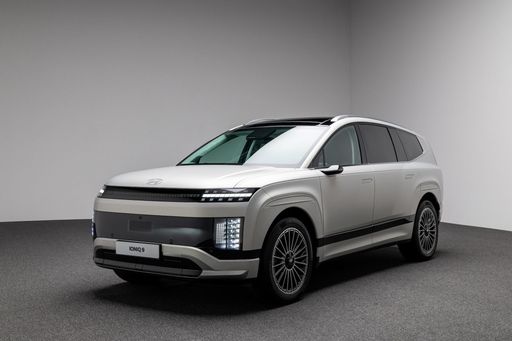
Hyundai IONIQ 9
McLaren GT Series
Hyundai IONIQ 9
Costs and Consumption
View detailed analysis
View detailed analysis
Engine and Performance
View detailed analysis
View detailed analysis
Dimensions and Body
View detailed analysis
View detailed analysis
McLaren GT Series
The McLaren GT takes the supercar blueprint and stretches it into a grand tourer, marrying thrilling pace with genuine long-distance comfort and a cabin that’s actually liveable. If you crave weekend escape capability without surrendering driver engagement, this is the car to consider — though it does attract a fair share of admiring glances.
details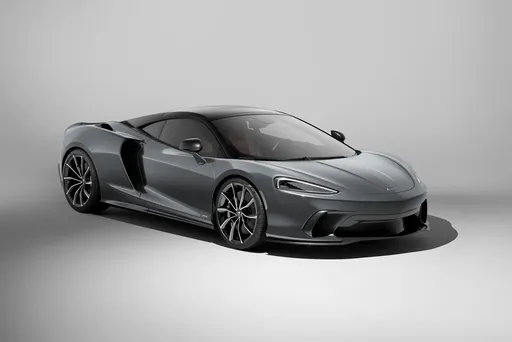
Hyundai IONIQ 9
The Hyundai IONIQ 9 is a bold step forward in the automotive world, combining cutting-edge electric technology with a sleek and modern design. This model stands out with its spacious interior and advanced features, ensuring both comfort and convenience for drivers and passengers alike. As Hyundai pushes the envelope in eco-friendly innovation, the IONIQ 9 represents the future of sustainable driving with its impressive range and performance capabilities.
details
McLaren GT Series
Hyundai IONIQ 9
Costs and Consumption |
|
|---|---|
|
Price
175,700 £
|
Price
58,700 - 74,400 £
|
|
Consumption L/100km
11.9 L/100km
|
Consumption L/100km
-
|
|
Consumption kWh/100km
-
|
Consumption kWh/100km
19.9 - 20.6 kWh/100km
|
|
Electric Range
-
|
Electric Range
600 - 620 km
|
|
Battery Capacity
-
|
Battery Capacity
-
|
|
co2
270 g/km
|
co2
0 g/km
|
|
Fuel tank capacity
-
|
Fuel tank capacity
-
|
Dimensions and Body |
|
|---|---|
|
Body Type
Coupe
|
Body Type
SUV
|
|
Seats
2
|
Seats
7
|
|
Doors
-
|
Doors
-
|
|
Curb weight
1,520 kg
|
Curb weight
2,594 - 2,689 kg
|
|
Trunk capacity
420 L
|
Trunk capacity
338 L
|
|
Length
-
|
Length
-
|
|
Width
2,045 mm
|
Width
1,980 mm
|
|
Height
-
|
Height
-
|
|
Max trunk capacity
-
|
Max trunk capacity
-
|
|
Payload
-
|
Payload
586 - 643 kg
|
Engine and Performance |
|
|---|---|
|
Engine Type
Petrol
|
Engine Type
Electric
|
|
Transmission
Automatic
|
Transmission
Automatic
|
|
Transmission Detail
Dual-Clutch Automatic
|
Transmission Detail
Reduction Gearbox
|
|
Drive Type
Rear-Wheel Drive
|
Drive Type
Rear-Wheel Drive, All-Wheel Drive
|
|
Power HP
635 HP
|
Power HP
218 - 428 HP
|
|
Acceleration 0-100km/h
3.2 s
|
Acceleration 0-100km/h
5.2 - 9.4 s
|
|
Max Speed
-
|
Max Speed
-
|
|
Torque
630 Nm
|
Torque
350 - 700 Nm
|
|
Number of Cylinders
8
|
Number of Cylinders
-
|
|
Power kW
467 kW
|
Power kW
160 - 315 kW
|
|
Engine capacity
3,994 cm3
|
Engine capacity
-
|
General |
|
|---|---|
|
Model Year
2023
|
Model Year
2025
|
|
CO2 Efficiency Class
G
|
CO2 Efficiency Class
A
|
|
Brand
McLaren
|
Brand
Hyundai
|
DriveDuel uses data analysis and artificial intelligence to evaluate vehicle data and create content. Content is regularly reviewed and improved.
The displayed prices are estimates based on German list prices, adjusted to the respective country’s VAT. Country-specific registration taxes are not included. This information is not legally binding.