VS

Mercedes A Class vs Mercedes B Class comparison

Compare performance (421 HP vs 238 HP), boot space and price (32,600 £ vs 33,100 £ ) at a glance. Find out which car is the better choice for you – Mercedes A Class or Mercedes B Class?

Mercedes A Class vs Mercedes B Class: Key differences

Mercedes A Class

2.7 (1 Reviews)
rate
  • barely cheaper
  • significantly more power
  • clearly more efficient
  • substantially quicker 0–100 km/h
details

Mercedes B Class

4.9 (5 Reviews)
rate
  • marginally lighter
  • noticeably more trunk space
details

All details on performance, efficiency, range and trunk space can be found in the technical comparison below – including user reviews for both models.

By Achim Sedelmaier

A Class

Head-to-head overview: Mercedes A Class VS Mercedes B Class

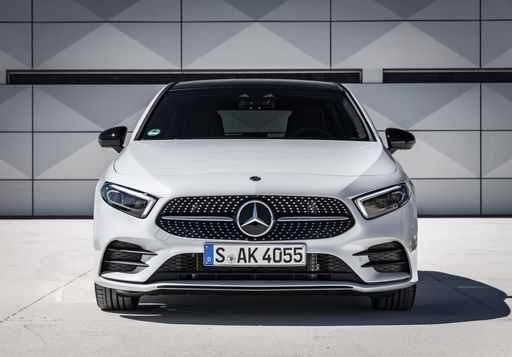
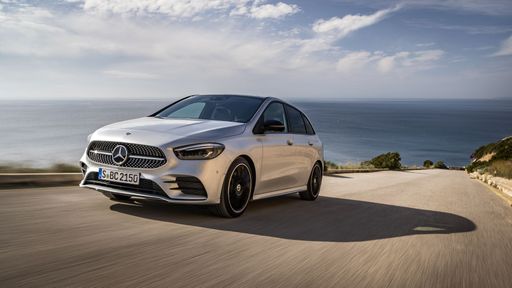
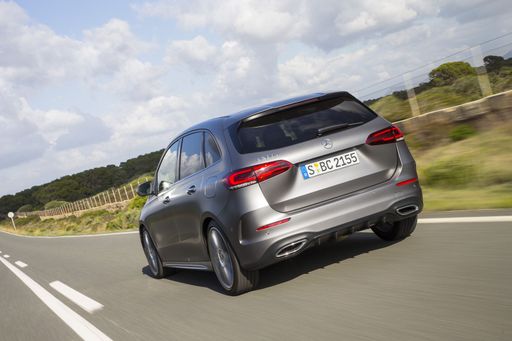
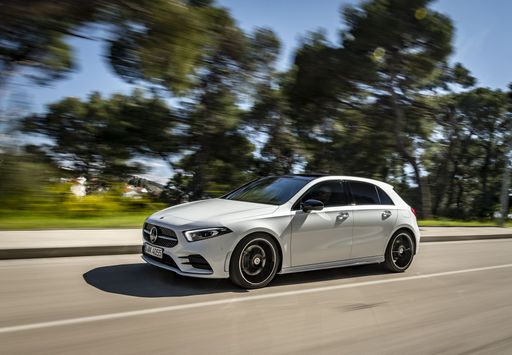
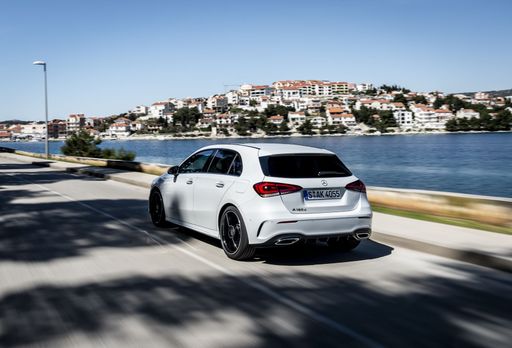
Mercedes A Class VS Mercedes B Class sets the stage for a straight-up comparison between a compact hatch with sporty intent and a taller, more practical hatchback aimed at families. This piece teases the real-world differences that matter beyond brochures — how the cars feel, who they’re designed to please, and how they behave day to day. The Mercedes A Class shows off a sharper silhouette and tighter road manners, while the Mercedes B Class markets itself on space, ease of use and a roomier personality. Read on if you want a practical steer toward which model suits your life rather than a numbers-only verdict.
B Class

Character clash: sportscar poise or sensible calm?

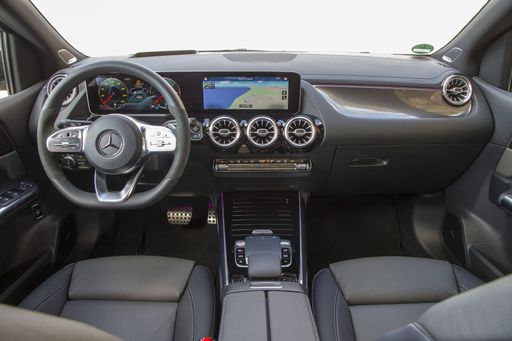
The Mercedes A Class feels like the younger sibling that wears big sunglasses — tauter suspension, cockpit-forward styling and a cabin that flirts with premium sportiness. The Mercedes B Class arrives as the sensible one: taller, more upright, with an emphasis on comfortable posture and simple usability rather than drama. In town the A Class projects attitude and agility, while the B Class trades some of that sharpness for a composed, less fussy ride that prioritises occupants over image. If personality matters as much as practicality, these two wear their intentions on their sleeves.

A Class

How they behave in everyday life

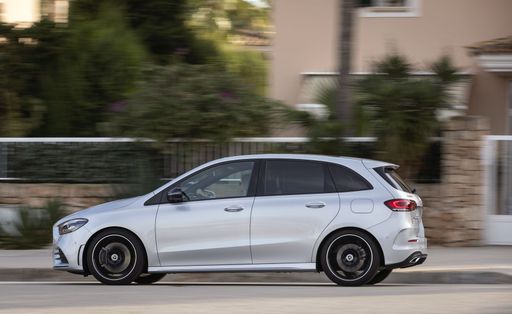
For tight city streets and parking garages the Mercedes A Class feels nimbler and more engaging — it’s happier being hustled through traffic and makes small-vehicle driving fun. The Mercedes B Class comes into its own when you need usable space: easier rear-seat access, a higher seating position and a more forgiving cabin make the school run and grocery hauls less stressful. On longer drives the A Class rewards the driver who wants a connected, driver-focused environment, whereas the B Class soaks up long hours with predictable comfort and a practical layout. Both are Mercedes inside and out, but they channel comfort and agility in different directions.

B Class

Buying for image, utility or both?

Choose the Mercedes A Class if you want a car that communicates style and modern tech to anyone who glances your way — it’s a statement hatch, compact but with a premium vibe. Opt for the Mercedes B Class if your priorities tilt toward family-friendly convenience, easy ingress/egress and furniture-friendly luggage space. The A Class makes more sense for buyers who enjoy steering feedback and a cabin that feels intentionally crafted; the B Class is for those who prefer straightforward ergonomics and a calmer, less fussy daily companion. Neither is a wrong choice — they simply serve different motivations.

A Class

Who should pick the Mercedes A Class?

If you’re image-conscious and a little tech-curious, the Mercedes A Class is the one that’s likely to click with you: it suits drivers who value a sporty feel, stylish interior touches and a more dynamic on-road demeanour. Young professionals and urban drivers who want a compact car that looks the part and offers a connected cabin will find it particularly appealing. It’s also a smart choice for commuters who enjoy a sharper steering feel and prefer a cabin that feels curated rather than utilitarian. In short, the A Class is for buyers who put design and driver engagement near the top of their checklist.

B Class

Who should pick the Mercedes B Class (and where the A Class still tempts)

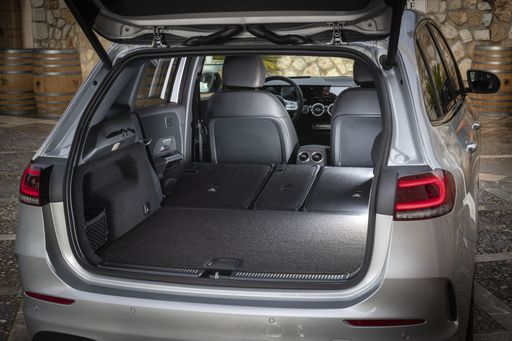
The Mercedes B Class is built for people who prioritise space, comfort and everyday practicality — think parents, multi-tasking households and anyone who often hauls people or goods. It rewards pragmatic buyers with easier access, a relaxed seating position and a no-nonsense interior layout that makes life simpler day to day; meanwhile the Mercedes A Class still tempts those who want a sportier image or a more driver-focused cabin. If predictability, comfort and low-stress usability top your list, the B Class is the smarter fit, but don’t ignore the A Class if you crave sharper character. Scroll down to the detailed breakdown below to see exactly where the trade-offs land.

Here’s where it gets real: The technical differences in detail

A Class

Costs and Efficiency:

When it comes to price and running costs, the biggest differences usually appear. This is often where you see which car fits your budget better in the long run.

Mercedes A Class is barely cheaper – starting at 32,600 £ , while the Mercedes B Class costs 33,100 £ . That’s a price difference of around 561 £.

Fuel consumption also shows a difference: the Mercedes A Class uses 2.3 L/100km and is clearly more efficient than the Mercedes B Class with 5.1 L/100km. The difference is about 2.8 L/100km.

B Class

Engine and Performance:

Under the bonnet, it becomes clear which model is tuned for sportiness and which one takes the lead when you hit the accelerator.

When it comes to engine power, the Mercedes A Class offers significantly more power – delivering 421 HP compared to 238 HP. That’s roughly 183 HP more horsepower.

When accelerating from 0 to 100 km/h, the Mercedes A Class is substantially quicker – completing the sprint in 3.9 s, while the Mercedes B Class takes 6.5 s. That’s about 2.6 s quicker.

There’s also a difference in torque: the Mercedes A Class delivers moderately more torque with 500 Nm compared to 400 Nm. That’s about 100 Nm more.

A Class

Space and Everyday Use:

Whether family car or daily driver – which one offers more room, flexibility and comfort?

Both vehicles offer seating for 5 people.

In terms of curb weight, Mercedes B Class is marginally lighter – 1,405 kg compared to 1,440 kg. The difference is around 35 kg.

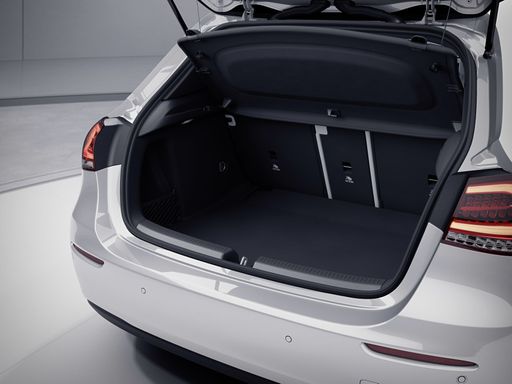
Looking at boot space, the Mercedes B Class offers noticeably more boot space – 455 L compared to 350 L. That’s a difference of about 105 L.

When it comes to payload, the Mercedes B Class carries somewhat more – 550 kg compared to 485 kg. That’s a difference of about 65 kg.

Who wins the race in the data check?

The Mercedes A Class is clearly superior overall in the objective data comparison.
This result only shows which model scores more points on paper – not which of the two cars feels right for you.

from £32,600
A Class

Mercedes A Class

  • Engine Type : Petrol MHEV, Diesel, Plugin Hybrid, Petrol
  • Transmission : Automatic
  • Drive Type : Front-Wheel Drive, All-Wheel Drive
  • Power HP : 116 - 421 HP
  • Consumption L/100km : 2.3 - 9 L/100km
  • Electric Range : 85 km
Mercedes A Class
Mercedes B Class

Costs and Consumption

View detailed analysis

Engine and Performance

View detailed analysis

Dimensions and Body

View detailed analysis

Mercedes A Class

The Mercedes A‑Class arrives as a compact charmer that dresses premium materials and a cockpit full of screens in a tidy, city-friendly package, delivering surprising agility and poise. For buyers who want a luxury badge, clever tech and a car that's equally happy in tight streets or on a spirited country run, the A‑Class offers a grown-up feel with a cheeky streak.

details

Mercedes B Class

The Mercedes B-Class is a smart, grown-up compact people carrier that dresses everyday practicality in a near‑premium polish, perfect for buyers who want comfort and a classy badge without the theatrics. It won’t set your pulse racing on a back road, but it will make school runs, commutes and grocery hauls feel pleasantly civilized — a reliable, slightly posh companion for real life.

details
Mercedes A Class
Mercedes B Class

Costs and Consumption

Price
32,600 - 66,500 £
Price
33,100 - 52,500 £
Consumption L/100km
2.3 - 9 L/100km
Consumption L/100km
5.1 - 6.9 L/100km
Consumption kWh/100km
-
Consumption kWh/100km
-
Electric Range
85 km
Electric Range
-
Battery Capacity
-
Battery Capacity
-
co2
53 - 205 g/km
co2
133 - 156 g/km
Fuel tank capacity
-
Fuel tank capacity
-

Dimensions and Body

Body Type
Hatchback
Body Type
MPV
Seats
5
Seats
5
Doors
-
Doors
-
Curb weight
1,440 - 1,695 kg
Curb weight
1,405 - 1,565 kg
Trunk capacity
310 - 350 L
Trunk capacity
445 - 455 L
Length
-
Length
-
Width
1,796 - 1,850 mm
Width
1,796 mm
Height
-
Height
-
Max trunk capacity
-
Max trunk capacity
-
Payload
450 - 485 kg
Payload
515 - 550 kg

Engine and Performance

Engine Type
Petrol MHEV, Diesel, Plugin Hybrid, Petrol
Engine Type
Petrol MHEV, Diesel
Transmission
Automatic
Transmission
Automatic
Transmission Detail
Dual-Clutch Automatic
Transmission Detail
Dual-Clutch Automatic
Drive Type
Front-Wheel Drive, All-Wheel Drive
Drive Type
Front-Wheel Drive, All-Wheel Drive
Power HP
116 - 421 HP
Power HP
116 - 238 HP
Acceleration 0-100km/h
3.9 - 9.7 s
Acceleration 0-100km/h
6.5 - 10 s
Max Speed
-
Max Speed
-
Torque
200 - 500 Nm
Torque
200 - 400 Nm
Number of Cylinders
4
Number of Cylinders
4
Power kW
85 - 310 kW
Power kW
85 - 175 kW
Engine capacity
1,332 - 1,991 cm3
Engine capacity
1,332 - 1,991 cm3

General

Model Year
2025
Model Year
2025
CO2 Efficiency Class
D, E, B, G
CO2 Efficiency Class
D, E, F
Brand
Mercedes-Benz
Brand
Mercedes-Benz
DriveDuel uses data analysis and artificial intelligence to evaluate vehicle data and create content. Content is regularly reviewed and improved. The displayed prices are estimates based on German list prices, adjusted to the respective country’s VAT. Country-specific registration taxes are not included. This information is not legally binding.