VS

Mercedes B Class vs Volvo XC40 comparison

Compare performance (238 HP vs 197 HP), boot space and price (33,100 £ vs 41,900 £ ) at a glance. Find out which car is the better choice for you – Mercedes B Class or Volvo XC40?

Mercedes B Class vs Volvo XC40: Key differences

Mercedes B Class

4.9 (5 Reviews)
rate
  • clearly cheaper
  • slightly more power
  • noticeably more efficient
  • a bit quicker 0–100 km/h
  • markedly lighter
details

Volvo XC40

5 (6 Reviews)
rate
details

All details on performance, efficiency, range and trunk space can be found in the technical comparison below – including user reviews for both models.

By Achim Sedelmaier

B Class

Comparing the Mercedes B-Klasse and Volvo XC40: Which Compact Front-Runner Takes the Lead?

In the realm of compact cars, both the Mercedes B-Klasse and Volvo XC40 stand as prominent contenders. While one strikes as an epitome of versatility, the other captivates with sophistication. Here, we delve into the technical specs, innovations, and overall performance of these compact powerhouses, helping you make a decision tailored to your needs.
XC40

Design and Dimensions: Compact Luxury Meets Swedish Simplicity

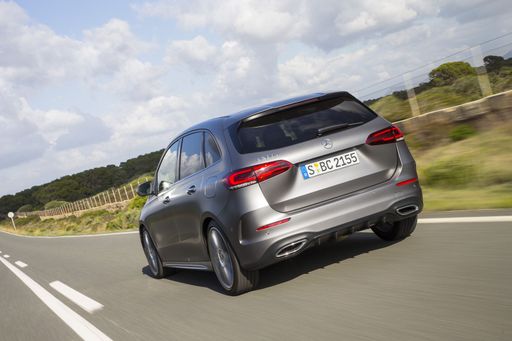
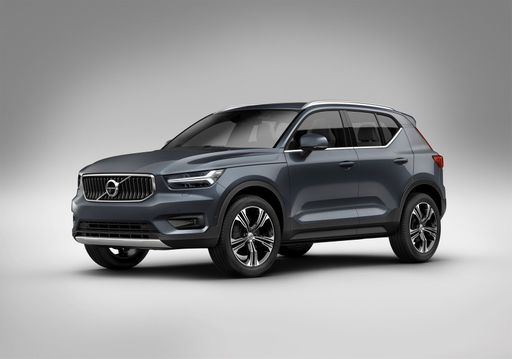
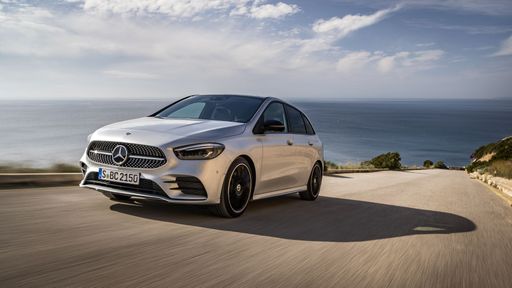
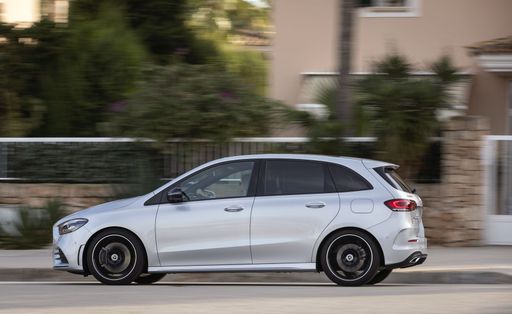
The Mercedes B-Klasse, designed as an MPV (Multi-Purpose Vehicle), flaunts a compact yet elegant design with a length of 4419 mm, width of 1796 mm, and a height of 1562 mm. Contrastingly, the Volvo XC40, an SUV, boasts Scandinavian simplicity with a slightly larger stature: 4425 mm in length, 1863 mm in width, and 1652 mm in height. Both models house five doors, maintaining practicality without compromising on style.

B Class

Engine and Performance: Power and Efficiency

The B-Klasse offers a versatile range of engines including Petrol Mild Hybrid Electric Vehicles (MHEV), Diesel, and Plugin Hybrid. It spans a power range of 116 to 238 HP with consumption figures ranging from a mere 0.8 L/100km in hybrid mode to 7.1 L/100km. Its electric variant offers an impressive electric range of 83 km, supported by a 12.9 kWh battery. Torque varies between 200 and 450 Nm, with a robust acceleration of up to 6.5 seconds to reach 100 km/h.

The XC40 predominantly offers petrol MHEV with power outputs between 163 and 197 HP and maintains an efficient consumption of 6.5 L/100km. Its acceleration performance is commendable, reaching 100 km/h in as little as 7.6 seconds, with a maximum speed capped at 180 km/h, thanks to its torque spanning between 265 and 300 Nm.

XC40

Transmission and Drivetrain: Flexible and Responsive

Both models utilize a dual-clutch automatic transmission, with the B-Klasse offering flexibility with either front-wheel or all-wheel drive, unlike the XC40, which sticks to a front-wheel-drive system. This difference of choice grants the B-Klasse an edge in terms of driving adaptability.

B Class

Environmental Footprint: Efficiency at Its Core

When examining CO2 emissions, the B-Klasse presents a range from 18 to 160 g/km, reflecting its adaptability with hybrid options. The XC40, while limited to MHEV, records emissions at 147 to 148 g/km. The B-Klasse also showcases a broader spectrum of CO2 efficiency classes, ranging from B to F, compared to the XC40's class E rating.

XC40

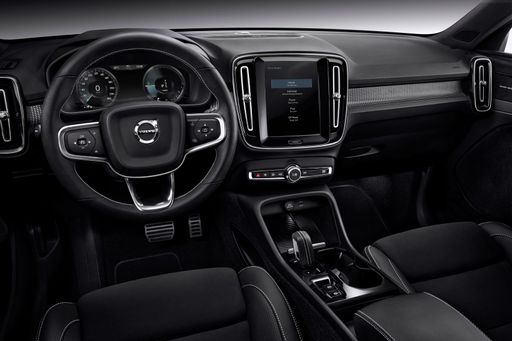
Sophisticated Interiors and Practicality

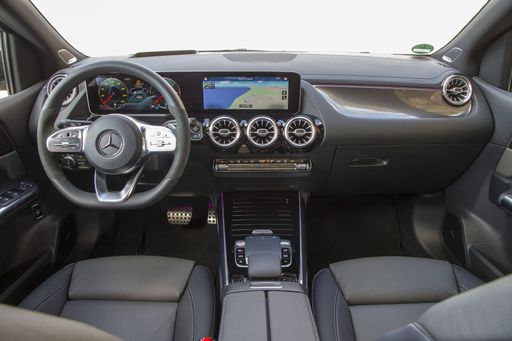
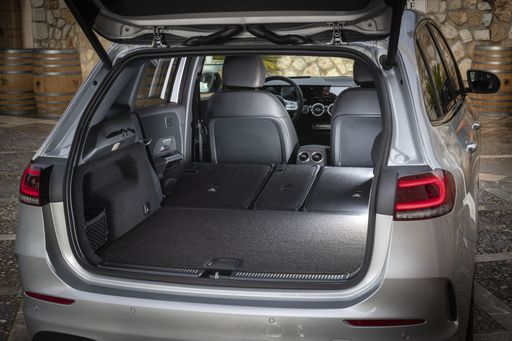
Both the Mercedes B-Klasse and Volvo XC40 offer spacious interiors with seating for five. The B-Klasse boasts a trunk capacity ranging from 405 to 455 liters, while the XC40 offers a marginally smaller trunk space of 452 liters. Payload potentials also favor the B-Klasse with up to 550 kg capacity compared to the XC40's 532 kg.

B Class

Conclusion: Versatility versus Style

The ultimate choice between the Mercedes B-Klasse and Volvo XC40 hinges on personal preference. If versatility, extended electric range, and driving adaptability are priorities, the B-Klasse earns the spotlight. In contrast, if Swedish elegance with consistent performance without hybrid complexity is more your lane, the XC40 shines as a compelling choice. In the end, both vehicles offer compelling narratives in their ways, ready to cater to diverse automotive tastes.

Here’s where it gets real: The technical differences in detail

B Class

Costs and Efficiency:

Price and efficiency are key factors when choosing a car – and this is often where the real differences emerge.

Mercedes B Class is clearly cheaper – starting at 33,100 £ , while the Volvo XC40 costs 41,900 £ . That’s a price difference of around 8,776 £.

Fuel consumption also shows a difference: the Mercedes B Class uses 5.1 L/100km and is noticeably more efficient than the Volvo XC40 with 6.5 L/100km. The difference is about 1.4 L/100km.

XC40

Engine and Performance:

Under the bonnet, it becomes clear which model is tuned for sportiness and which one takes the lead when you hit the accelerator.

When it comes to engine power, the Mercedes B Class offers slightly more power – delivering 238 HP compared to 197 HP. That’s roughly 41 HP more horsepower.

When accelerating from 0 to 100 km/h, the Mercedes B Class is a bit quicker – completing the sprint in 6.5 s, while the Volvo XC40 takes 7.6 s. That’s about 1.1 s quicker.

There’s also a difference in torque: the Mercedes B Class delivers markedly more torque with 400 Nm compared to 300 Nm. That’s about 100 Nm more.

B Class

Space and Everyday Use:

Cabin size, boot volume and payload all play a role in everyday practicality. Here, comfort and flexibility make the difference.

Both vehicles offer seating for 5 people.

In terms of curb weight, Mercedes B Class is markedly lighter – 1,405 kg compared to 1,688 kg. The difference is around 283 kg.

When it comes to payload, the Mercedes B Class carries barely more – 550 kg compared to 532 kg. That’s a difference of about 18 kg.

Who wins the race in the data check?

The Mercedes B Class holds a decisive overall lead in the objective data comparison.
This result only shows which model scores more points on paper – not which of the two cars feels right for you.

from £33,100
B Class

Mercedes B Class

  • Engine Type Petrol MHEV, Diesel
  • Transmission Automatic
  • Drive Type Front-Wheel Drive, All-Wheel Drive
  • Power HP 116 - 238 HP
  • Consumption L/100km 5.1 - 6.9 L/100km
Mercedes B Class
Volvo XC40

Costs and Consumption

View detailed analysis

Engine and Performance

View detailed analysis

Dimensions and Body

View detailed analysis

Mercedes B Class

The Mercedes B-Class is a smart, grown-up compact people carrier that dresses everyday practicality in a near‑premium polish, perfect for buyers who want comfort and a classy badge without the theatrics. It won’t set your pulse racing on a back road, but it will make school runs, commutes and grocery hauls feel pleasantly civilized — a reliable, slightly posh companion for real life.

details

Volvo XC40

The Volvo XC40 blends Scandinavian design with practical versatility, offering a compact luxury crossover that feels composed and easy to live with. It’s refined and focused on safety with a high-quality interior, making it a smart choice for daily city driving and weekend escapes.

details
Mercedes B Class
Volvo XC40

Costs and Consumption

Price
33,100 - 52,500 £
Price
41,900 - 46,100 £
Consumption L/100km
5.1 - 6.9 L/100km
Consumption L/100km
6.5 L/100km
Consumption kWh/100km
-
Consumption kWh/100km
-
Electric Range
-
Electric Range
-
Battery Capacity
-
Battery Capacity
-
co2
133 - 156 g/km
co2
148 g/km
Fuel tank capacity
-
Fuel tank capacity
-

Dimensions and Body

Body Type
MPV
Body Type
SUV
Seats
5
Seats
5
Doors
-
Doors
-
Curb weight
1,405 - 1,565 kg
Curb weight
1,688 kg
Trunk capacity
445 - 455 L
Trunk capacity
-
Length
-
Length
-
Width
1,796 mm
Width
1,863 mm
Height
-
Height
-
Max trunk capacity
-
Max trunk capacity
-
Payload
515 - 550 kg
Payload
532 kg

Engine and Performance

Engine Type
Petrol MHEV, Diesel
Engine Type
Petrol MHEV
Transmission
Automatic
Transmission
Automatic
Transmission Detail
Dual-Clutch Automatic
Transmission Detail
Dual-Clutch Automatic
Drive Type
Front-Wheel Drive, All-Wheel Drive
Drive Type
Front-Wheel Drive
Power HP
116 - 238 HP
Power HP
163 - 197 HP
Acceleration 0-100km/h
6.5 - 10 s
Acceleration 0-100km/h
7.6 - 8.6 s
Max Speed
-
Max Speed
-
Torque
200 - 400 Nm
Torque
265 - 300 Nm
Number of Cylinders
4
Number of Cylinders
4
Power kW
85 - 175 kW
Power kW
120 - 145 kW
Engine capacity
1,332 - 1,991 cm3
Engine capacity
1,969 cm3

General

Model Year
2025
Model Year
2026
CO2 Efficiency Class
D, E, F
CO2 Efficiency Class
E
Brand
Mercedes-Benz
Brand
Volvo
DriveDuel uses data analysis and artificial intelligence to evaluate vehicle data and create content. Content is regularly reviewed and improved. The displayed prices are estimates based on German list prices, adjusted to the respective country’s VAT. Country-specific registration taxes are not included. This information is not legally binding.