@ Mercedes-Benz Group Media
@ Dr. Ing. h.c. F. Porsche AG
VS

Mercedes AMG GT vs Porsche Panamera – Which one offers the better deal?

Two cars, one duel: Mercedes AMG GT meets Porsche Panamera.
Which one wins in performance, efficiency and value for money? Find out now!

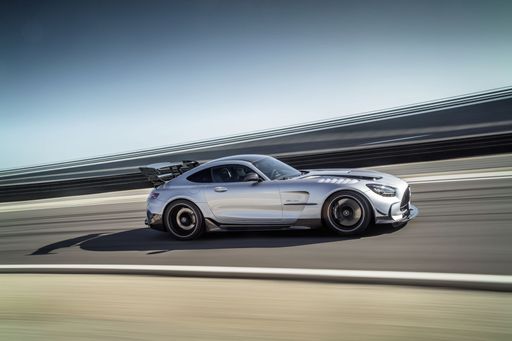
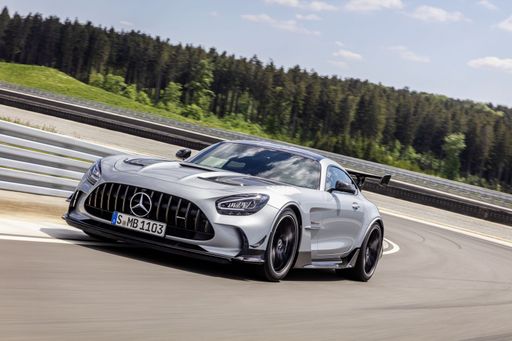
AMG GT @ Mercedes-Benz Group Media

Performance Battle: Mercedes AMG GT vs Porsche Panamera

In the world of high-performance luxury cars, two titans often come face to face: the Mercedes AMG GT and the Porsche Panamera. Both herald from legendary German manufacturers, boasting a rich heritage of racing pedigree and state-of-the-art engineering. But how do they stack up against each other? Let's dive into their technical aspects, innovations, and unique charms.
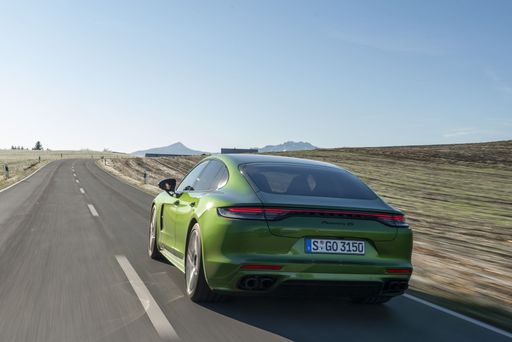
Panamera @ Dr. Ing. h.c. F. Porsche AG

Engine and Performance

The powertrains of these formidable machines are marvels of modern automotive engineering. The Mercedes AMG GT offers a selection of engines, ranging from a 2.0-liter inline-four in its entry-level models to a roaring 4.0-liter V8 in its top trims, with a maximum output of 816 HP. Tasked with channeling this power is an automatic gearbox, efficiently distributing it to either rear-wheel or all-wheel drive configurations. This translates to a thrilling acceleration, taking merely 2.8 seconds to sprint from 0-100 km/h in its fastest guise.

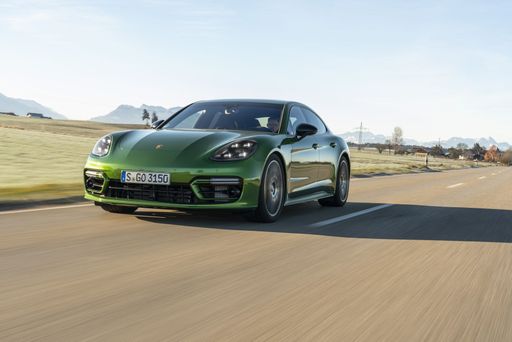
Similarly, the Porsche Panamera stands tall with a diverse engine lineup, including both petrol and plug-in hybrid options. The upper echelon of Panamera's offerings includes a robust V8 lump, delivering up to 782 HP, paired with a dual-clutch automatic transmission. This grants the Panamera a scintillating 0-100 km/h time of just 2.9 seconds and reaching speeds up to 325 km/h in its most extreme form.

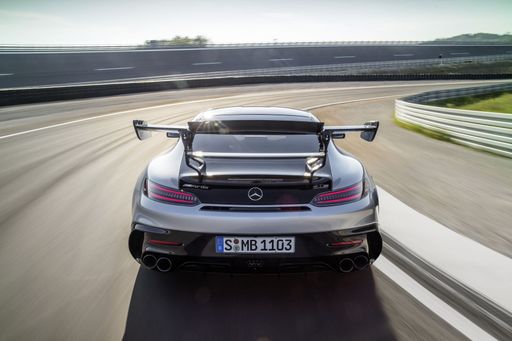
AMG GT @ Mercedes-Benz Group Media

Fuel Efficiency and Range

Given the merging focus on performance and sustainability, it's essential to consider efficiency. The AMG GT's hybrid model manages a consumption of 8.2 L/100km and an electric range of 13 km, intriguing for its segment but not revolutionary. Conversely, the Panamera shines with its plug-in hybrid's superior range, allowing up to 92 km on electric power alone and a frugal 1.0 L/100km fuel consumption, underscoring its efficiency prowess.

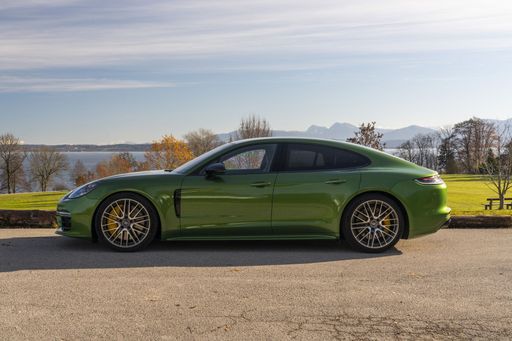
Panamera @ Dr. Ing. h.c. F. Porsche AG

Dimensions and Practicality

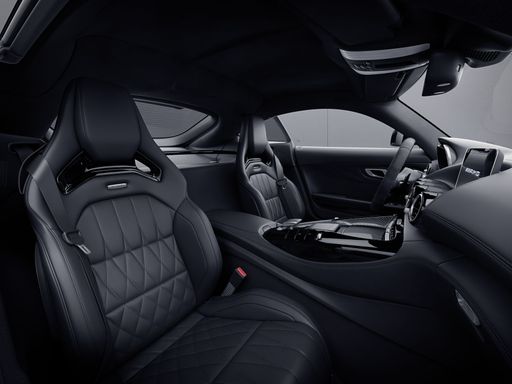
While both luxury cars promise opulence, they cater to different needs. The AMG GT is a sports coupe at heart, with a sleek 2-door setup. Its compact form, stretching 4728 mm in length, accommodates only two passengers — a pure sports car through and through.

In contrast, the Porsche Panamera exudes luxury grand tourer vibes. It’s significantly longer, with some models extending beyond 5200 mm, offering a generous cabin for four occupants through its 5-door hatchback configuration. The trunk capacity of up to 494 liters further underscores its practicality compared to the AMG GT's 321-liter maximum capacity.

AMG GT @ Mercedes-Benz Group Media

Technical Innovations

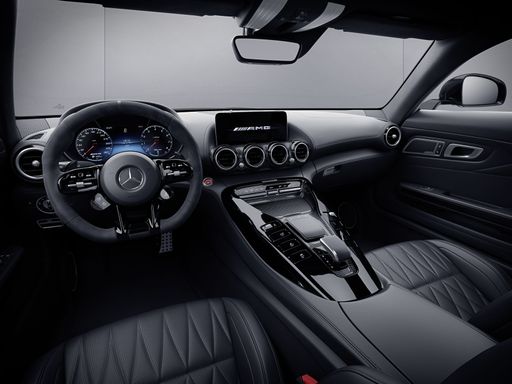
The Mercedes AMG GT showcases cutting-edge technology with its advanced driving aids and dynamic select control, allowing drivers to seamlessly shift between comfort, sport, and race modes. Its lightweight construction enhances handling agility, ensuring that every twist and turn feels exhilarating.

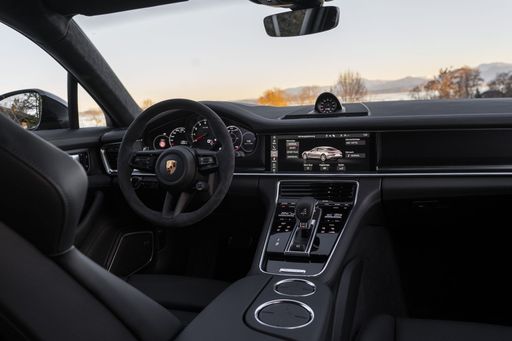
Porsche, staying true to its DNA, provides the Panamera with Porsche Active Aerodynamics and an adaptive air suspension system that adapts to varying driving conditions for optimal performance. Additionally, the Panamera's interior tech stack, featuring the Porsche Communication Management system, enhances connectivity and entertainment options on the road.

Panamera @ Dr. Ing. h.c. F. Porsche AG

The Verdict

Choosing between the Mercedes AMG GT and the Porsche Panamera largely depends on personal preference. The AMG GT appeals to those craving pure unadulterated sports car experiences, while the Panamera offers a balance of performance, luxury, and practicality — ideal for the discerning driver who desires versatility without sacrificing performance. Both cars are masterpieces in their own rights, each weaving its tale of speed, luxury, and innovation.

Here’s where it gets real: The technical differences in detail

AMG GT @ Mercedes-Benz Group Media

Costs and Efficiency:

Price and efficiency are often the first things buyers look at. Here it becomes clear which model has the long-term edge – whether at the pump, the plug, or in purchase price.

Porsche Panamera has a hardly perceptible advantage in terms of price – it starts at 99800 £, while the Mercedes AMG GT costs 102500 £. That’s a price difference of around 2733 £.

Fuel consumption also shows a difference: Porsche Panamera manages with 3 L and is therefore convincingly more efficient than the Mercedes AMG GT with 10.30 L. The difference is about 7.30 L per 100 km.

As for range, the Porsche Panamera performs significantly better – achieving up to 97 km, about 86 km more than the Mercedes AMG GT.

Panamera @ Dr. Ing. h.c. F. Porsche AG

Engine and Performance:

Power, torque and acceleration say a lot about how a car feels on the road. This is where you see which model delivers more driving dynamics.

When it comes to engine power, the Mercedes AMG GT has a minimal edge – offering 816 HP compared to 782 HP. That’s roughly 34 HP more horsepower.

In acceleration from 0 to 100 km/h, the Mercedes AMG GT is minimal quicker – completing the sprint in 2.80 s, while the Porsche Panamera takes 2.90 s. That’s about 0.10 s faster.

In terms of top speed, the Porsche Panamera performs hardly perceptible better – reaching 325 km/h, while the Mercedes AMG GT tops out at 320 km/h. The difference is around 5 km/h.

There’s also a difference in torque: Mercedes AMG GT pulls evident stronger with 1420 Nm compared to 1000 Nm. That’s about 420 Nm difference.

AMG GT @ Mercedes-Benz Group Media

Space and Everyday Use:

Cabin size, boot volume and payload all play a role in everyday practicality. Here, comfort and flexibility make the difference.

Seats: Porsche Panamera offers significantly more seating capacity – 4 vs 2.

In curb weight, Mercedes AMG GT is hardly perceptible lighter – 1790 kg compared to 1960 kg. The difference is around 170 kg.

In terms of boot space, the Porsche Panamera offers clearly perceptible more room – 494 L compared to 321 L. That’s a difference of about 173 L.

When it comes to payload, Porsche Panamera significantly takes the win – 545 kg compared to 215 kg. That’s a difference of about 330 kg.

Who comes out on top?

Overall, the Porsche Panamera shows itself to be wins the duel decisively and secures the title of DriveDuel Champion.
It convinces with the more balanced overall package and proves to be the more versatile choice for everyday use.

from about £99,800
Panamera @ Dr. Ing. h.c. F. Porsche AG

Porsche Panamera

  • Engine Type : Petrol, Plugin Hybrid
  • Transmission : Automatic
  • Drive Type : Rear-Wheel Drive, All-Wheel Drive
  • Power HP : 353 - 782 HP
  • Consumption L/100km : 3 - 12 L
  • Electric Range : 83 - 97 km

Mercedes AMG GT

The Mercedes-Benz AMG GT is a striking blend of luxury and performance, capturing the essence of high-performance motoring. With its sleek, aerodynamic design and a roaring engine, it delivers an exhilarating driving experience. Inside, the cabin combines elegance with technology, offering comfort wrapped in premium materials for an immersive journey.

details

Porsche Panamera

The Porsche Panamera stands as a testament to the seamless fusion of luxury and performance in the automotive world. With its sleek design and powerful engine, it offers an exhilarating driving experience that is hard to rival. Inside, the Panamera boasts a meticulously crafted interior with top-of-the-line materials, ensuring comfort and sophistication on every journey.

details
Mercedes AMG GT
Porsche Panamera
AMG GT @ Mercedes-Benz Group Media
Panamera @ Dr. Ing. h.c. F. Porsche AG

Costs and Consumption

Price
102500 - 194400 £
Price
99800 - 212100 £
Consumption L/100km
10.3 - 14 L
Consumption L/100km
3 - 12 L
Consumption kWh/100km
-
Consumption kWh/100km
-
Electric Range
11 km
Electric Range
83 - 97 km
Battery Capacity
-
Battery Capacity
21.80 kWh
co2
235 - 319 g/km
co2
69 - 274 g/km
Fuel tank capacity
70 L
Fuel tank capacity
75 - 90 L

Dimensions and Body

Body Type
Coupe
Body Type
Hatchback
Seats
2
Seats
4
Doors
2
Doors
5
Curb weight
1790 - 2195 kg
Curb weight
1960 - 2535 kg
Trunk capacity
182 - 321 L
Trunk capacity
421 - 494 L
Length
4728 mm
Length
5052 - 5204 mm
Width
1929 mm
Width
1937 mm
Height
1354 - 1359 mm
Height
1415 - 1428 mm
Max trunk capacity
-
Max trunk capacity
1255 - 1385 L
Payload
170 - 215 kg
Payload
340 - 545 kg

Engine and Performance

Engine Type
Petrol MHEV, Petrol, Plugin Hybrid
Engine Type
Petrol, Plugin Hybrid
Transmission
Automatic
Transmission
Automatic
Transmission Detail
Automatic Gearbox
Transmission Detail
Dual-Clutch Automatic
Drive Type
Rear-Wheel Drive, All-Wheel Drive
Drive Type
Rear-Wheel Drive, All-Wheel Drive
Power HP
435 - 816 HP
Power HP
353 - 782 HP
Acceleration 0-100km/h
2.8 - 4.6 s
Acceleration 0-100km/h
2.9 - 5.3 s
Max Speed
280 - 320 km/h
Max Speed
270 - 325 km/h
Torque
500 - 1420 Nm
Torque
500 - 1000 Nm
Number of Cylinders
4 - 8
Number of Cylinders
6 - 8
Power kW
320 - 600 kW
Power kW
260 - 575 kW
Engine capacity
1991 - 3982 cm3
Engine capacity
2894 - 3996 cm3

General

Model Year
2025
Model Year
2025
CO2 Efficiency Class
G
CO2 Efficiency Class
G, B, C
Brand
Mercedes-Benz
Brand
Porsche
Is the Mercedes AMG GT offered with different drivetrains?

The Mercedes AMG GT is available as Rear-Wheel Drive or All-Wheel Drive.

The prices and data displayed are estimates based on German list prices and may vary by country. This information is not legally binding.