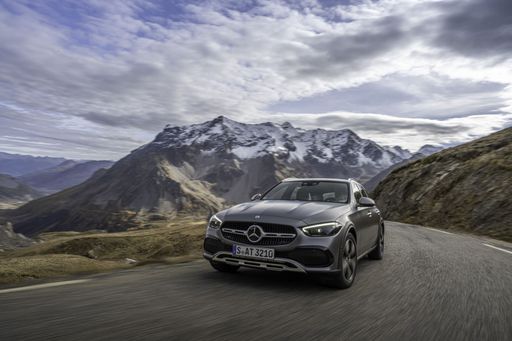
VS

Mercedes C Class Estate vs Skoda Superb Combi comparison

Compare performance (288 HP vs 265 HP), boot space and price (42,600 £ vs 36,100 £ ) at a glance. Find out which car is the better choice for you – Mercedes C Class Estate or Skoda Superb Combi?

Mercedes C Class Estate vs Skoda Superb Combi: Key differences

Mercedes C Class Estate

3.6 (1 Reviews)
rate
  • only slightly more power
details

Skoda Superb Combi

4.7 (1 Reviews)
rate
  • moderately cheaper
  • clearly more efficient
  • only slightly quicker 0–100 km/h
  • a bit lighter
  • noticeably more trunk space
details

All details on performance, efficiency, range and trunk space can be found in the technical comparison below – including user reviews for both models.

By Achim Sedelmaier

C Class Estate

Battle of the Wagons: Mercedes C-Klasse T-Modell vs. Skoda Superb Combi

In today's competitive automotive market, wagons stand out as practical, versatile, and stylish options. Among the most compelling contenders in this category are the Mercedes C-Klasse T-Modell and the Skoda Superb Combi. Both of these models offer a unique blend of comfort, performance, and innovation, making them appealing choices for families and car enthusiasts alike. In this comparison, we delve into the technical aspects and innovations that set these two wagons apart.
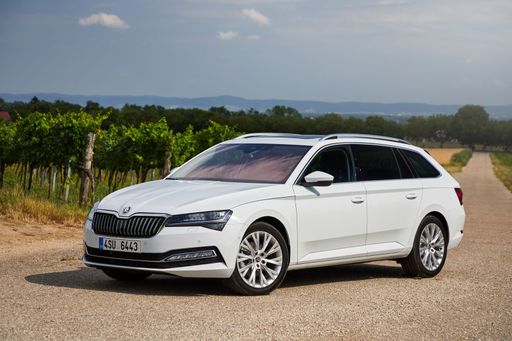
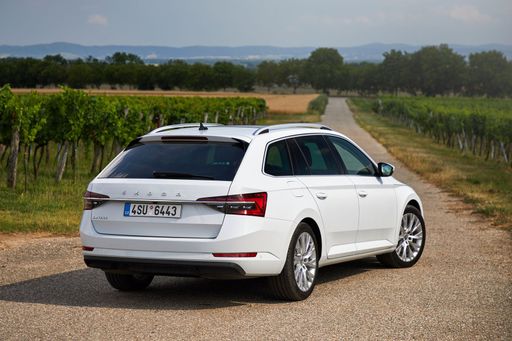
Superb Combi

Engine and Performance

Under the hood, the Mercedes C-Klasse T-Modell offers a diverse range of engine options including petrol MHEV, diesel MHEV, and a plugin hybrid variant. With power outputs ranging from 193 to an impressive 680 HP, drivers can expect a thrilling performance. The C-Klasse also stands out with its rear-wheel and all-wheel drive options, which cater to different driving preferences. The top speed reaches up to 280 km/h, with acceleration from 0 to 100 km/h in as little as 3.4 seconds, depending on the variant.

On the other hand, the Skoda Superb Combi provides efficient yet robust engine choices including petrol MHEV, diesel, petrol, and a plugin hybrid option. Power ranges from 150 to 265 HP, with a seamless front-wheel and all-wheel drive experience. The Superb Combi achieves a top speed of 250 km/h and accelerates to 100 km/h in 5.7 seconds at its best. This makes it a respectable contender for those seeking practicality without compromising on performance.

C Class Estate

Efficiency and Innovation

The Mercedes C-Klasse T-Modell boasts impressive fuel efficiency, with consumption as low as 0.4 L/100km in its plugin hybrid mode and an electric range extending up to 113 km. Its innovative features include a significant battery capacity of 19.5 kWh, ensuring extended electric driving capability and reduced environmental impact.

Similarly, the Skoda Superb Combi presents commendable fuel efficiency with consumption ranging from 0.4 to 7.6 L/100km. Its plugin hybrid variant can travel up to 134 km on electric power alone, reflecting Skoda's dedication to sustainable motoring. With a battery capacity of 19.7 kWh, the Superb Combi stands as a modern, environmentally conscious choice.

Superb Combi

Dimensions and Practicality

The C-Klasse T-Modell offers a sleek design with dimensions varying from 4751 to 4842 mm in length, and a trunk capacity reaching up to 490 liters, catering to everyday needs. With a seating capacity for five and a payload capacity reaching up to 610 kg, it's ideally suited for family trips or cargo transport.

Meanwhile, the Superb Combi is designed with practicality in mind, boasting a generous length of 4902 mm and a remarkable trunk capacity of 690 liters, the largest in its class. This makes it a versatile companion for both family and business use, accommodating ample luggage or equipment with ease.

C Class Estate

Conclusion: Luxury vs. Versatility

The Mercedes C-Klasse T-Modell and Skoda Superb Combi each offer unique strengths. The C-Klasse T-Modell stands out with its luxurious appeal, powerful engine range, and rear/all-wheel drive options, catering to those who desire a blend of performance and sophistication.

On the other hand, the Skoda Superb Combi offers unrivaled practicality, spaciousness, and an efficient engine lineup, making it the perfect choice for those who prioritize value and functionality.

Ultimately, the decision between these two will depend on personal preferences and needs. Whether you choose the elegance of the Mercedes or the practicality of the Skoda, both models promise to deliver a satisfying driving experience.

Here’s where it gets real: The technical differences in detail

C Class Estate

Costs and Efficiency:

Looking at overall running costs, both models reveal some interesting differences in everyday economy.

Skoda Superb Combi is moderately cheaper – starting at 36,100 £ , while the Mercedes C Class Estate costs 42,600 £ . That’s a price difference of around 6,515 £.

Fuel consumption also shows a difference: the Skoda Superb Combi uses 1.2 L/100km and is clearly more efficient than the Mercedes C Class Estate with 4.7 L/100km. The difference is about 3.5 L/100km.

Superb Combi

Engine and Performance:

Under the bonnet, it becomes clear which model is tuned for sportiness and which one takes the lead when you hit the accelerator.

When it comes to engine power, the Mercedes C Class Estate offers only slightly more power – delivering 288 HP compared to 265 HP. That’s roughly 23 HP more horsepower.

When accelerating from 0 to 100 km/h, the Skoda Superb Combi is only slightly quicker – completing the sprint in 5.7 s, while the Mercedes C Class Estate takes 5.8 s. That’s about 0.1 s quicker.

There’s also a difference in torque: the Mercedes C Class Estate delivers markedly more torque with 550 Nm compared to 400 Nm. That’s about 150 Nm more.

C Class Estate

Space and Everyday Use:

Cabin size, boot volume and payload all play a role in everyday practicality. Here, comfort and flexibility make the difference.

Both vehicles offer seating for 5 people.

In terms of curb weight, Skoda Superb Combi is a bit lighter – 1,575 kg compared to 1,755 kg. The difference is around 180 kg.

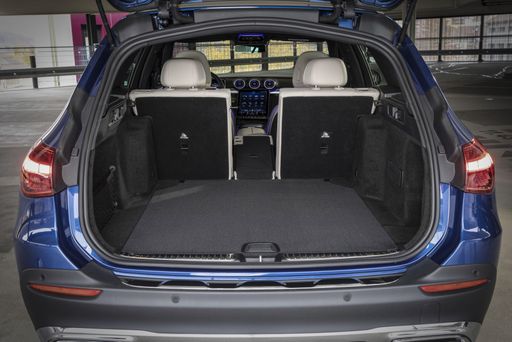
Looking at boot space, the Skoda Superb Combi offers noticeably more boot space – 690 L compared to 490 L. That’s a difference of about 200 L.

When it comes to payload, the Skoda Superb Combi carries barely more – 584 kg compared to 565 kg. That’s a difference of about 19 kg.

Who wins the race in the data check?

The Skoda Superb Combi holds a decisive overall lead in the objective data comparison.
This result only shows which model scores more points on paper – not which of the two cars feels right for you.

from £36,100
Superb Combi

Skoda Superb Combi

  • Engine Type : Petrol, Petrol MHEV, Diesel, Plugin Hybrid
  • Transmission : Automatic
  • Drive Type : Front-Wheel Drive, All-Wheel Drive
  • Power HP : 150 - 265 HP
  • Consumption L/100km : 1.2 - 7.8 L/100km
  • Electric Range : 128 - 137 km
Mercedes C Class Estate
Skoda Superb Combi

Costs and Consumption

View detailed analysis

Engine and Performance

View detailed analysis

Dimensions and Body

View detailed analysis

Mercedes C Class Estate

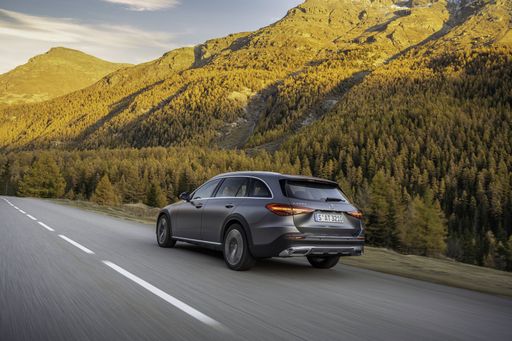
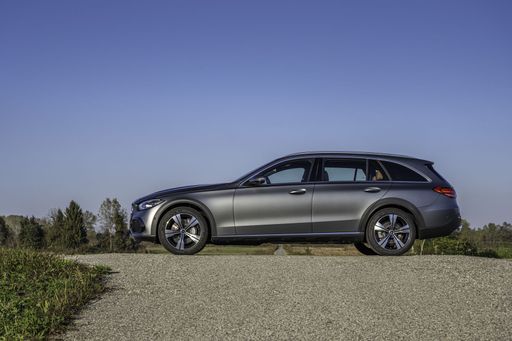
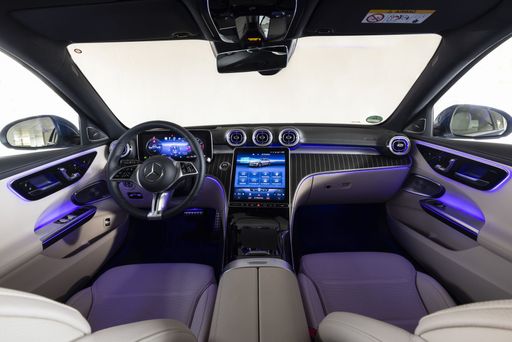
The Mercedes C-Class wagon dresses Mercedes refinement in a sensible, practical package, marrying a sleek estate silhouette with a plush, high-quality cabin that feels more premium than its badge implies. It quietly soaks up motorway miles and cartloads of family kit with composed handling and effortless comfort — a clever alternative to an SUV for buyers who still like to steer.

details

Skoda Superb Combi

The Skoda Superb Combi is the practical hero of the estate world, offering cavernous space and a calm, refined ride that makes family life feel effortless. Its clever features, understated design and no-nonsense value make it a smart pick for buyers who want Germanic engineering without the badge premium — and it even manages to stay surprisingly stylish while doing all the heavy lifting.

details
Mercedes C Class Estate
Skoda Superb Combi

Costs and Consumption

Price
42,600 - 67,200 £
Price
36,100 - 52,300 £
Consumption L/100km
4.7 - 6.9 L/100km
Consumption L/100km
1.2 - 7.8 L/100km
Consumption kWh/100km
-
Consumption kWh/100km
-
Electric Range
-
Electric Range
128 - 137 km
Battery Capacity
-
Battery Capacity
-
co2
123 - 157 g/km
co2
28 - 178 g/km
Fuel tank capacity
-
Fuel tank capacity
-

Dimensions and Body

Body Type
Estate
Body Type
Estate
Seats
5
Seats
5
Doors
-
Doors
-
Curb weight
1,755 - 1,940 kg
Curb weight
1,575 - 1,853 kg
Trunk capacity
490 L
Trunk capacity
510 - 690 L
Length
-
Length
-
Width
1,820 mm
Width
1,849 mm
Height
-
Height
-
Max trunk capacity
-
Max trunk capacity
-
Payload
460 - 565 kg
Payload
497 - 584 kg

Engine and Performance

Engine Type
Petrol MHEV, Diesel MHEV
Engine Type
Petrol, Petrol MHEV, Diesel, Plugin Hybrid
Transmission
Automatic
Transmission
Automatic
Transmission Detail
Automatic Gearbox
Transmission Detail
Dual-Clutch Automatic
Drive Type
Rear-Wheel Drive, All-Wheel Drive
Drive Type
Front-Wheel Drive, All-Wheel Drive
Power HP
186 - 288 HP
Power HP
150 - 265 HP
Acceleration 0-100km/h
5.8 - 8.8 s
Acceleration 0-100km/h
5.7 - 9.3 s
Max Speed
-
Max Speed
-
Torque
250 - 550 Nm
Torque
250 - 400 Nm
Number of Cylinders
4
Number of Cylinders
4
Power kW
137 - 212 kW
Power kW
110 - 195 kW
Engine capacity
1,496 - 1,999 cm3
Engine capacity
1,498 - 1,984 cm3

General

Model Year
2,024 - 2,025
Model Year
2,024 - 2,025
CO2 Efficiency Class
E, F, D
CO2 Efficiency Class
E, F, D, G, B
Brand
Mercedes-Benz
Brand
Skoda
DriveDuel uses data analysis and artificial intelligence to evaluate vehicle data and create content. Content is regularly reviewed and improved. The displayed prices are estimates based on German list prices, adjusted to the respective country’s VAT. Country-specific registration taxes are not included. This information is not legally binding.