VS

Skoda Octavia Combi vs Skoda Superb Combi comparison

Compare performance (265 HP vs 265 HP), boot space and price (25,600 £ vs 36,100 £ ) at a glance. Find out which car is the better choice for you – Skoda Octavia Combi or Skoda Superb Combi?

Skoda Octavia Combi vs Skoda Superb Combi: Key differences

Skoda Octavia Combi

  • significantly cheaper
  • slightly lighter

Skoda Superb Combi

  • significantly more efficient
  • moderately quicker 0–100 km/h
  • marginally more trunk space
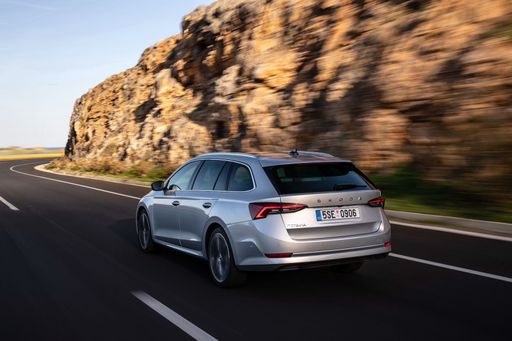
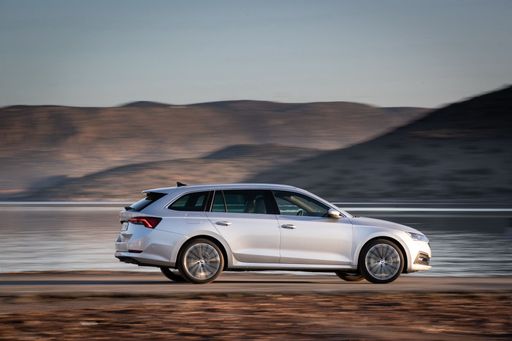
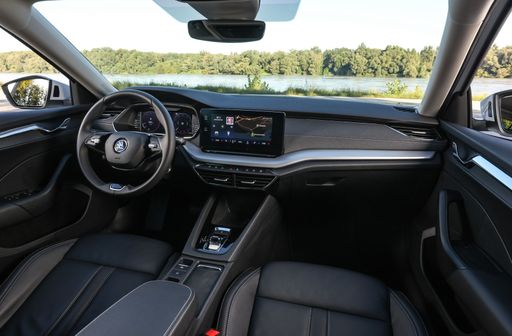
Octavia Combi

Skoda Octavia Combi vs Skoda Superb Combi: A Clash of the Czech Titans

In the realm of station wagons, Skoda continues to command respect with the Octavia Combi and the more upscale Superb Combi. Both models exude the brand's ethos of practicality, efficiency, and affordability, yet they appeal to different segments with their distinct features and capabilities. Let's delve into the specifics of each to see how these two wagons stack up against each other.
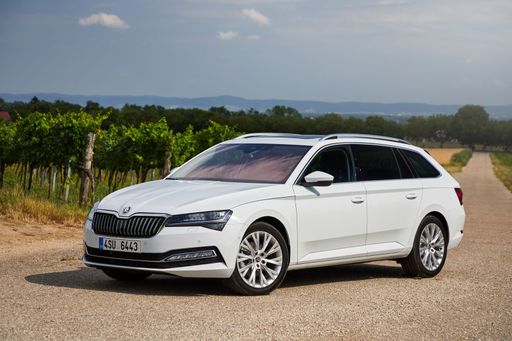
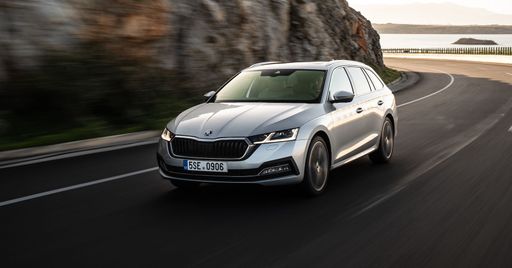
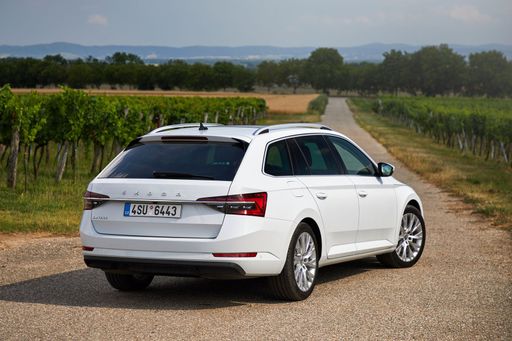
Superb Combi

Engine and Performance

The Skoda Octavia Combi comes fitted with a variety of engine options, including petrol, petrol mild-hybrid (MHEV), and diesel units. The power output ranges from 116 to 265 HP, offering drivers flexibility based on their needs for performance or economy. The Acceleration to 100 km/h ranges from 6.5 to 10.7 seconds, with top speeds stretching up to 250 km/h, demonstrating its versatile prowess on the road.

On the other hand, the Superb Combi includes an additional plug-in hybrid engine option, enhancing its eco-friendly credentials. Producing power from 150 to 265 HP, this model offers competitive performance with an acceleration ranging from 5.7 to 9.3 seconds. The electric hybrid versions boast an electric range of up to 134 km, making it a perfect fit for urban drivers conscious of their carbon footprint.

Octavia Combi

Fuel Efficiency

The Octavia Combi illustrates its focus on fuel economy with consumption figures starting at 4.4 L/100km. This economy is achieved through efficient engine configurations and a lightweight design, with curb weights between 1366 and 1534 kg.

The Superb Combi, though slightly heavier with curb weights up to 1853 kg, manages to deliver impressive fuel efficiency too, thanks to the hybrid variant offering a low 0.4 L/100km. Conventional engines also perform admirably, up to 7.9 L/100km, providing balanced performance and consumption.

Superb Combi

Dimensions and Capacity

Both models embody practicality through their spacious interiors, essential for a station wagon. The Octavia Combi measures between 4698 mm and 4709 mm in length, featuring a trunk capacity of 640 L, which is commendable for a family-oriented vehicle.

The Superb Combi, however, stands out with a length of 4902 mm and a trunk capacity of 690 L. This makes it ideal for those who prioritize space, whether it’s for cargo or passenger comfort. Its larger dimensions come with a payload capacity up to 584 kg, allowing it to easily handle a full load with ease.

Octavia Combi

Innovation and Features

Both wagons boast advanced technology, from dual-clutch automatic transmissions to all-wheel-drive options, which enhance their driveability across various conditions. The Superb Combi especially impresses with its plug-in hybrid technology, which not only reduces emissions but also empowers the user to save on fuel costs.

Moreover, Skoda offers advanced safety features across the board, including multiple driver assistance systems, ensuring that both the Octavia Combi and Superb Combi offer secure and reliable performances for everyday driving.

Conclusion

Choosing between the Skoda Octavia Combi and the Superb Combi primarily depends on your need for space, performance, and budget. The Octavia stands out as an economical, reliable choice providing excellent value for money, while the Superb provides an edge with its larger size and hybrid capabilities, perfect for those wanting an executive touch. Both models showcase Skoda’s commitment to offering quality vehicles tailored to diverse lifestyle needs.

Here’s where it gets real: The technical differences in detail

Octavia Combi

Costs and Efficiency:

When it comes to price and running costs, the biggest differences usually appear. This is often where you see which car fits your budget better in the long run.

Skoda Octavia Combi is significantly cheaper – starting at 25,600 £ , while the Skoda Superb Combi costs 36,100 £ . That’s a price difference of around 10,508 £.

Fuel consumption also shows a difference: the Skoda Superb Combi uses 1.2 L/100km and is significantly more efficient than the Skoda Octavia Combi with 4.4 L/100km. The difference is about 3.2 L/100km.

Superb Combi

Engine and Performance:

Under the bonnet, it becomes clear which model is tuned for sportiness and which one takes the lead when you hit the accelerator.

Both models deliver identical power – 265 HP each.

When accelerating from 0 to 100 km/h, the Skoda Superb Combi is moderately quicker – completing the sprint in 5.7 s, while the Skoda Octavia Combi takes 6.5 s. That’s about 0.8 s quicker.

Looking at top speed, the Skoda Octavia Combi is marginally faster – reaching 250 km/h, while the Skoda Superb Combi tops out at 232 km/h. The difference is around 18 km/h.

There’s also a difference in torque: the Skoda Superb Combi delivers marginally more torque with 400 Nm compared to 370 Nm. That’s about 30 Nm more.

Octavia Combi

Space and Everyday Use:

Cabin size, boot volume and payload all play a role in everyday practicality. Here, comfort and flexibility make the difference.

Both vehicles offer seating for 5 people.

In terms of curb weight, Skoda Octavia Combi is slightly lighter – 1,366 kg compared to 1,575 kg. The difference is around 209 kg.

Looking at boot space, the Skoda Superb Combi offers marginally more boot space – 690 L compared to 640 L. That’s a difference of about 50 L.

For maximum load capacity, the Skoda Superb Combi offers a bit more capacity – up to 1,920 L, about 220 L more than the Skoda Octavia Combi.

When it comes to payload, the Skoda Superb Combi carries marginally more – 584 kg compared to 534 kg. That’s a difference of about 50 kg.

Who wins the race in the data check?

The Skoda Superb Combi holds a decisive overall lead in the objective data comparison.
This result only shows which model scores more points on paper – not which of the two cars feels right for you.

from £36,100
Superb Combi

Skoda Superb Combi

  • Engine Type : Petrol, Petrol MHEV, Diesel, Plugin Hybrid
  • Transmission : Automatic
  • Drive Type : Front-Wheel Drive, All-Wheel Drive
  • Power HP : 150 - 265 HP
  • Consumption L/100km : 1.2 - 7.8 L/100km
  • Electric Range : 128 - 137 km
Skoda Octavia Combi
Skoda Superb Combi

Costs and Consumption

View detailed analysis

Engine and Performance

View detailed analysis

Dimensions and Body

View detailed analysis

Skoda Octavia Combi

The Skoda Octavia Combi is the sensible family wagon that somehow turns grocery runs and long trips into a pleasant, unshowy experience — spacious, practical and built like it prefers reliability over flash. With smart touches, clever storage and a cabin that feels grown-up rather than frugal, it’s an easy recommendation for buyers who want maximum utility without sacrificing comfort or style.

details

Skoda Superb Combi

The Skoda Superb Combi is the practical hero of the estate world, offering cavernous space and a calm, refined ride that makes family life feel effortless. Its clever features, understated design and no-nonsense value make it a smart pick for buyers who want Germanic engineering without the badge premium — and it even manages to stay surprisingly stylish while doing all the heavy lifting.

details
Skoda Octavia Combi
Skoda Superb Combi

Costs and Consumption

Price
25,600 - 42,300 £
Price
36,100 - 52,300 £
Consumption L/100km
4.4 - 6.9 L/100km
Consumption L/100km
1.2 - 7.8 L/100km
Consumption kWh/100km
-
Consumption kWh/100km
-
Electric Range
-
Electric Range
128 - 137 km
Battery Capacity
-
Battery Capacity
-
co2
113 - 157 g/km
co2
28 - 178 g/km
Fuel tank capacity
45 - 55 L
Fuel tank capacity
66 L

Dimensions and Body

Body Type
Estate
Body Type
Estate
Seats
5
Seats
5
Doors
5
Doors
5
Curb weight
1,366 - 1,553 kg
Curb weight
1,575 - 1,853 kg
Trunk capacity
640 L
Trunk capacity
510 - 690 L
Length
4,698 - 4,709 mm
Length
4,902 mm
Width
1,829 mm
Width
1,849 mm
Height
1,455 - 1,468 mm
Height
1,482 mm
Max trunk capacity
1,700 L
Max trunk capacity
1,920 L
Payload
471 - 534 kg
Payload
497 - 584 kg

Engine and Performance

Engine Type
Petrol, Petrol MHEV, Diesel
Engine Type
Petrol, Petrol MHEV, Diesel, Plugin Hybrid
Transmission
Automatic, Manuel
Transmission
Automatic
Transmission Detail
Dual-Clutch Automatic, Manual Gearbox
Transmission Detail
Dual-Clutch Automatic
Drive Type
Front-Wheel Drive, All-Wheel Drive
Drive Type
Front-Wheel Drive, All-Wheel Drive
Power HP
116 - 265 HP
Power HP
150 - 265 HP
Acceleration 0-100km/h
6.5 - 10.7 s
Acceleration 0-100km/h
5.7 - 9.3 s
Max Speed
203 - 250 km/h
Max Speed
232 km/h
Torque
220 - 370 Nm
Torque
250 - 400 Nm
Number of Cylinders
4
Number of Cylinders
4
Power kW
85 - 195 kW
Power kW
110 - 195 kW
Engine capacity
1,498 - 1,984 cm3
Engine capacity
1,498 - 1,984 cm3

General

Model Year
2,024 - 2,025
Model Year
2,024 - 2,025
CO2 Efficiency Class
E, F, D, C
CO2 Efficiency Class
E, F, D, G, B
Brand
Skoda
Brand
Skoda
DriveDuel uses data analysis and artificial intelligence to evaluate vehicle data and create content. Content is regularly reviewed and improved. The displayed prices are estimates based on German list prices, adjusted to the respective country’s VAT. Country-specific registration taxes are not included. This information is not legally binding.