VS

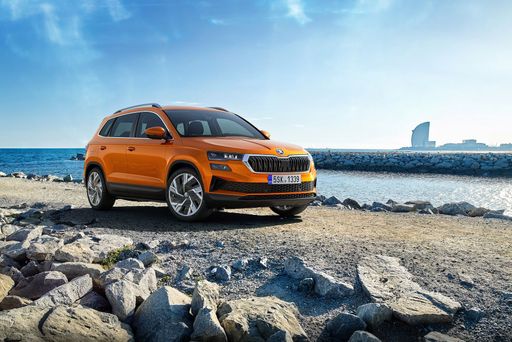
Skoda Karoq vs Skoda Octavia Combi comparison

Compare performance (190 HP vs 265 HP), boot space and price (29,100 £ vs 25,600 £ ) at a glance. Find out which car is the better choice for you – Skoda Karoq or Skoda Octavia Combi?

Skoda Karoq vs Skoda Octavia Combi: Key differences

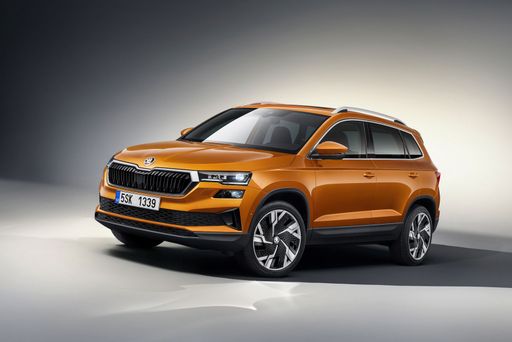
Skoda Karoq

4.6 (2 Reviews)
rate

Skoda Octavia Combi

  • slightly cheaper
  • noticeably more power
  • somewhat more efficient
  • very slightly quicker 0–100 km/h
  • very slightly lighter
  • moderately more trunk space
Karoq

Compact Versatility: Skoda Karoq vs Skoda Octavia Combi

In the world of family-friendly vehicles, Skoda offers two European favorites—the rugged Skoda Karoq SUV and the versatile Skoda Octavia Combi wagon. These two models bring distinct features and styles yet are concerned with practicality, performance, and innovation. Let's dive deeper into what each has to offer for the 2024 model year.
Octavia Combi

Under the Hood

The Skoda Karoq, available with petrol and diesel engines, provides a range of power outputs. With options ranging from a 115 HP engine to a robust 190 HP, drivers can choose between front-wheel or all-wheel drive systems coupled with either a manual gearbox or a dual-clutch automatic transmission. This flexibility ensures the Karoq can cater to different driving preferences, whether you prioritize speed with an acceleration time of 7 seconds to 100 km/h or prefer the eco-friendlier end of its spectrum, which offers a fuel consumption as low as 4.9 L/100km.

Meanwhile, the Skoda Octavia Combi offers engines with slightly more power. Its lineup includes a 265 HP option and even a mild hybrid electric vehicle (MHEV) variant. Like the Karoq, transmission choices include manual and dual-clutch automatic options, along with both drive types. It offers a fuel consumption starting at a frugal 4.4 L/100km, making it an appealing choice for those prioritizing efficiency without sacrificing performance.

Karoq

Dimensions and Practicality

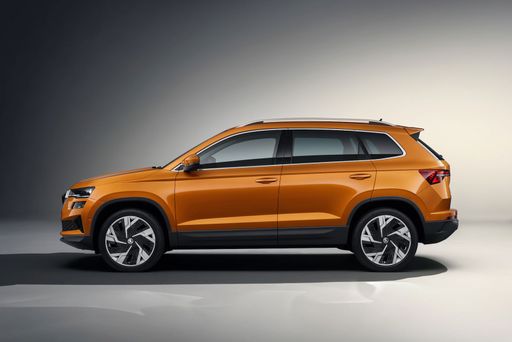
Designed with family life in mind, both vehicles offer ample space, but in different forms. The Skoda Karoq, at 4390 mm in length, boasts a comfortable interior with a trunk capacity of 521 liters. The SUV body type provides a higher seating position and bulkier road presence—ideal for tackling rough terrains and more dynamic driving experiences.

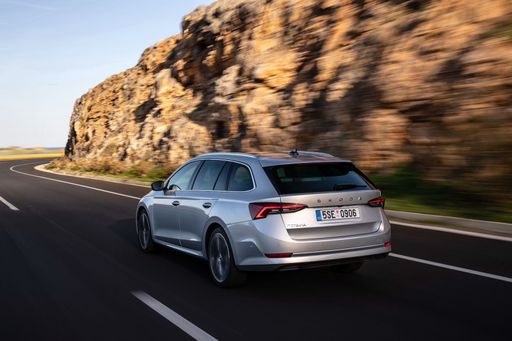
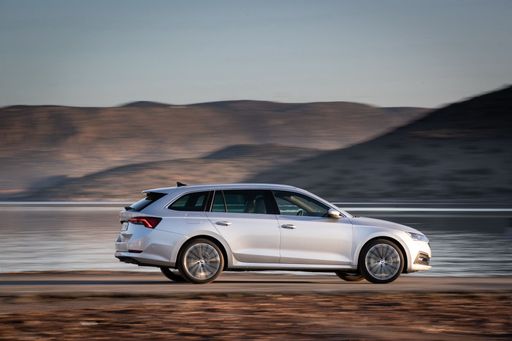
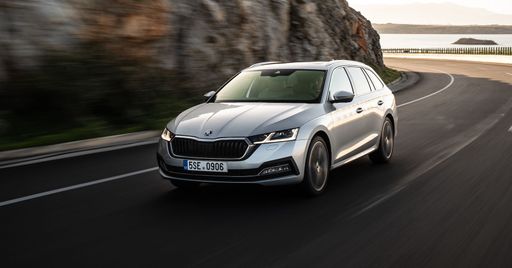
The Skoda Octavia Combi, measuring 4698 mm in length, extends practicality with its spacious trunk offering 640 liters of storage. Despite the lesser height compared to the Karoq, it integrates seamlessly into urban and rural settings alike, providing a perfect balance between city driving comfort and long-haul capability.

Octavia Combi

Interior Comfort and Innovation

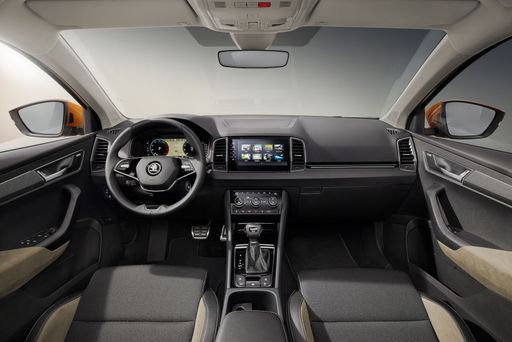
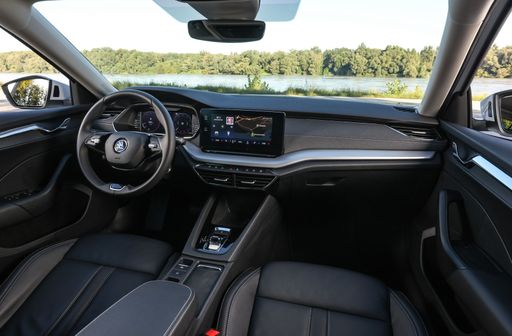
Both models cater to comfort with seating for five and offer multiple configurations to enhance passenger convenience. They include advanced infotainment systems and safety technology, ensuring a secure and enjoyable driving experience. Notably, the Octavia Combi, with its reputation for an ergonomic interior, emphasizes luxurious touches and high-quality materials, appealing to those who appreciate a touch of elegance.

Karoq

Environmental Impact and Efficiency

As with most modern vehicles, reducing carbon emissions is a key component of design. The Karoq's CO2 emissions range from 129 to 174 g/km, while the Octavia Combi varies between 114 and 157 g/km, showcasing each model’s environmental credentials. This difference slightly favors the Octavia Combi, especially for buyers focused on reducing their carbon footprint.

Octavia Combi

The Verdict

Choosing between the Skoda Karoq and Skoda Octavia Combi ultimately depends on your lifestyle needs. The Karoq stands out for those who might frequently venture off-road or require all-wheel drive capabilities. Conversely, the Octavia Combi offers a sizeable, spacious trunk ideal for those with extra cargo requirements and a need for energy-efficient commuting.

Whether you lean towards the striking resilience of the Karoq or the refined practicality of the Octavia Combi, both options fully embrace the Skoda ethos of delivering reliable vehicles that cater to diverse audiences while maintaining competitive performance and technological advancements.

Here’s where it gets real: The technical differences in detail

Karoq

Costs and Efficiency:

Price and efficiency are key factors when choosing a car – and this is often where the real differences emerge.

Skoda Octavia Combi is slightly cheaper – starting at 25,600 £ , while the Skoda Karoq costs 29,100 £ . That’s a price difference of around 3,505 £.

Fuel consumption also shows a difference: the Skoda Octavia Combi uses 4.4 L/100km and is somewhat more efficient than the Skoda Karoq with 4.9 L/100km. The difference is about 0.5 L/100km.

Octavia Combi

Engine and Performance:

Power, torque and acceleration are the classic benchmarks for car enthusiasts – and here, some clear differences start to show.

When it comes to engine power, the Skoda Octavia Combi offers noticeably more power – delivering 265 HP compared to 190 HP. That’s roughly 75 HP more horsepower.

When accelerating from 0 to 100 km/h, the Skoda Octavia Combi is very slightly quicker – completing the sprint in 6.5 s, while the Skoda Karoq takes 7 s. That’s about 0.5 s quicker.

Looking at top speed, the Skoda Octavia Combi is somewhat faster – reaching 250 km/h, while the Skoda Karoq tops out at 210 km/h. The difference is around 40 km/h.

There’s also a difference in torque: the Skoda Octavia Combi delivers barely more torque with 370 Nm compared to 360 Nm. That’s about 10 Nm more.

Karoq

Space and Everyday Use:

Cabin size, boot volume and payload all play a role in everyday practicality. Here, comfort and flexibility make the difference.

Both vehicles offer seating for 5 people.

In terms of curb weight, Skoda Octavia Combi is very slightly lighter – 1,366 kg compared to 1,380 kg. The difference is around 14 kg.

Looking at boot space, the Skoda Octavia Combi offers moderately more boot space – 640 L compared to 521 L. That’s a difference of about 119 L.

For maximum load capacity, the Skoda Octavia Combi offers very slightly more capacity – up to 1,700 L, about 70 L more than the Skoda Karoq.

When it comes to payload, the Skoda Karoq carries marginally more – 549 kg compared to 534 kg. That’s a difference of about 15 kg.

Who wins the race in the data check?

The Skoda Octavia Combi holds a decisive overall lead in the objective data comparison.
This result only shows which model scores more points on paper – not which of the two cars feels right for you.

from £25,600
Octavia Combi

Skoda Octavia Combi

  • Engine Type : Petrol, Petrol MHEV, Diesel
  • Transmission : Automatic, Manuel
  • Drive Type : Front-Wheel Drive, All-Wheel Drive
  • Power HP : 116 - 265 HP
  • Consumption L/100km : 4.4 - 6.9 L/100km
Skoda Karoq
Skoda Octavia Combi

Costs and Consumption

View detailed analysis

Engine and Performance

View detailed analysis

Dimensions and Body

View detailed analysis

Skoda Karoq

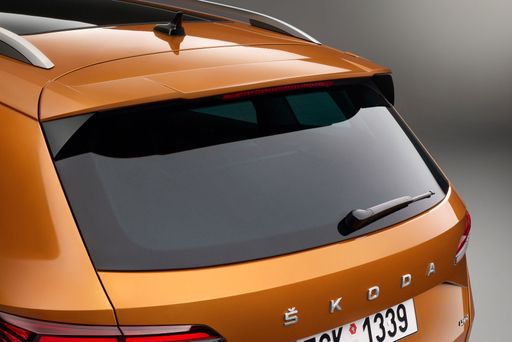
The Skoda Karoq is a smart, unfussy compact SUV that blends roomy practicality with a pleasantly composed driving character. It won’t turn heads at a car meet, but it will make daily life easier with clever storage, sensible ergonomics and a reassuringly grown-up ride.

details

Skoda Octavia Combi

The Skoda Octavia Combi is the sensible family wagon that somehow turns grocery runs and long trips into a pleasant, unshowy experience — spacious, practical and built like it prefers reliability over flash. With smart touches, clever storage and a cabin that feels grown-up rather than frugal, it’s an easy recommendation for buyers who want maximum utility without sacrificing comfort or style.

details
Skoda Karoq
Skoda Octavia Combi

Costs and Consumption

Price
29,100 - 41,700 £
Price
25,600 - 42,300 £
Consumption L/100km
4.9 - 7.6 L/100km
Consumption L/100km
4.4 - 6.9 L/100km
Consumption kWh/100km
-
Consumption kWh/100km
-
Electric Range
-
Electric Range
-
Battery Capacity
-
Battery Capacity
-
co2
128 - 173 g/km
co2
113 - 157 g/km
Fuel tank capacity
50 - 55 L
Fuel tank capacity
45 - 55 L

Dimensions and Body

Body Type
SUV
Body Type
Estate
Seats
5
Seats
5
Doors
5
Doors
5
Curb weight
1,380 - 1,655 kg
Curb weight
1,366 - 1,553 kg
Trunk capacity
521 L
Trunk capacity
640 L
Length
4,390 mm
Length
4,698 - 4,709 mm
Width
1,841 mm
Width
1,829 mm
Height
1,624 mm
Height
1,455 - 1,468 mm
Max trunk capacity
1,630 L
Max trunk capacity
1,700 L
Payload
456 - 549 kg
Payload
471 - 534 kg

Engine and Performance

Engine Type
Petrol, Diesel
Engine Type
Petrol, Petrol MHEV, Diesel
Transmission
Manuel, Automatic
Transmission
Automatic, Manuel
Transmission Detail
Manual Gearbox, Dual-Clutch Automatic
Transmission Detail
Dual-Clutch Automatic, Manual Gearbox
Drive Type
Front-Wheel Drive, All-Wheel Drive
Drive Type
Front-Wheel Drive, All-Wheel Drive
Power HP
115 - 190 HP
Power HP
116 - 265 HP
Acceleration 0-100km/h
7 - 11.2 s
Acceleration 0-100km/h
6.5 - 10.7 s
Max Speed
192 - 210 km/h
Max Speed
203 - 250 km/h
Torque
200 - 360 Nm
Torque
220 - 370 Nm
Number of Cylinders
3 - 4
Number of Cylinders
4
Power kW
85 - 140 kW
Power kW
85 - 195 kW
Engine capacity
999 - 1,984 cm3
Engine capacity
1,498 - 1,984 cm3

General

Model Year
2,025
Model Year
2,024 - 2,025
CO2 Efficiency Class
D, E, F
CO2 Efficiency Class
E, F, D, C
Brand
Skoda
Brand
Skoda
DriveDuel uses data analysis and artificial intelligence to evaluate vehicle data and create content. Content is regularly reviewed and improved. The displayed prices are estimates based on German list prices, adjusted to the respective country’s VAT. Country-specific registration taxes are not included. This information is not legally binding.