VS

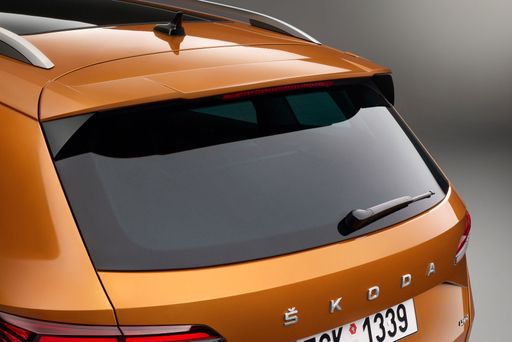
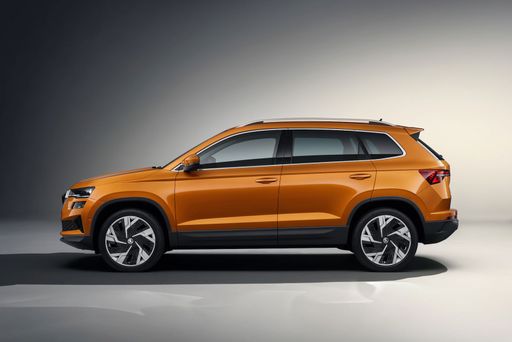
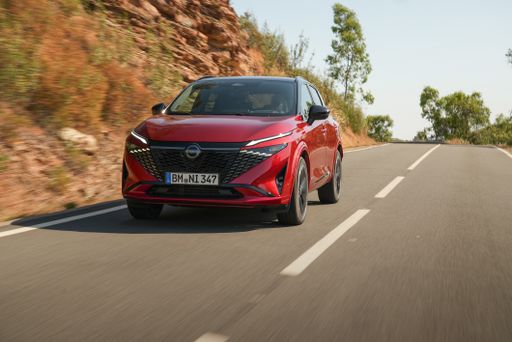
Nissan Qashqai vs Skoda Karoq comparison

Compare performance (205 HP vs 190 HP), boot space and price (29,600 £ vs 29,100 £ ) at a glance. Find out which car is the better choice for you – Nissan Qashqai or Skoda Karoq?

Nissan Qashqai vs Skoda Karoq: Key differences

Nissan Qashqai

4.9 (4 Reviews)
rate
  • marginally more power
  • slightly more efficient
details

Skoda Karoq

4.6 (2 Reviews)
rate
  • only slightly cheaper
  • barely quicker 0–100 km/h
  • only slightly lighter
  • very slightly more trunk space
details

All details on performance, efficiency, range and trunk space can be found in the technical comparison below – including user reviews for both models.

By Achim Sedelmaier

Qashqai

Quick take: Nissan Qashqai VS Skoda Karoq

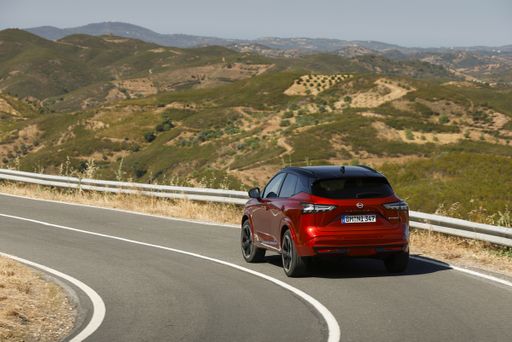
The Nissan Qashqai and the Skoda Karoq sit in the same compact‑SUV lane but answer different buyer questions: the Nissan Qashqai leans into calm, EV‑like city driving and modern connected tech, while the Skoda Karoq doubles down on straightforward practicality and roomy utility. Nissan Qashqai feels engineered to soothe daily commutes with quiet manners and a modern infotainment suite, whereas Skoda Karoq trades a touch of glamour for clever stowage, simple controls and predictable usability. In this matchup you’re choosing between a tech‑forward, comfort‑biased personality (Qashqai) and a no‑nonsense, workmanlike companion (Karoq). Read on for how those philosophies matter in real life rather than on paper.
Karoq

Character and driving feel

The Nissan Qashqai behaves more like an electric car at low speeds — smooth, linear pull and an emphasis on serenity — while the Skoda Karoq drives like a traditional compact SUV: solid, neutral and reassuring. Nissan Qashqai delivers less mechanical feedback and a softer, more filtered experience that relaxes city driving but won’t excite a driver seeking engagement. Skoda Karoq rewards steady inputs with confident grip and composure on fast roads, so it feels more planted on long runs or when towing. The trade‑off is clear: pick the Qashqai if you want refinement and ease, pick the Karoq if you want predictable handling and a sense of sturdiness at speed.

Qashqai

Comfort, cabin feel and ergonomics

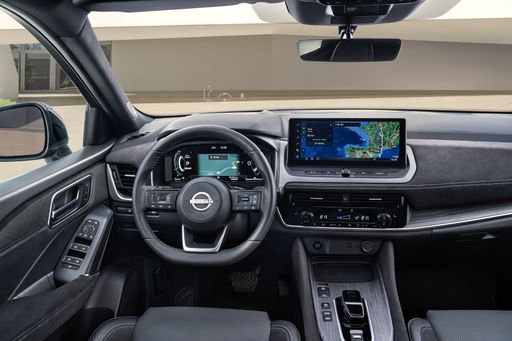
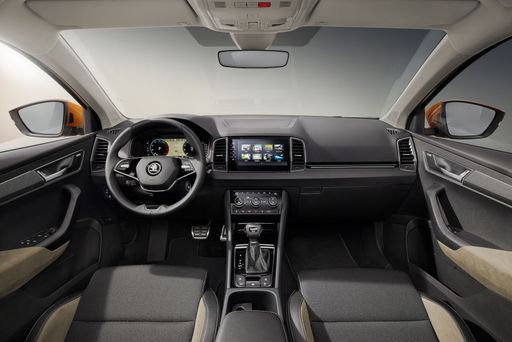
The Nissan Qashqai prioritises a tranquil cabin and comfortable front seats with a contemporary infotainment setup that many find intuitive and immediate, whereas the Skoda Karoq opts for a straightforward, functional interior that puts practicality before flair. Nissan Qashqai’s Google‑based system and physical climate controls reduce fiddling and make short drives less stressful, while Skoda Karoq’s pared‑back layout and useful storage nooks reward owners who value simple, no‑nonsense ergonomics. Material choices feel slightly more modern in the Qashqai in visible areas, but the Karoq’s layout and visibility often make daily chores feel easier. If plush quietness and tech polish are your priorities, the Qashqai pulls ahead; if clear logic and usable cubbies matter more, the Karoq wins the day.

Karoq

Practicality and family usability

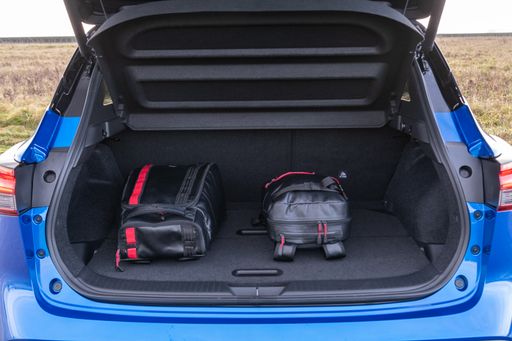
The Skoda Karoq is the more pragmatic partner for families who pack a lot: its boot and smart load solutions make loading and organising luggage noticeably easier than in the Nissan Qashqai. Nissan Qashqai still performs well with wide‑opening doors and helpful camera views that simplify parking and child‑seat handling, but its boot lip and variable floor can feel fiddly with heavy bags. Skoda Karoq’s optional modular seating and abundance of little touches (nets, hooks, concealed trays) turn routine errands into less of a juggling act. So for holiday luggage, sports kit or a buggy‑heavy life the Karoq will usually feel more competent; the Qashqai suits families who prioritise cabin comfort and town manoeuvrability over maximum cargo flexibility.

Qashqai

City friendliness versus motorway manners

In the city the Nissan Qashqai shines: silent low‑speed manners, an almost single‑pedal feel in traffic and sharp camera aids make congestion less draining than in the Skoda Karoq. The Skoda Karoq, however, comes into its own on longer journeys — its steady ride, low wind and tyre noise and overall stability deliver a relaxed motorway companion. Nissan Qashqai can be a strong all‑rounder but is more tailored to stop‑start life and shorter stints, while Skoda Karoq is the one you’ll be grateful for on extended trips or when carrying heavier loads. Choose the Qashqai for urban calm and tech convenience; choose the Karoq for relaxed long‑distance cruising and load‑carrying consistency.

Karoq

Buyer fit: who should choose which and why

If your days are a mix of school runs, city meetings and a desire for a quiet, modern cabin, the Nissan Qashqai will feel like an immediate companion thanks to its relaxed drive and connected features — it’s for buyers who prize comfort and tech polish. The Skoda Karoq is aimed at buyers who prioritise space, straightforward usability and a steady demeanour on motorways and holidays; it rewards those who value utility and clever details over flash. Neither choice is objectively superior; the right pick depends on whether you want the Qashqai’s refined, tech‑leaning experience or the Karoq’s pragmatic, capacity‑first approach. Below we drill into the technical differences so you can match those real‑world impressions to engines, luggage layouts and equipment levels that matter to your life.

Here’s where it gets real: The technical differences in detail

Qashqai

Costs and Efficiency:

Price and efficiency are often the first things buyers look at. Here it becomes clear which model has the long-term edge – whether at the pump, the plug, or in purchase price.

Skoda Karoq is only slightly cheaper – starting at 29,100 £ , while the Nissan Qashqai costs 29,600 £ . That’s a price difference of around 523 £.

Fuel consumption also shows a difference: the Nissan Qashqai uses 4.3 L/100km and is slightly more efficient than the Skoda Karoq with 4.9 L/100km. The difference is about 0.6 L/100km.

Karoq

Engine and Performance:

Power, torque and acceleration are the classic benchmarks for car enthusiasts – and here, some clear differences start to show.

When it comes to engine power, the Nissan Qashqai offers marginally more power – delivering 205 HP compared to 190 HP. That’s roughly 15 HP more horsepower.

When accelerating from 0 to 100 km/h, the Skoda Karoq is barely quicker – completing the sprint in 7 s, while the Nissan Qashqai takes 7.6 s. That’s about 0.6 s quicker.

There’s also a difference in torque: the Skoda Karoq delivers marginally more torque with 360 Nm compared to 330 Nm. That’s about 30 Nm more.

Qashqai

Space and Everyday Use:

Cabin size, boot volume and payload all play a role in everyday practicality. Here, comfort and flexibility make the difference.

Both vehicles offer seating for 5 people.

In terms of curb weight, Skoda Karoq is only slightly lighter – 1,380 kg compared to 1,420 kg. The difference is around 40 kg.

Looking at boot space, the Skoda Karoq offers very slightly more boot space – 521 L compared to 504 L. That’s a difference of about 17 L.

When it comes to payload, the Skoda Karoq carries very slightly more – 549 kg compared to 516 kg. That’s a difference of about 33 kg.

Who wins the race in the data check?

The Nissan Qashqai has only a minor advantage in the objective data comparison.
This result only shows which model scores more points on paper – not which of the two cars feels right for you.

from £29,600
Qashqai

Nissan Qashqai

  • Engine Type Petrol MHEV, Full Hybrid
  • Transmission Manuel, Automatic
  • Drive Type Front-Wheel Drive, All-Wheel Drive
  • Power HP 158 - 205 HP
  • Consumption L/100km 4.3 - 6.8 L/100km
Nissan Qashqai
Skoda Karoq

Costs and Consumption

View detailed analysis

Engine and Performance

View detailed analysis

Dimensions and Body

View detailed analysis

Nissan Qashqai

The Nissan Qashqai is a compact crossover that blends everyday practicality with a comfortable, composed driving experience and a smart, well finished interior. It feels sensible and versatile for city life and longer trips, appealing to buyers who want a reliable, low fuss family car.

details

Skoda Karoq

Skoda Karoq is a smartly packaged compact SUV that balances practical family-friendly space with composed handling, making daily drives feel easy and assured. Its straightforward design, roomy cabin with clever storage solutions, and sensible equipment make it a strong choice for buyers seeking value and versatility without fuss.

details
Nissan Qashqai
Skoda Karoq

Costs and Consumption

Price
29,600 - 39,900 £
Price
29,100 - 41,700 £
Consumption L/100km
4.3 - 6.8 L/100km
Consumption L/100km
4.9 - 7.6 L/100km
Consumption kWh/100km
-
Consumption kWh/100km
-
Electric Range
-
Electric Range
-
Battery Capacity
-
Battery Capacity
-
co2
98 - 152 g/km
co2
128 - 173 g/km
Fuel tank capacity
-
Fuel tank capacity
-

Dimensions and Body

Body Type
SUV
Body Type
SUV
Seats
5
Seats
5
Doors
-
Doors
-
Curb weight
1,420 - 1,624 kg
Curb weight
1,380 - 1,655 kg
Trunk capacity
479 - 504 L
Trunk capacity
521 L
Length
-
Length
-
Width
1,835 mm
Width
1,841 mm
Height
-
Height
-
Max trunk capacity
-
Max trunk capacity
-
Payload
446 - 516 kg
Payload
456 - 549 kg

Engine and Performance

Engine Type
Petrol MHEV, Full Hybrid
Engine Type
Petrol, Diesel
Transmission
Manuel, Automatic
Transmission
Manuel, Automatic
Transmission Detail
Manual Gearbox, CVT, Reduction Gearbox
Transmission Detail
Manual Gearbox, Dual-Clutch Automatic
Drive Type
Front-Wheel Drive, All-Wheel Drive
Drive Type
Front-Wheel Drive, All-Wheel Drive
Power HP
158 - 205 HP
Power HP
115 - 190 HP
Acceleration 0-100km/h
7.6 - 9.9 s
Acceleration 0-100km/h
7 - 11.2 s
Max Speed
-
Max Speed
-
Torque
260 - 330 Nm
Torque
200 - 360 Nm
Number of Cylinders
3 - 4
Number of Cylinders
3 - 4
Power kW
116 - 151 kW
Power kW
85 - 140 kW
Engine capacity
1,332 - 1,498 cm3
Engine capacity
999 - 1,984 cm3

General

Model Year
2,025 - 2,026
Model Year
2025
CO2 Efficiency Class
E, C
CO2 Efficiency Class
D, E, F
Brand
Nissan
Brand
Skoda
DriveDuel uses data analysis and artificial intelligence to evaluate vehicle data and create content. Content is regularly reviewed and improved. The displayed prices are estimates based on German list prices, adjusted to the respective country’s VAT. Country-specific registration taxes are not included. This information is not legally binding.