VS

Skoda Kamiq vs Skoda Karoq comparison

Compare performance (150 HP vs 190 HP), boot space and price (22,300 £ vs 29,100 £ ) at a glance. Find out which car is the better choice for you – Skoda Kamiq or Skoda Karoq?

Skoda Kamiq vs Skoda Karoq: Key differences

Skoda Kamiq

5 (5 Reviews)
rate
  • clearly cheaper
  • a bit lighter
details

Skoda Karoq

4.6 (2 Reviews)
rate
  • visibly more power
  • marginally more efficient
  • slightly quicker 0–100 km/h
  • noticeably more trunk space
details

By Achim Sedelmaier

Kamiq

Skoda Kamiq VS Skoda Karoq: Which Skoda SUV fits your life?

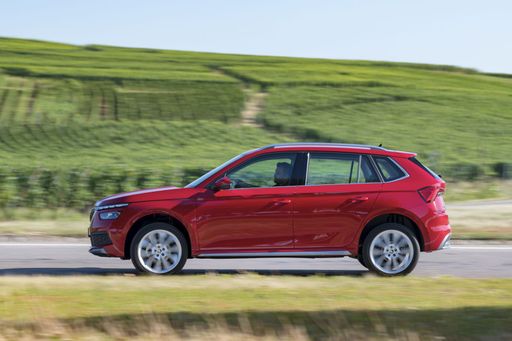
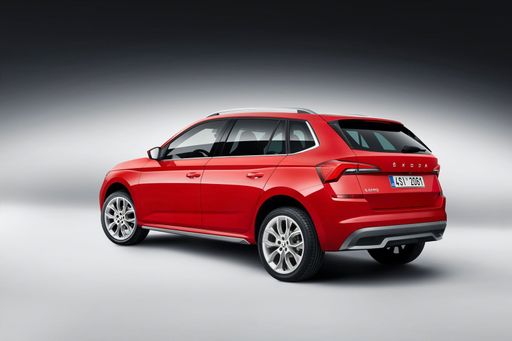
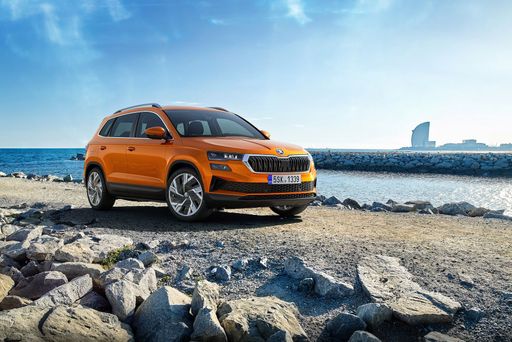
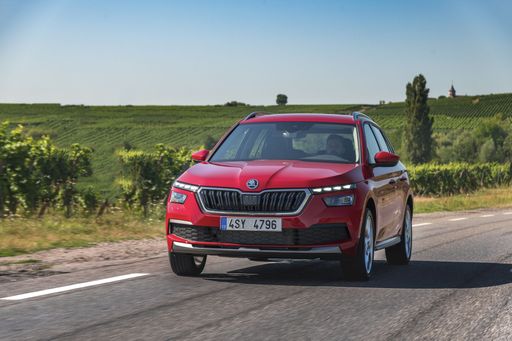
The Skoda Kamiq and Skoda Karoq share the same no-nonsense, family-friendly DNA, but they deliver it at two different sizes and temperaments. Think of the Kamiq as the tidy, easygoing city ally that still surprises with space, while the Karoq feels like the grown-up all-rounder made for bigger loads and longer journeys. This comparison focuses on how they differ when you actually live with them: comfort, usability, cabin feel, and day-to-day practicality. If you’re choosing between them, it’s less about badge and more about where and how you drive, and how much room your life really needs.
Karoq

On-road character and comfort

The Skoda Kamiq rides with a relaxed, softly sprung attitude that keeps daily driving calm, especially around town and on mixed commutes. The Skoda Karoq feels more settled at speed, with extra composure and a quieter, more mature vibe on long motorway runs. Pick sensible wheel sizes and the Karoq irons out distance with ease, while the Kamiq keeps things light and undemanding for shorter hops and urban errands. Enthusiasts won’t find fireworks in either, but the Karoq’s added heft and control give it a touch more confidence on rougher roads.

Kamiq

Space, boot and family practicality

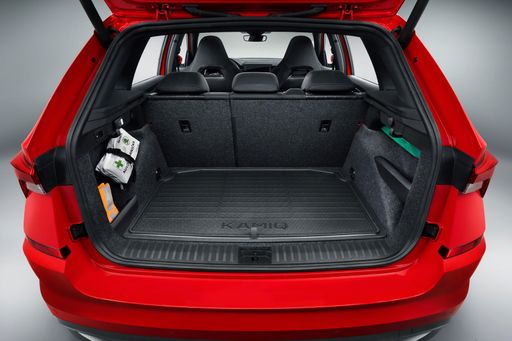
The Skoda Karoq is the obvious choice if your weekends involve pushchairs, sports kit or flat-pack furniture, thanks to a larger, squarer load bay and the option of a highly flexible rear-seat system. The Skoda Kamiq answers back with outstanding rear legroom for its class, so adults and child seats fit more easily than you might expect from a smaller SUV. In everyday use the Karoq’s cargo area is simply more accommodating for bulky items, while the Kamiq suits lighter family life and weekly shopping without drama. Note that the Kamiq’s boot is easiest to live with when specified with the smarter floor solution, whereas the Karoq’s configurability does the heavy lifting for growing families.

Karoq

City friendliness and ease of use

The Skoda Kamiq is the handier tool in tight streets: compact footprint, light steering, excellent visibility and simple parking manners. The Skoda Karoq remains easy to place and steer, and standard rear-camera help means it never feels unwieldy, but it still occupies more space on a crowded curb. If your routine is school runs, parallel parking and multi-storey ramps, the Kamiq’s smaller size reduces stress. If you split your time between town and longer A-roads, the Karoq’s calm high-speed demeanor more than offsets the extra inches in the suburbs.

Kamiq

Cabin feel, tech and perceived quality

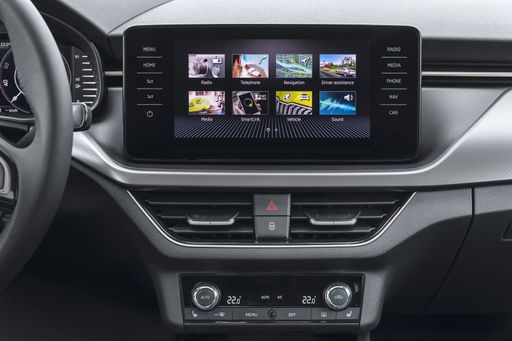
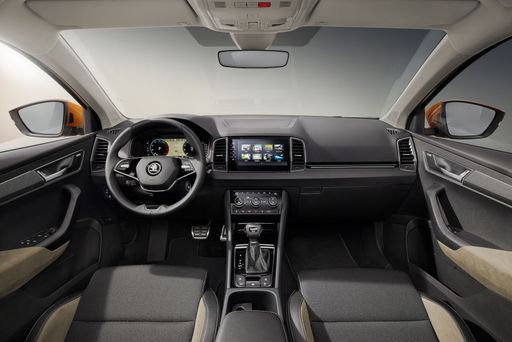
Both cabins are straightforward and logically laid out, prioritizing physical controls where you want them and clear menus where you don’t. The Skoda Kamiq keeps things refreshingly simple, though its infotainment can feel a touch slower and some plastics are more utilitarian to the eye. The Skoda Karoq brings a slightly richer, more hushed ambience and generally snappier systems, though trims vary and some versions swap familiar knobs for touchy panels. In day-to-day use, the Kamiq feels airy and no-fuss, while the Karoq comes across as more substantial and serene on the move.

Karoq

Running costs, value and who should buy which

The Skoda Kamiq typically undercuts the Skoda Karoq on purchase price and tends to sip less fuel in real-world commuting, making it the wallet-friendly pick for urban and mixed-use buyers. The Skoda Karoq asks more upfront but pays you back in load space, long-distance quiet, and tow-friendly stability, which matters if holidays mean bikes, trailers or caravans. Neither offers hybrid assistance, so company-car tax hunters may look elsewhere, but private buyers will appreciate the straightforward ownership experience and useful “Simply Clever” details in both. In short: choose the Kamiq if you prize city agility, low day-to-day costs and surprising rear-seat space; choose the Karoq if you need true family practicality, longer-trip refinement and flexibility—then dive into the specs to match the engine and options to your lifestyle.

Here’s where it gets real: The technical differences in detail

Kamiq

Costs and Efficiency:

When it comes to price and running costs, the biggest differences usually appear. This is often where you see which car fits your budget better in the long run.

Skoda Kamiq is clearly cheaper – starting at 22,300 £ , while the Skoda Karoq costs 29,100 £ . That’s a price difference of around 6,814 £.

Fuel consumption also shows a difference: the Skoda Karoq uses 4.9 L/100km and is marginally more efficient than the Skoda Kamiq with 5.3 L/100km. The difference is about 0.4 L/100km.

Karoq

Engine and Performance:

Power, torque and acceleration are the classic benchmarks for car enthusiasts – and here, some clear differences start to show.

When it comes to engine power, the Skoda Karoq offers visibly more power – delivering 190 HP compared to 150 HP. That’s roughly 40 HP more horsepower.

When accelerating from 0 to 100 km/h, the Skoda Karoq is slightly quicker – completing the sprint in 7 s, while the Skoda Kamiq takes 8.1 s. That’s about 1.1 s quicker.

There’s also a difference in torque: the Skoda Karoq delivers clearly more torque with 360 Nm compared to 250 Nm. That’s about 110 Nm more.

Kamiq

Space and Everyday Use:

Beyond pure performance, interior space and usability matter most in daily life. This is where you see which car is more practical and versatile.

Both vehicles offer seating for 5 people.

In terms of curb weight, Skoda Kamiq is a bit lighter – 1,231 kg compared to 1,380 kg. The difference is around 149 kg.

Looking at boot space, the Skoda Karoq offers noticeably more boot space – 521 L compared to 400 L. That’s a difference of about 121 L.

When it comes to payload, the Skoda Karoq carries only slightly more – 549 kg compared to 539 kg. That’s a difference of about 10 kg.

Who wins the race in the data check?

The Skoda Karoq is clearly superior overall in the objective data comparison.
This result only shows which model scores more points on paper – not which of the two cars feels right for you.

from £29,100
Karoq

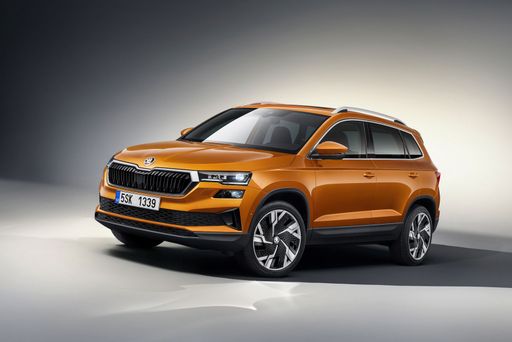
Skoda Karoq

  • Engine Type : Petrol, Diesel
  • Transmission : Manuel, Automatic
  • Drive Type : Front-Wheel Drive, All-Wheel Drive
  • Power HP : 115 - 190 HP
  • Consumption L/100km : 4.9 - 7.6 L/100km
Skoda Kamiq
Skoda Karoq

Costs and Consumption

View detailed analysis

Engine and Performance

View detailed analysis

Dimensions and Body

View detailed analysis

Skoda Kamiq

The Skoda Kamiq is a practical, well-built small crossover that mixes city-friendly manners with surprisingly versatile interior space and clever storage solutions. It offers a comfortable ride, user-friendly technology and solid value, making it a sensible choice for everyday driving.

details

Skoda Karoq

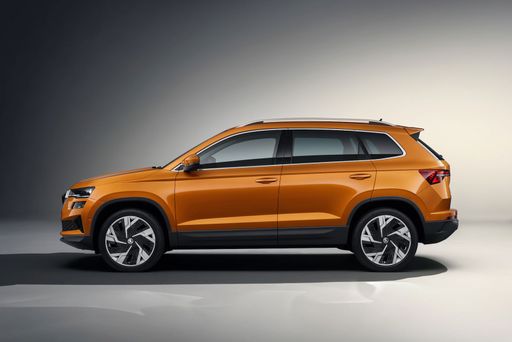
Skoda Karoq is a smartly packaged compact SUV that balances practical family-friendly space with composed handling, making daily drives feel easy and assured. Its straightforward design, roomy cabin with clever storage solutions, and sensible equipment make it a strong choice for buyers seeking value and versatility without fuss.

details
Skoda Kamiq
Skoda Karoq

Costs and Consumption

Price
22,300 - 32,700 £
Price
29,100 - 41,700 £
Consumption L/100km
5.3 - 5.7 L/100km
Consumption L/100km
4.9 - 7.6 L/100km
Consumption kWh/100km
-
Consumption kWh/100km
-
Electric Range
-
Electric Range
-
Battery Capacity
-
Battery Capacity
-
co2
121 - 128 g/km
co2
128 - 173 g/km
Fuel tank capacity
-
Fuel tank capacity
-

Dimensions and Body

Body Type
SUV
Body Type
SUV
Seats
5
Seats
5
Doors
-
Doors
-
Curb weight
1,231 - 1,340 kg
Curb weight
1,380 - 1,655 kg
Trunk capacity
400 L
Trunk capacity
521 L
Length
-
Length
-
Width
1,793 mm
Width
1,841 mm
Height
-
Height
-
Max trunk capacity
-
Max trunk capacity
-
Payload
439 - 539 kg
Payload
456 - 549 kg

Engine and Performance

Engine Type
Petrol
Engine Type
Petrol, Diesel
Transmission
Manuel, Automatic
Transmission
Manuel, Automatic
Transmission Detail
Manual Gearbox, Dual-Clutch Automatic
Transmission Detail
Manual Gearbox, Dual-Clutch Automatic
Drive Type
Front-Wheel Drive
Drive Type
Front-Wheel Drive, All-Wheel Drive
Power HP
95 - 150 HP
Power HP
115 - 190 HP
Acceleration 0-100km/h
8.1 - 11 s
Acceleration 0-100km/h
7 - 11.2 s
Max Speed
-
Max Speed
-
Torque
175 - 250 Nm
Torque
200 - 360 Nm
Number of Cylinders
3 - 4
Number of Cylinders
3 - 4
Power kW
70 - 110 kW
Power kW
85 - 140 kW
Engine capacity
999 - 1,498 cm3
Engine capacity
999 - 1,984 cm3

General

Model Year
2025
Model Year
2025
CO2 Efficiency Class
D
CO2 Efficiency Class
D, E, F
Brand
Skoda
Brand
Skoda
DriveDuel uses data analysis and artificial intelligence to evaluate vehicle data and create content. Content is regularly reviewed and improved. The displayed prices are estimates based on German list prices, adjusted to the respective country’s VAT. Country-specific registration taxes are not included. This information is not legally binding.