
 Deutschland
 France
 Nederland
 Great Britain
 Sverige
 Danmark
 Suomi
Suomi Italia
 Polska
 Česko
Česko España
VS
Mercedes C-Class Saloon vs Volvo S90 comparison
Compare performance (680 HP vs 455 HP), boot space and price (41,300 £ vs 62,200 £ ) at a glance. Find out which car is the better choice for you – Mercedes C-Class Saloon or Volvo S90?
Mercedes C-Class Saloon vs Volvo S90: Key differences
C-Class Saloon
Costs and Efficiency:
When it comes to price and running costs, the biggest differences usually appear. This is often where you see which car fits your budget better in the long run.
Mercedes C-Class Saloon is considerably cheaper – starting at 41,300 £ , while the Volvo S90 costs 62,200 £ . That’s a price difference of around 20,903 £.
Fuel consumption also shows a difference: the Volvo S90 uses 0.8 L/100km and is substantially more efficient than the Mercedes C-Class Saloon with 4.5 L/100km. The difference is about 3.7 L/100km.
As for electric range, the Volvo S90 offers substantially more range – reaching up to 89 km, about 78 km more than the Mercedes C-Class Saloon.
S90
Engine and Performance:
Power, torque and acceleration say a lot about how a car feels on the road. This is where you see which model delivers more driving dynamics.
When it comes to engine power, the Mercedes C-Class Saloon offers clearly more power – delivering 680 HP compared to 455 HP. That’s roughly 225 HP more horsepower.
When accelerating from 0 to 100 km/h, the Mercedes C-Class Saloon is clearly quicker – completing the sprint in 3.4 s, while the Volvo S90 takes 4.7 s. That’s about 1.3 s quicker.
There’s also a difference in torque: the Mercedes C-Class Saloon delivers clearly more torque with 1,020 Nm compared to 709 Nm. That’s about 311 Nm more.
C-Class Saloon
Space and Everyday Use:
Cabin size, boot volume and payload all play a role in everyday practicality. Here, comfort and flexibility make the difference.
Both vehicles offer seating for 5 people.
In terms of curb weight, Mercedes C-Class Saloon is somewhat lighter – 1,695 kg compared to 1,912 kg. The difference is around 217 kg.
Looking at boot space, the Mercedes C-Class Saloon offers marginally more boot space – 455 L compared to 453 L. That’s a difference of about 2 L.
When it comes to payload, the Mercedes C-Class Saloon carries only slightly more – 570 kg compared to 518 kg. That’s a difference of about 52 kg.
Who wins the race in the data check?
The Volvo S90 holds a decisive overall lead in the objective data comparison.
This result only shows which model scores more points on paper – not which of the two cars feels right for you.
from £62,200
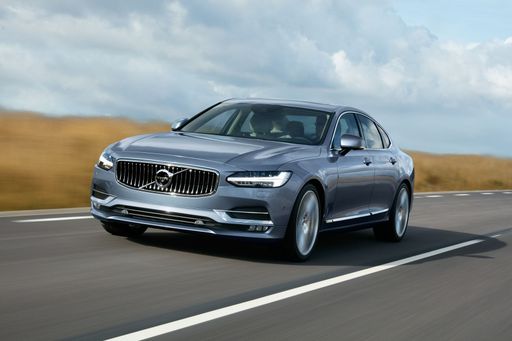
Volvo S90
Mercedes C-Class Saloon
Volvo S90
Costs and Consumption
View detailed analysis
View detailed analysis
Engine and Performance
View detailed analysis
View detailed analysis
Dimensions and Body
View detailed analysis
View detailed analysis
Mercedes C-Class Saloon
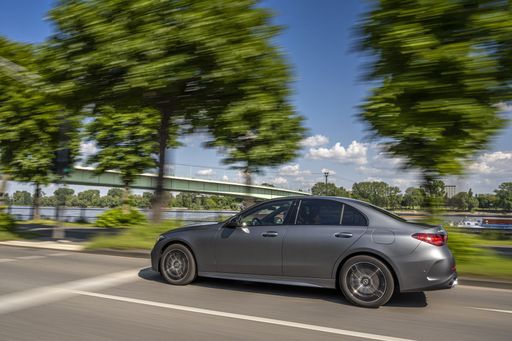
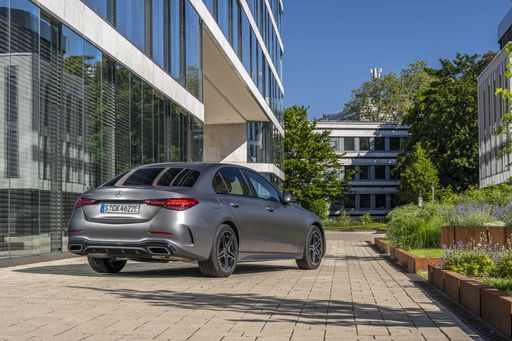
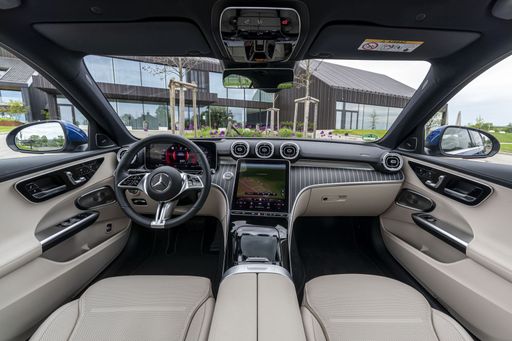
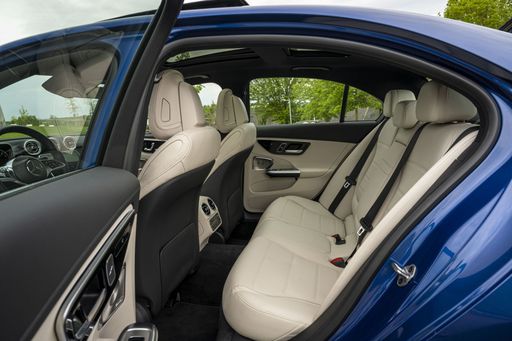
The Mercedes C‑Class is the compact executive that dresses like it owns the boulevard, with an interior that blends modern elegance and plush comfort to make everyday driving feel unexpectedly special. On the road it pairs poise with a hint of cheeky agility, rewarding drivers who want refinement without forfeiting a touch of fun — and yes, it still looks great in the driveway.
details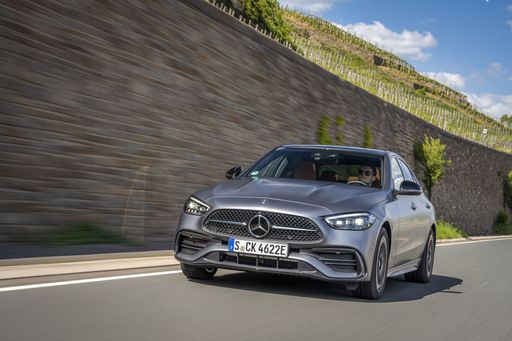
Volvo S90
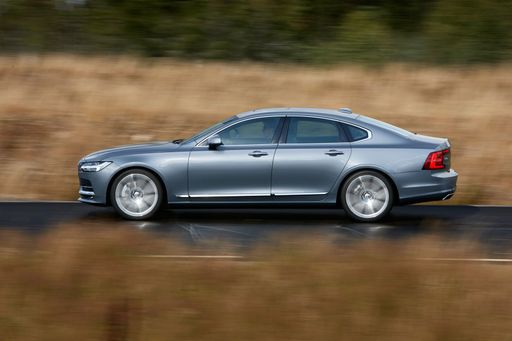
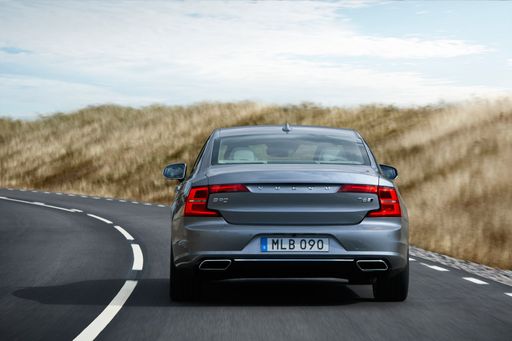
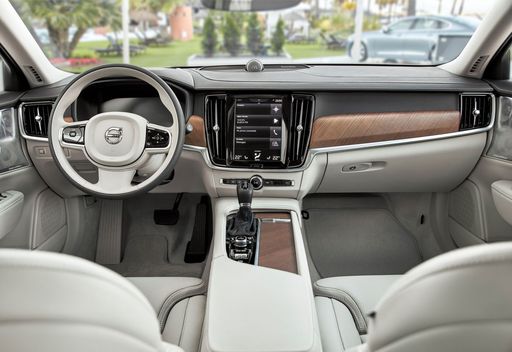
The Volvo S90 is a composed, elegant luxury sedan that dresses Scandinavian restraint in a quietly imposing package. It prioritises serene highway manners and a calm, tech‑savvy cabin, making it a car that suggests you deserve the nicer things in life without ever raising its voice.
details
Mercedes C-Class Saloon
Volvo S90
Costs and Consumption |
|
|---|---|
|
Price
41,300 - 103,400 £
|
Price
62,200 - 70,500 £
|
|
Consumption L/100km
4.5 - 9 L/100km
|
Consumption L/100km
0.8 - 5.7 L/100km
|
|
Consumption kWh/100km
-
|
Consumption kWh/100km
-
|
|
Electric Range
11 km
|
Electric Range
89 km
|
|
Battery Capacity
-
|
Battery Capacity
14.7 kWh
|
|
co2
119 - 205 g/km
|
co2
17 - 149 g/km
|
|
Fuel tank capacity
-
|
Fuel tank capacity
60 L
|
Dimensions and Body |
|
|---|---|
|
Body Type
Sedan
|
Body Type
Sedan
|
|
Seats
5
|
Seats
5
|
|
Doors
-
|
Doors
4
|
|
Curb weight
1,695 - 2,165 kg
|
Curb weight
1,912 - 2,119 kg
|
|
Trunk capacity
280 - 455 L
|
Trunk capacity
431 - 453 L
|
|
Length
-
|
Length
4,969 mm
|
|
Width
1,820 - 1,900 mm
|
Width
1,879 mm
|
|
Height
-
|
Height
1,440 mm
|
|
Max trunk capacity
-
|
Max trunk capacity
-
|
|
Payload
485 - 570 kg
|
Payload
451 - 518 kg
|
Engine and Performance |
|
|---|---|
|
Engine Type
Petrol MHEV, Diesel MHEV, Plugin Hybrid
|
Engine Type
Diesel MHEV, Plugin Hybrid
|
|
Transmission
Automatic
|
Transmission
Automatic
|
|
Transmission Detail
Automatic Gearbox
|
Transmission Detail
Automatic Gearbox
|
|
Drive Type
Rear-Wheel Drive, All-Wheel Drive
|
Drive Type
All-Wheel Drive
|
|
Power HP
183 - 680 HP
|
Power HP
235 - 455 HP
|
|
Acceleration 0-100km/h
3.4 - 8.6 s
|
Acceleration 0-100km/h
4.7 - 7 s
|
|
Max Speed
-
|
Max Speed
180 km/h
|
|
Torque
250 - 1,020 Nm
|
Torque
480 - 709 Nm
|
|
Number of Cylinders
4
|
Number of Cylinders
4
|
|
Power kW
135 - 500 kW
|
Power kW
173 - 335 kW
|
|
Engine capacity
1,496 - 1,999 cm3
|
Engine capacity
1,969 cm3
|
General |
|
|---|---|
|
Model Year
2,024 - 2,025
|
Model Year
2,022 - 2,024
|
|
CO2 Efficiency Class
E, D, G
|
CO2 Efficiency Class
E, B
|
|
Brand
Mercedes-Benz
|
Brand
Volvo
|
DriveDuel uses data analysis and artificial intelligence to evaluate vehicle data and create content. Content is regularly reviewed and improved.
The displayed prices are estimates based on German list prices, adjusted to the respective country’s VAT. Country-specific registration taxes are not included. This information is not legally binding.