VS

Mercedes B Class vs Mercedes C Class Sedan comparison

Compare performance (238 HP vs 680 HP), boot space and price (33,100 £ vs 41,300 £ ) at a glance. Find out which car is the better choice for you – Mercedes B Class or Mercedes C Class Sedan?

Mercedes B Class vs Mercedes C Class Sedan: Key differences

Mercedes B Class

4.9 (5 Reviews)
rate
  • visibly cheaper
  • markedly lighter

Mercedes C Class Sedan

  • substantially more power
  • substantially more efficient
  • noticeably more electric range
  • considerably quicker 0–100 km/h

All details on performance, efficiency, range and trunk space can be found in the technical comparison below – including user reviews for both models.

B Class

The Clash of Elegance and Versatility: Mercedes B-Klasse vs. Mercedes C-Klasse Limousine

When it comes to esteemed luxury, there's a name that resonates with elegance and performance—Mercedes-Benz. Their lineup features both the refined C-Klasse Limousine and the versatile B-Klasse. If you're in the market for a blend of luxury and functionality, which among these two should you pick? Let's dive into their specifics to find out.
C Class Sedan

Design and Dimensions: A Matter of Preferences

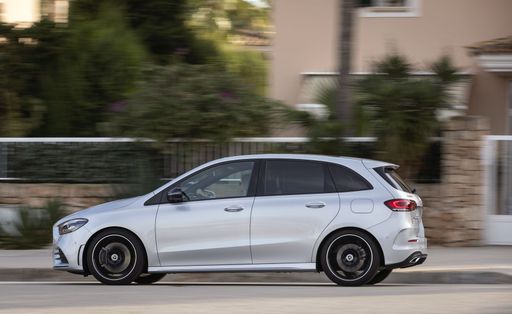
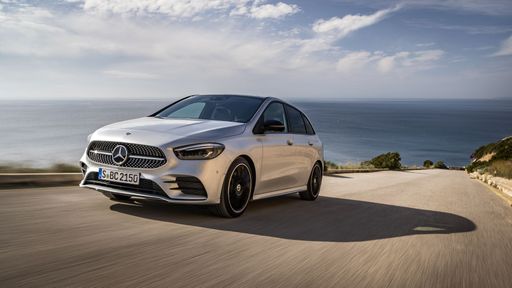
The B-Klasse stands out as a Multi-Purpose Vehicle (MPV) tailored for those who prioritize space and functionality. Measuring 4419 mm in length, 1796 mm in width, and 1562 mm in height, it is compact enough for urban settings while providing a roomy cabin. Its high roofline translates to excellent headspace, vital for families or anyone who appreciates a command view of the road.

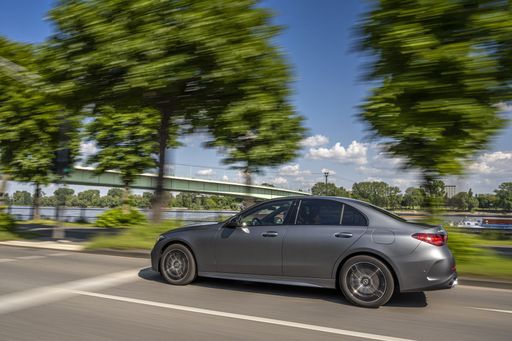
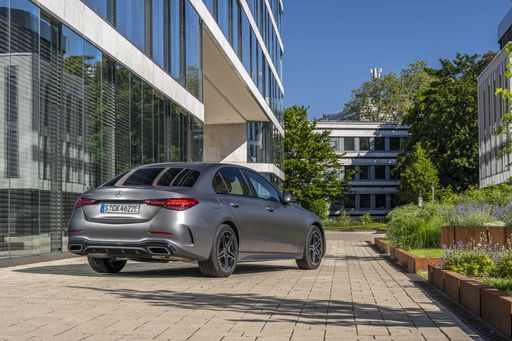
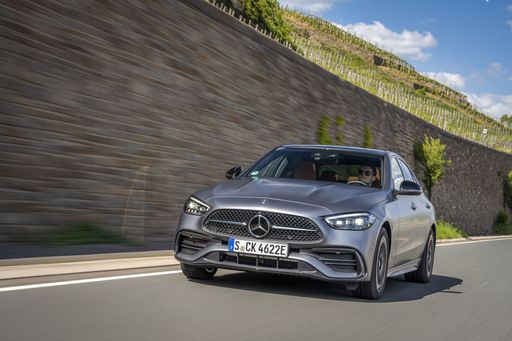
In contrast, the C-Klasse Limousine falls into the sedan category, known for its sleek aesthetics and executive appeal. The model spans a length ranging from 4751 mm to 4842 mm, about 1820 mm to 1900 mm in width, and 1438 mm to 1458 mm in height, depending on the trim. Its elongated body suggests plush interiors and ample legroom, framed by aerodynamic lines that speak of elegance.

B Class

Engine Performance and Technology

The B-Klasse offers a range of engine types, including petrol MHEV, diesel, and plug-in hybrids. The power output varies between 116 HP and 238 HP, with top speeds reaching up to 250 km/h. Its most efficient model boasts a consumption of 0.8 L/100km and offers an electric range of up to 83 km, creditable to a 12.9 kWh battery, perfect for eco-conscious urban dwellers.

On the other hand, the C-Klasse Limousine offers more robust performance options. With power ranging from 183 HP to an astonishing 680 HP, this sedan caters to varied tastes, from refined cruising to sporty thrills. It comes with petrol MHEV, diesel MHEV, and plug-in hybrid powertrains. Consumption rates can be as low as 0.4 L/100km, featuring an electric range up to 116 km, thanks to its larger 19.5 kWh battery.

C Class Sedan

Interior Comfort and Utility

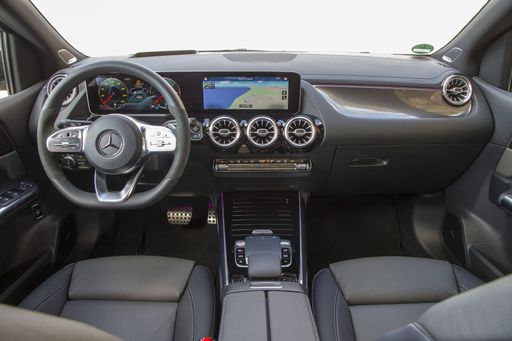
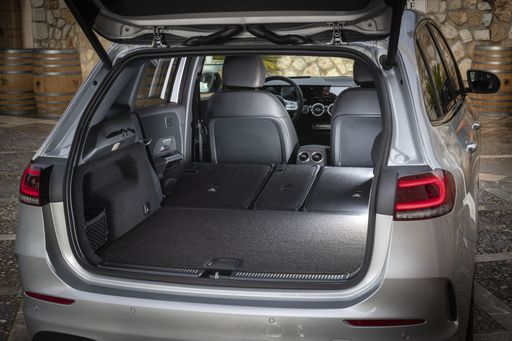
The B-Klasse seats up to five passengers and comes with a trunk capacity of up to 455 liters, combining comfort with utility. Its design targets families and those needing practical daily drivers, offering advanced infotainment systems and spacious interiors.

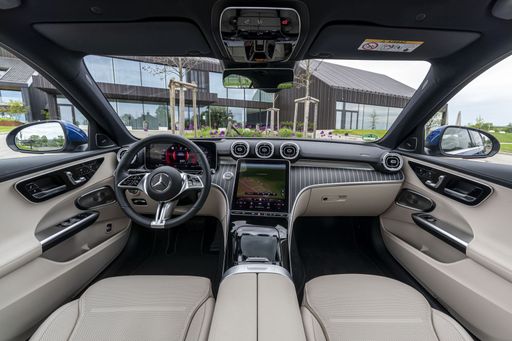
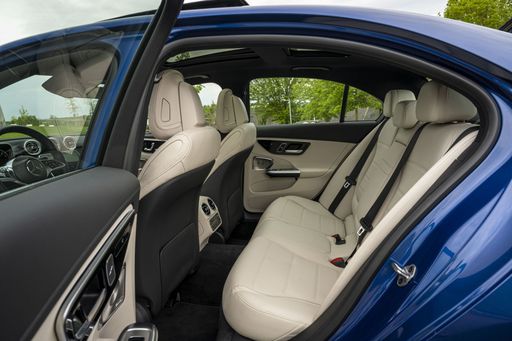
The C-Klasse, despite its sedan footprint, does not compromise on comfort. It also seats five and offers competitive cargo space, with a trunk capacity that maxes out around 455 liters. The interior is tailored with premium materials, and its dashboard bursts with innovative tech, making driving as opulent as it is exciting.

B Class

Driving Dynamics and Efficiency

For those prioritizing front-wheel or all-wheel drive configurations and nimble handling, the B-Klasse is an ideal choice for navigating cityscapes with its responsive dual-clutch automatic transmission. Its acceleration sees it hit 100 km/h in as fast as 6.5 seconds, depending on the model.

The C-Klasse Limousine is the choice for drivers who desire a sporty, engaging drive. Rear-wheel and all-wheel drive options create a dynamic driving experience, making the vehicle feel agile despite its size. The C-Klasse can accelerate from 0 to 100 km/h in a mere 3.4 seconds with its top-tier models, inviting feelings of adrenaline on-demand.

C Class Sedan

Conclusion: Which Mercedes for You?

Both the Mercedes B-Klasse and C-Klasse Limousine embody the brand's commitment to quality and innovation. The B-Klasse suits practical drivers who value flexibility and family-friendly features. Meanwhile, the C-Klasse is tailored for those who desire an executive style with sports car dynamics.

Your choice will hinge on your lifestyle priorities: Do you seek the adaptability of an MPV or the elegance of a sedan? Whichever path you choose, Mercedes-Benz ensures your ride is nothing short of impeccable.

Here’s where it gets real: The technical differences in detail

B Class

Costs and Efficiency:

Looking at overall running costs, both models reveal some interesting differences in everyday economy.

Mercedes B Class is visibly cheaper – starting at 33,100 £ , while the Mercedes C Class Sedan costs 41,300 £ . That’s a price difference of around 8,196 £.

Fuel consumption also shows a difference: the Mercedes C Class Sedan uses 1.6 L/100km and is substantially more efficient than the Mercedes B Class with 2.5 L/100km. The difference is about 0.9 L/100km.

As for electric range, the Mercedes C Class Sedan offers noticeably more range – reaching up to 117 km, about 34 km more than the Mercedes B Class.

C Class Sedan

Engine and Performance:

Under the bonnet, it becomes clear which model is tuned for sportiness and which one takes the lead when you hit the accelerator.

When it comes to engine power, the Mercedes C Class Sedan offers substantially more power – delivering 680 HP compared to 238 HP. That’s roughly 442 HP more horsepower.

When accelerating from 0 to 100 km/h, the Mercedes C Class Sedan is considerably quicker – completing the sprint in 3.4 s, while the Mercedes B Class takes 6.5 s. That’s about 3.1 s quicker.

Looking at top speed, the Mercedes C Class Sedan is somewhat faster – reaching 250 km/h, while the Mercedes B Class tops out at 223 km/h. The difference is around 27 km/h.

There’s also a difference in torque: the Mercedes C Class Sedan delivers clearly more torque with 1,020 Nm compared to 450 Nm. That’s about 570 Nm more.

B Class

Space and Everyday Use:

Beyond pure performance, interior space and usability matter most in daily life. This is where you see which car is more practical and versatile.

Both vehicles offer seating for 5 people.

In terms of curb weight, Mercedes B Class is markedly lighter – 1,405 kg compared to 1,695 kg. The difference is around 290 kg.

Boot capacity is identical – both offer 455 L of storage.

When it comes to payload, the Mercedes C Class Sedan carries marginally more – 570 kg compared to 550 kg. That’s a difference of about 20 kg.

Who wins the race in the data check?

The Mercedes C Class Sedan stands well ahead of its rival in the objective data comparison.
This result only shows which model scores more points on paper – not which of the two cars feels right for you.

from £41,300
C Class Sedan

Mercedes C Class Sedan

  • Engine Type : Petrol MHEV, Plugin Hybrid, Diesel MHEV
  • Transmission : Automatic
  • Drive Type : Rear-Wheel Drive, All-Wheel Drive
  • Power HP : 183 - 680 HP
  • Consumption L/100km : 1.6 - 9 L/100km
  • Electric Range : 11 - 117 km
Mercedes B Class
Mercedes C Class Sedan

Costs and Consumption

View detailed analysis

Engine and Performance

View detailed analysis

Dimensions and Body

View detailed analysis

Mercedes B Class

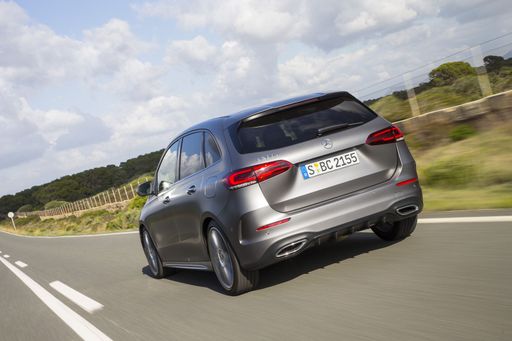
The Mercedes B-Class is a smart, grown-up compact people carrier that dresses everyday practicality in a near‑premium polish, perfect for buyers who want comfort and a classy badge without the theatrics. It won’t set your pulse racing on a back road, but it will make school runs, commutes and grocery hauls feel pleasantly civilized — a reliable, slightly posh companion for real life.

details

Mercedes C Class Sedan

The Mercedes C‑Class is the compact executive that dresses like it owns the boulevard, with an interior that blends modern elegance and plush comfort to make everyday driving feel unexpectedly special. On the road it pairs poise with a hint of cheeky agility, rewarding drivers who want refinement without forfeiting a touch of fun — and yes, it still looks great in the driveway.

details
Mercedes B Class
Mercedes C Class Sedan

Costs and Consumption

Price
33,100 - 52,500 £
Price
41,300 - 103,400 £
Consumption L/100km
2.5 - 6.9 L/100km
Consumption L/100km
1.6 - 9 L/100km
Consumption kWh/100km
-
Consumption kWh/100km
-
Electric Range
83 km
Electric Range
11 - 117 km
Battery Capacity
12.9 kWh
Battery Capacity
19.5 kWh
co2
56 - 156 g/km
co2
41 - 205 g/km
Fuel tank capacity
35 L
Fuel tank capacity
50 L

Dimensions and Body

Body Type
MPV
Body Type
Sedan
Seats
5
Seats
5
Doors
5
Doors
4
Curb weight
1,405 - 1,745 kg
Curb weight
1,695 - 2,195 kg
Trunk capacity
405 - 455 L
Trunk capacity
315 - 455 L
Length
4,419 mm
Length
4,751 mm
Width
1,796 mm
Width
1,820 - 1,900 mm
Height
1,562 mm
Height
1,438 mm
Max trunk capacity
1,440 L
Max trunk capacity
-
Payload
505 - 550 kg
Payload
480 - 570 kg

Engine and Performance

Engine Type
Plugin Hybrid, Petrol MHEV, Diesel
Engine Type
Petrol MHEV, Plugin Hybrid, Diesel MHEV
Transmission
Automatic
Transmission
Automatic
Transmission Detail
Dual-Clutch Automatic
Transmission Detail
Automatic Gearbox
Drive Type
Front-Wheel Drive, All-Wheel Drive
Drive Type
Rear-Wheel Drive, All-Wheel Drive
Power HP
116 - 238 HP
Power HP
183 - 680 HP
Acceleration 0-100km/h
6.5 - 10 s
Acceleration 0-100km/h
3.4 - 8.6 s
Max Speed
223 km/h
Max Speed
235 - 250 km/h
Torque
200 - 450 Nm
Torque
250 - 1,020 Nm
Number of Cylinders
4
Number of Cylinders
4
Power kW
85 - 175 kW
Power kW
135 - 500 kW
Engine capacity
1,332 - 1,991 cm3
Engine capacity
1,496 - 1,999 cm3

General

Model Year
2,024 - 2,025
Model Year
2,024 - 2,025
CO2 Efficiency Class
B, D, E, F
CO2 Efficiency Class
E, B, D, G
Brand
Mercedes-Benz
Brand
Mercedes-Benz
DriveDuel uses data analysis and artificial intelligence to evaluate vehicle data and create content. Content is regularly reviewed and improved. The displayed prices are estimates based on German list prices, adjusted to the respective country’s VAT. Country-specific registration taxes are not included. This information is not legally binding.