VS

Mercedes CLA Shooting Brake vs VW Arteon comparison

Compare performance (354 HP vs 320 HP), boot space and price (48,900 £ vs 43,300 £ ) at a glance. Find out which car is the better choice for you – Mercedes CLA Shooting Brake or VW Arteon?

Mercedes CLA Shooting Brake vs VW Arteon: Key differences

Mercedes CLA Shooting Brake

5 (2 Reviews)
rate
  • very slightly more power

VW Arteon

5 (1 Reviews)
rate
  • slightly cheaper
  • very slightly quicker 0–100 km/h
  • noticeably lighter
  • clearly more trunk space

All details on performance, efficiency, range and trunk space can be found in the technical comparison below – including user reviews for both models.

CLA Shooting Brake

The Battle of the Stylish Wagons: Mercedes CLA Shooting Brake vs. VW Arteon

In the competitive world of automotive elegance, the Mercedes CLA Shooting Brake and the VW Arteon have carved out distinctive niches, marrying performance with functionality. Both wagons appeal to those who seek not only practicality but also a generous dose of sophistication. Let's dive into the specifics and compare these two remarkable models.
Arteon

Performance and Power

The Mercedes CLA Shooting Brake is available in a range of engines, from economical diesel to powerful petrol MHEV. With power outputs spanning from 116 HP to a whopping 421 HP, it offers an engine for every preference. The choice of front-wheel and all-wheel drive further accommodates diverse driving styles, promising a personalized experience across its lineup. The best-in-class acceleration from 0-100 km/h clocks at a brisk 4.1 seconds, impressive for a vehicle of this stature.

On the other hand, the VW Arteon provides similarly compelling performance with its own spectrum of engine choices. The Arteon's diesel and petrol engines offer power outputs ranging from 150 HP to 320 HP. Like its Mercedes counterpart, it features both front-wheel and all-wheel drive options. A notable performance highlight is its swift 4.9-second sprint from 0-100 km/h, thanks to its most potent engine variant, putting it squarely in competition with the CLA Shooting Brake's performance figures.

CLA Shooting Brake

Efficiency and Eco-Friendliness

When it comes to efficiency, the Mercedes CLA Shooting Brake shines with its plug-in hybrid variant boasting an impressive electric range of 85 km, all while maintaining a subdued consumption rate of just 0.8 L/100 km. The battery capacity stands strong at 12.9 kWh, aligning well with modern eco-conscious trends. The various conventional engine options also demonstrate respectable fuel efficiency, ranging from 5 L/100 km to 9.1 L/100 km, depending on the model.

The VW Arteon, while not offering a plug-in hybrid, still provides competitive fuel consumption figures between 5.1 and 8.6 L/100 km. Its largest fuel tank capacity of 66 liters significantly extends driving range, reducing the need for frequent refueling. Despite a somewhat higher CO2 emission profile in its top variants, the Arteon remains a contender in the efficiency stakes.

Arteon

Interior and Cargo Space

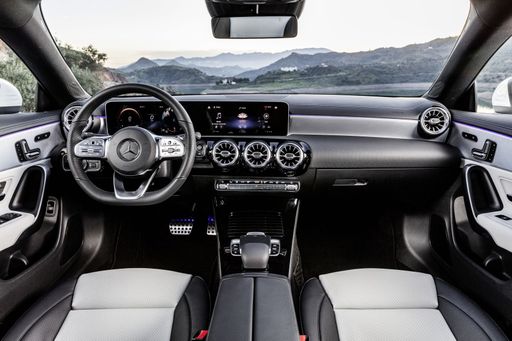
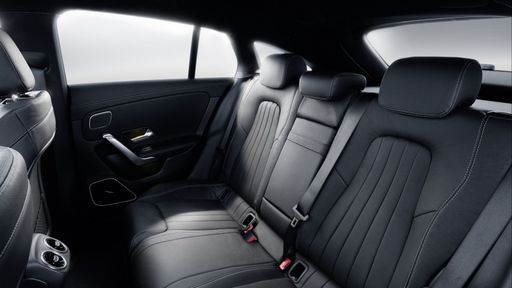
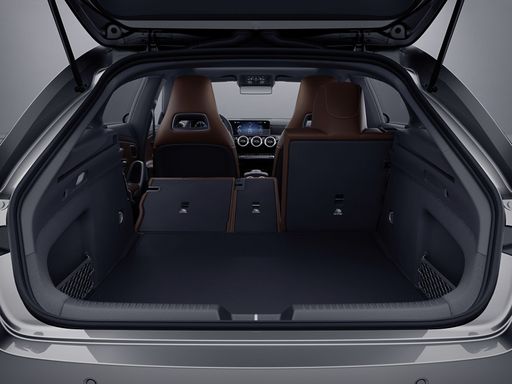
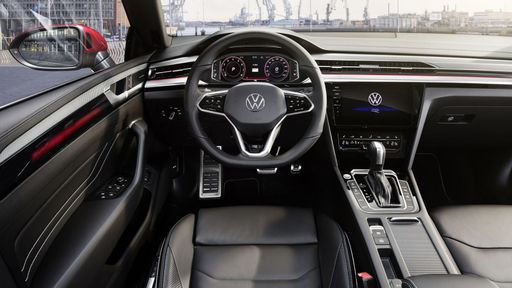
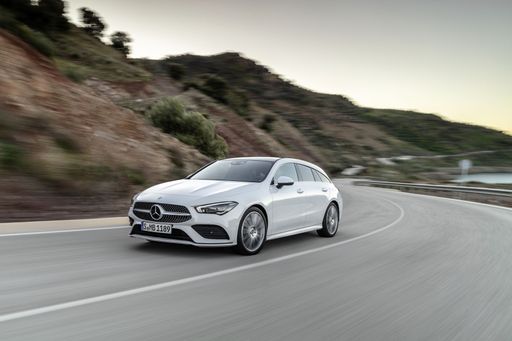
Both the Mercedes CLA Shooting Brake and the VW Arteon prioritize passenger comfort. The CLA Shooting Brake houses up to five seats and a trunk capacity peaking at 505 liters. The luxurious interior and modern infotainment options make it a serene space for both driver and passengers.

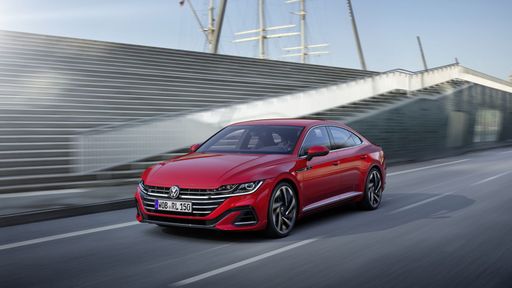
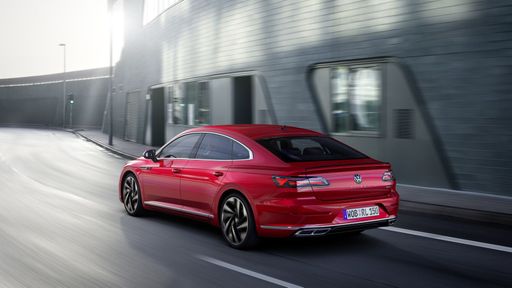
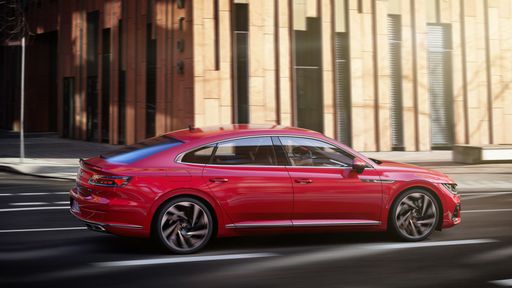
Similarly, the VW Arteon boasts a spacious interior with ample room for five occupants. Its trunk capacity outshines the CLA at 590 liters, making it ideal for those who frequently transport larger loads or travel with plenty of luggage. The Arteon’s interior exudes practicality with a dash of understated elegance, appealing to those who prefer subtlety over spectacle.

CLA Shooting Brake

Design and Dimensions

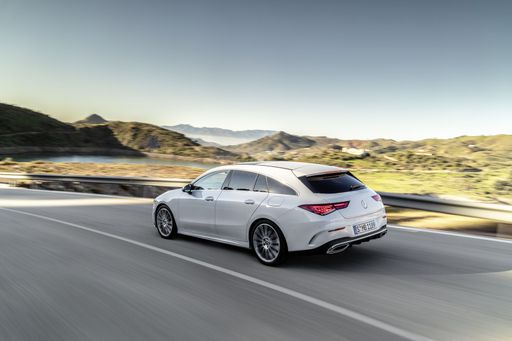
The Mercedes CLA Shooting Brake, evident from its sleek silhouette, embodies a dynamic and sportier aesthetic. Its compact dimensions of up to 4695 mm in length and 1857 mm in width allow for agile navigation coupled with a presence that turns heads.

On the other hand, the VW Arteon cuts a more elongated figure at 4866 mm in length and 1871 mm in width, embodying VW’s philosophy of refined sophistication. It presents a bolder stance on the road, reflecting its grand touring aspirations.

Arteon

Conclusion: A Choice of Personal Style

The decision between the Mercedes CLA Shooting Brake and the VW Arteon largely boils down to personal preference. The CLA Shooting Brake appeals to those who prize sporty elegance and the option of hybrid efficiency. In contrast, the Arteon is for those who favor understated luxury with a practical edge. Both models deliver commendable performance, luxurious interiors, and the cherished practicality of a wagon, making them worthy contenders for anyone valuing both style and substance in their automotive pursuits.

Here’s where it gets real: The technical differences in detail

CLA Shooting Brake

Costs and Efficiency:

When it comes to price and running costs, the biggest differences usually appear. This is often where you see which car fits your budget better in the long run.

VW Arteon is slightly cheaper – starting at 43,300 £ , while the Mercedes CLA Shooting Brake costs 48,900 £ . That’s a price difference of around 5,658 £.

Arteon

Engine and Performance:

Under the bonnet, it becomes clear which model is tuned for sportiness and which one takes the lead when you hit the accelerator.

When it comes to engine power, the Mercedes CLA Shooting Brake offers very slightly more power – delivering 354 HP compared to 320 HP. That’s roughly 34 HP more horsepower.

When accelerating from 0 to 100 km/h, the VW Arteon is very slightly quicker – completing the sprint in 4.9 s, while the Mercedes CLA Shooting Brake takes 5 s. That’s about 0.1 s quicker.

There’s also a difference in torque: the Mercedes CLA Shooting Brake delivers slightly more torque with 515 Nm compared to 420 Nm. That’s about 95 Nm more.

CLA Shooting Brake

Space and Everyday Use:

Beyond pure performance, interior space and usability matter most in daily life. This is where you see which car is more practical and versatile.

Both vehicles offer seating for 5 people.

In terms of curb weight, VW Arteon is noticeably lighter – 1,607 kg compared to 2,075 kg. The difference is around 468 kg.

Looking at boot space, the VW Arteon offers clearly more boot space – 590 L compared to 455 L. That’s a difference of about 135 L.

When it comes to payload, the VW Arteon carries slightly more – 569 kg compared to 460 kg. That’s a difference of about 109 kg.

Who wins the race in the data check?

The Mercedes CLA Shooting Brake is clearly ahead overall in the objective data comparison.
This result only shows which model scores more points on paper – not which of the two cars feels right for you.

from £48,900
CLA Shooting Brake

Mercedes CLA Shooting Brake

  • Engine Type : Electric
  • Transmission : Automatic
  • Drive Type : Rear-Wheel Drive, All-Wheel Drive
  • Power HP : 272 - 354 HP
  • Consumption kWh/100km : 12.7 - 13.3 kWh/100km
  • Electric Range : 742 - 768 km
Mercedes CLA Shooting Brake
VW Arteon

Costs and Consumption

View detailed analysis

Engine and Performance

View detailed analysis

Dimensions and Body

View detailed analysis

Mercedes CLA Shooting Brake

The Mercedes CLA Shooting Brake turns estate practicality into runway-ready style with a swooping roofline and coupe-like silhouette that makes even mundane errands feel a little more glamorous. Inside it pairs clever packaging with premium flair, so you get useful load space and a grown-up cabin — ideal if you want a car that looks like a showroom trophy but still handles the weekly shop without sulking.

details

VW Arteon

The VW Arteon cuts a fastback silhouette that manages to look more expensive than it is, with a cabin that feels calm, roomy and smartly finished. It blends relaxed long distance comfort with a touch of sporting poise, making it a clever choice for buyers who want grand touring polish without shouting for attention.

details
Mercedes CLA Shooting Brake
VW Arteon

Costs and Consumption

Price
48,900 - 60,900 £
Price
43,300 - 60,800 £
Consumption L/100km
-
Consumption L/100km
5.1 - 8.6 L/100km
Consumption kWh/100km
12.7 - 13.3 kWh/100km
Consumption kWh/100km
-
Electric Range
742 - 768 km
Electric Range
-
Battery Capacity
-
Battery Capacity
-
co2
0 g/km
co2
133 - 195 g/km
Fuel tank capacity
-
Fuel tank capacity
66 L

Dimensions and Body

Body Type
Estate
Body Type
Estate
Seats
5
Seats
5
Doors
-
Doors
5
Curb weight
2,075 - 2,155 kg
Curb weight
1,607 - 1,773 kg
Trunk capacity
455 L
Trunk capacity
590 L
Length
-
Length
4,866 mm
Width
1,855 mm
Width
1,871 mm
Height
-
Height
1,434 - 1,451 mm
Max trunk capacity
-
Max trunk capacity
1,632 L
Payload
430 - 460 kg
Payload
467 - 569 kg

Engine and Performance

Engine Type
Electric
Engine Type
Diesel, Petrol
Transmission
Automatic
Transmission
Automatic
Transmission Detail
Reduction Gearbox
Transmission Detail
Dual-Clutch Automatic
Drive Type
Rear-Wheel Drive, All-Wheel Drive
Drive Type
Front-Wheel Drive, All-Wheel Drive
Power HP
272 - 354 HP
Power HP
150 - 320 HP
Acceleration 0-100km/h
5 - 6.8 s
Acceleration 0-100km/h
4.9 - 9.4 s
Max Speed
-
Max Speed
216 - 250 km/h
Torque
335 - 515 Nm
Torque
320 - 420 Nm
Number of Cylinders
-
Number of Cylinders
4
Power kW
200 - 260 kW
Power kW
110 - 235 kW
Engine capacity
-
Engine capacity
1,968 - 1,984 cm3

General

Model Year
2,026
Model Year
2,024
CO2 Efficiency Class
A
CO2 Efficiency Class
D, E, F, G
Brand
Mercedes-Benz
Brand
VW
DriveDuel uses data analysis and artificial intelligence to evaluate vehicle data and create content. Content is regularly reviewed and improved. The displayed prices are estimates based on German list prices, adjusted to the respective country’s VAT. Country-specific registration taxes are not included. This information is not legally binding.