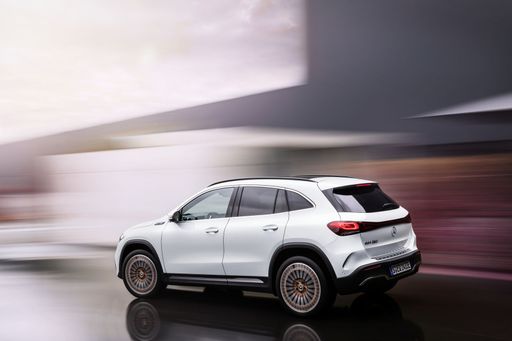
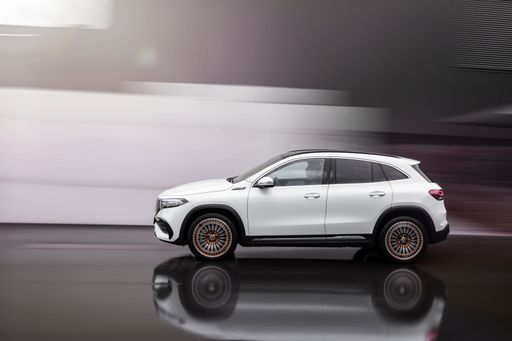
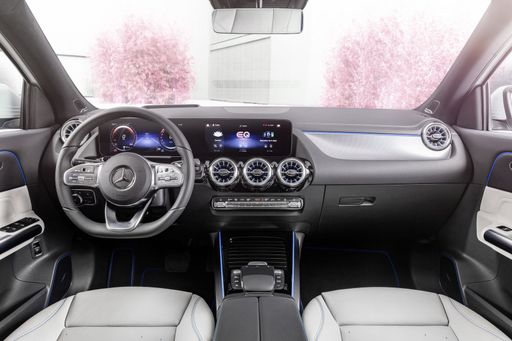
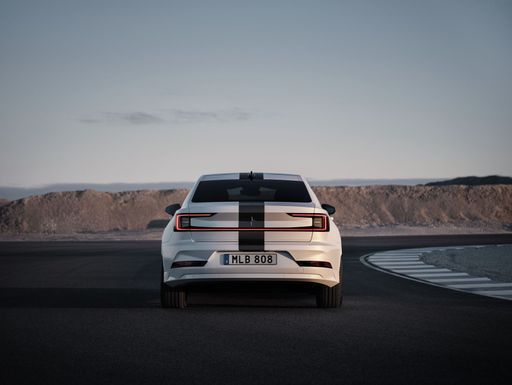
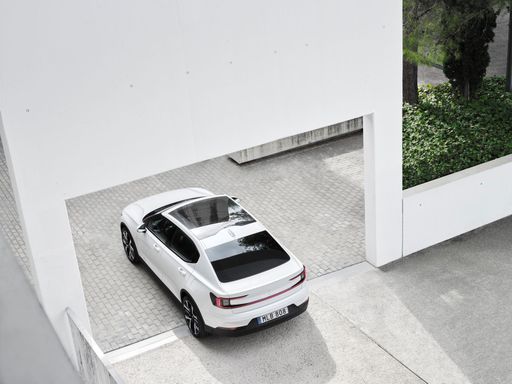
@ Mercedes-Benz Group Media
@ Polestar Automotive Holding
VS

Mercedes EQA vs Polestar 2 – Differences & prices compared

Two cars, one duel: Mercedes EQA meets Polestar 2.
Which one wins in performance, efficiency and value for money? Find out now!

EQA @ Mercedes-Benz Group Media

Mercedes EQA vs Polestar 2: A Clash of Electric Titans

As the automotive industry races toward an electrified future, electric vehicles (EVs) like the Mercedes EQA and the Polestar 2 are at the forefront of this revolution. These two models stand out not only for their eco-friendly credentials but also for their blend of comfort, performance, and cutting-edge technology. In this comparison, we delve into the technical aspects and innovations that make these cars compelling options for potential EV buyers.
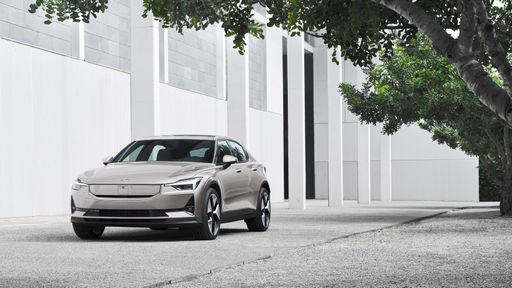
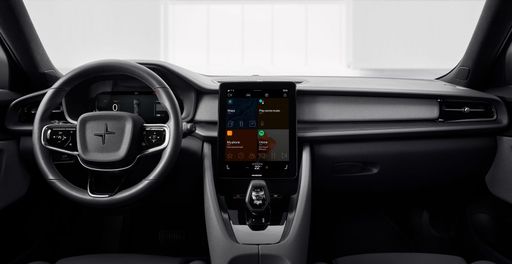
2 @ Polestar Automotive Holding

Design and Dimensions

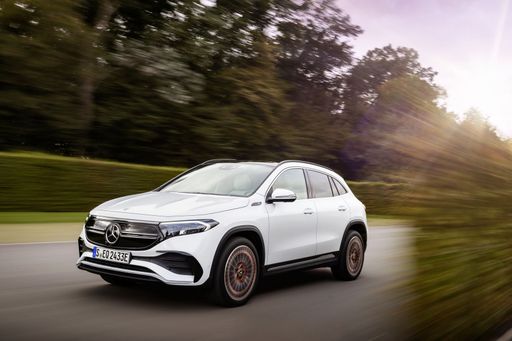
The Mercedes EQA and Polestar 2 catch the eye with distinct stylistic approaches that cater to different tastes. The EQA is offered in an SUV body type, measuring 4463 mm in length, 1834 mm in width, and up to 1613 mm in height. With a curb weight ranging around 2045 to 2115 kg, it comfortably seats five passengers and offers a trunk capacity of 340 liters.

In contrast, the Polestar 2 presents itself as a sleek hatchback with a longer body at 4606 mm and wider at 1859 mm. It delivers a rather substantial trunk capacity of 405 liters. Despite being heavier, with a curb weight between 2015 and 2188 kg, the Polestar 2 maintains a low-profile design, ideal for those preferring a compact yet spacious ride.

EQA @ Mercedes-Benz Group Media

Performance and Powertrain

Mercedes has offered the EQA with a diverse range of power outputs, from 190 HP up to 292 HP, supported by a battery capacity varying between 66.5 kWh and 70.5 kWh. It provides a front-wheel or all-wheel drive configuration with acceleration capabilities from 0 to 100 km/h in as fast as 6 seconds. The EQA features a maximum speed of 160 km/h, ensuring a refined urban and highway driving experience.

The Polestar 2 pushes performance boundaries further with power options ranging from 272 HP to an impressive 476 HP, and a battery capacity of 78 kWh. All-wheel and rear-wheel drive options are available, allowing it to sprint from 0 to 100 km/h in as little as 4.2 seconds and reach a top speed of 205 km/h. This makes the Polestar 2 a thrilling choice for performance enthusiasts.

2 @ Polestar Automotive Holding

Efficiency and Range

When it comes to efficiency, both cars offer competitive energy consumption rates. The EQA records as low as 14.4 kWh/100km with an electric range extending up to 561 km, providing excellent longevity for daily commutes and longer journeys alike.

The Polestar 2 follows closely with consumption figures starting from 14.7 kWh/100km, and it boasts an impressive range of up to 659 km, which makes it a strong contender in the efficiency stakes. Both vehicles are firmly in the 'A' CO2 efficiency class, contributing to pollution reduction efforts.

EQA @ Mercedes-Benz Group Media

Technological Innovations

Both the Mercedes EQA and Polestar 2 are equipped with a host of technological innovations typical of modern EVs. The EQA incorporates Mercedes-Benz's latest infotainment systems, highlighting seamless connectivity and vehicle interface, along with a reduction gearbox ensuring smooth and effortless driving.

Meanwhile, the Polestar 2 is not only about performance but also about smart technology. It features an advanced infotainment system powered by Android Automotive OS, offering users an intuitive and adaptive experience. Additionally, it provides autonomous driving support systems that enhance safety and convenience on the road.

2 @ Polestar Automotive Holding

Final Verdict

The choice between the Mercedes EQA and Polestar 2 ultimately boils down to individual preferences. The EQA is aimed at buyers looking for a traditional SUV experience combined with electric efficiency, while the Polestar 2 excels in delivering superior performance in a compact hatchback design. Both models embody the future of motoring with their focus on sustainability, making them worthy contenders in the electric car arena.

Here’s where it gets real: The technical differences in detail

EQA @ Mercedes-Benz Group Media

Costs and Efficiency:

Price and efficiency are often the first things buyers look at. Here it becomes clear which model has the long-term edge – whether at the pump, the plug, or in purchase price.

Polestar 2 has a hardly perceptible advantage in terms of price – it starts at 42000 £, while the Mercedes EQA costs 44200 £. That’s a price difference of around 2246 £.

In terms of energy consumption, the advantage goes to the Mercedes EQA: with 14.40 kWh per 100 km, it’s barely noticeable more efficient than the Polestar 2 with 14.80 kWh. That’s a difference of about 0.40 kWh.

As for range, the Polestar 2 performs a bit better – achieving up to 659 km, about 98 km more than the Mercedes EQA.

2 @ Polestar Automotive Holding

Engine and Performance:

Power, torque and acceleration say a lot about how a car feels on the road. This is where you see which model delivers more driving dynamics.

When it comes to engine power, the Polestar 2 has a clearly perceptible edge – offering 476 HP compared to 292 HP. That’s roughly 184 HP more horsepower.

In acceleration from 0 to 100 km/h, the Polestar 2 is convincingly quicker – completing the sprint in 4.20 s, while the Mercedes EQA takes 6 s. That’s about 1.80 s faster.

In terms of top speed, the Polestar 2 performs noticeable better – reaching 205 km/h, while the Mercedes EQA tops out at 160 km/h. The difference is around 45 km/h.

There’s also a difference in torque: Polestar 2 pulls evident stronger with 740 Nm compared to 520 Nm. That’s about 220 Nm difference.

Space and Everyday Use:

Whether family car or daily driver – which one offers more room, flexibility and comfort?

Both vehicles offer seating for 5 people.

In curb weight, Polestar 2 is barely noticeable lighter – 2015 kg compared to 2045 kg. The difference is around 30 kg.

In terms of boot space, the Polestar 2 offers a bit more room – 405 L compared to 340 L. That’s a difference of about 65 L.

In maximum load capacity, the Mercedes EQA performs slightly better – up to 1320 L, which is about 225 L more than the Polestar 2.

When it comes to payload, Mercedes EQA minimal takes the win – 425 kg compared to 421 kg. That’s a difference of about 4 kg.

Who comes out on top?

Overall, the Polestar 2 shows itself to be outperforms in nearly all aspects and secures the title of DriveDuel Champion.
It convinces with the more balanced overall package and proves to be the more versatile choice for everyday use.

from about £42,000
2 @ Polestar Automotive Holding

Polestar 2

  • Engine Type : Electric
  • Transmission : Automatic
  • Drive Type : All-Wheel Drive, Rear-Wheel Drive
  • Power HP : 272 - 476 HP
  • Consumption kWh/100km : 14.8 - 16.8 kWh
  • Electric Range : 554 - 659 km

Mercedes EQA

5 (1)
rate

The Mercedes EQA slips into the electric crossover ranks with the brand’s familiar luxury polish, offering a quiet, fuss-free drive that feels perfectly at home in the city or on a country escape. Inside it’s neatly finished and tech-forward, projecting grown-up refinement even if it plays things a bit safe for anyone chasing outright excitement.

details

Polestar 2

5 (1)
rate

Der Polestar 2 beeindruckt mit seinem klaren, skandinavischen Design und einer hochwertigen Verarbeitung, die sowohl innen als auch außen zu sehen ist. Besonders auffallend ist das futuristische Cockpit mit einem innovativen Infotainment-System, das auf Android basiert und nahtlose Konnektivität bietet. Zusätzlich bietet das Modell ein exzellentes Fahrgefühl mit dynamischen Fahreigenschaften, das selbst anspruchsvolle Fahrer begeistert.

details
Mercedes EQA
Polestar 2
EQA @ Mercedes-Benz Group Media
2 @ Polestar Automotive Holding

Costs and Consumption

Price
44200 - 57400 £
Price
42000 - 57400 £
Consumption L/100km
-
Consumption L/100km
-
Consumption kWh/100km
14.4 - 16.9 kWh
Consumption kWh/100km
14.8 - 16.8 kWh
Electric Range
476 - 561 km
Electric Range
554 - 659 km
Battery Capacity
70.50 kWh
Battery Capacity
78 kWh
co2
0 g/km
co2
0 g/km
Fuel tank capacity
-
Fuel tank capacity
-

Dimensions and Body

Body Type
SUV
Body Type
Sedan
Seats
5
Seats
5
Doors
5
Doors
5
Curb weight
2045 - 2115 kg
Curb weight
2015 - 2188 kg
Trunk capacity
340 L
Trunk capacity
405 L
Length
4463 mm
Length
4606 mm
Width
1834 mm
Width
1859 mm
Height
1608 - 1613 mm
Height
1473 - 1479 mm
Max trunk capacity
1320 L
Max trunk capacity
1095 L
Payload
425 kg
Payload
375 - 421 kg

Engine and Performance

Engine Type
Electric
Engine Type
Electric
Transmission
Automatic
Transmission
Automatic
Transmission Detail
Reduction Gearbox
Transmission Detail
Reduction Gearbox
Drive Type
Front-Wheel Drive, All-Wheel Drive
Drive Type
All-Wheel Drive, Rear-Wheel Drive
Power HP
190 - 292 HP
Power HP
272 - 476 HP
Acceleration 0-100km/h
6 - 8.6 s
Acceleration 0-100km/h
4.2 - 6.4 s
Max Speed
160 km/h
Max Speed
205 km/h
Torque
385 - 520 Nm
Torque
490 - 740 Nm
Number of Cylinders
-
Number of Cylinders
-
Power kW
140 - 215 kW
Power kW
200 - 350 kW
Engine capacity
-
Engine capacity
-

General

Model Year
2024 - 2025
Model Year
2024
CO2 Efficiency Class
A
CO2 Efficiency Class
A
Brand
Mercedes-Benz
Brand
Polestar
Is the Mercedes EQA offered with different drivetrains?

Available configurations include Front-Wheel Drive or All-Wheel Drive.

The prices and data displayed are estimates based on German list prices and may vary by country. This information is not legally binding.