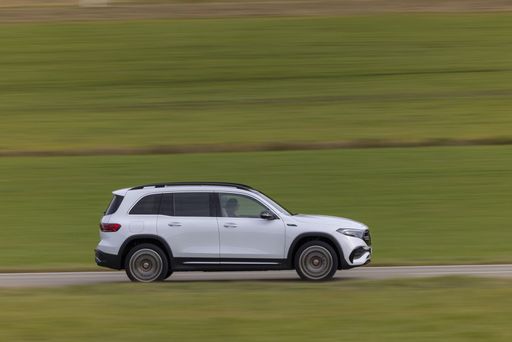
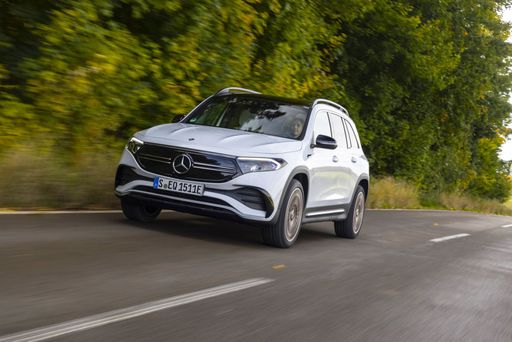
VS

Mercedes EQA vs Mercedes EQB comparison

Compare performance (292 HP vs 292 HP), boot space and price (44,200 £ vs 45,900 £ ) at a glance. Find out which car is the better choice for you – Mercedes EQA or Mercedes EQB?

Mercedes EQA vs Mercedes EQB: Key differences

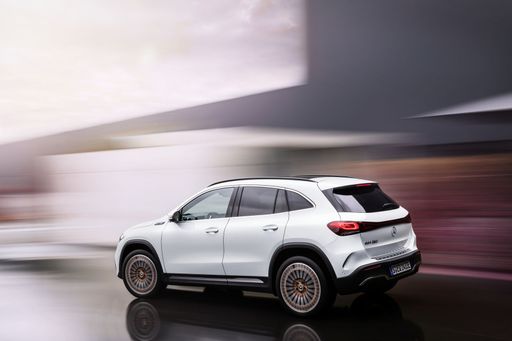
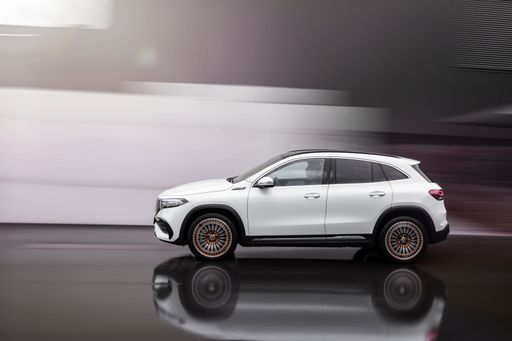
Mercedes EQA

5 (1 Reviews)
rate
  • only slightly cheaper
  • marginally more efficient
  • barely more electric range
  • very slightly quicker 0–100 km/h
  • marginally lighter

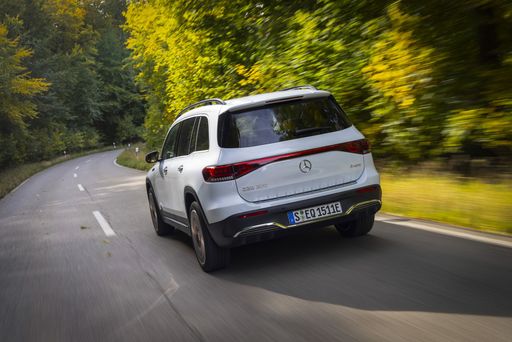
Mercedes EQB

4.3 (3 Reviews)
rate
  • clearly more trunk space

All details on performance, efficiency, range and trunk space can be found in the technical comparison below – including user reviews for both models.

EQA

The All-Electric Showdown: Mercedes EQA vs. EQB

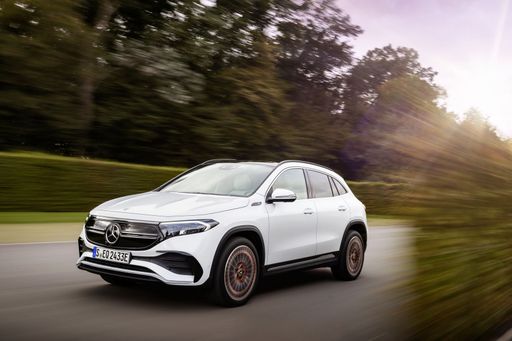
The electric vehicle market is rapidly evolving, and Mercedes-Benz is at the forefront with its EQA and EQB models. Both vehicles share the same ethos of luxury and innovative technology, but they cater to distinct needs and preferences. In this comparison, we will delve into the technical aspects, innovations, and distinctive characteristics of both the EQA and EQB, helping prospective buyers choose the right model for their lifestyle.
EQB

Performance and Powertrain

Starting with performance, both the EQA and EQB offer impressive options in terms of electric power and drivetrain configurations. The EQA is powered by a range of options, including 190 HP, 228 HP, and an exhilarating 292 HP in its top trim. In contrast, the EQB also comes with a similar power range, providing flexible choices to meet varying driving expectations.

Each model boasts similar torque outputs, with both vehicles producing up to 520 Nm in their most powerful configurations. This ample torque results in thrill-worthy acceleration; for example, the EQA can sprint from 0 to 100 km/h in just 6 seconds with its high-performance variant, while the EQB follows closely with a 0-100 km/h time of 6.2 seconds.

EQA

Electric Range and Efficiency

When it comes to electric range, both the EQA and EQB feature impressive capabilities, ideal for everyday commuting and longer journeys alike. The EQA can achieve a range of up to 561 km depending on the configuration, while the EQB closely follows with a maximum range of 533 km. This slight advantage in range for the EQA may appeal to those who prioritize long-distance travel.

Regarding energy consumption, the EQA offers efficiencies between 14.4 to 16.9 kWh/100 km, whereas the EQB has a higher consumption rate ranging from 15.2 to 17.3 kWh/100 km. While both vehicles are commendably efficient for electric SUVs, those looking to maximize their energy usage might find the EQA slightly more appealing.

EQB

Interior and Space Utilization

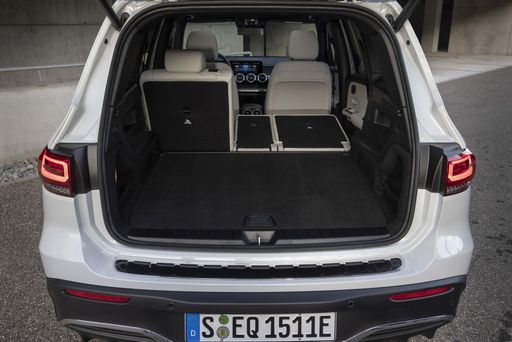
Interior space is another critical consideration for buyers, particularly families or those needing extra cargo capacity. The EQB shines in this area with a trunk capacity of 495 liters, significantly surpassing the EQA's 340 liters. Wide openings and ample headroom across both models ensure comfort, but the additional storage space in the EQB can be a game-changer for versatility and practicality.

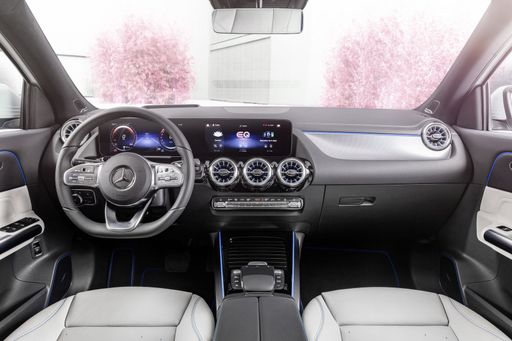
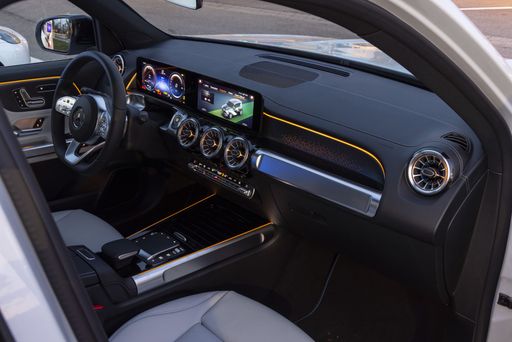
Both vehicles seat five adults comfortably, and offer high-end materials and tech features typical of the Mercedes-Benz brand. Infotainment systems in both models utilize Mercedes' MBUX technology, providing user-friendly interactions and advanced navigation capabilities.

EQA

Dimensions and Weight Comparison

In terms of dimensions, the EQB is larger than the EQA, measuring 4684 mm in length compared to the EQA's 4463 mm. This difference translates into a more spacious cabin in the EQB, while the slightly smaller footprint of the EQA may benefit urban drivers maneuvering tight streets. Curb weights for the EQA range from 2045 kg to 2115 kg, while the EQB weighs in heavier at 2105 kg to 2170 kg, which can impact efficiency and handling.

EQB

Technological Innovations

Innovation is at the heart of both the EQA and EQB. Features such as adaptive cruise control, lane-keeping assistance, and an array of driver-assistance systems enhance the safety and driving experience. Furthermore, the integration of sustainable materials throughout the interiors of both models demonstrates Mercedes' commitment to eco-friendliness.

EQA

Final Thoughts: Which SUV Fits Your Lifestyle?

In conclusion, the choice between the Mercedes EQA and EQB largely depends on individual preferences and needs. Those prioritizing efficiency and agility may lean towards the EQA, while buyers seeking more spacious accommodation and practical storage options may find the EQB more suited to their lifestyle. With both models embodying the luxurious and innovative spirit of Mercedes-Benz, prospective buyers are sure to find a compelling electric SUV in either choice.

Here’s where it gets real: The technical differences in detail

EQA

Costs and Efficiency:

When it comes to price and running costs, the biggest differences usually appear. This is often where you see which car fits your budget better in the long run.

Mercedes EQA is only slightly cheaper – starting at 44,200 £ , while the Mercedes EQB costs 45,900 £ . That’s a price difference of around 1,632 £.

In terms of energy consumption, the Mercedes EQA is marginally more efficient: consuming 14.4 kWh/100km compared to 15.2 kWh/100km for the Mercedes EQB. That’s a difference of about 0.8 kWh/100km.

As for electric range, the Mercedes EQA offers barely more range – reaching up to 561 km, about 26 km more than the Mercedes EQB.

EQB

Engine and Performance:

Power, torque and acceleration are the classic benchmarks for car enthusiasts – and here, some clear differences start to show.

Both models deliver identical power – 292 HP each.

When accelerating from 0 to 100 km/h, the Mercedes EQA is very slightly quicker – completing the sprint in 6 s, while the Mercedes EQB takes 6.2 s. That’s about 0.2 s quicker.

There’s no difference in top speed – both reach 160 km/h.

Both models offer the same torque – 520 Nm.

EQA

Space and Everyday Use:

Whether family car or daily driver – which one offers more room, flexibility and comfort?

Both vehicles offer seating for 5 people.

In terms of curb weight, Mercedes EQA is marginally lighter – 2,045 kg compared to 2,105 kg. The difference is around 60 kg.

Looking at boot space, the Mercedes EQB offers clearly more boot space – 495 L compared to 340 L. That’s a difference of about 155 L.

For maximum load capacity, the Mercedes EQB offers visibly more capacity – up to 1,710 L, about 390 L more than the Mercedes EQA.

When it comes to payload, the Mercedes EQB carries only slightly more – 435 kg compared to 425 kg. That’s a difference of about 10 kg.

Who wins the race in the data check?

The Mercedes EQB shows a few small advantages in the objective data comparison.
This result only shows which model scores more points on paper – not which of the two cars feels right for you.

from £45,900
EQB

Mercedes EQB

  • Engine Type : Electric
  • Transmission : Automatic
  • Drive Type : Front-Wheel Drive, All-Wheel Drive
  • Power HP : 190 - 292 HP
  • Consumption kWh/100km : 15.2 - 17.2 kWh/100km
  • Electric Range : 468 - 535 km
Mercedes EQA
Mercedes EQB

Costs and Consumption

View detailed analysis

Engine and Performance

View detailed analysis

Dimensions and Body

View detailed analysis

Mercedes EQA

The Mercedes EQA slips into the electric crossover ranks with the brand’s familiar luxury polish, offering a quiet, fuss-free drive that feels perfectly at home in the city or on a country escape. Inside it’s neatly finished and tech-forward, projecting grown-up refinement even if it plays things a bit safe for anyone chasing outright excitement.

details

Mercedes EQB

The Mercedes EQB is an electric compact SUV that dresses Mercedes' premium feel in practical clothing, with flexible seating and a serene, composed ride that turns everyday errands into a small luxury. It won't thrill the enthusiast, but for buyers who want a smart, spacious and well-made EV with tasteful tech and real-world usability, the EQB is a sensible, slightly buttoned-up choice that impresses without shouting.

details
Mercedes EQA
Mercedes EQB

Costs and Consumption

Price
44,200 - 57,400 £
Price
45,900 - 58,900 £
Consumption L/100km
-
Consumption L/100km
-
Consumption kWh/100km
14.4 - 16.9 kWh/100km
Consumption kWh/100km
15.2 - 17.2 kWh/100km
Electric Range
476 - 561 km
Electric Range
468 - 535 km
Battery Capacity
70.5 kWh
Battery Capacity
70.5 kWh
co2
0 g/km
co2
0 g/km
Fuel tank capacity
-
Fuel tank capacity
-

Dimensions and Body

Body Type
SUV
Body Type
SUV
Seats
5
Seats
5
Doors
5
Doors
5
Curb weight
2,045 - 2,115 kg
Curb weight
2,105 - 2,170 kg
Trunk capacity
340 L
Trunk capacity
495 L
Length
4,463 mm
Length
4,684 mm
Width
1,834 mm
Width
1,834 mm
Height
1,608 - 1,613 mm
Height
1,654 - 1,689 mm
Max trunk capacity
1,320 L
Max trunk capacity
1,710 L
Payload
425 kg
Payload
435 kg

Engine and Performance

Engine Type
Electric
Engine Type
Electric
Transmission
Automatic
Transmission
Automatic
Transmission Detail
Reduction Gearbox
Transmission Detail
Reduction Gearbox
Drive Type
Front-Wheel Drive, All-Wheel Drive
Drive Type
Front-Wheel Drive, All-Wheel Drive
Power HP
190 - 292 HP
Power HP
190 - 292 HP
Acceleration 0-100km/h
6 - 8.6 s
Acceleration 0-100km/h
6.2 - 8.9 s
Max Speed
160 km/h
Max Speed
160 km/h
Torque
385 - 520 Nm
Torque
385 - 520 Nm
Number of Cylinders
-
Number of Cylinders
-
Power kW
140 - 215 kW
Power kW
140 - 215 kW
Engine capacity
-
Engine capacity
-

General

Model Year
2,024 - 2,025
Model Year
2,024 - 2,025
CO2 Efficiency Class
A
CO2 Efficiency Class
A
Brand
Mercedes-Benz
Brand
Mercedes-Benz
DriveDuel uses data analysis and artificial intelligence to evaluate vehicle data and create content. Content is regularly reviewed and improved. The displayed prices are estimates based on German list prices, adjusted to the respective country’s VAT. Country-specific registration taxes are not included. This information is not legally binding.