
 Deutschland
 France
 Nederland
 Great Britain
 Sverige
 Norge
Norge Danmark
 Suomi
Suomi Italia
 Polska
 España
VS
Mercedes EQB vs Land Rover Defender – Which one offers the better deal?
Compare performance, boot capacity, efficiency and price at a glance.
Find out which car is the better choice for you – Mercedes EQB or Land Rover Defender?
EQB
@ Mercedes-Benz Group Media
Costs and Efficiency:
When it comes to price and running costs, the biggest differences usually appear. This is often where you see which car fits your budget better in the long run.
Mercedes EQB has a evident advantage in terms of price – it starts at 45900 £, while the Land Rover Defender costs 57900 £. That’s a price difference of around 11988 £.
As for range, the Mercedes EQB performs significantly better – achieving up to 535 km, about 487 km more than the Land Rover Defender.
Defender
@ Jaguar Land Rover Media
Engine and Performance:
Under the bonnet, it becomes clear which model is tuned for sportiness and which one takes the lead when you hit the accelerator.
When it comes to engine power, the Land Rover Defender has a convincingly edge – offering 635 HP compared to 292 HP. That’s roughly 343 HP more horsepower.
In acceleration from 0 to 100 km/h, the Land Rover Defender is significantly quicker – completing the sprint in 4 s, while the Mercedes EQB takes 6.20 s. That’s about 2.20 s faster.
In terms of top speed, the Land Rover Defender performs noticeable better – reaching 250 km/h, while the Mercedes EQB tops out at 160 km/h. The difference is around 90 km/h.
There’s also a difference in torque: Land Rover Defender pulls distinct stronger with 750 Nm compared to 520 Nm. That’s about 230 Nm difference.
EQB
@ Mercedes-Benz Group Media
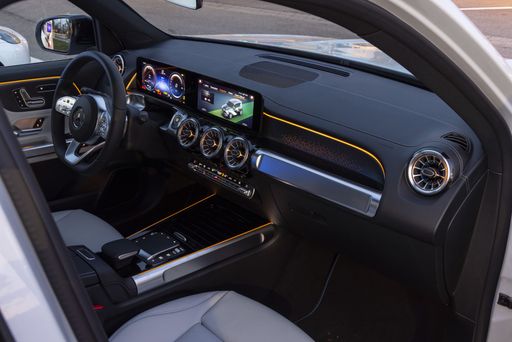
Space and Everyday Use:
Cabin size, boot volume and payload all play a role in everyday practicality. Here, comfort and flexibility make the difference.
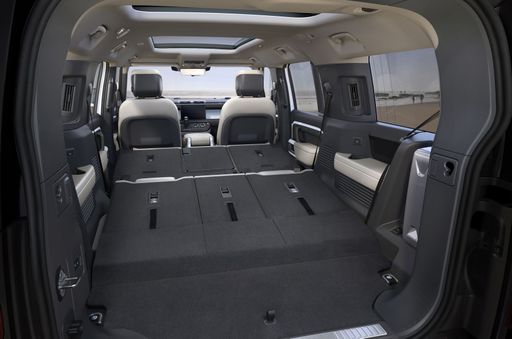
Seats: Land Rover Defender offers distinct more seating capacity – 8 vs 5.
In curb weight, Mercedes EQB is hardly perceptible lighter – 2105 kg compared to 2300 kg. The difference is around 195 kg.
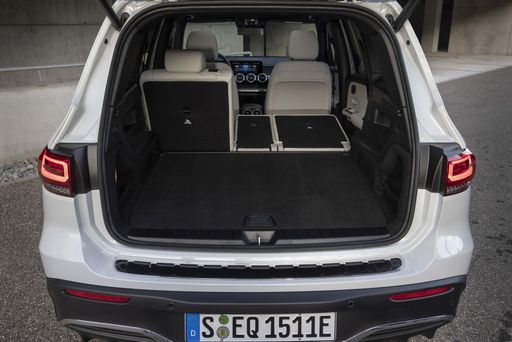
In terms of boot space, the Land Rover Defender offers clearly perceptible more room – 786 L compared to 495 L. That’s a difference of about 291 L.
In maximum load capacity, the Land Rover Defender performs a bit better – up to 2078 L, which is about 368 L more than the Mercedes EQB.
When it comes to payload, Land Rover Defender significantly takes the win – 819 kg compared to 435 kg. That’s a difference of about 384 kg.
Who wins the race?
The Land Rover Defender proves to be dominates this comparison and therefore becomes our DriveDuel Champion!
Land Rover Defender is the better all-rounder in this comparison.
from about £57,900
 @ Jaguar Land Rover Media
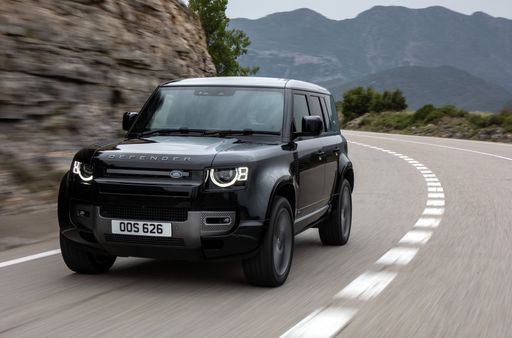
Land Rover Defender
Mercedes EQB
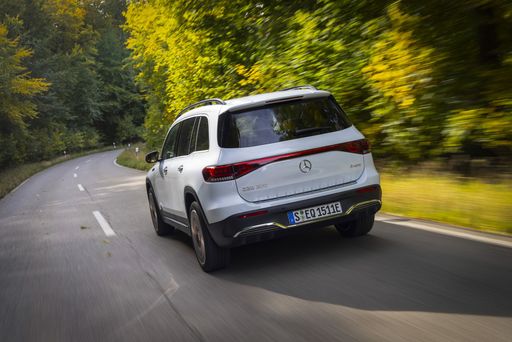
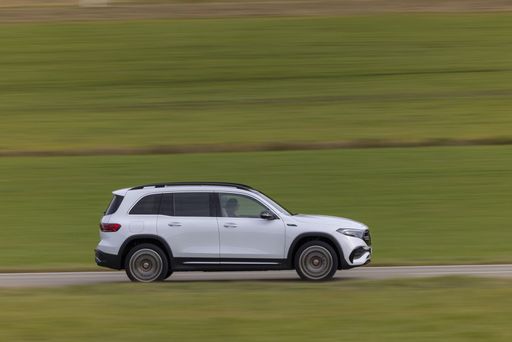
The Mercedes EQB is an electric compact SUV that dresses Mercedes' premium feel in practical clothing, with flexible seating and a serene, composed ride that turns everyday errands into a small luxury. It won't thrill the enthusiast, but for buyers who want a smart, spacious and well-made EV with tasteful tech and real-world usability, the EQB is a sensible, slightly buttoned-up choice that impresses without shouting.
details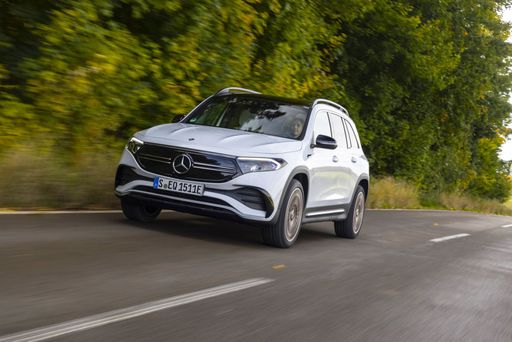 @ Mercedes-Benz Group Media
 @ Mercedes-Benz Group Media
 @ Mercedes-Benz Group Media
 @ Mercedes-Benz Group Media
 @ Mercedes-Benz Group Media
Land Rover Defender
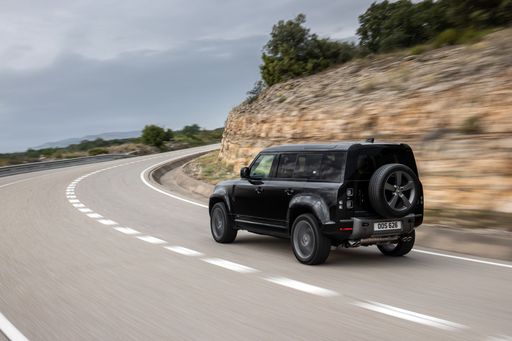
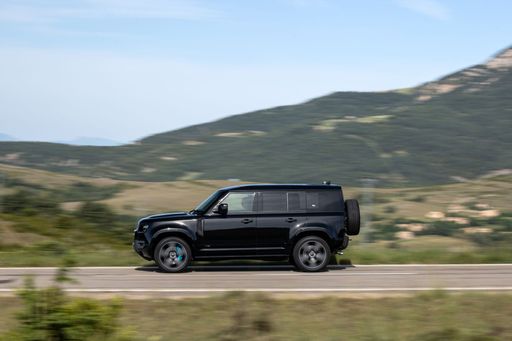
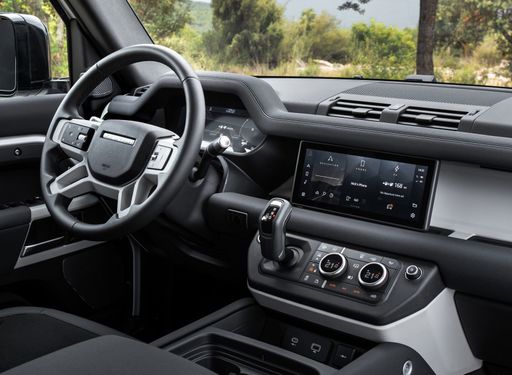
The Land Rover Defender boasts a rugged design that seamlessly blends traditional aesthetics with modern innovation, making it a true icon in the world of off-road vehicles. Its performance capabilities are matched by a luxurious interior, offering comfort and cutting-edge technology for drivers and passengers alike. Whether tackling rough terrains or cruising through city streets, the Defender exudes versatility and reliability, maintaining its reputation as a robust yet refined companion for any adventure.
details
@ Jaguar Land Rover Media
 @ Jaguar Land Rover Media
 @ Jaguar Land Rover Media
 @ Jaguar Land Rover Media
 @ Jaguar Land Rover Media
 @ Jaguar Land Rover Media
Mercedes EQB
Land Rover Defender
|
@ Mercedes-Benz Group Media
|
@ Jaguar Land Rover Media
|
|
|
|
Costs and Consumption |
|
|---|---|
|
Price
45900 - 58900 £
|
Price
57900 - 172000 £
|
|
Consumption L/100km
-
|
Consumption L/100km
6 - 14.4 L
|
|
Consumption kWh/100km
15.2 - 17.2 kWh
|
Consumption kWh/100km
-
|
|
Electric Range
468 - 535 km
|
Electric Range
48 km
|
|
Battery Capacity
70.50 kWh
|
Battery Capacity
15.40 kWh
|
|
co2
0 g/km
|
co2
135 - 324 g/km
|
|
Fuel tank capacity
-
|
Fuel tank capacity
89 - 91 L
|
Dimensions and Body |
|
|---|---|
|
Body Type
SUV
|
Body Type
Off-Roader
|
|
Seats
5
|
Seats
2 - 8
|
|
Doors
5
|
Doors
3 - 5
|
|
Curb weight
2105 - 2170 kg
|
Curb weight
2300 - 2745 kg
|
|
Trunk capacity
495 L
|
Trunk capacity
293 - 786 L
|
|
Length
4684 mm
|
Length
4323 - 5358 mm
|
|
Width
1834 mm
|
Width
2008 mm
|
|
Height
1654 - 1689 mm
|
Height
1967 - 1995 mm
|
|
Max trunk capacity
1710 L
|
Max trunk capacity
1263 - 2078 L
|
|
Payload
435 kg
|
Payload
494 - 819 kg
|
Engine and Performance |
|
|---|---|
|
Engine Type
Electric
|
Engine Type
Petrol, Diesel MHEV, Plugin Hybrid, Petrol MHEV
|
|
Transmission
Automatic
|
Transmission
Automatic
|
|
Transmission Detail
Reduction Gearbox
|
Transmission Detail
Automatic Gearbox
|
|
Drive Type
Front-Wheel Drive, All-Wheel Drive
|
Drive Type
All-Wheel Drive
|
|
Power HP
190 - 292 HP
|
Power HP
200 - 635 HP
|
|
Acceleration 0-100km/h
6.2 - 8.9 s
|
Acceleration 0-100km/h
4 - 10.2 s
|
|
Max Speed
160 km/h
|
Max Speed
175 - 250 km/h
|
|
Torque
385 - 520 Nm
|
Torque
500 - 750 Nm
|
|
Number of Cylinders
-
|
Number of Cylinders
4 - 8
|
|
Power kW
140 - 215 kW
|
Power kW
147 - 467 kW
|
|
Engine capacity
-
|
Engine capacity
1997 - 5000 cm3
|
General |
|
|---|---|
|
Model Year
2024 - 2025
|
Model Year
2025
|
|
CO2 Efficiency Class
A
|
CO2 Efficiency Class
G, D
|
|
Brand
Mercedes-Benz
|
Brand
Land Rover
|
What drive types are available for the Mercedes EQB?
The Mercedes EQB is available as Front-Wheel Drive or All-Wheel Drive.
The prices and data displayed are estimates based on German list prices and may vary by country. This information is not legally binding.