@ Kia Corporation
@ Mercedes-Benz Group Media
VS

Kia EV3 vs Mercedes EQB – Which one offers the better deal?

Both models have their strengths – but which one suits you more?
Compare performance, efficiency, price and space directly: Kia EV3 or Mercedes EQB?

EV3 @ Kia Corporation

A Futuristic Showdown: Kia EV3 vs. Mercedes EQB

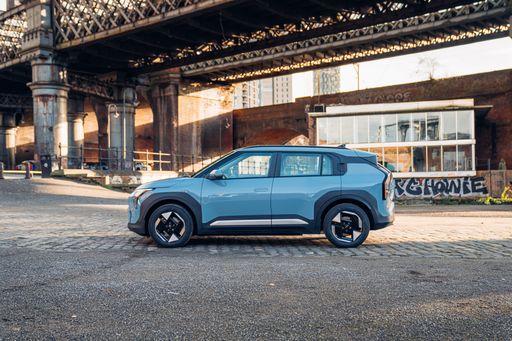
In the rapidly evolving electric vehicle market, the SUV segment continues to dazzle with innovations and offerings that promise exciting driving experiences. We pit the 2024 Kia EV3 against the renowned Mercedes EQB to see how they stack up in terms of technical prowess, design, and value. Both vehicles combine practicality with eco-conscious engineering, but which one edges out in the electric SUV battle? Let's delve into the details.
EQB @ Mercedes-Benz Group Media

Design and Dimensions: Small Yet Mighty

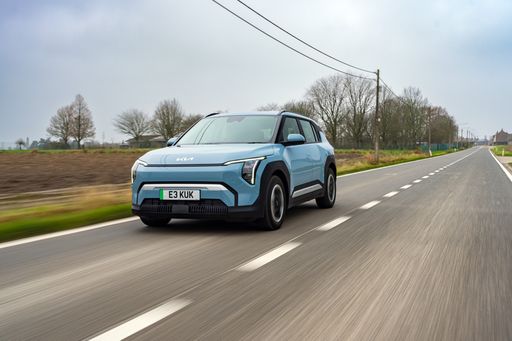
The Kia EV3 presents a compact yet stylish design, with a length of approximately 4310mm, a width of 1850mm, and a height of 1570mm. It encapsulates the modern SUV aesthetics in a smaller package, offering easy maneuverability in urban settings without compromising on space.

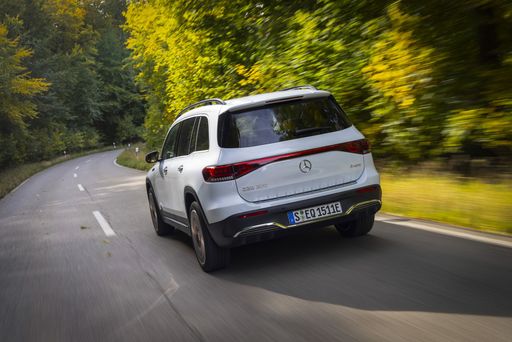
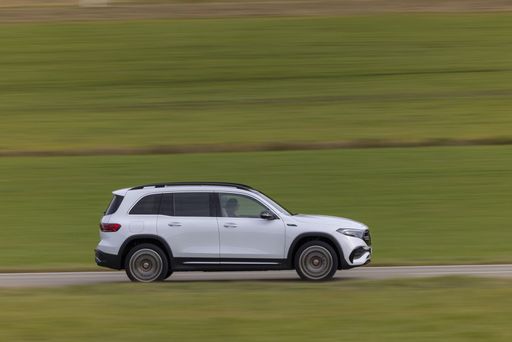
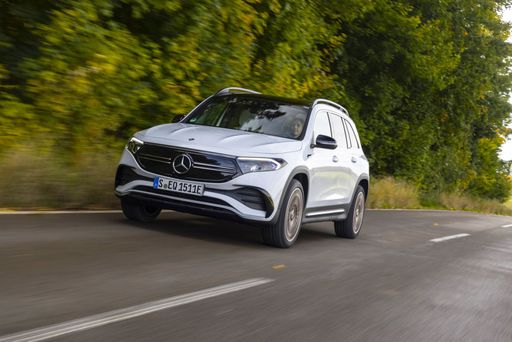
On the other hand, the Mercedes EQB embraces a more robust design with dimensions spanning 4684mm in length, 1834mm in width, and up to 1689mm in height. Its larger size may appeal to those who prefer a more commanding road presence and additional cabin space, enhancing long-distance comfort for families.

EV3 @ Kia Corporation

Performance: Power vs. Efficiency

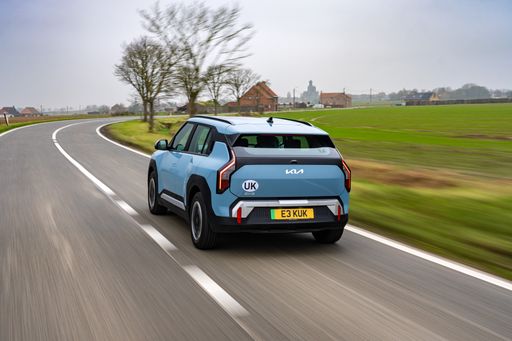
Kia’s EV3 is equipped with a singular electric motor delivering 204 horsepower and 283 Nm of torque, boasting a rapid acceleration from 0 to 100 km/h in approximately 7.5 seconds. Top speed is capped at 170 km/h, catering efficiently to urban and suburban commutes. The EV3's electric range varies from 436 km to 605 km, depending largely on battery capacity (58.3 or 81.4 kWh) and driving conditions.

The Mercedes EQB offers a broader range of powertrains, with configurations that provide between 190 HP to a substantial 292 HP, with torque figures ranging from 385 Nm to 520 Nm. Acceleration times differ accordingly, from a swift 6.2 seconds to a composure-focused 8.9 seconds for the less powerful trims. The EQB's range is respectably positioned at 445 km to 533 km, facilitated by a 70.5 kWh battery, marking it as a well-rounded contender for performance enthusiasts and efficiency seekers alike.

EQB @ Mercedes-Benz Group Media

Technical Innovations: The Future in Detail

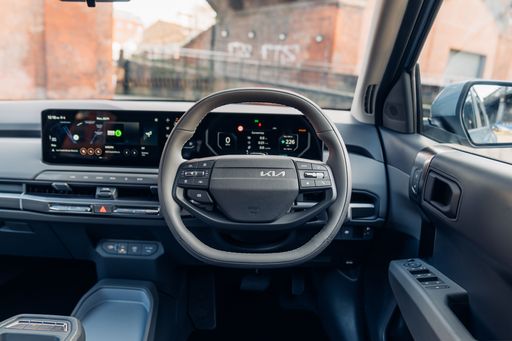
Both vehicles feature advanced electric drivetrains paired to reduction gearboxes, enhancing drivability and performance efficiency. Hyundai's adherence to a purely front-wheel-drive configuration contrasts with Mercedes-Benz's flexibility in offering both front-wheel and all-wheel options, catering to a broader set of driving preferences and conditions.

From the perspective of environmental impact, both the Kia EV3 and Mercedes EQB boast zero tailpipe emissions, solidifying their stance in the CO2 efficiency class of A. This commitment to sustainability is reflected not only in their powertrains but also in the integration of regenerative braking systems, enhancing overall energy consumption effectiveness.

EV3 @ Kia Corporation

Interior Space and Practicality

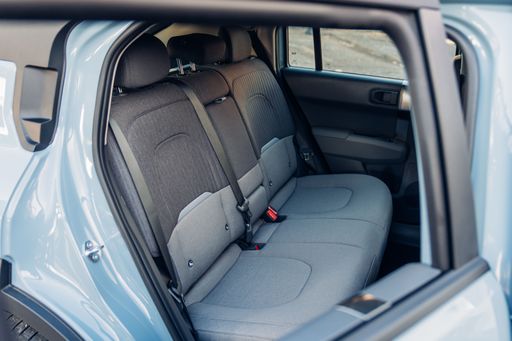
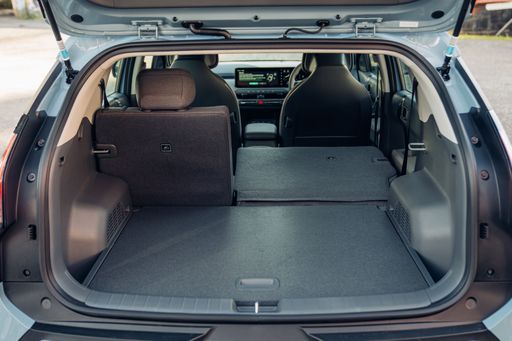
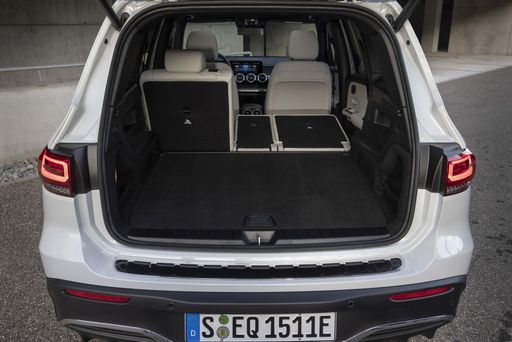
In terms of interior versatility, Kia's EV3 offers seating for five passengers with a trunk capacity of 460 liters, making it adequate for daily errands and moderate travel plans. Contrastingly, the Mercedes EQB provides a slightly larger trunk capacity of 495 liters, again accommodating up to five occupants comfortably, thereby appealing to more storage-centric consumers.

EQB @ Mercedes-Benz Group Media

Conclusion: Tailoring Preferences

Deciding between the Kia EV3 and Mercedes EQB largely depends on individual preferences. The EV3 stands out for those who prioritize range efficiency and nimbleness in a tighter package ideal for the city goer. Meanwhile, the EQB impresses with its upmarket versatility, offering higher peak performance and enhanced comfort for longer journeys. Both vehicles introduce innovations setting new precedents in their class, representing not just transportation, but statements of modern electric advancements.

Here’s where it gets real: The technical differences in detail

Costs and Efficiency:

Looking at overall running costs, both models reveal some interesting differences in everyday economy.

Kia EV3 has a convincingly advantage in terms of price – it starts at 30800 £, while the Mercedes EQB costs 45900 £. That’s a price difference of around 15021 £.

In terms of energy consumption, the advantage goes to the Kia EV3: with 14.90 kWh per 100 km, it’s slight more efficient than the Mercedes EQB with 15.20 kWh. That’s a difference of about 0.30 kWh.

As for range, the Kia EV3 performs a bit better – achieving up to 605 km, about 70 km more than the Mercedes EQB.

Engine and Performance:

Power, torque and acceleration are the classic benchmarks for car enthusiasts – and here, some clear differences start to show.

When it comes to engine power, the Mercedes EQB has a noticeable edge – offering 292 HP compared to 204 HP. That’s roughly 88 HP more horsepower.

In acceleration from 0 to 100 km/h, the Mercedes EQB is distinct quicker – completing the sprint in 6.20 s, while the Kia EV3 takes 7.50 s. That’s about 1.30 s faster.

In terms of top speed, the Kia EV3 performs hardly perceptible better – reaching 170 km/h, while the Mercedes EQB tops out at 160 km/h. The difference is around 10 km/h.

There’s also a difference in torque: Mercedes EQB pulls convincingly stronger with 520 Nm compared to 283 Nm. That’s about 237 Nm difference.

Space and Everyday Use:

Beyond pure performance, interior space and usability matter most in daily life. This is where you see which car is more practical and versatile.

Both vehicles offer seating for 5 people.

In curb weight, Kia EV3 is a bit lighter – 1800 kg compared to 2105 kg. The difference is around 305 kg.

In terms of boot space, the Mercedes EQB offers slight more room – 495 L compared to 460 L. That’s a difference of about 35 L.

In maximum load capacity, the Mercedes EQB performs noticeable better – up to 1710 L, which is about 459 L more than the Kia EV3.

When it comes to payload, Kia EV3 minimal takes the win – 470 kg compared to 435 kg. That’s a difference of about 35 kg.

Who comes out on top?

Overall, the Mercedes EQB shows itself to be leads convincingly overall and secures the title of DriveDuel Champion.
It convinces with the more balanced overall package and proves to be the more versatile choice for everyday use.

from about £45,900
EQB @ Mercedes-Benz Group Media

Mercedes EQB

  • Engine Type : Electric
  • Transmission : Automatic
  • Drive Type : Front-Wheel Drive, All-Wheel Drive
  • Power HP : 190 - 292 HP
  • Consumption kWh/100km : 15.2 - 17.2 kWh
  • Electric Range : 468 - 535 km

Kia EV3

5 (1)
rate

The Kia EV3 arrives as a cheeky, practical electric compact that manages to feel both premium and playful, delivering crisp handling and a roomy cabin that's perfect for urban life. With smart tech, friendly styling and sensible pricing, the EV3 is the kind of car that makes switching to electric feel like a no-brainer without asking you to give anything important up.

details

Mercedes EQB

3 (1)
rate

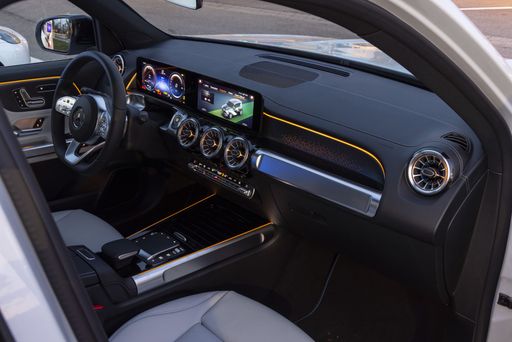
The Mercedes EQB is an electric compact SUV that dresses Mercedes' premium feel in practical clothing, with flexible seating and a serene, composed ride that turns everyday errands into a small luxury. It won't thrill the enthusiast, but for buyers who want a smart, spacious and well-made EV with tasteful tech and real-world usability, the EQB is a sensible, slightly buttoned-up choice that impresses without shouting.

details
Kia EV3
Mercedes EQB
EV3 @ Kia Corporation
EQB @ Mercedes-Benz Group Media

Costs and Consumption

Price
30800 - 41700 £
Price
45900 - 58900 £
Consumption L/100km
-
Consumption L/100km
-
Consumption kWh/100km
14.9 - 16.2 kWh
Consumption kWh/100km
15.2 - 17.2 kWh
Electric Range
436 - 605 km
Electric Range
468 - 535 km
Battery Capacity
58.3 - 81.4 kWh
Battery Capacity
70.50 kWh
co2
0 g/km
co2
0 g/km
Fuel tank capacity
-
Fuel tank capacity
-

Dimensions and Body

Body Type
SUV
Body Type
SUV
Seats
5
Seats
5
Doors
5
Doors
5
Curb weight
1800 - 1885 kg
Curb weight
2105 - 2170 kg
Trunk capacity
460 L
Trunk capacity
495 L
Length
4300 - 4310 mm
Length
4684 mm
Width
1850 mm
Width
1834 mm
Height
1560 - 1570 mm
Height
1654 - 1689 mm
Max trunk capacity
1251 L
Max trunk capacity
1710 L
Payload
470 kg
Payload
435 kg

Engine and Performance

Engine Type
Electric
Engine Type
Electric
Transmission
Automatic
Transmission
Automatic
Transmission Detail
Reduction Gearbox
Transmission Detail
Reduction Gearbox
Drive Type
Front-Wheel Drive
Drive Type
Front-Wheel Drive, All-Wheel Drive
Power HP
204 HP
Power HP
190 - 292 HP
Acceleration 0-100km/h
7.5 - 7.9 s
Acceleration 0-100km/h
6.2 - 8.9 s
Max Speed
170 km/h
Max Speed
160 km/h
Torque
283 Nm
Torque
385 - 520 Nm
Number of Cylinders
-
Number of Cylinders
-
Power kW
150 kW
Power kW
140 - 215 kW
Engine capacity
-
Engine capacity
-

General

Model Year
2024
Model Year
2024 - 2025
CO2 Efficiency Class
A
CO2 Efficiency Class
A
Brand
Kia
Brand
Mercedes-Benz
What drive types are available for the Kia EV3?

The Kia EV3 is offered with Front-Wheel Drive.

The prices and data displayed are estimates based on German list prices and may vary by country. This information is not legally binding.