
 Deutschland
 France
 Nederland
 Great Britain
 Sverige
 Norge
Norge Danmark
 Suomi
Suomi Italia
 Polska
 España
VS
Mercedes EQS SUV vs smart #5 - Differences and prices compared
Compare performance (658 HP vs 646 HP), boot space and price (95000 £ vs 39300 £) at a glance. Find out which car is the better choice for you – Mercedes EQS SUV or smart #5?
EQS SUV
Costs and Efficiency:
Looking at overall running costs, both models reveal some interesting differences in everyday economy.
smart #5 has a convincingly advantage in terms of price – it starts at 39300 £, while the Mercedes EQS SUV costs 95000 £. That’s a price difference of around 55630 £.
In terms of energy consumption, the advantage goes to the smart #5: with 18.40 kWh per 100 km, it’s barely noticeable more efficient than the Mercedes EQS SUV with 19.60 kWh. That’s a difference of about 1.20 kWh.
As for range, the Mercedes EQS SUV performs somewhat better – achieving up to 695 km, about 105 km more than the smart #5.
EQS SUV
Engine and Performance:
Power, torque and acceleration say a lot about how a car feels on the road. This is where you see which model delivers more driving dynamics.
When it comes to engine power, the Mercedes EQS SUV has a minimal edge – offering 658 HP compared to 646 HP. That’s roughly 12 HP more horsepower.
In acceleration from 0 to 100 km/h, the smart #5 is slightly quicker – completing the sprint in 3.80 s, while the Mercedes EQS SUV takes 4.40 s. That’s about 0.60 s faster.
There’s no difference in top speed – both reach 210 km/h.
There’s also a difference in torque: Mercedes EQS SUV pulls distinct stronger with 950 Nm compared to 710 Nm. That’s about 240 Nm difference.
EQS SUV
Space and Everyday Use:
Beyond pure performance, interior space and usability matter most in daily life. This is where you see which car is more practical and versatile.
Both vehicles offer seating for 5 people.
In curb weight, smart #5 is noticeable lighter – 2200 kg compared to 2695 kg. The difference is around 495 kg.
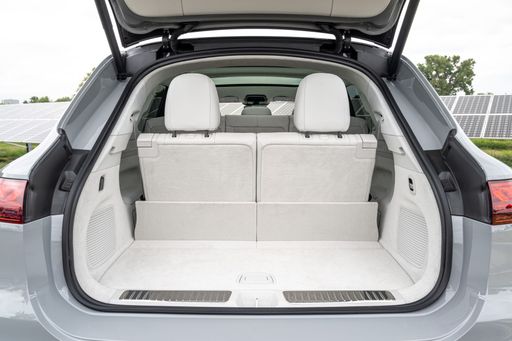
In terms of boot space, the Mercedes EQS SUV offers barely noticeable more room – 645 L compared to 630 L. That’s a difference of about 15 L.
In maximum load capacity, the Mercedes EQS SUV performs clearly perceptible better – up to 2100 L, which is about 570 L more than the smart #5.
When it comes to payload, Mercedes EQS SUV slightly takes the win – 570 kg compared to 502 kg. That’s a difference of about 68 kg.
Who comes out on top?
Overall, the smart #5 shows itself to be outperforms in nearly all aspects and secures the title of DriveDuel Champion.
It convinces with the more balanced overall package and proves to be the more versatile choice for everyday use.
from about £39,300

smart #5
Mercedes EQS SUV
smart #5
Costs and Consumption
View detailed analysis
View detailed analysis
Engine and Performance
View detailed analysis
View detailed analysis
Dimensions and Body
View detailed analysis
View detailed analysis
Mercedes EQS SUV
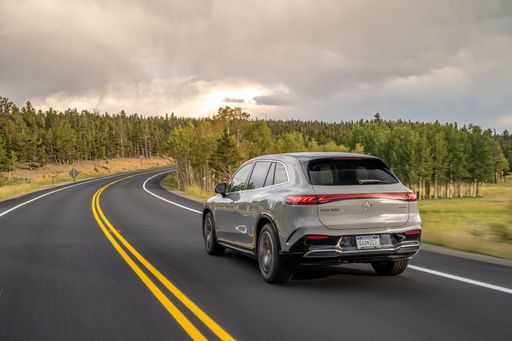
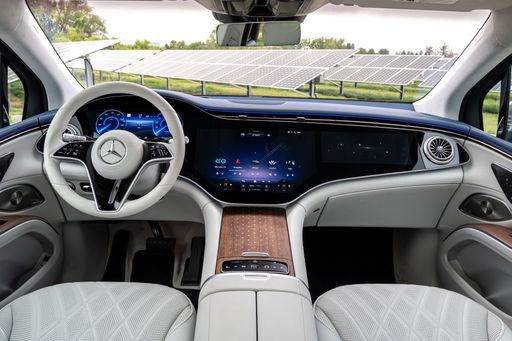
The Mercedes EQS SUV blends limousine-level quiet and luxury with the commanding presence of an SUV, wrapping passengers in sumptuous materials and a futuristic, screen-dominated cabin. It drives with serene confidence and delivers the kind of effortless refinement that makes city commutes and long trips feel like first-class experiences — just be prepared for attention wherever you park it.
details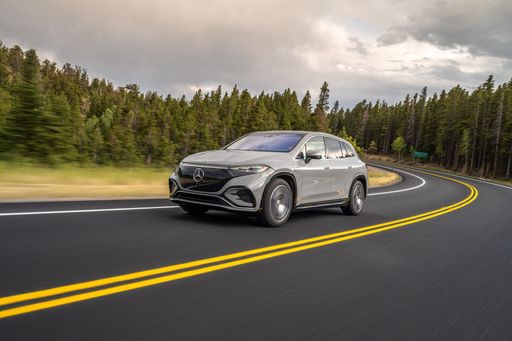
smart #5
5 (3 Reviews)
The Smart #5 continues to build on the brand's legacy of compact and efficient urban vehicles, now infused with a more modern and stylish design. Its sleek appearance is complemented by a spacious interior, offering comfort without compromising its compact nature. This model is ideal for city dwellers seeking a blend of innovation, practicality, and style in their daily drives.
details
Mercedes EQS SUV
smart #5
|
|
|
|
|
|
Costs and Consumption |
|
|---|---|
|
Price
95000 - 212100 £
|
Price
39300 - 52200 £
|
|
Consumption L/100km
-
|
Consumption L/100km
-
|
|
Consumption kWh/100km
19.6 - 21.9 kWh
|
Consumption kWh/100km
18.4 - 19.9 kWh
|
|
Electric Range
615 - 695 km
|
Electric Range
465 - 590 km
|
|
Battery Capacity
108.4 - 118 kWh
|
Battery Capacity
74.4 - 94 kWh
|
|
co2
0 g/km
|
co2
0 g/km
|
|
Fuel tank capacity
-
|
Fuel tank capacity
-
|
Dimensions and Body |
|
|---|---|
|
Body Type
SUV
|
Body Type
SUV
|
|
Seats
4 - 5
|
Seats
5
|
|
Doors
5
|
Doors
5
|
|
Curb weight
2695 - 3075 kg
|
Curb weight
2200 - 2378 kg
|
|
Trunk capacity
440 - 645 L
|
Trunk capacity
630 L
|
|
Length
5125 mm
|
Length
4695 mm
|
|
Width
1959 - 2034 mm
|
Width
1920 mm
|
|
Height
1718 - 1721 mm
|
Height
1705 mm
|
|
Max trunk capacity
2100 L
|
Max trunk capacity
1530 L
|
|
Payload
425 - 570 kg
|
Payload
475 - 502 kg
|
Engine and Performance |
|
|---|---|
|
Engine Type
Electric
|
Engine Type
Electric
|
|
Transmission
Automatic
|
Transmission
Automatic
|
|
Transmission Detail
Reduction Gearbox
|
Transmission Detail
Reduction Gearbox
|
|
Drive Type
All-Wheel Drive, Rear-Wheel Drive
|
Drive Type
Rear-Wheel Drive, All-Wheel Drive
|
|
Power HP
360 - 658 HP
|
Power HP
340 - 646 HP
|
|
Acceleration 0-100km/h
4.4 - 6.8 s
|
Acceleration 0-100km/h
3.8 - 6.9 s
|
|
Max Speed
210 km/h
|
Max Speed
200 - 210 km/h
|
|
Torque
568 - 950 Nm
|
Torque
373 - 710 Nm
|
|
Number of Cylinders
-
|
Number of Cylinders
-
|
|
Power kW
265 - 484 kW
|
Power kW
250 - 475 kW
|
|
Engine capacity
-
|
Engine capacity
-
|
General |
|
|---|---|
|
Model Year
2024
|
Model Year
2025
|
|
CO2 Efficiency Class
A
|
CO2 Efficiency Class
A
|
|
Brand
Mercedes-Benz
|
Brand
smart
|
Is the Mercedes EQS SUV offered with different drivetrains?
The Mercedes EQS SUV is available as All-Wheel Drive or Rear-Wheel Drive.
The prices and data displayed are estimates based on German list prices and may vary by country. This information is not legally binding.