VS

Mercedes GLA vs Jaguar E-Pace comparison

Compare performance (421 HP vs 269 HP), boot space and price (38,800 £ vs 32,400 £ ) at a glance. Find out which car is the better choice for you – Mercedes GLA or Jaguar E-Pace?

Mercedes GLA vs Jaguar E-Pace: Key differences

Mercedes GLA

4.5 (4 Reviews)
rate
  • markedly more power
  • marginally more electric range
  • substantially quicker 0–100 km/h
  • slightly lighter
details

Jaguar E-Pace

  • moderately cheaper
  • significantly more efficient
  • slightly more trunk space
details

All details on performance, efficiency, range and trunk space can be found in the technical comparison below – including user reviews for both models.

By Achim Sedelmaier

GLA

Head to Head: Jaguar E-Pace vs. Mercedes GLA

The compact SUV segment is thriving, with buyers looking for a blend of performance, luxury, and technology. Two prominent players in this arena are the Jaguar E-Pace and the Mercedes GLA, both offering their unique characteristics and innovations. This article delves into a detailed comparison of the two models across various technical aspects.
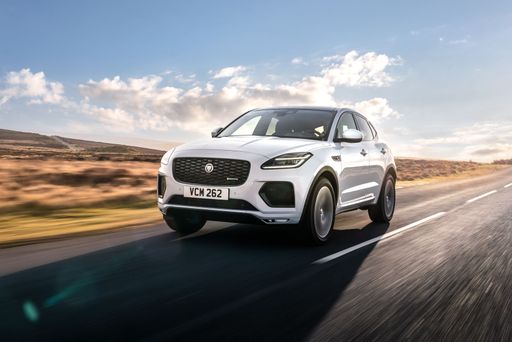
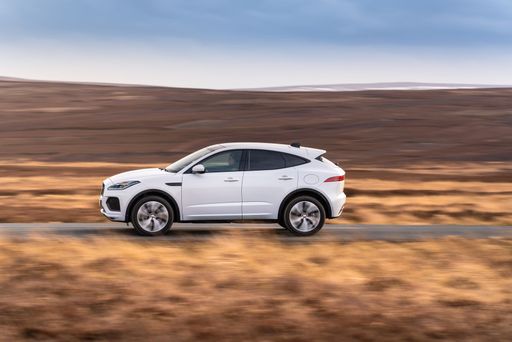
E-Pace

Engine Options and Performance

The Jaguar E-Pace offers a diverse range of engine options, including plugin hybrid, diesel MHEV, and petrol MHEV variants, making it versatile for different driving needs. With powers ranging from 160 to 269 HP, the E-Pace can accelerate from 0-100 km/h in as little as 7.3 seconds. The model boasts an impressive top speed of 211 km/h for the more powerful variants, ensuring exhilarating performance.

On the other hand, the Mercedes GLA echoes this diversity with petrol, diesel, and plugin hybrid variants as well, ranging from 116 to a staggering 421 HP in the performance-oriented AMG variant. It can achieve a swift acceleration of 0-100 km/h in just 4.3 seconds, showcasing the extreme potential of the GLA line-up. The top speed also impressively reaches up to 270 km/h in the AMG version.

GLA

Fuel Efficiency and Consumption

In terms of fuel efficiency, the Jaguar E-Pace performs adequately, with consumption figures ranging from 1.4 L/100 km in the hybrid model to around 8.2 L for the petrol variant. Its battery capacity of 11.5 kWh allows for an electric range of up to 69 km, making it a solid option for short commutes.

Conversely, the Mercedes GLA takes the lead in fuel efficiency, particularly in its plugin hybrid editions, with an astonishing consumption as low as 1 L/100 km. The electric range here is slightly better, with options reaching up to 74 km on a single charge, thanks to its larger 12.9 kWh battery capacity.

E-Pace

Interior Comfort and Technology

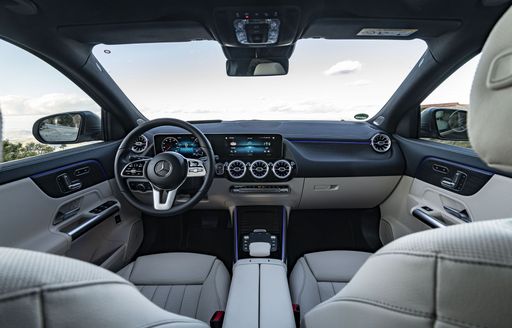
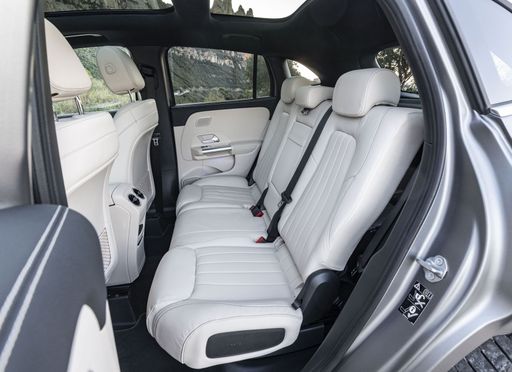
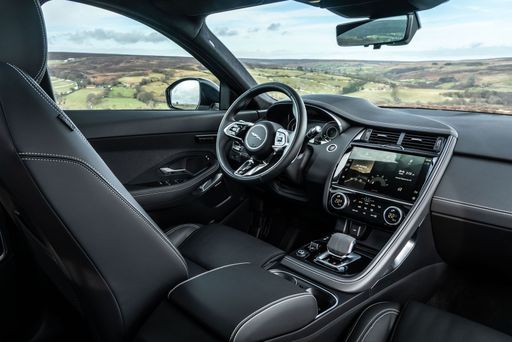
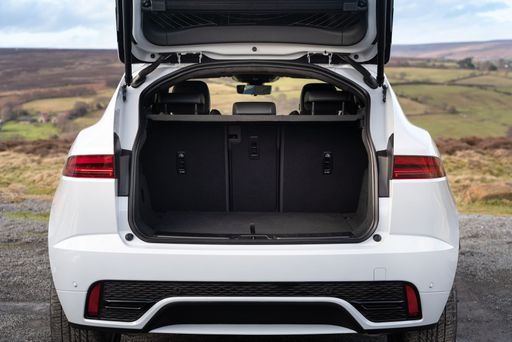
Both vehicles provide spacious interiors designed to comfortably seat five passengers. The Jaguar E-Pace features a trunk capacity of 494 liters, slightly ahead of the Mercedes GLA’s best offering of 435 liters. However, the GLA shines with its modern Mercedes-Benz user interface, including a dual-screen setup that integrates entertainment and navigation seamlessly.

Jaguar's E-Pace comes with an ergonomic and luxurious interior, packed with high-quality materials. The infotainment system is user-friendly and features connectivity options that cater to today's tech-savvy drivers. Both models emphasize comfort and technology, appealing to those who value a superior driving experience.

GLA

Safety and Driver Assistance Technologies

When it comes to safety, both the Jaguar E-Pace and Mercedes GLA are equipped with an array of advanced driver assistance systems. The E-Pace includes features like adaptive cruise control, emergency braking, and lane departure warnings, ensuring that occupants remain safe on the road.

The Mercedes GLA raises the bar with cutting-edge tech such as the Mercedes-Benz Intelligent Drive, which incorporates extensive autonomous driving capabilities. Features like active parking assist and a 360-degree camera system enhance its safety profile, making it a tough competitor in this arena.

E-Pace

Conclusion: Which SUV Takes the Crown?

The competition between the Jaguar E-Pace and Mercedes GLA is fierce, with each vehicle bringing its own strengths to the table. Buyers who prioritize performance and an exhilarating driving experience may lean towards the GLA, particularly in its premium AMG iteration. In contrast, the E-Pace offers a unique blend of British luxury, practicality, and respectable performance, making it an appealing choice for those wanting an SUV that stands out.

Ultimately, the decision comes down to personal preference: whether you prefer the sporty flair of the Jaguar or the refined sophistication of the Mercedes. Whichever you choose, both models showcase the pinnacle of automotive engineering in the compact SUV segment.

Here’s where it gets real: The technical differences in detail

GLA

Costs and Efficiency:

Looking at overall running costs, both models reveal some interesting differences in everyday economy.

Jaguar E-Pace is moderately cheaper – starting at 32,400 £ , while the Mercedes GLA costs 38,800 £ . That’s a price difference of around 6,436 £.

Fuel consumption also shows a difference: the Jaguar E-Pace uses 1.4 L/100km and is significantly more efficient than the Mercedes GLA with 2.9 L/100km. The difference is about 1.5 L/100km.

As for electric range, the Mercedes GLA offers marginally more range – reaching up to 74 km, about 5 km more than the Jaguar E-Pace.

E-Pace

Engine and Performance:

Power, torque and acceleration say a lot about how a car feels on the road. This is where you see which model delivers more driving dynamics.

When it comes to engine power, the Mercedes GLA offers markedly more power – delivering 421 HP compared to 269 HP. That’s roughly 152 HP more horsepower.

When accelerating from 0 to 100 km/h, the Mercedes GLA is substantially quicker – completing the sprint in 4.3 s, while the Jaguar E-Pace takes 7.3 s. That’s about 3 s quicker.

There’s also a difference in torque: the Jaguar E-Pace delivers barely more torque with 540 Nm compared to 500 Nm. That’s about 40 Nm more.

GLA

Space and Everyday Use:

Whether family car or daily driver – which one offers more room, flexibility and comfort?

Both vehicles offer seating for 5 people.

In terms of curb weight, Mercedes GLA is slightly lighter – 1,570 kg compared to 1,783 kg. The difference is around 213 kg.

Looking at boot space, the Jaguar E-Pace offers slightly more boot space – 494 L compared to 435 L. That’s a difference of about 59 L.

When it comes to payload, the Jaguar E-Pace carries only slightly more – 554 kg compared to 500 kg. That’s a difference of about 54 kg.

Who wins the race in the data check?

The Jaguar E-Pace is far ahead overall in the objective data comparison.
This result only shows which model scores more points on paper – not which of the two cars feels right for you.

from £32,400
E-Pace

Jaguar E-Pace

  • Engine Type Plugin Hybrid, Diesel MHEV, Petrol MHEV
  • Transmission Automatic
  • Drive Type All-Wheel Drive, Front-Wheel Drive
  • Power HP 160 - 269 HP
  • Consumption L/100km 1.4 - 8.2 L/100km
  • Electric Range 69 km
Mercedes GLA
Jaguar E-Pace

Costs and Consumption

View detailed analysis

Engine and Performance

View detailed analysis

Dimensions and Body

View detailed analysis

Mercedes GLA

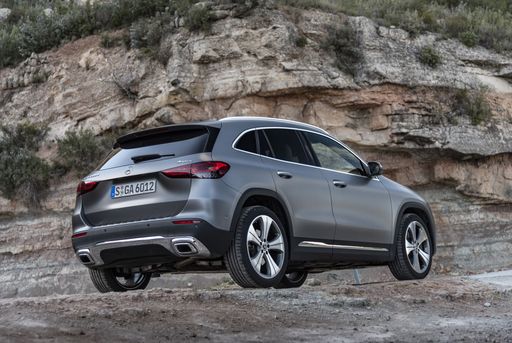
The Mercedes GLA is a compact luxury crossover that brings Mercedes-Benz's refined design and premium cabin materials into a practical, city-friendly package. It combines comfortable ride quality and intuitive tech with poised handling, making it a confident choice for everyday driving and longer journeys.

details

Jaguar E-Pace

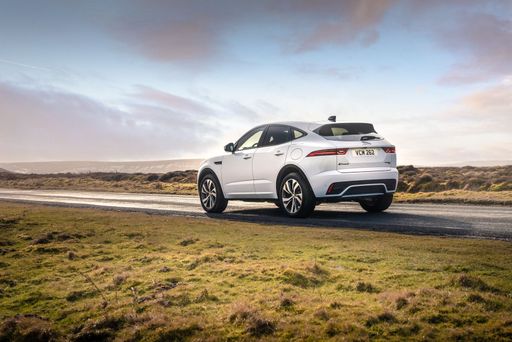
The Jaguar E-Pace brings compact SUV practicality together with taut, sporty design and unmistakable British charm, helping it stand out in a crowded class. Inside, the cabin feels premium and the driving manners are engaging enough to keep a grin on your face, making it a tempting choice for buyers who want Jaguar style without the bulk.

details
Mercedes GLA
Jaguar E-Pace

Costs and Consumption

Price
38,800 - 75,300 £
Price
32,400 - 56,100 £
Consumption L/100km
2.9 - 9.5 L/100km
Consumption L/100km
1.4 - 8.2 L/100km
Consumption kWh/100km
-
Consumption kWh/100km
-
Electric Range
74 km
Electric Range
69 km
Battery Capacity
-
Battery Capacity
11.5 kWh
co2
66 - 216 g/km
co2
33 - 185 g/km
Fuel tank capacity
-
Fuel tank capacity
56 - 67 L

Dimensions and Body

Body Type
SUV
Body Type
SUV
Seats
5
Seats
5
Doors
-
Doors
5
Curb weight
1,570 - 1,810 kg
Curb weight
1,783 - 2,173 kg
Trunk capacity
385 - 435 L
Trunk capacity
494 L
Length
-
Length
4,395 mm
Width
1,834 - 1,849 mm
Width
1,984 mm
Height
-
Height
1,648 mm
Max trunk capacity
-
Max trunk capacity
1,170 L
Payload
480 - 500 kg
Payload
497 - 554 kg

Engine and Performance

Engine Type
Petrol MHEV, Plugin Hybrid, Diesel, Petrol
Engine Type
Plugin Hybrid, Diesel MHEV, Petrol MHEV
Transmission
Automatic
Transmission
Automatic
Transmission Detail
Dual-Clutch Automatic
Transmission Detail
Automatic Gearbox
Drive Type
Front-Wheel Drive, All-Wheel Drive
Drive Type
All-Wheel Drive, Front-Wheel Drive
Power HP
116 - 421 HP
Power HP
160 - 269 HP
Acceleration 0-100km/h
4.3 - 11 s
Acceleration 0-100km/h
7.3 - 10.5 s
Max Speed
-
Max Speed
190 - 211 km/h
Torque
230 - 500 Nm
Torque
260 - 540 Nm
Number of Cylinders
4
Number of Cylinders
3 - 4
Power kW
85 - 310 kW
Power kW
118 - 198 kW
Engine capacity
1,332 - 1,991 cm3
Engine capacity
1,498 - 1,998 cm3

General

Model Year
2025
Model Year
2024
CO2 Efficiency Class
E, F, B, G
CO2 Efficiency Class
B, G
Brand
Mercedes-Benz
Brand
Jaguar
DriveDuel uses data analysis and artificial intelligence to evaluate vehicle data and create content. Content is regularly reviewed and improved. The displayed prices are estimates based on German list prices, adjusted to the respective country’s VAT. Country-specific registration taxes are not included. This information is not legally binding.