VS

Mercedes GLB vs Land Rover Range Rover Evoque comparison

Compare performance (354 HP vs 269 HP), boot space and price (50,600 £ vs 43,300 £ ) at a glance. Find out which car is the better choice for you – Mercedes GLB or Land Rover Range Rover Evoque?

Mercedes GLB vs Land Rover Range Rover Evoque: Key differences

Mercedes GLB

3.6 (4 Reviews)
rate
  • noticeably more power
  • substantially more electric range
  • markedly quicker 0–100 km/h
  • a bit more trunk space

Land Rover Range Rover Evoque

1.4 (2 Reviews)
rate
  • somewhat cheaper
  • noticeably lighter

All details on performance, efficiency, range and trunk space can be found in the technical comparison below – including user reviews for both models.

GLB

The Ultimate SUV Showdown: Mercedes GLB vs. Range Rover Evoque

In the competitive world of premium SUVs, two models have been making waves: the Mercedes GLB and the Land Rover Range Rover Evoque. Each offers its own set of unique attributes, appealing to a distinct group of drivers. In this article, we'll dive into a comprehensive comparison of these two stellar vehicles.
Range Rover Evoque

Design and Dimensions

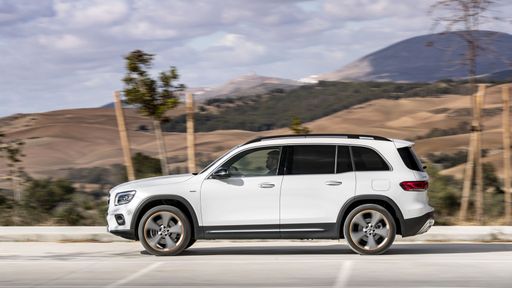
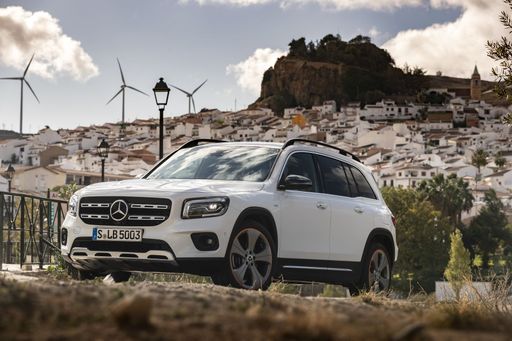
The Mercedes GLB stands out with its practical and sleek design. With a body length ranging from 4634mm to 4650mm, a width of up to 1850mm, and a height of around 1665mm to 1692mm, it offers a robust presence on the road. The GLB's ground clearance and overall design make it suitable for urban environments as well as light off-road adventures.

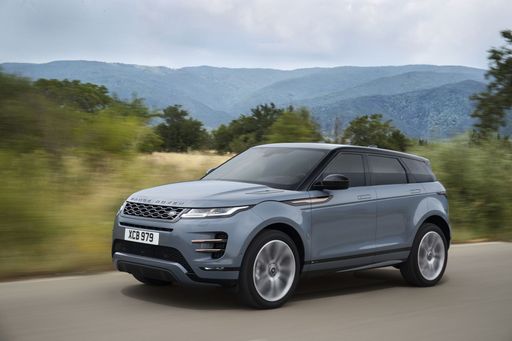
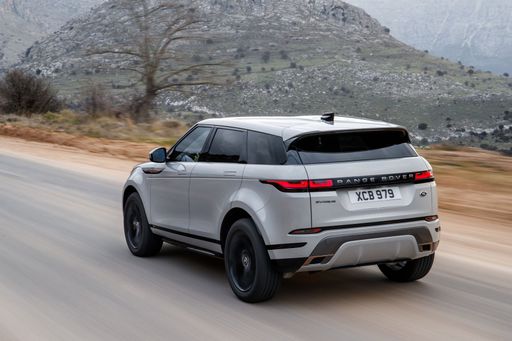
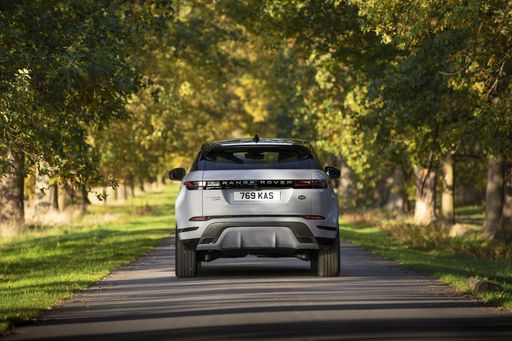
On the other hand, the Range Rover Evoque brings a more compact design, measuring 4371mm in length, 1900mm in width, and 1649mm in height. Known for its stylish and contemporary look, the Evoque is perfect for those seeking a premium aesthetic with the capability of handling various terrains.

GLB

Engine Options and Performance

Under the hood, the Mercedes GLB offers a choice between petrol MHEV and diesel engines. With power outputs ranging from 116 HP to 320 HP, it provides options for various driving styles. The GLB's fuel consumption varies between 5.6 L/100km and 9 L/100km, making it a reasonable choice for those considering fuel efficiency. Its acceleration from 0 to 100km/h can be achieved in as little as 5.5 seconds, depending on the variant.

The Range Rover Evoque offers diesel MHEV, petrol MHEV, and a plug-in hybrid option. It delivers power between 163 HP and 269 HP, catering to both eco-conscious and performance-driven drivers. Notably, the plug-in hybrid variant boasts an impressive electric range of 68km, with a combined fuel consumption as low as 1.4 L/100km. The fastest Evoque variant accelerates from 0 to 100km/h in 7.2 seconds.

Range Rover Evoque

Interior and Space

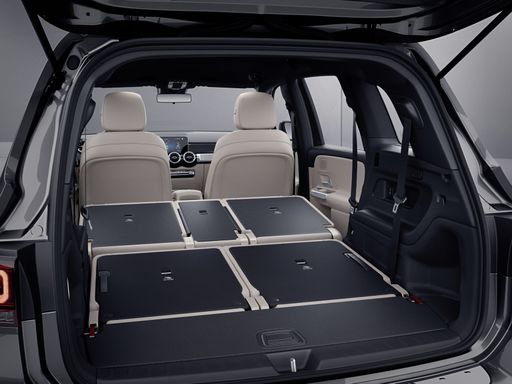
Both vehicles cater to families and luxury enthusiasts with seating for up to five passengers. The Mercedes GLB offers a larger trunk capacity at 570 liters, compared to the Evoque's 472 liters. The GLB is ideal for those who prioritize cargo space for family trips or outdoor adventures.

However, the Range Rover Evoque compensates with a cargo space intelligently designed for flexibility and style, ensuring ample room for everyday use or weekend getaways.

GLB

Innovations and Technology

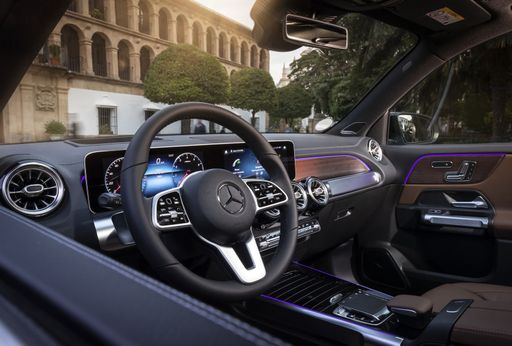
The Mercedes GLB is equipped with cutting-edge technology, including a dual-clutch automatic transmission and various drive assists. Its focus on efficiency and performance ensures a smooth and engaging driving experience, whether navigating busy city streets or open highways.

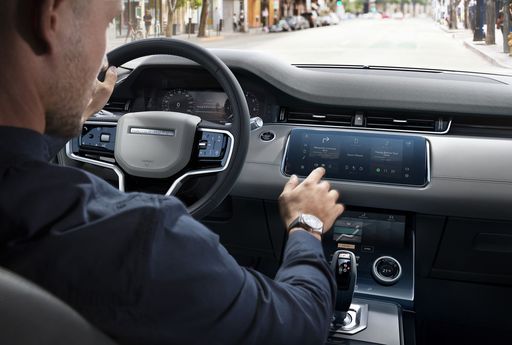
The Range Rover Evoque shines with its optional plug-in hybrid technology, marrying power with sustainability. It features modern conveniences like Automatic Gearbox options and advanced on-road and off-road capabilities, making it a versatile companion no matter the destination.

Range Rover Evoque

Conclusion: Which SUV Comes Out on Top?

The decision between the Mercedes GLB and the Land Rover Range Rover Evoque ultimately depends on personal preferences and priorities. The GLB excels in space and practicality, making it an excellent choice for families or those requiring more cargo capacity. Meanwhile, the Evoque appeals to style-conscious buyers interested in innovative hybrid technology and advanced versatility.

Both models represent the pinnacle of modern SUV design and capability, proving that luxury and performance can coexist harmoniously. Whatever your choice, you're guaranteed a top-tier driving experience.

Here’s where it gets real: The technical differences in detail

GLB

Costs and Efficiency:

Price and efficiency are often the first things buyers look at. Here it becomes clear which model has the long-term edge – whether at the pump, the plug, or in purchase price.

Land Rover Range Rover Evoque is somewhat cheaper – starting at 43,300 £ , while the Mercedes GLB costs 50,600 £ . That’s a price difference of around 7,327 £.

As for electric range, the Mercedes GLB offers substantially more range – reaching up to 631 km, about 571 km more than the Land Rover Range Rover Evoque.

Range Rover Evoque

Engine and Performance:

Power, torque and acceleration say a lot about how a car feels on the road. This is where you see which model delivers more driving dynamics.

When it comes to engine power, the Mercedes GLB offers noticeably more power – delivering 354 HP compared to 269 HP. That’s roughly 85 HP more horsepower.

When accelerating from 0 to 100 km/h, the Mercedes GLB is markedly quicker – completing the sprint in 5.5 s, while the Land Rover Range Rover Evoque takes 7.2 s. That’s about 1.7 s quicker.

There’s also a difference in torque: the Land Rover Range Rover Evoque delivers barely more torque with 540 Nm compared to 515 Nm. That’s about 25 Nm more.

GLB

Space and Everyday Use:

Whether family car or daily driver – which one offers more room, flexibility and comfort?

Both vehicles offer seating for 5 people.

In terms of curb weight, Land Rover Range Rover Evoque is noticeably lighter – 1,792 kg compared to 2,200 kg. The difference is around 408 kg.

Looking at boot space, the Mercedes GLB offers a bit more boot space – 540 L compared to 472 L. That’s a difference of about 68 L.

When it comes to payload, the Land Rover Range Rover Evoque carries a bit more – 600 kg compared to 500 kg. That’s a difference of about 100 kg.

Who wins the race in the data check?

The Mercedes GLB stands well ahead of its rival in the objective data comparison.
This result only shows which model scores more points on paper – not which of the two cars feels right for you.

from £50,600
GLB

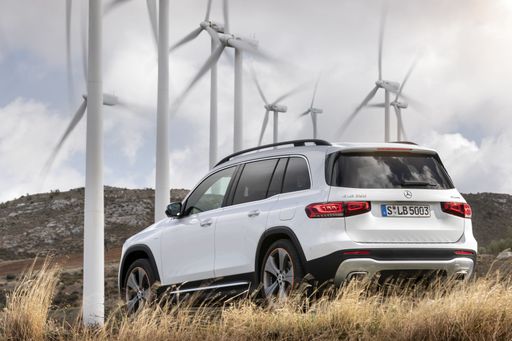
Mercedes GLB

  • Engine Type : Electric
  • Transmission : Automatic
  • Drive Type : Rear-Wheel Drive, All-Wheel Drive
  • Power HP : 272 - 354 HP
  • Consumption kWh/100km : 15.8 - 15.9 kWh/100km
  • Electric Range : 614 - 631 km
Mercedes GLB
Land Rover Range Rover Evoque

Costs and Consumption

View detailed analysis

Engine and Performance

View detailed analysis

Dimensions and Body

View detailed analysis

Mercedes GLB

The Mercedes GLB is a practical compact SUV that mixes boxy, family-friendly space with premium German polish, making it an appealing choice for buyers who want usefulness without pretension. It drives with a confident, composed feel and somehow manages to look both rugged and refined — the grown-up SUV that still likes to have fun.

details

Land Rover Range Rover Evoque

The Range Rover Evoque turns heads with a compact, sculpted silhouette and an interior that feels more boutique hotel than utility vehicle. It delivers composed, playful handling around town while keeping enough ruggedness for weekend escapes — perfect for buyers who want luxury without the ostentation.

details
Mercedes GLB
Land Rover Range Rover Evoque

Costs and Consumption

Price
50,600 - 62,400 £
Price
43,300 - 64,800 £
Consumption L/100km
-
Consumption L/100km
3.7 - 7.8 L/100km
Consumption kWh/100km
15.8 - 15.9 kWh/100km
Consumption kWh/100km
-
Electric Range
614 - 631 km
Electric Range
60 km
Battery Capacity
-
Battery Capacity
-
co2
0 g/km
co2
85 - 177 g/km
Fuel tank capacity
-
Fuel tank capacity
-

Dimensions and Body

Body Type
SUV
Body Type
SUV
Seats
5
Seats
5
Doors
-
Doors
-
Curb weight
2,200 - 2,280 kg
Curb weight
1,792 - 2,157 kg
Trunk capacity
540 L
Trunk capacity
472 L
Length
-
Length
-
Width
1,861 mm
Width
1,900 mm
Height
-
Height
-
Max trunk capacity
-
Max trunk capacity
-
Payload
500 kg
Payload
503 - 600 kg

Engine and Performance

Engine Type
Electric
Engine Type
Petrol MHEV, Diesel MHEV, Plugin Hybrid
Transmission
Automatic
Transmission
Manuel, Automatic
Transmission Detail
Reduction Gearbox
Transmission Detail
Manual Gearbox, Automatic Gearbox
Drive Type
Rear-Wheel Drive, All-Wheel Drive
Drive Type
Front-Wheel Drive, All-Wheel Drive
Power HP
272 - 354 HP
Power HP
160 - 269 HP
Acceleration 0-100km/h
5.5 - 7.4 s
Acceleration 0-100km/h
7.2 - 10.3 s
Max Speed
-
Max Speed
-
Torque
335 - 515 Nm
Torque
260 - 540 Nm
Number of Cylinders
-
Number of Cylinders
3 - 4
Power kW
200 - 260 kW
Power kW
118 - 198 kW
Engine capacity
-
Engine capacity
1,498 - 1,998 cm3

General

Model Year
2,026
Model Year
2,025
CO2 Efficiency Class
A
CO2 Efficiency Class
G, F, B
Brand
Mercedes-Benz
Brand
Land Rover
DriveDuel uses data analysis and artificial intelligence to evaluate vehicle data and create content. Content is regularly reviewed and improved. The displayed prices are estimates based on German list prices, adjusted to the respective country’s VAT. Country-specific registration taxes are not included. This information is not legally binding.