VS

BMW iX3 vs Mercedes GLB comparison

Compare performance (469 HP vs 354 HP), boot space and price (54,300 £ vs 43,200 £ ) at a glance. Find out which car is the better choice for you – BMW iX3 or Mercedes GLB?

BMW iX3 vs Mercedes GLB: Key differences

BMW iX3

4.6 (4 Reviews)
rate
  • visibly more power
  • only slightly more efficient
  • visibly more electric range
  • moderately quicker 0–100 km/h
details

Mercedes GLB

3.6 (4 Reviews)
rate
  • visibly cheaper
  • visibly lighter
details

All details on performance, efficiency, range and trunk space can be found in the technical comparison below – including user reviews for both models.

By Achim Sedelmaier

iX3

BMW iX3 VS Mercedes GLB: premium electric SUV or practical family allrounder?

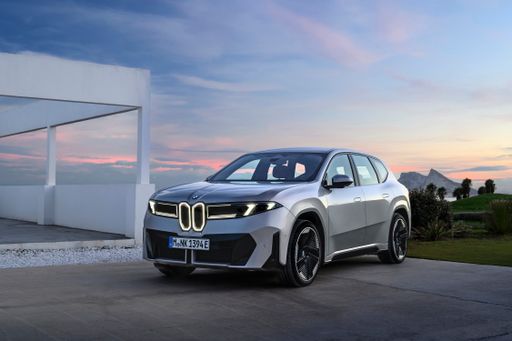
BMW iX3 VS Mercedes GLB sets up a clear contrast: the BMW iX3 arrives as a tech‑forward electric SUV that leans toward long‑distance efficiency and driving precision, while the Mercedes GLB pitches itself as a versatile, family‑centric compact with real‑world usability. The iX3 feels like a next‑generation BMW—quiet, taut in corners and built around a new panoramic display philosophy—whereas the GLB is more conservative, offering straightforward space solutions and a familiar Mercedes operating logic. Those differences matter day to day: the iX3 targets people who prioritise range, rapid charging and highway ease, the GLB suits buyers who want flexible seating, easy access and predictable packaging. Below we translate those strengths into how each car will actually feel, live and work for different buyers before we dig into the specs.
GLB

Character and driving: which one rewards the driver?

The BMW iX3 drives with a noticeably sportier, more composed temperament than the Mercedes GLB, so drivers who enjoy precise turn‑in and a firmer chassis will prefer the iX3’s feel. The Mercedes GLB, by contrast, is tuned toward composure and comfort; it’s forgiving, confidence‑inspiring and built around everyday practicality rather than razor‑sharp responses. In real‑world terms that means the iX3 shrinks long motorway distances with lower effort and brisk acceleration when you want it, while the GLB makes city manoeuvres and multi‑passenger tasks less taxing. Both are quiet on the move, but the iX3’s electrical and suspension setup emphasises refined long‑distance cruising and on‑the‑move efficiency more deliberately. Choose the iX3 if dynamic driver engagement and efficient touring are priorities; pick the GLB if steady, easy‑going daily usability ranks higher.

iX3

Cabin feel and perceived quality: modernism versus pragmatism

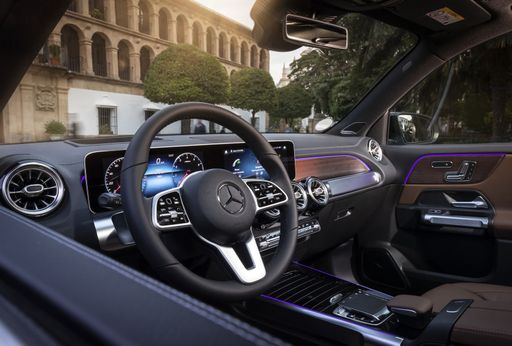
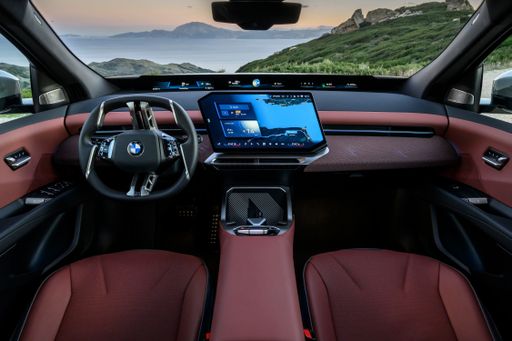
Inside, the BMW iX3 presents a futuristic, minimalist cabin with a wide panoramic display and an emphasis on digital interaction that feels modern and premium, though it asks you to accept fewer physical controls. The Mercedes GLB uses the familiar MBUX architecture with strong connectivity and clear screens, but some surfaces and plastics read more pragmatic than luxurious compared with the iX3’s cleaner execution. Both cars push a touch‑and‑voice approach, yet the iX3’s HUD and voice integration can make information feel more integrated, whereas the GLB keeps things straightforward and slightly more conventional to the touch. If you value a high‑tech, cinematic cockpit the BMW iX3 will impress; if you prefer a more conventional layout and straightforward controls the Mercedes GLB will feel easier to live with.

GLB

Practicality and usability: how they cope with family life and cargo

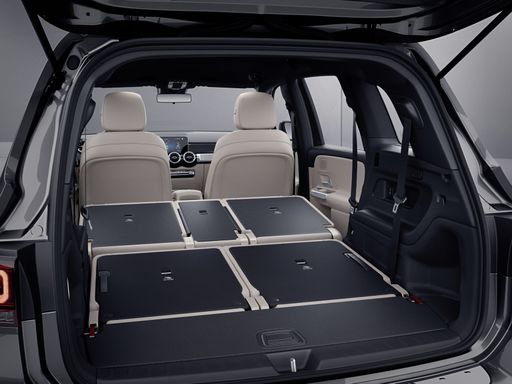
The Mercedes GLB’s headline advantage is usable space and versatility: a genuine option for occasional third‑row passengers, sliding rear seating and a straightforward layout that suits family duties and child seats. The BMW iX3 counters with a roomy second row, clever underfloor storage and an extra front luggage bay that upscale buyers will appreciate, but it stops short of the GLB’s people‑moving flexibility and has a loadfloor that isn’t the flat, furniture‑friendly type some users want. Everyday small touches matter here—the GLB’s door openings, seat access and choice of configurations make it simpler when you’re juggling kids, crates and strollers, while the iX3 rewards owners who prioritise trunk space plus tidy storage solutions over sheer modularity. Option lists and paid features also change the balance: the GLB will feel more practical at a given price if you spec the right packages, whereas the iX3 bundles a lot of tech that lifts its purchase cost.

iX3

Comfort, long‑distance behaviour and city friendliness

On long runs the BMW iX3 stands out for its calm cabin, efficient energy use and systems designed to shorten charging stops, so drivers who live on motorways will notice the difference in both stress and time saved. The Mercedes GLB is refreshingly composed on highways as well and arguably easier to live with in urban settings thanks to its compact visibility, lighter steering and straightforward ergonomics. In town the GLB’s packaging, door apertures and shoulder‑room orientation make parking, family loading and short hops less fiddly than the iX3’s broader stance and minimalist touch surfaces. For mixed use—commuting, school runs and regular motorway trips—the GLB is the pragmatic choice; for long solo runs or frequent high‑speed touring the iX3’s comfort and efficiency tilt the scales the other way.

GLB

Buyer fit and trade‑offs before the technical deep‑dive

Think of the BMW iX3 as the pick for tech‑minded frequent travellers who want strong electric range, brisk performance and a high‑tech cockpit, albeit at a premium price and with a touchscreen‑led interface. The Mercedes GLB will suit families and practical buyers who need flexible seating, easier daily usability and a more conventional interior at a comparatively lower entry cost, accepting that the third row is best for kids and that some desirable tech comes as extra. The matchup is therefore one of trade‑offs—sportier efficiency and touring ease versus adaptable space and everyday convenience—and which set of compromises you prefer depends on how you use the car most weeks. Next up is the technical comparison, where the numbers clarify how those real‑world differences translate into range, charging behaviour and performance.

Here’s where it gets real: The technical differences in detail

iX3

Costs and Efficiency:

Price and efficiency are key factors when choosing a car – and this is often where the real differences emerge.

Mercedes GLB is visibly cheaper – starting at 43,200 £ , while the BMW iX3 costs 54,300 £ . That’s a price difference of around 11,145 £.

In terms of energy consumption, the BMW iX3 is only slightly more efficient: consuming 14.6 kWh/100km compared to 15.4 kWh/100km for the Mercedes GLB. That’s a difference of about 0.8 kWh/100km.

As for electric range, the BMW iX3 offers visibly more range – reaching up to 805 km, about 174 km more than the Mercedes GLB.

GLB

Engine and Performance:

Under the bonnet, it becomes clear which model is tuned for sportiness and which one takes the lead when you hit the accelerator.

When it comes to engine power, the BMW iX3 offers visibly more power – delivering 469 HP compared to 354 HP. That’s roughly 115 HP more horsepower.

When accelerating from 0 to 100 km/h, the BMW iX3 is moderately quicker – completing the sprint in 4.9 s, while the Mercedes GLB takes 5.5 s. That’s about 0.6 s quicker.

There’s also a difference in torque: the BMW iX3 delivers markedly more torque with 645 Nm compared to 515 Nm. That’s about 130 Nm more.

iX3

Space and Everyday Use:

Whether family car or daily driver – which one offers more room, flexibility and comfort?

Both vehicles offer seating for 5 people.

In terms of curb weight, Mercedes GLB is visibly lighter – 1,840 kg compared to 2,360 kg. The difference is around 520 kg.

When it comes to payload, the Mercedes GLB carries only slightly more – 505 kg compared to 465 kg. That’s a difference of about 40 kg.

Who wins the race in the data check?

The BMW iX3 holds a solid overall lead in the objective data comparison.
This result only shows which model scores more points on paper – not which of the two cars feels right for you.

from £54,300
iX3

BMW iX3

  • Engine Type Electric
  • Transmission Automatic
  • Drive Type All-Wheel Drive, Rear-Wheel Drive
  • Power HP 320 - 469 HP
  • Consumption kWh/100km 14.6 - 15.1 kWh/100km
  • Electric Range 635 - 805 km
BMW iX3
Mercedes GLB

Costs and Consumption

View detailed analysis

Engine and Performance

View detailed analysis

Dimensions and Body

View detailed analysis

BMW iX3

The BMW iX3 is an electric SUV that delivers the composed, premium driving experience BMW buyers expect. With a calm, refined cabin and practical everyday usability, it’s a strong choice for those who want electric motoring without giving up luxury and comfort.

details

Mercedes GLB

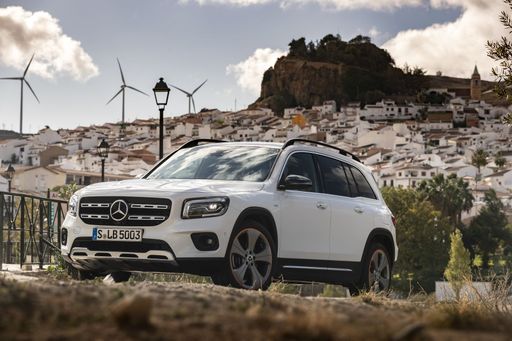
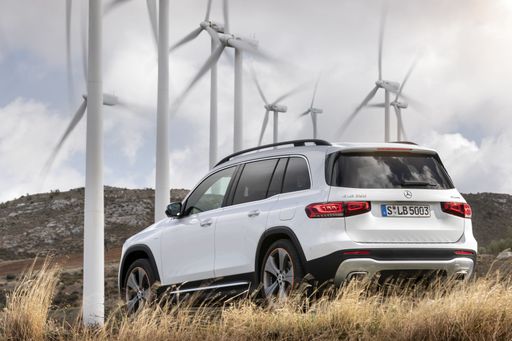
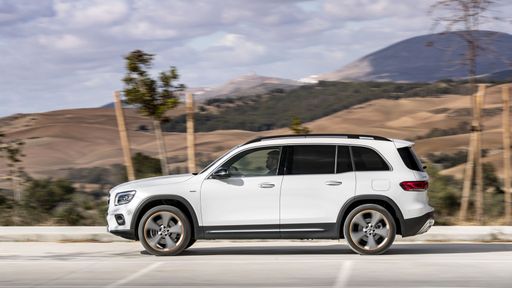
The Mercedes GLB is a compact luxury SUV that blends smart packaging with a polished, composed driving experience. Its flexible interior and premium feel make it a sensible pick for buyers who want Mercedes comfort and practicality in a smaller footprint.

details
BMW iX3
Mercedes GLB

Costs and Consumption

Price
54,300 - 66,300 £
Price
43,200 - 62,400 £
Consumption L/100km
-
Consumption L/100km
5.7 - 6.1 L/100km
Consumption kWh/100km
14.6 - 15.1 kWh/100km
Consumption kWh/100km
15.4 - 15.9 kWh/100km
Electric Range
635 - 805 km
Electric Range
431 - 631 km
Battery Capacity
-
Battery Capacity
-
co2
0 g/km
co2
0 - 138 g/km
Fuel tank capacity
-
Fuel tank capacity
-

Dimensions and Body

Body Type
SUV
Body Type
SUV
Seats
5
Seats
5
Doors
-
Doors
-
Curb weight
2,360 kg
Curb weight
1,840 - 2,280 kg
Trunk capacity
-
Trunk capacity
540 L
Length
-
Length
-
Width
1,895 mm
Width
1,861 mm
Height
-
Height
-
Max trunk capacity
-
Max trunk capacity
-
Payload
465 kg
Payload
485 - 505 kg

Engine and Performance

Engine Type
Electric
Engine Type
Electric, Full Hybrid
Transmission
Automatic
Transmission
Automatic
Transmission Detail
Reduction Gearbox
Transmission Detail
Reduction Gearbox
Drive Type
All-Wheel Drive, Rear-Wheel Drive
Drive Type
Rear-Wheel Drive, All-Wheel Drive
Power HP
320 - 469 HP
Power HP
156 - 354 HP
Acceleration 0-100km/h
4.9 - 5.9 s
Acceleration 0-100km/h
5.5 - 9.7 s
Max Speed
-
Max Speed
-
Torque
500 - 645 Nm
Torque
280 - 515 Nm
Number of Cylinders
-
Number of Cylinders
4
Power kW
235 - 345 kW
Power kW
115 - 260 kW
Engine capacity
-
Engine capacity
1,499 cm3

General

Model Year
2026
Model Year
2026
CO2 Efficiency Class
A
CO2 Efficiency Class
A, D, E
Brand
BMW
Brand
Mercedes-Benz
DriveDuel uses data analysis and artificial intelligence to evaluate vehicle data and create content. Content is regularly reviewed and improved. The displayed prices are estimates based on German list prices, adjusted to the respective country’s VAT. Country-specific registration taxes are not included. This information is not legally binding.