VS

Mercedes GLB vs Mercedes C Class Wagon comparison

Compare performance (354 HP vs 680 HP), boot space and price (50,600 £ vs 42,600 £ ) at a glance. Find out which car is the better choice for you – Mercedes GLB or Mercedes C Class Wagon?

Mercedes GLB vs Mercedes C Class Wagon: Key differences

Mercedes GLB

3.2 (3 Reviews)
rate
  • significantly more electric range
  • marginally more trunk space

Mercedes C Class Wagon

  • moderately cheaper
  • substantially more power
  • clearly quicker 0–100 km/h
  • noticeably lighter

All details on performance, efficiency, range and trunk space can be found in the technical comparison below – including user reviews for both models.

GLB

Mercedes C-Klasse T-Modell vs. Mercedes GLB: The Battle of Luxury and Versatility

In the world of Mercedes-Benz, choosing the right vehicle often comes down to personal needs and style. For those torn between the refined luxury of a wagon and the commanding presence of an SUV, the Mercedes C-Klasse T-Modell and the Mercedes GLB present two enticing options. Both vehicles are part of the 2024 lineup and bring their own set of features and innovations to the table. Let's dive into a detailed comparison to see how they stack up against each other.

C Class Wagon

The Alluring Attraction of the C-Klasse T-Modell

The Mercedes C-Klasse T-Modell, commonly known as the C-Class estate, is an embodiment of luxury and performance wrapped in a wagon's sleek design. It boasts a variety of engine options, including Petrol Mild Hybrid Electric Vehicle (MHEV), Diesel MHEV, and Plug-in Hybrid, emphasizing both power and efficiency. With power outputs ranging from 193 HP to a staggering 680 HP in its top-tier versions, it caters to different driving preferences.

Its automatic transmission offers seamless gear shifts for a smooth ride, complemented by the choice between rear-wheel and all-wheel drive systems. The wagon's agility is further highlighted by its impressive acceleration capabilities, reaching 0-100 km/h in as fast as 3.4 seconds for its high-performance variants. This is combined with a top speed of up to 280 km/h.

Despite its powerful performance, the C-Klasse T-Modell maintains a balance between speed and efficiency. Fuel consumption ranges from an economical 0.4 L/100km in its hybrid model to more robust figures in the high-performance variants. It also provides an electric range of up to 113 km, powered by its 19.5 kWh battery.

Inside, the C-Klasse T-Modell offers a spacious design with a trunk capacity of 490 liters, ensuring ample room for passengers and luggage. Its dimensions emphasize comfort with a length of up to 4842 mm and a width reaching 1900 mm.

GLB

The Versatility and Command of the Mercedes GLB

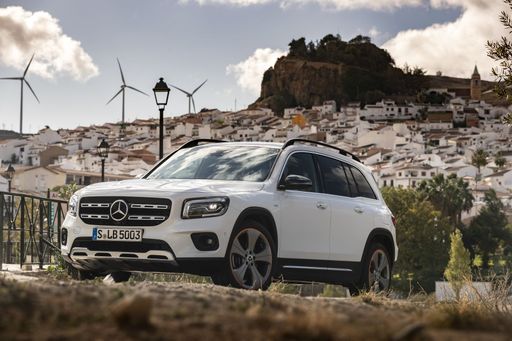
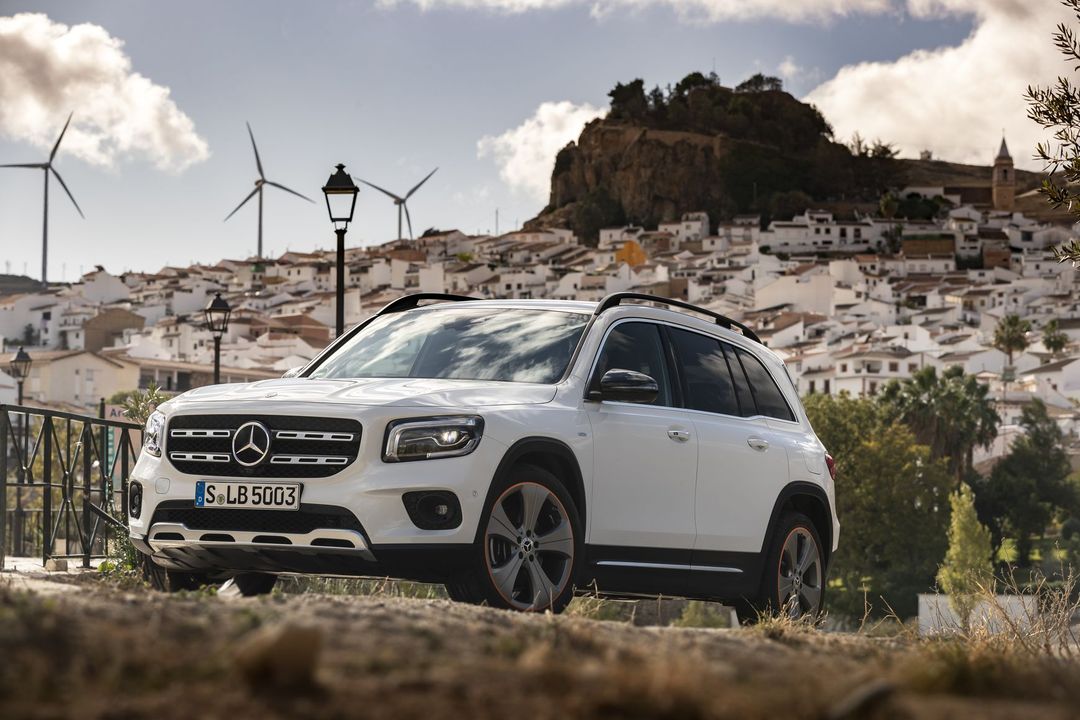
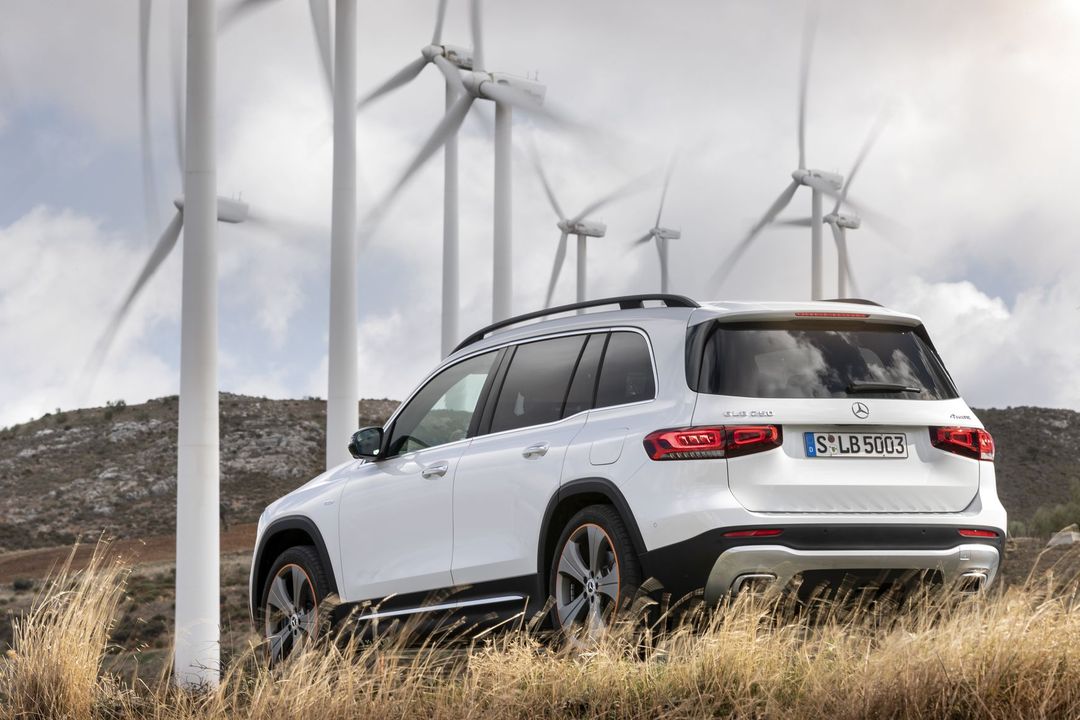
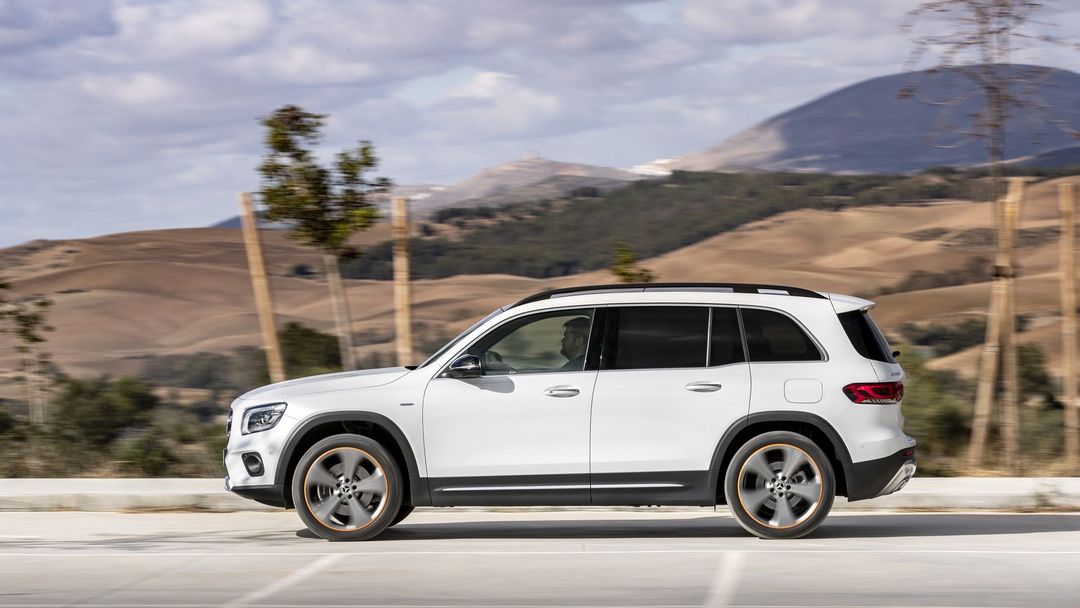
In contrast, the Mercedes GLB stands tall as a compact SUV offering versatility and ample space. Available with petrol MHEV and diesel engines, it provides power outputs between 150 HP and 320 HP. Its dual-clutch automatic transmission ensures crisp and precise gear shifts, while front-wheel and all-wheel drive options adapt to various driving conditions.

Though the GLB may not match the C-Klasse T-Modell in outright speed, it presents competitive acceleration with 0-100 km/h times as fast as 5.5 seconds. Its top speed reaches an impressive 250 km/h, catering to those with a thirst for adventure.

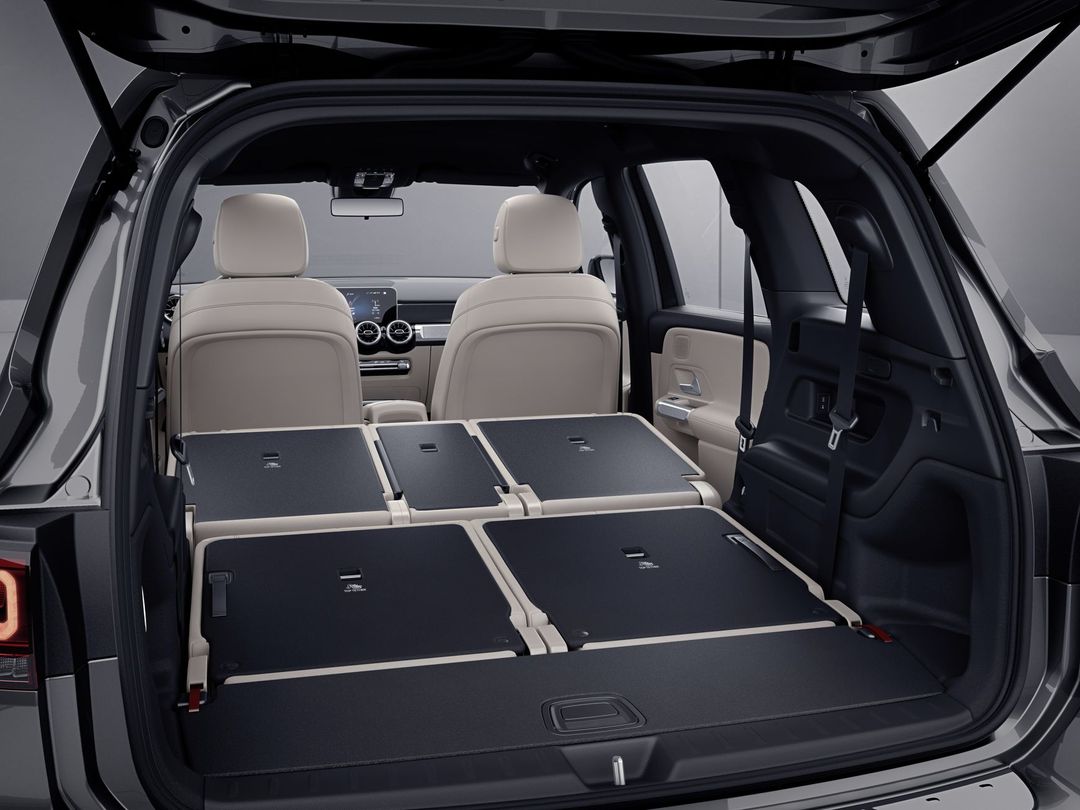
The GLB is commendable for its efficient use of space, boasting a trunk capacity of 570 liters. It comfortably seats five passengers, making it ideal for families or group outings. With a height of up to 1692 mm, the GLB promises a higher seating position, offering a commanding view of the road and a sense of adventure.

C Class Wagon

Conclusion: Which Mercedes is Right for You?

The choice between the Mercedes C-Klasse T-Modell and the Mercedes GLB ultimately comes down to personal preferences and lifestyle needs. The C-Klasse T-Modell appeals to those seeking luxury and performance in a sleek package, along with cutting-edge hybrid technology for eco-friendliness and efficiency.

The GLB, on the other hand, is tailored for those who require versatility and space alongside reliable performance. Its SUV design allows for practical usability without compromising on the luxury experience inherent to the Mercedes-Benz brand.

Both vehicles stand out in their categories, making either choice a formidable addition to anyone's garage. Whichever path you choose, Mercedes promises luxury, performance, and innovation at every turn.

Here’s where it gets real: The technical differences in detail

GLB

Costs and Efficiency:

Price and efficiency are often the first things buyers look at. Here it becomes clear which model has the long-term edge – whether at the pump, the plug, or in purchase price.

Mercedes C Class Wagon is moderately cheaper – starting at 42,600 £ , while the Mercedes GLB costs 50,600 £ . That’s a price difference of around 8,012 £.

As for electric range, the Mercedes GLB offers significantly more range – reaching up to 631 km, about 519 km more than the Mercedes C Class Wagon.

C Class Wagon

Engine and Performance:

Under the bonnet, it becomes clear which model is tuned for sportiness and which one takes the lead when you hit the accelerator.

When it comes to engine power, the Mercedes C Class Wagon offers substantially more power – delivering 680 HP compared to 354 HP. That’s roughly 326 HP more horsepower.

When accelerating from 0 to 100 km/h, the Mercedes C Class Wagon is clearly quicker – completing the sprint in 3.4 s, while the Mercedes GLB takes 5.5 s. That’s about 2.1 s quicker.

There’s also a difference in torque: the Mercedes C Class Wagon delivers clearly more torque with 1,020 Nm compared to 515 Nm. That’s about 505 Nm more.

GLB

Space and Everyday Use:

Cabin size, boot volume and payload all play a role in everyday practicality. Here, comfort and flexibility make the difference.

Both vehicles offer seating for 5 people.

In terms of curb weight, Mercedes C Class Wagon is noticeably lighter – 1,755 kg compared to 2,200 kg. The difference is around 445 kg.

Looking at boot space, the Mercedes GLB offers marginally more boot space – 540 L compared to 490 L. That’s a difference of about 50 L.

When it comes to payload, the Mercedes C Class Wagon carries a bit more – 565 kg compared to 500 kg. That’s a difference of about 65 kg.

Who wins the race in the data check?

The Mercedes C Class Wagon is far ahead overall in the objective data comparison.
This result only shows which model scores more points on paper – not which of the two cars feels right for you.

from £42,600
C Class Wagon

Mercedes C Class Wagon

  • Engine Type : Petrol MHEV, Plugin Hybrid, Diesel MHEV
  • Transmission : Automatic
  • Drive Type : Rear-Wheel Drive, All-Wheel Drive
  • Power HP : 186 - 680 HP
  • Consumption L/100km : 0.4 - 9 L/100km
  • Electric Range : 11 - 112 km
Mercedes GLB
Mercedes C Class Wagon

Costs and Consumption

View detailed analysis

Engine and Performance

View detailed analysis

Dimensions and Body

View detailed analysis

Mercedes GLB

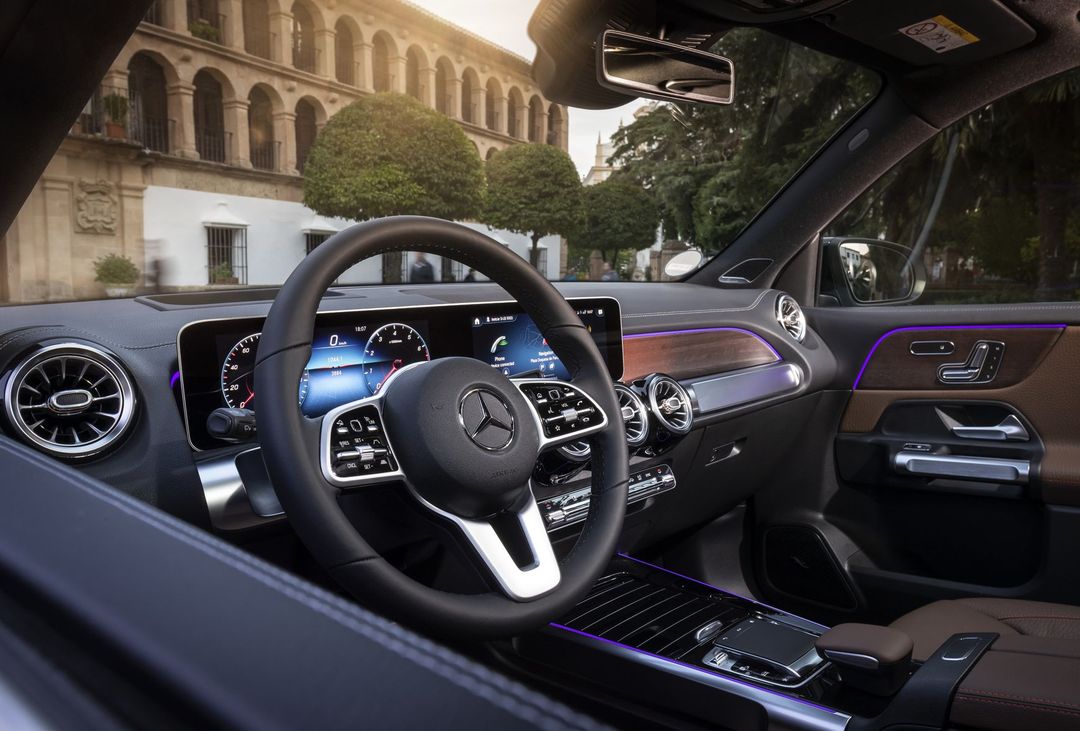
The Mercedes GLB is a practical compact SUV that mixes boxy, family-friendly space with premium German polish, making it an appealing choice for buyers who want usefulness without pretension. It drives with a confident, composed feel and somehow manages to look both rugged and refined — the grown-up SUV that still likes to have fun.

details

Mercedes C Class Wagon

The Mercedes C-Class wagon dresses Mercedes refinement in a sensible, practical package, marrying a sleek estate silhouette with a plush, high-quality cabin that feels more premium than its badge implies. It quietly soaks up motorway miles and cartloads of family kit with composed handling and effortless comfort — a clever alternative to an SUV for buyers who still like to steer.

details
Mercedes GLB
Mercedes C Class Wagon

Costs and Consumption

Price
50,600 - 62,400 £
Price
42,600 - 104,400 £
Consumption L/100km
-
Consumption L/100km
0.4 - 9 L/100km
Consumption kWh/100km
15.8 - 15.9 kWh/100km
Consumption kWh/100km
-
Electric Range
614 - 631 km
Electric Range
11 - 112 km
Battery Capacity
-
Battery Capacity
19.5 kWh
co2
0 g/km
co2
11 - 205 g/km
Fuel tank capacity
-
Fuel tank capacity
50 - 60 L

Dimensions and Body

Body Type
SUV
Body Type
Estate
Seats
5
Seats
5
Doors
-
Doors
5
Curb weight
2,200 - 2,280 kg
Curb weight
1,755 - 2,235 kg
Trunk capacity
540 L
Trunk capacity
360 - 490 L
Length
-
Length
4,751 - 4,842 mm
Width
1,861 mm
Width
1,820 - 1,900 mm
Height
-
Height
1,454 - 1,474 mm
Max trunk capacity
-
Max trunk capacity
1,375 L
Payload
500 kg
Payload
440 - 565 kg

Engine and Performance

Engine Type
Electric
Engine Type
Petrol MHEV, Plugin Hybrid, Diesel MHEV
Transmission
Automatic
Transmission
Automatic
Transmission Detail
Reduction Gearbox
Transmission Detail
Automatic Gearbox
Drive Type
Rear-Wheel Drive, All-Wheel Drive
Drive Type
Rear-Wheel Drive, All-Wheel Drive
Power HP
272 - 354 HP
Power HP
186 - 680 HP
Acceleration 0-100km/h
5.5 - 7.4 s
Acceleration 0-100km/h
3.4 - 8.8 s
Max Speed
-
Max Speed
232 - 280 km/h
Torque
335 - 515 Nm
Torque
250 - 1,020 Nm
Number of Cylinders
-
Number of Cylinders
4
Power kW
200 - 260 kW
Power kW
137 - 500 kW
Engine capacity
-
Engine capacity
1,496 - 1,999 cm3

General

Model Year
2,026
Model Year
2,024 - 2,025
CO2 Efficiency Class
A
CO2 Efficiency Class
E, F, G, B, D
Brand
Mercedes-Benz
Brand
Mercedes-Benz
DriveDuel uses data analysis and artificial intelligence to evaluate vehicle data and create content. Content is regularly reviewed and improved. The displayed prices are estimates based on German list prices, adjusted to the respective country’s VAT. Country-specific registration taxes are not included. This information is not legally binding.