VS

Mercedes GLB vs Mercedes GLC comparison

Compare performance (354 HP vs 472 HP), boot space and price (43,200 £ vs 50,300 £ ) at a glance. Find out which car is the better choice for you – Mercedes GLB or Mercedes GLC?

Mercedes GLB vs Mercedes GLC: Key differences

Mercedes GLB

3.6 (4 Reviews)
rate
  • moderately cheaper
  • substantially more electric range
  • only slightly lighter
details

Mercedes GLC

4.4 (13 Reviews)
rate
  • noticeably more power
  • considerably more efficient
  • markedly quicker 0–100 km/h
  • slightly more trunk space
details

All details on performance, efficiency, range and trunk space can be found in the technical comparison below – including user reviews for both models.

By Achim Sedelmaier

GLB

Mercedes GLB vs Mercedes GLC: character clash in the Mercedes SUV family

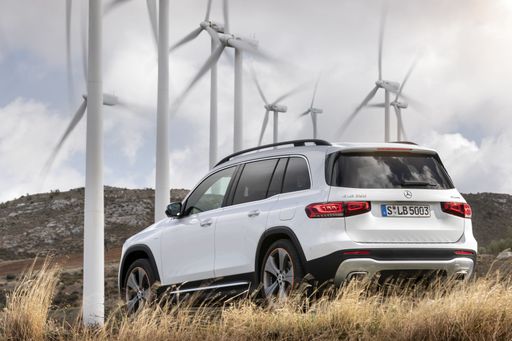
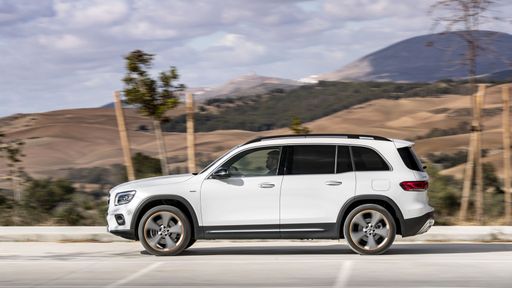
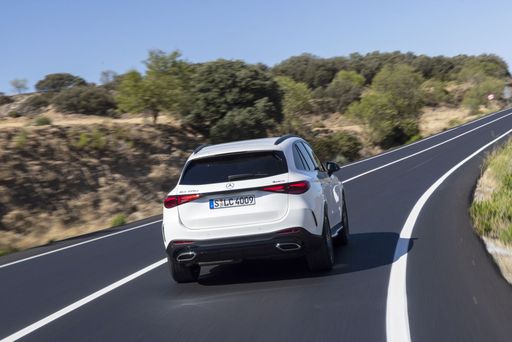
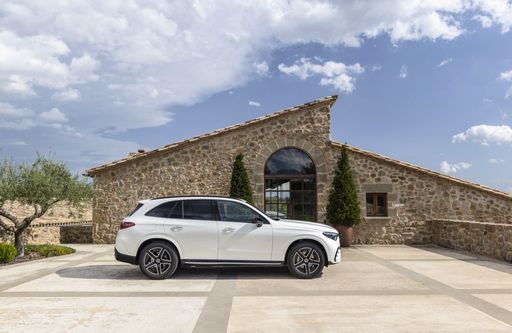
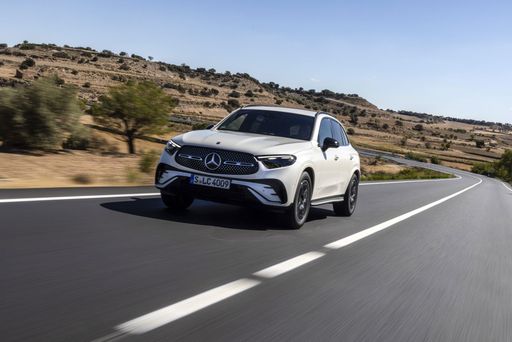
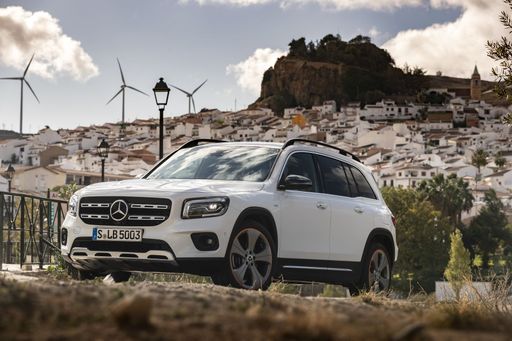
Mercedes GLB VS Mercedes GLC pits pragmatic versatility against polished luxury. The Mercedes GLB feels like the clever choice: boxy, easy to place, and available with an occasional-use third row that turns school runs and sleepovers from hassle into routine. The Mercedes GLC leans upscale and serene, with a richer cabin and a more substantial, long‑legged feel on the motorway. Price also sets the tone: the GLB typically undercuts the GLC, while the GLC gives you more performance headroom and a grander sense of occasion. Which one lands better depends on whether your day is ruled by people and cargo or by calm, premium miles.
GLC

Space and practicality: flexible seven vs big five

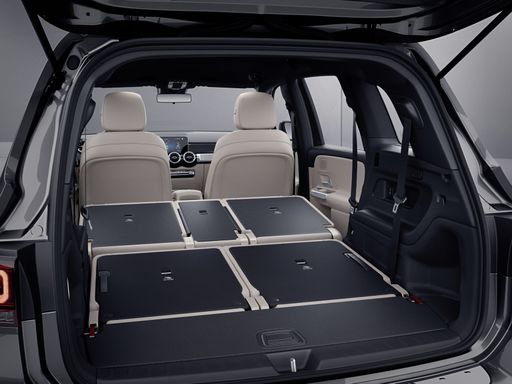
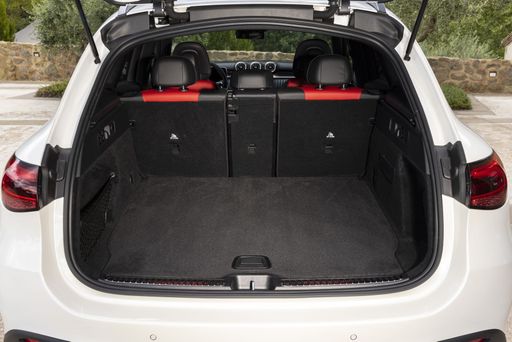
The Mercedes GLB is the packaging ace, with a tall, square body that makes its second row roomy and allows for a kid‑friendly third row when you need it. Family logistics are easier in the GLB thanks to wide rear doors, a sensible load height, and in EV form even extra storage under the front hood. The Mercedes GLC is the better five‑seater hauler, offering a flatter, more generous luggage bay in its petrol and diesel versions that swallows pushchairs and suitcases with less Tetris. Go for a GLC plug‑in hybrid and that boot becomes shallower and stepped, while the GLB keeps its layout advantage. If your priority is seven‑seat flexibility, pick the GLB; if it’s five seats and maximum regular cargo space, the GLC in non‑PHEV form is the cleaner solution.

GLB

Cabin feel and controls: airy utility vs hush and polish

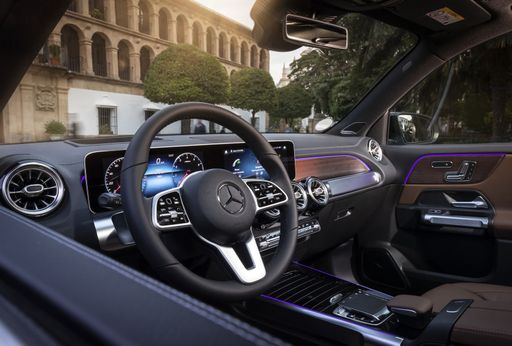
The Mercedes GLB’s cabin feels bright and airy, and its latest MBUX screen setup is quick and feature‑rich, but materials in lower areas don’t always scream premium. Its interface is heavily touch‑driven, so traditionalists may miss more physical switches. The Mercedes GLC counters with a classier mix of trims and a quieter, cushier impression the moment you shut the door. However, the GLC’s touch‑sensitive steering controls and climate buried in the screen can frustrate, even if the voice assistant is excellent. In short, GLB favors easy‑going utility, while GLC delivers the luxury vibe—provided you’re happy to live in the digital cockpit.

GLC

Long‑distance and performance: fast charging calm vs refined muscle

For motorway days, both settle down nicely, but they do it differently. The Mercedes GLB in EV form leans on an 800‑volt setup for very short charging stops, making big trips surprisingly relaxed, and it tows confidently when specified for it. The Mercedes GLC brings more outright shove and quicker responses, feeling effortlessly strong when joining or overtaking, and with the right suspension spec it glides along with quiet authority. Choose the GLC plug‑in hybrid and you can commute largely on electricity if you charge regularly, then cruise long distances in hybrid mode without anxiety. If you want effortless pace and a traditional grand‑touring feel, the GLC suits; if you value silent EV running and rapid top‑ups on the way to the mountains, the GLB has the edge.

GLB

City manners and visibility: easy edges vs big‑car tricks

The Mercedes GLB’s upright glasshouse and square tail make it simple to judge in tight streets and multi‑storeys, and the light steering removes stress from errands. The Mercedes GLC feels wider and its thick rear pillars restrict natural rearward view, so you’ll rely more on cameras and sensors. Option the GLC’s rear‑axle steering and it suddenly pivots like a smaller car, which is a boon for urban parking and narrow lanes. Even so, the GLB remains the inherently simpler city partner thanks to its shape and sightlines. If most miles are urban, the GLB’s easygoing manners pay off; the GLC’s tech can match that agility if you spec it right.

GLC

Costs, efficiency and buyer fit: head vs heart within one badge

The Mercedes GLB typically starts lower, and its EV versions can make ownership costs compelling if you charge at home and travel often. The Mercedes GLC asks more upfront and climbs quickly with options, but pays back in cabin richness, stronger acceleration, and a more prestigious feel. Pick the GLC plug‑in hybrid if you can plug in daily and want to slash fuel on short trips without giving up long‑haul capability. Stick with a GLC petrol or diesel for the biggest boot and classic premium SUV manners. In the end, families seeking maximum versatility and city‑friendly packaging gravitate to the GLB, while comfort‑first drivers who want refinement, pace and a grander feel will lean GLC—details in the specs below will help you lock in the right version.

Here’s where it gets real: The technical differences in detail

GLB

Costs and Efficiency:

When it comes to price and running costs, the biggest differences usually appear. This is often where you see which car fits your budget better in the long run.

Mercedes GLB is moderately cheaper – starting at 43,200 £ , while the Mercedes GLC costs 50,300 £ . That’s a price difference of around 7,130 £.

Fuel consumption also shows a difference: the Mercedes GLC uses 1.6 L/100km and is considerably more efficient than the Mercedes GLB with 5.7 L/100km. The difference is about 4.1 L/100km.

As for electric range, the Mercedes GLB offers substantially more range – reaching up to 631 km, about 503 km more than the Mercedes GLC.

GLC

Engine and Performance:

Power, torque and acceleration say a lot about how a car feels on the road. This is where you see which model delivers more driving dynamics.

When it comes to engine power, the Mercedes GLC offers noticeably more power – delivering 472 HP compared to 354 HP. That’s roughly 118 HP more horsepower.

When accelerating from 0 to 100 km/h, the Mercedes GLC is markedly quicker – completing the sprint in 4.2 s, while the Mercedes GLB takes 5.5 s. That’s about 1.3 s quicker.

There’s also a difference in torque: the Mercedes GLC delivers visibly more torque with 750 Nm compared to 515 Nm. That’s about 235 Nm more.

GLB

Space and Everyday Use:

Beyond pure performance, interior space and usability matter most in daily life. This is where you see which car is more practical and versatile.

Both vehicles offer seating for 5 people.

In terms of curb weight, Mercedes GLB is only slightly lighter – 1,840 kg compared to 1,985 kg. The difference is around 145 kg.

Looking at boot space, the Mercedes GLC offers slightly more boot space – 620 L compared to 540 L. That’s a difference of about 80 L.

When it comes to payload, the Mercedes GLC carries moderately more – 575 kg compared to 505 kg. That’s a difference of about 70 kg.

Who wins the race in the data check?

The Mercedes GLC is far ahead overall in the objective data comparison.
This result only shows which model scores more points on paper – not which of the two cars feels right for you.

from £50,300
GLC

Mercedes GLC

  • Engine Type Diesel MHEV, Plugin Hybrid, Petrol MHEV
  • Transmission Automatic
  • Drive Type All-Wheel Drive
  • Power HP 186 - 472 HP
  • Consumption L/100km 1.6 - 9.4 L/100km
  • Electric Range 122 - 128 km
Mercedes GLB
Mercedes GLC

Costs and Consumption

View detailed analysis

Engine and Performance

View detailed analysis

Dimensions and Body

View detailed analysis

Mercedes GLB

The Mercedes GLB is a compact luxury SUV that blends smart packaging with a polished, composed driving experience. Its flexible interior and premium feel make it a sensible pick for buyers who want Mercedes comfort and practicality in a smaller footprint.

details

Mercedes GLC

The Mercedes GLC blends quiet refinement with premium materials to create a comfortable, modern cabin that feels more upscale than its size might suggest. It delivers composed handling and confident on-road manners while offering practical versatility and a strong suite of driver assistance and infotainment features.

details
Mercedes GLB
Mercedes GLC

Costs and Consumption

Price
43,200 - 62,400 £
Price
50,300 - 82,100 £
Consumption L/100km
5.7 - 6.1 L/100km
Consumption L/100km
1.6 - 9.4 L/100km
Consumption kWh/100km
15.4 - 15.9 kWh/100km
Consumption kWh/100km
-
Electric Range
431 - 631 km
Electric Range
122 - 128 km
Battery Capacity
-
Battery Capacity
-
co2
0 - 138 g/km
co2
41 - 214 g/km
Fuel tank capacity
-
Fuel tank capacity
-

Dimensions and Body

Body Type
SUV
Body Type
SUV
Seats
5
Seats
5
Doors
-
Doors
-
Curb weight
1,840 - 2,280 kg
Curb weight
1,985 - 2,400 kg
Trunk capacity
540 L
Trunk capacity
390 - 620 L
Length
-
Length
-
Width
1,861 mm
Width
1,890 - 1,920 mm
Height
-
Height
-
Max trunk capacity
-
Max trunk capacity
-
Payload
485 - 505 kg
Payload
475 - 575 kg

Engine and Performance

Engine Type
Electric, Full Hybrid
Engine Type
Diesel MHEV, Plugin Hybrid, Petrol MHEV
Transmission
Automatic
Transmission
Automatic
Transmission Detail
Reduction Gearbox
Transmission Detail
Automatic Gearbox
Drive Type
Rear-Wheel Drive, All-Wheel Drive
Drive Type
All-Wheel Drive
Power HP
156 - 354 HP
Power HP
186 - 472 HP
Acceleration 0-100km/h
5.5 - 9.7 s
Acceleration 0-100km/h
4.2 - 9 s
Max Speed
-
Max Speed
-
Torque
280 - 515 Nm
Torque
380 - 750 Nm
Number of Cylinders
4
Number of Cylinders
4 - 6
Power kW
115 - 260 kW
Power kW
137 - 347 kW
Engine capacity
1,499 cm3
Engine capacity
1,993 - 2,999 cm3

General

Model Year
2026
Model Year
2,025 - 2,026
CO2 Efficiency Class
A, D, E
CO2 Efficiency Class
D, B, E, F, G
Brand
Mercedes-Benz
Brand
Mercedes-Benz
DriveDuel uses data analysis and artificial intelligence to evaluate vehicle data and create content. Content is regularly reviewed and improved. The displayed prices are estimates based on German list prices, adjusted to the respective country’s VAT. Country-specific registration taxes are not included. This information is not legally binding.