VS

Mercedes GLB vs VW Caddy comparison

Compare performance (354 HP vs 150 HP), boot space and price (43,200 £ vs 27,800 £ ) at a glance. Find out which car is the better choice for you – Mercedes GLB or VW Caddy?

Mercedes GLB vs VW Caddy: Key differences

Mercedes GLB

3.6 (4 Reviews)
rate
  • clearly more power
  • clearly more electric range
  • substantially quicker 0–100 km/h
details

VW Caddy

5 (1 Reviews)
rate
  • considerably cheaper
  • substantially more efficient
  • a bit lighter
details

All details on performance, efficiency, range and trunk space can be found in the technical comparison below – including user reviews for both models.

By Achim Sedelmaier

GLB

Battle of the Versatile: Mercedes GLB vs. VW Caddy

In the world of automobiles, versatility often takes precedence, especially for those who seek more than just a means of transportation. The Mercedes GLB and the VW Caddy cater to this need with aplomb, each offering unique attributes that appeal to a diverse group of buyers. Let's delve into how these two models compare in terms of technical specifications and innovative features.
Caddy

Design and Body Type

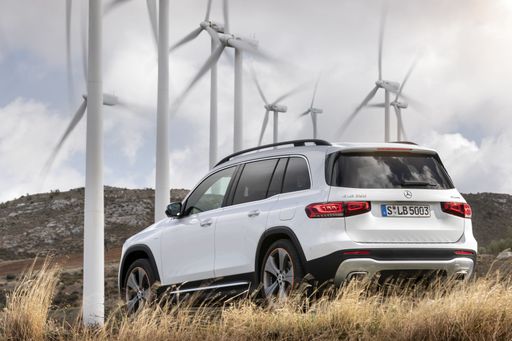
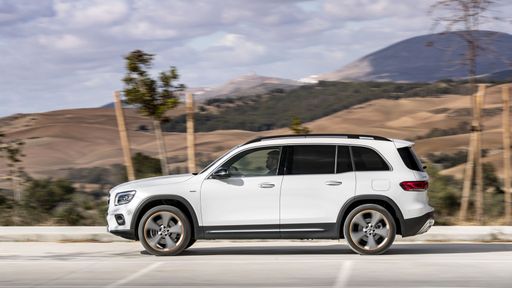
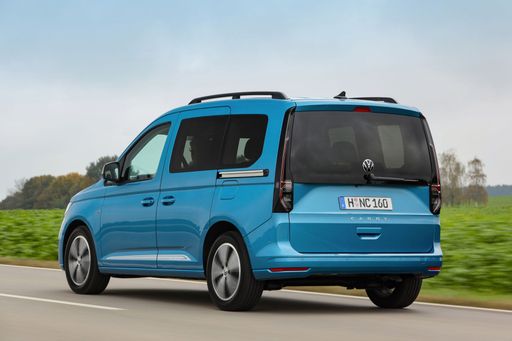
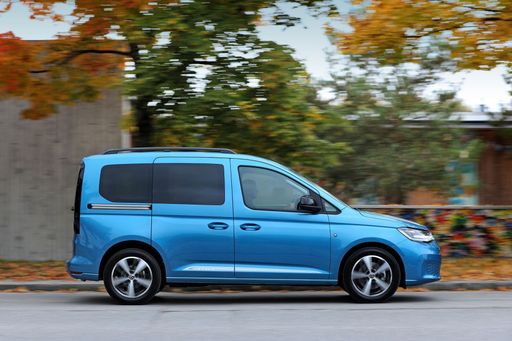
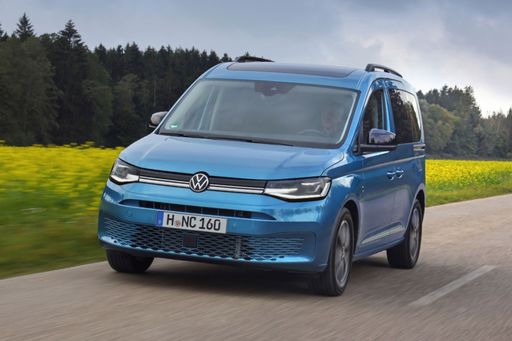
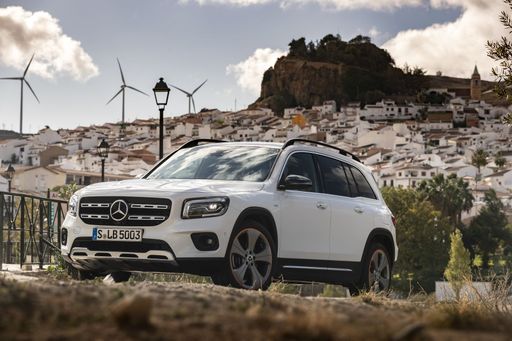
The Mercedes GLB is a quintessential SUV with a modern flair, designed to cater to both style-conscious drivers and those who seek practical utility. Its dimensions, with a length up to 4650 mm, width of 1850 mm, and height of 1665 mm, provide a balanced blend of presence and practicality. On the other hand, the VW Caddy is a high roof wagon engineered for utility, offering impressive interior space—ideal for families or businesses. Its dimensions are slightly more grounded with a length ranging up to 4853 mm, width of 1855 mm, and height spanning up to 1860 mm.

GLB

Engine and Performance

The Mercedes GLB offers a variety of engine options, including petrol mild hybrids and diesels with power outputs ranging from 116 to 320 horsepower. The dual-clutch automatic transmission ensures a smooth driving experience, while both front-wheel and all-wheel drive options cater to different driving preferences. Notably, the GLB can accelerate from 0 to 100 km/h in as little as 5.5 seconds and boasts a maximum speed of 250 km/h.

Conversely, the VW Caddy brings a mix of powertrains, from petrol and diesel to a plug-in hybrid, marking a step forward in eco-friendly driving. The power output caps at 150 horsepower, with the Caddy reaching a maximum speed of 186 km/h. Its acceleration ranges up to a modest 11.4 seconds for 0-100 km/h, highlighting its focus on efficiency and practicality over outright speed.

Caddy

Fuel Efficiency and Emissions

Efficiency is a strong suit for both vehicles. The Mercedes GLB has a fuel consumption range of 5.6 to 9 L/100 km with CO2 emissions between 146 to 204 g/km. Meanwhile, the VW Caddy impresses with its versatility, offering a consumption range from as low as 0.5 L/100 km for the plug-in hybrid to a maximum of 6.9 L/100 km, alongside CO2 emissions as low as 11 g/km.

GLB

Innovations and Features

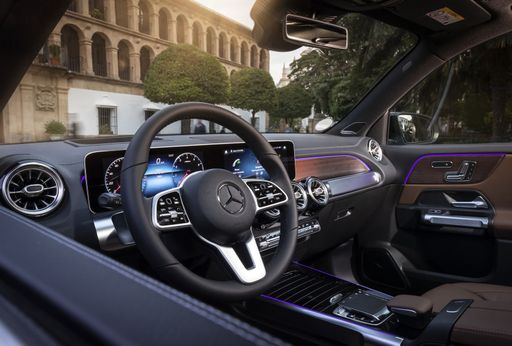
Mercedes has equipped the GLB with a wealth of features typical of its luxury pedigree, including advanced driver assistance systems and connectivity options that enhance every journey. From superior infotainment systems to premium interior materials, the GLB ensures a sophisticated driving environment.

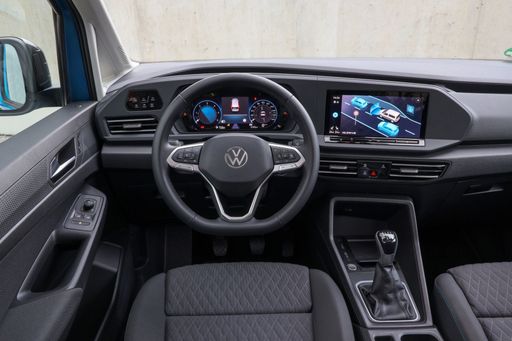
The VW Caddy, meanwhile, focuses on practicality and flexibility. It offers multiple seating configurations, providing options between 5 to 7 seats, making it an adaptable choice for larger families or commercial use. With a robust payload capacity reaching up to 703 kg, the Caddy also offers a wide array of utility features.

Caddy

Conclusion

The Mercedes GLB and VW Caddy cater to different segments but share the common trait of versatility. The GLB appeals to those who demand performance with a touch of luxury wrapped in an SUV form. In contrast, the VW Caddy shines as a practical workhorse, especially for those who need space and efficiency in a high-roof wagon format. Both models continue to push the boundaries of their respective genres, offering innovations that cater to modern demands.

Here’s where it gets real: The technical differences in detail

GLB

Costs and Efficiency:

Price and efficiency are key factors when choosing a car – and this is often where the real differences emerge.

VW Caddy is considerably cheaper – starting at 27,800 £ , while the Mercedes GLB costs 43,200 £ . That’s a price difference of around 15,438 £.

Fuel consumption also shows a difference: the VW Caddy uses 0.5 L/100km and is substantially more efficient than the Mercedes GLB with 5.7 L/100km. The difference is about 5.2 L/100km.

As for electric range, the Mercedes GLB offers clearly more range – reaching up to 631 km, about 510 km more than the VW Caddy.

Caddy

Engine and Performance:

Under the bonnet, it becomes clear which model is tuned for sportiness and which one takes the lead when you hit the accelerator.

When it comes to engine power, the Mercedes GLB offers clearly more power – delivering 354 HP compared to 150 HP. That’s roughly 204 HP more horsepower.

When accelerating from 0 to 100 km/h, the Mercedes GLB is substantially quicker – completing the sprint in 5.5 s, while the VW Caddy takes 11.4 s. That’s about 5.9 s quicker.

There’s also a difference in torque: the Mercedes GLB delivers clearly more torque with 515 Nm compared to 320 Nm. That’s about 195 Nm more.

GLB

Space and Everyday Use:

Cabin size, boot volume and payload all play a role in everyday practicality. Here, comfort and flexibility make the difference.

Seats: VW Caddy offers more seats – 7 vs 5.

In terms of curb weight, VW Caddy is a bit lighter – 1,575 kg compared to 1,840 kg. The difference is around 265 kg.

When it comes to payload, the VW Caddy carries clearly more – 710 kg compared to 505 kg. That’s a difference of about 205 kg.

Who wins the race in the data check?

The VW Caddy is far ahead overall in the objective data comparison.
This result only shows which model scores more points on paper – not which of the two cars feels right for you.

from £27,800
Caddy

VW Caddy

  • Engine Type Petrol, Diesel, Plugin Hybrid
  • Transmission Manuel, Automatic
  • Drive Type Front-Wheel Drive, All-Wheel Drive
  • Power HP 102 - 150 HP
  • Consumption L/100km 0.5 - 6.9 L/100km
  • Electric Range 116 - 121 km
Mercedes GLB
VW Caddy

Costs and Consumption

View detailed analysis

Engine and Performance

View detailed analysis

Dimensions and Body

View detailed analysis

Mercedes GLB

The Mercedes GLB is a compact luxury SUV that blends smart packaging with a polished, composed driving experience. Its flexible interior and premium feel make it a sensible pick for buyers who want Mercedes comfort and practicality in a smaller footprint.

details

VW Caddy

The VW Caddy is the Swiss-army knife of compact vans — practical, surprisingly refined, and ready to swap a weekend adventure for a grocery run without breaking a sweat. It’s user-friendly, comfortable enough for daily driving, and sensible for buyers who want utility with a dash of style and no drama.

details
Mercedes GLB
VW Caddy

Costs and Consumption

Price
43,200 - 62,400 £
Price
27,800 - 45,900 £
Consumption L/100km
5.7 - 6.1 L/100km
Consumption L/100km
0.5 - 6.9 L/100km
Consumption kWh/100km
15.4 - 15.9 kWh/100km
Consumption kWh/100km
-
Electric Range
431 - 631 km
Electric Range
116 - 121 km
Battery Capacity
-
Battery Capacity
19.7 kWh
co2
0 - 138 g/km
co2
10 - 165 g/km
Fuel tank capacity
-
Fuel tank capacity
50 L

Dimensions and Body

Body Type
SUV
Body Type
High Roof Estate
Seats
5
Seats
5 - 7
Doors
-
Doors
5
Curb weight
1,840 - 2,280 kg
Curb weight
1,575 - 1,998 kg
Trunk capacity
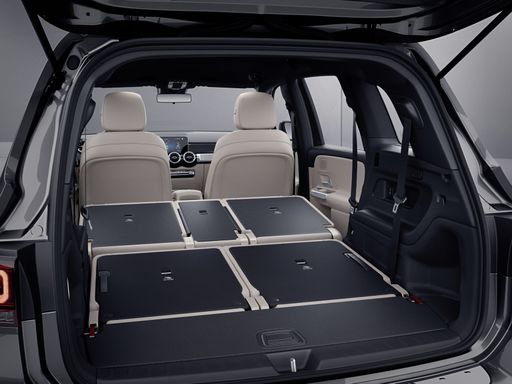
540 L
Trunk capacity
-
Length
-
Length
4,500 - 4,853 mm
Width
1,861 mm
Width
1,855 mm
Height
-
Height
1,819 - 1,860 mm
Max trunk capacity
-
Max trunk capacity
2,556 - 3,700 L
Payload
485 - 505 kg
Payload
501 - 710 kg

Engine and Performance

Engine Type
Electric, Full Hybrid
Engine Type
Petrol, Diesel, Plugin Hybrid
Transmission
Automatic
Transmission
Manuel, Automatic
Transmission Detail
Reduction Gearbox
Transmission Detail
Manual Gearbox, Dual-Clutch Automatic
Drive Type
Rear-Wheel Drive, All-Wheel Drive
Drive Type
Front-Wheel Drive, All-Wheel Drive
Power HP
156 - 354 HP
Power HP
102 - 150 HP
Acceleration 0-100km/h
5.5 - 9.7 s
Acceleration 0-100km/h
11.4 - 14 s
Max Speed
-
Max Speed
173 - 186 km/h
Torque
280 - 515 Nm
Torque
220 - 320 Nm
Number of Cylinders
4
Number of Cylinders
4
Power kW
115 - 260 kW
Power kW
75 - 110 kW
Engine capacity
1,499 cm3
Engine capacity
1,498 - 1,968 cm3

General

Model Year
2026
Model Year
2024
CO2 Efficiency Class
A, D, E
CO2 Efficiency Class
E, F, B
Brand
Mercedes-Benz
Brand
VW
DriveDuel uses data analysis and artificial intelligence to evaluate vehicle data and create content. Content is regularly reviewed and improved. The displayed prices are estimates based on German list prices, adjusted to the respective country’s VAT. Country-specific registration taxes are not included. This information is not legally binding.