
 Deutschland
 France
 Nederland
 Great Britain
 Sverige
 Norge
Norge Danmark
 Suomi
Suomi Italia
 Polska
 España
VS
Mercedes GLE vs VW Caddy – Performance, range & efficiency compared
Two cars, one duel: Mercedes GLE meets VW Caddy.
Which one wins in performance, efficiency and value for money? Find out now!
GLE
@ Mercedes-Benz Group Media
Costs and Efficiency:
Price and efficiency are key factors when choosing a car – and this is often where the real differences emerge.
VW Caddy has a decisively advantage in terms of price – it starts at 27800 £, while the Mercedes GLE costs 76300 £. That’s a price difference of around 48511 £.
Fuel consumption also shows a difference: VW Caddy manages with 0.50 L and is therefore convincingly more efficient than the Mercedes GLE with 2 L. The difference is about 1.50 L per 100 km.
As for range, the VW Caddy performs hardly perceptible better – achieving up to 121 km, about 7 km more than the Mercedes GLE.
Caddy
@ Volkswagen AG / VW Media
Engine and Performance:
Power, torque and acceleration say a lot about how a car feels on the road. This is where you see which model delivers more driving dynamics.
When it comes to engine power, the Mercedes GLE has a convincingly edge – offering 634 HP compared to 150 HP. That’s roughly 484 HP more horsepower.
In acceleration from 0 to 100 km/h, the Mercedes GLE is clearly quicker – completing the sprint in 3.90 s, while the VW Caddy takes 11.40 s. That’s about 7.50 s faster.
In terms of top speed, the Mercedes GLE performs noticeable better – reaching 280 km/h, while the VW Caddy tops out at 186 km/h. The difference is around 94 km/h.
There’s also a difference in torque: Mercedes GLE pulls clearly stronger with 850 Nm compared to 320 Nm. That’s about 530 Nm difference.
GLE
@ Mercedes-Benz Group Media
Space and Everyday Use:
Beyond pure performance, interior space and usability matter most in daily life. This is where you see which car is more practical and versatile.
Seats: VW Caddy offers clearly perceptible more seating capacity – 7 vs 5.
In curb weight, VW Caddy is decisively lighter – 1575 kg compared to 2310 kg. The difference is around 735 kg.
In maximum load capacity, the VW Caddy performs convincingly better – up to 3700 L, which is about 1645 L more than the Mercedes GLE.
When it comes to payload, VW Caddy hardly perceptible takes the win – 710 kg compared to 705 kg. That’s a difference of about 5 kg.
Who comes out on top?
Overall, the VW Caddy shows itself to be is largely superior and secures the title of DriveDuel Champion.
It convinces with the more balanced overall package and proves to be the more versatile choice for everyday use.
from about £27,800
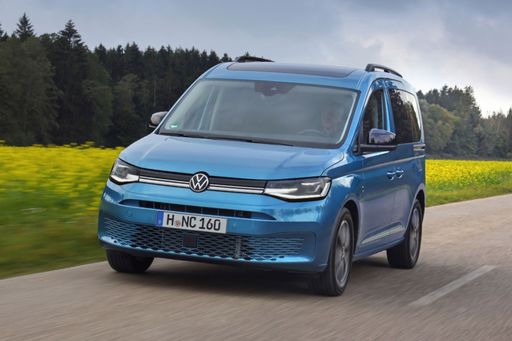 @ Volkswagen AG / VW Media
VW Caddy
Mercedes GLE
The Mercedes GLE blends luxurious comfort with a confident road presence, wrapping tech and refinement in an SUV shape that still knows how to behave on a twisty back road. Inside it's plush and quiet, with clever storage and driver aids that make long trips effortless — plus the badge gives it that easy-to-respect curb appeal.
details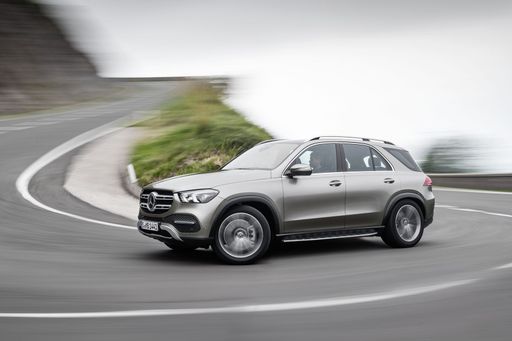 @ Mercedes-Benz Group Media
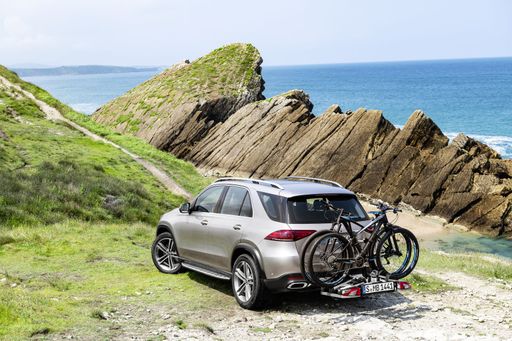 @ Mercedes-Benz Group Media
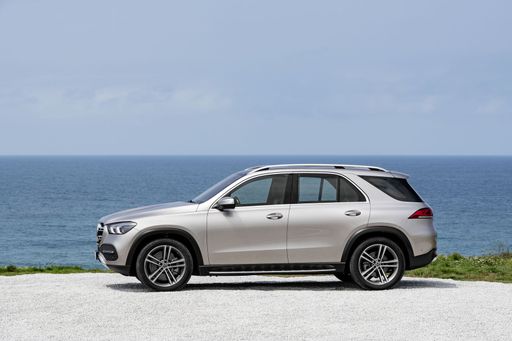 @ Mercedes-Benz Group Media
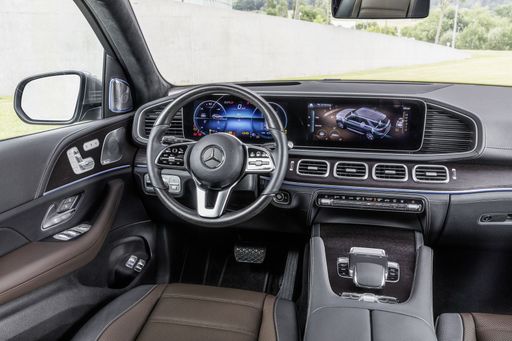 @ Mercedes-Benz Group Media
VW Caddy
The VW Caddy is the Swiss-army knife of compact vans — practical, surprisingly refined, and ready to swap a weekend adventure for a grocery run without breaking a sweat. It’s user-friendly, comfortable enough for daily driving, and sensible for buyers who want utility with a dash of style and no drama.
details
@ Volkswagen AG / VW Media
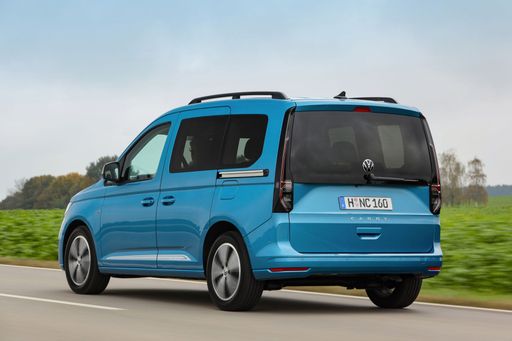 @ Volkswagen AG / VW Media
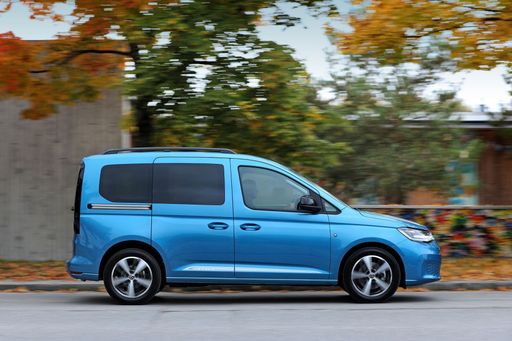 @ Volkswagen AG / VW Media
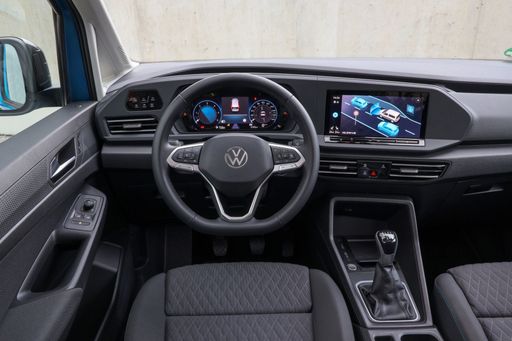 @ Volkswagen AG / VW Media
Mercedes GLE
VW Caddy
|
@ Mercedes-Benz Group Media
|
@ Volkswagen AG / VW Media
|
|
|
|
Costs and Consumption |
|
|---|---|
|
Price
76300 - 175800 £
|
Price
27800 - 45900 £
|
|
Consumption L/100km
2 - 12.5 L
|
Consumption L/100km
0.5 - 6.9 L
|
|
Consumption kWh/100km
-
|
Consumption kWh/100km
-
|
|
Electric Range
89 - 114 km
|
Electric Range
116 - 121 km
|
|
Battery Capacity
24.8 - 25 kWh
|
Battery Capacity
19.70 kWh
|
|
co2
53 - 284 g/km
|
co2
10 - 165 g/km
|
|
Fuel tank capacity
65 - 85 L
|
Fuel tank capacity
50 L
|
Dimensions and Body |
|
|---|---|
|
Body Type
SUV
|
Body Type
High Roof Estate
|
|
Seats
5
|
Seats
5 - 7
|
|
Doors
5
|
Doors
5
|
|
Curb weight
2310 - 2800 kg
|
Curb weight
1575 - 1998 kg
|
|
Trunk capacity
490 - 655 L
|
Trunk capacity
-
|
|
Length
4924 - 4961 mm
|
Length
4500 - 4853 mm
|
|
Width
1947 mm
|
Width
1855 mm
|
|
Height
1716 - 1797 mm
|
Height
1819 - 1860 mm
|
|
Max trunk capacity
1645 - 2055 L
|
Max trunk capacity
2556 - 3700 L
|
|
Payload
460 - 705 kg
|
Payload
501 - 710 kg
|
Engine and Performance |
|
|---|---|
|
Engine Type
Petrol MHEV, Plugin Hybrid, Diesel MHEV
|
Engine Type
Petrol, Diesel, Plugin Hybrid
|
|
Transmission
Automatic
|
Transmission
Manuel, Automatic
|
|
Transmission Detail
Automatic Gearbox
|
Transmission Detail
Manual Gearbox, Dual-Clutch Automatic
|
|
Drive Type
All-Wheel Drive
|
Drive Type
Front-Wheel Drive, All-Wheel Drive
|
|
Power HP
289 - 634 HP
|
Power HP
102 - 150 HP
|
|
Acceleration 0-100km/h
3.9 - 6.9 s
|
Acceleration 0-100km/h
11.4 - 14 s
|
|
Max Speed
210 - 280 km/h
|
Max Speed
173 - 186 km/h
|
|
Torque
500 - 850 Nm
|
Torque
220 - 320 Nm
|
|
Number of Cylinders
4 - 8
|
Number of Cylinders
4
|
|
Power kW
213 - 466 kW
|
Power kW
75 - 110 kW
|
|
Engine capacity
1993 - 3982 cm3
|
Engine capacity
1498 - 1968 cm3
|
General |
|
|---|---|
|
Model Year
2024 - 2025
|
Model Year
2024
|
|
CO2 Efficiency Class
G, B, F
|
CO2 Efficiency Class
E, F, B
|
|
Brand
Mercedes-Benz
|
Brand
VW
|
What drive types are available for the Mercedes GLE?
Available configurations include All-Wheel Drive.
The prices and data displayed are estimates based on German list prices and may vary by country. This information is not legally binding.