@ MINI / BMW Group Press
@ Volkswagen AG / VW Media
VS

MINI Countryman vs VW Golf – Differences & prices compared

Both models have their strengths – but which one suits you more?
Compare performance, efficiency, price and space directly: MINI Countryman or VW Golf?

MINI Countryman

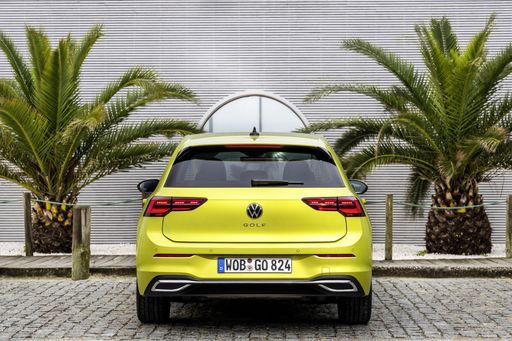
VW Golf

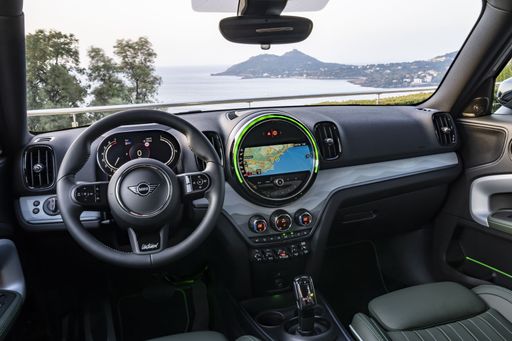
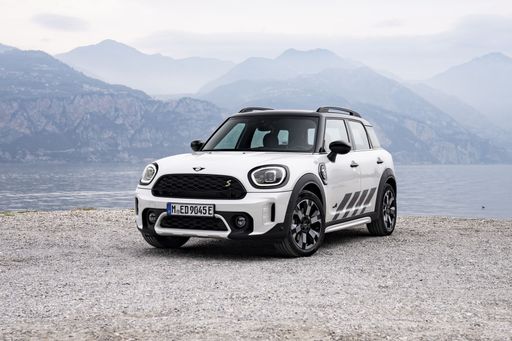
Countryman @ MINI / BMW Group Press

The Modern Clash: MINI Countryman vs. VW Golf

In the world of automobiles, few comparisons are as compelling as that between the MINI Countryman and the VW Golf. Both vehicles are celebrated icons in their respective segments, offering distinctive experiences with the latest advancements in automotive technology. Here, we dive into the technical details and innovations of these two exceptional cars.
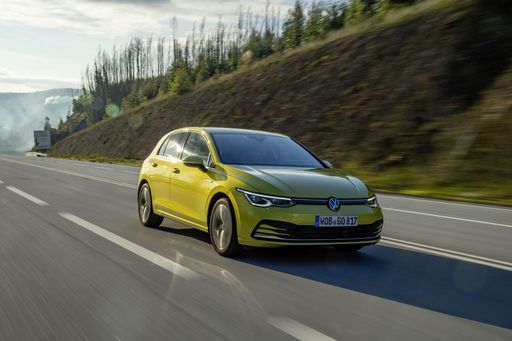
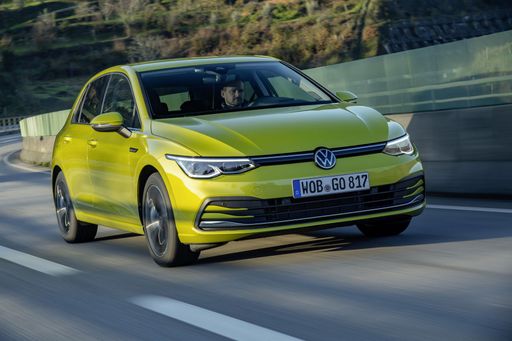
Golf @ Volkswagen AG / VW Media

Powertrain Variety and Performance

The 2024 MINI Countryman offers a wide array of engine options. Buyers can choose from petrol, diesel, and even electric powertrains, all coupled with automatic transmissions. The MINI Countryman showcases its versatility with both front-wheel and all-wheel drive configurations. The power output ranges from 170 HP in the petrol MHEV variant to an impressive 313 HP in the top-tier electric version, meeting the needs of those seeking eco-friendly options or robust performance.

In contrast, the VW Golf takes a similar approach by providing a diverse choice of powertrains, including petrol MHEV, diesel, and plug-in hybrids. The VW Golf also offers both automatic and manual transmission options, accommodating a range of driving preferences. With power options stretching from 116 HP to a powerful 333 HP in the performance-oriented Golf R, the Golf lineup ensures agility and efficiency for daily driving and spirited performance.

Countryman @ MINI / BMW Group Press

Efficiency and Range

When efficiency is paramount, both models present compelling figures. The MINI Countryman's petrol engines offer consumption as low as 4.6 L/100km, while the all-electric variant clocks in at 15.7 kWh/100km with an electric range extending up to 462 km. These figures highlight MINI's commitment to sustainable mobility alongside the spirited driving dynamics it is renowned for.

The VW Golf shows its prowess in efficiency as well, with consumption figures as low as 4.3 L/100km for its diesel engines. The plug-in hybrid variant reaches an impressive electric range of 143 km, bolstering the Golf's reputation for providing economical solutions without compromising performance.

Golf @ Volkswagen AG / VW Media

Design and Dimensions

Standing as an SUV, the MINI Countryman features a robust and stylish design, marked by dimensions that include a length of 4444 mm, a width of 1843 mm, and a height of 1661 mm. This grants the Countryman ample interior space while maintaining the classic MINI charm. A practical trunk capacity of up to 505 liters ensures sufficient room for all adventures.

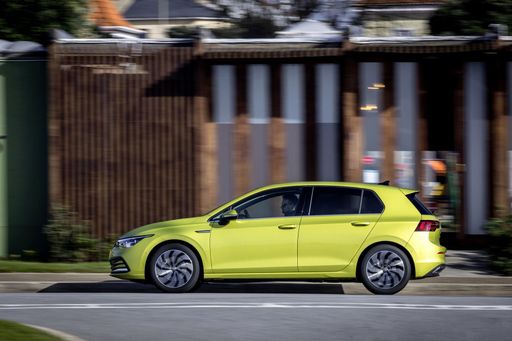
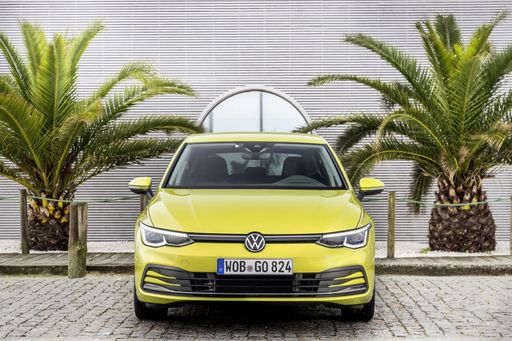
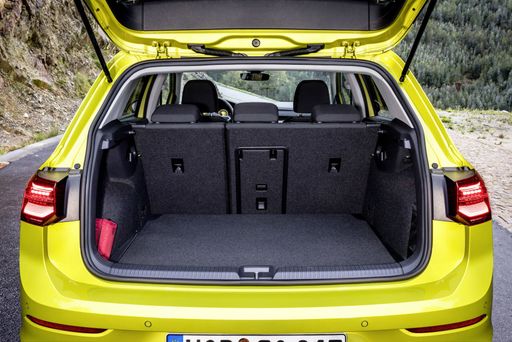
On the other hand, the VW Golf maintains its classic hatchback design, providing a compact and sporty profile with a length of 4289 mm, width of 1789 mm, and a height of 1483 mm. The Golf's trunk capacity, reaching up to 381 liters, efficiently caters to urban and outdoor lifestyles.

Countryman @ MINI / BMW Group Press

Advanced Features and Innovations

Both the MINI Countryman and VW Golf excel in technological advancements. The 2024 models integrate cutting-edge infotainment systems, advanced driver assistance features, and connectivity options that keep drivers and passengers entertained and safe.

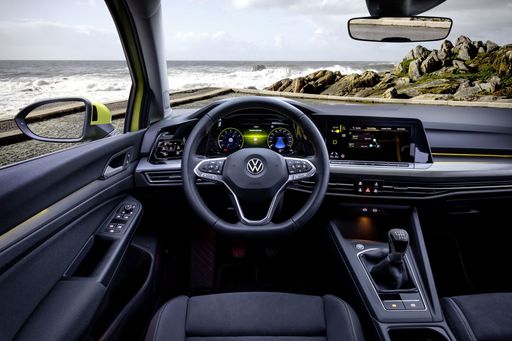
The MINI Countryman's focus on innovation is evidenced by its upgraded automated driving systems and premium interior appointments, ensuring a heightened driving experience. Meanwhile, the VW Golf shines with its display technology and safety systems, offering a seamless blend of comfort and advanced functionality.

Golf @ Volkswagen AG / VW Media

Conclusion: Choosing Your Ideal Ride

Deciding between the MINI Countryman and VW Golf is no easy feat, as both vehicles offer rich matrices of performance, efficiency, and technology. The choice ultimately hinges on individual preference—whether the sporty nature and iconic charm of the MINI lures you, or the sophisticated yet classic appeal of the VW Golf wins you over. Regardless, both these models stand as exemplary choices in the modern automotive landscape.

Here’s where it gets real: The technical differences in detail

Countryman @ MINI / BMW Group Press

Costs and Efficiency:

Looking at overall running costs, both models reveal some interesting differences in everyday economy.

VW Golf has a clearly perceptible advantage in terms of price – it starts at 25200 £, while the MINI Countryman costs 31500 £. That’s a price difference of around 6347 £.

Fuel consumption also shows a difference: VW Golf manages with 1.10 L and is therefore significantly more efficient than the MINI Countryman with 4.60 L. The difference is about 3.50 L per 100 km.

As for range, the MINI Countryman performs significantly better – achieving up to 462 km, about 319 km more than the VW Golf.

Golf @ Volkswagen AG / VW Media

Engine and Performance:

Power, torque and acceleration are the classic benchmarks for car enthusiasts – and here, some clear differences start to show.

When it comes to engine power, the VW Golf has a minimal edge – offering 333 HP compared to 313 HP. That’s roughly 20 HP more horsepower.

In acceleration from 0 to 100 km/h, the VW Golf is somewhat quicker – completing the sprint in 4.60 s, while the MINI Countryman takes 5.40 s. That’s about 0.80 s faster.

In terms of top speed, the VW Golf performs slight better – reaching 270 km/h, while the MINI Countryman tops out at 250 km/h. The difference is around 20 km/h.

There’s also a difference in torque: MINI Countryman pulls to a small extent stronger with 494 Nm compared to 420 Nm. That’s about 74 Nm difference.

Space and Everyday Use:

Cabin size, boot volume and payload all play a role in everyday practicality. Here, comfort and flexibility make the difference.

Both vehicles offer seating for 5 people.

In curb weight, VW Golf is evident lighter – 1307 kg compared to 1620 kg. The difference is around 313 kg.

In terms of boot space, the MINI Countryman offers clearly perceptible more room – 505 L compared to 381 L. That’s a difference of about 124 L.

In maximum load capacity, the MINI Countryman performs a bit better – up to 1530 L, which is about 293 L more than the VW Golf.

When it comes to payload, VW Golf minimal takes the win – 508 kg compared to 500 kg. That’s a difference of about 8 kg.

Who comes out on top?

Overall, the VW Golf shows itself to be wins the duel decisively and secures the title of DriveDuel Champion.
It convinces with the more balanced overall package and proves to be the more versatile choice for everyday use.

MINI Countryman
VW Golf

Costs and Consumption

View detailed analysis

Engine and Performance

View detailed analysis

Dimensions and Body

View detailed analysis
from about £25,200
Golf @ Volkswagen AG / VW Media

VW Golf

  • Engine Type : Petrol MHEV, Petrol, Diesel, Plugin Hybrid
  • Transmission : Automatic, Manuel
  • Drive Type : Front-Wheel Drive, All-Wheel Drive
  • Power HP : 116 - 333 HP
  • Consumption L/100km : 1.1 - 8.1 L
  • Electric Range : 131 - 143 km

MINI Countryman

The MINI Countryman turns the cheeky charm of a classic MINI into a proper all-rounder, blending playful styling with surprisingly usable space for everyday life. It still grins at city lights but will happily tackle muddy lanes, perfect for buyers who want character without sacrificing practicality.

details

VW Golf

The VW Golf remains the everyman’s favourite — cleverly balanced, composed and just posh enough to feel grown-up without pretending to be something it’s not. It slips through town and eats up longer trips with a refined cabin, practical layout and a kindly, capable character that turns everyday driving into something a little bit special.

details
MINI Countryman
VW Golf
Countryman @ MINI / BMW Group Press
Golf @ Volkswagen AG / VW Media

Costs and Consumption

Price
31500 - 45300 £
Price
25200 - 47600 £
Consumption L/100km
4.6 - 7.8 L
Consumption L/100km
1.1 - 8.1 L
Consumption kWh/100km
15.7 - 16.8 kWh
Consumption kWh/100km
-
Electric Range
432 - 462 km
Electric Range
131 - 143 km
Battery Capacity
64.60 kWh
Battery Capacity
19.70 kWh
co2
0 - 177 g/km
co2
25 - 184 g/km
Fuel tank capacity
45 - 54 L
Fuel tank capacity
40 - 55 L

Dimensions and Body

Body Type
SUV
Body Type
Hatchback
Seats
5
Seats
5
Doors
5
Doors
5
Curb weight
1620 - 2075 kg
Curb weight
1307 - 1662 kg
Trunk capacity
450 - 505 L
Trunk capacity
273 - 381 L
Length
4444 - 4447 mm
Length
4282 - 4296 mm
Width
1843 mm
Width
1789 mm
Height
1635 - 1661 mm
Height
1454 - 1483 mm
Max trunk capacity
1450 - 1530 L
Max trunk capacity
1129 - 1237 L
Payload
460 - 500 kg
Payload
438 - 508 kg

Engine and Performance

Engine Type
Petrol MHEV, Diesel MHEV, Electric, Petrol
Engine Type
Petrol MHEV, Petrol, Diesel, Plugin Hybrid
Transmission
Automatic
Transmission
Automatic, Manuel
Transmission Detail
Dual-Clutch Automatic, Automatic Gearbox, Reduction Gearbox
Transmission Detail
Dual-Clutch Automatic, Manual Gearbox
Drive Type
Front-Wheel Drive, All-Wheel Drive
Drive Type
Front-Wheel Drive, All-Wheel Drive
Power HP
163 - 313 HP
Power HP
116 - 333 HP
Acceleration 0-100km/h
5.4 - 8.6 s
Acceleration 0-100km/h
4.6 - 10.2 s
Max Speed
170 - 250 km/h
Max Speed
202 - 270 km/h
Torque
250 - 494 Nm
Torque
220 - 420 Nm
Number of Cylinders
3 - 4
Number of Cylinders
4
Power kW
120 - 230 kW
Power kW
85 - 245 kW
Engine capacity
1499 - 1998 cm3
Engine capacity
1498 - 1984 cm3

General

Model Year
2024
Model Year
2024 - 2025
CO2 Efficiency Class
D, E, A, G
CO2 Efficiency Class
D, F, G, C, B
Brand
MINI
Brand
VW
What drive types are available for the MINI Countryman?

The MINI Countryman is available as Front-Wheel Drive or All-Wheel Drive.

The prices and data displayed are estimates based on German list prices and may vary by country. This information is not legally binding.

do not click