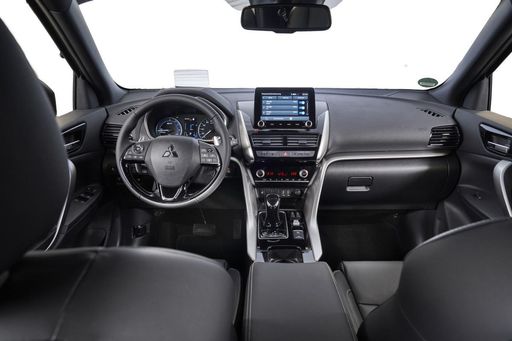
@ Mitsubishi Motors Corporation
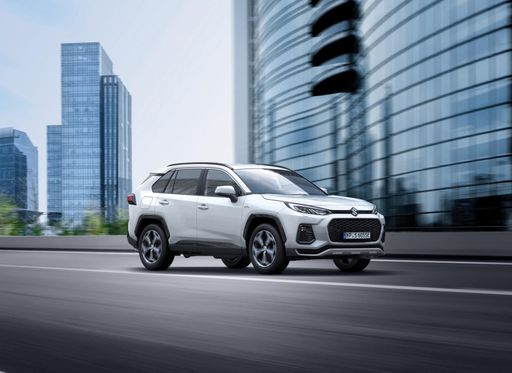
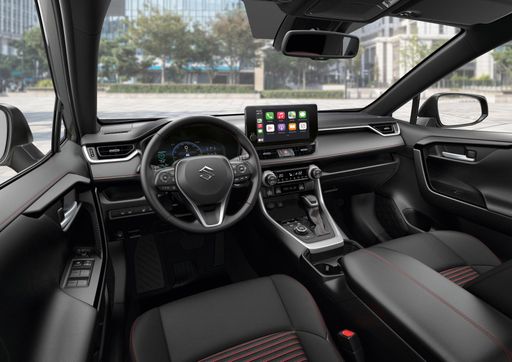
@ Suzuki Motor Corporation
VS

Mitsubishi Eclipse Cross vs Suzuki Across – Performance, range & efficiency compared

Compare performance, boot capacity, efficiency and price at a glance.
Find out which car is the better choice for you – Mitsubishi Eclipse Cross or Suzuki Across?

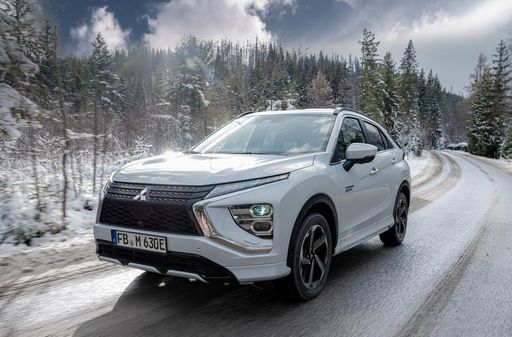
Eclipse Cross @ Mitsubishi Motors Corporation

Ultimate Showdown: Mitsubishi Eclipse Cross vs Suzuki Across

In the ever-evolving world of SUVs, the competition has intensified with the emergence of hybrid technology. Two notable contenders in this arena are the Mitsubishi Eclipse Cross and the Suzuki Across. Both vehicles boast modern designs and innovative features, but they cater to different driving needs and preferences. In this article, we will delve into a comprehensive comparison of these two hybrid SUVs, looking closely at their technical specifications, innovations, and overall driving experience.
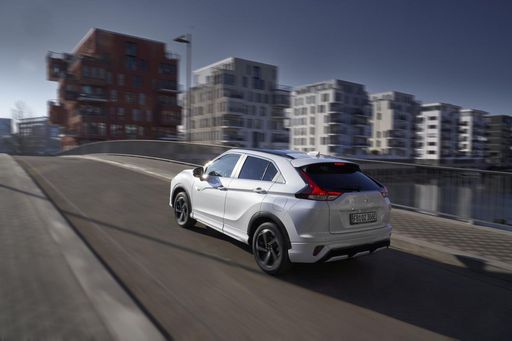
Across @ Suzuki Motor Corporation

Performance and Powertrain

The Mitsubishi Eclipse Cross, a versatile compact SUV, is powered by a 2.36-liter four-cylinder engine, generating a respectable 188 horsepower (138 kW) and delivering an impressive driving experience, especially with its all-wheel-drive system. With a CO2 efficiency of 46 g/km, it offers a balance between performance and environmental consciousness. The Eclipse Cross can accelerate from 0-100 km/h in approximately 10.9 seconds, reaching a top speed of 162 km/h. It's equipped with a fuel tank capacity of 43 liters and boasts an electric range of up to 45 kilometers, making it suitable for urban commutes.

On the other hand, the Suzuki Across takes performance to a whole new level with a more powerful engine setup. The 2.487-liter four-cylinder engine produces a staggering 306 horsepower (225 kW), placing it firmly in the 'performance SUV' category. With a 0-100 km/h acceleration time of just 6 seconds, the Across outpaces its rival with ease. Its top speed of 180 km/h complements its sporty credentials. With a more efficient fuel consumption of only 1 L/100 km and a dazzling electric range of 75 kilometers, the Across also outperforms the Eclipse Cross in terms of hybrid technology.

Eclipse Cross @ Mitsubishi Motors Corporation

Dimensions and Cargo Capacity

When it comes to size, the Mitsubishi Eclipse Cross measures 4545 mm in length, 1805 mm in width, and stands at a height of 1685 mm. The cargo capacity stands at 359 liters, which is adequate for daily use and weekend trips. With a curb weight ranging from 1985 kg to 2052 kg, the Eclipse Cross retains a relatively lightweight stature for an SUV.

In comparison, the Suzuki Across is slightly larger, measuring 4635 mm in length and 1855 mm in width while also being slightly taller at 1690 mm. It offers an impressive trunk capacity of 490 liters, allowing for more luggage space or groceries. With a curb weight of 2075 kg, the Across might appear heavier but compensates with its superior power output.

Across @ Suzuki Motor Corporation

Technological Innovations

Both the Mitsubishi Eclipse Cross and Suzuki Across come equipped with a host of modern technological features aimed at enhancing the driving experience. The Eclipse Cross includes an advanced infotainment system coupled with smartphone integration, ensuring easy connectivity and navigation. Safety features such as lane departure warning, adaptive cruise control, and a suite of airbags provide peace of mind for families or commuters.

The Suzuki Across takes a more advanced approach with its technology features. The inclusion of a sophisticated CVT transmission, paired with a robust infotainment system, elevates the overall driving experience. Additionally, its advanced driver-assist systems, including adaptive cruise control, lane centering assistance, and more, showcase Suzuki’s commitment to safety. The Across integrates an innovative plug-in hybrid system, resulting in remarkable fuel efficiency and reduced emissions.

Eclipse Cross @ Mitsubishi Motors Corporation

Conclusion: Which SUV Reigns Supreme?

Choosing between the Mitsubishi Eclipse Cross and the Suzuki Across ultimately depends on individual preferences and priorities. The Eclipse Cross is an excellent choice for those seeking a well-rounded and capable SUV with hybrid capabilities coupled with everyday practicality. In contrast, the Suzuki Across dazzles with its unmatched power, efficiency, and spaciousness, making it ideal for performance enthusiasts and dynamic families.

As the automotive landscape continues to evolve, both models feature attractive attributes that cater to modern drivers’ needs. It’s essential to weigh the benefits and specifications against personal requirements to make an informed decision in the ever-competitive SUV market.

Here’s where it gets real: The technical differences in detail

Costs and Efficiency:

Price and efficiency are often the first things buyers look at. Here it becomes clear which model has the long-term edge – whether at the pump, the plug, or in purchase price.

Mitsubishi Eclipse Cross has a distinct advantage in terms of price – it starts at 41100 £, while the Suzuki Across costs 49900 £. That’s a price difference of around 8743 £.

As for range, the Mitsubishi Eclipse Cross performs significantly better – achieving up to 635 km, about 560 km more than the Suzuki Across.

Engine and Performance:

Under the bonnet, it becomes clear which model is tuned for sportiness and which one takes the lead when you hit the accelerator.

When it comes to engine power, the Suzuki Across has a distinct edge – offering 306 HP compared to 218 HP. That’s roughly 88 HP more horsepower.

In acceleration from 0 to 100 km/h, the Suzuki Across is distinct quicker – completing the sprint in 6 s, while the Mitsubishi Eclipse Cross takes 7.90 s. That’s about 1.90 s faster.

In terms of top speed, the Suzuki Across performs slight better – reaching 180 km/h, while the Mitsubishi Eclipse Cross tops out at 170 km/h. The difference is around 10 km/h.

Space and Everyday Use:

Beyond pure performance, interior space and usability matter most in daily life. This is where you see which car is more practical and versatile.

Both vehicles offer seating for 5 people.

In terms of boot space, the Suzuki Across offers barely noticeable more room – 490 L compared to 487 L. That’s a difference of about 3 L.

In maximum load capacity, the Mitsubishi Eclipse Cross performs barely noticeable better – up to 1670 L, which is about 66 L more than the Suzuki Across.

Who wins the race?

The Mitsubishi Eclipse Cross proves to be only a minor advantage and therefore becomes our DriveDuel Champion!
Mitsubishi Eclipse Cross is the better all-rounder in this comparison.

from about £41,100
Eclipse Cross @ Mitsubishi Motors Corporation

Mitsubishi Eclipse Cross

  • Engine Type : Electric
  • Transmission : Automatic
  • Drive Type : Front-Wheel Drive
  • Power HP : 218 HP
  • Consumption kWh/100km : 16.7 - 16.9 kWh
  • Electric Range : 635 km

Mitsubishi Eclipse Cross

Mitsubishi Eclipse Cross combines coupe-like looks with crossover practicality, so you get style without the showroom attitude. It’s an affable daily driver that hides a few quirks behind a confident grin, making it an easy pick for buyers who want personality without fuss.

details

Suzuki Across

5 (1)
rate

The Suzuki Across is Suzuki's take on a roomy, efficient plug-in SUV handed down from its Toyota cousin, marrying sensible practicality with a polished, grown-up driving character. It won't thrill those chasing sporty drama, but for buyers who value measured refinement, low running costs and lots of usable space, it's an unexpectedly accomplished and subtly premium package.

details
Mitsubishi Eclipse Cross
Suzuki Across
Eclipse Cross @ Mitsubishi Motors Corporation
Across @ Suzuki Motor Corporation

Costs and Consumption

Price
41100 - 48200 £
Price
49900 £
Consumption L/100km
-
Consumption L/100km
1 L
Consumption kWh/100km
16.7 - 16.9 kWh
Consumption kWh/100km
-
Electric Range
635 km
Electric Range
75 km
Battery Capacity
-
Battery Capacity
-
co2
0 g/km
co2
22 g/km
Fuel tank capacity
-
Fuel tank capacity
55 L

Dimensions and Body

Body Type
SUV
Body Type
SUV
Seats
5
Seats
5
Doors
5
Doors
5
Curb weight
-
Curb weight
2075 kg
Trunk capacity
487 L
Trunk capacity
490 L
Length
4489 mm
Length
4635 mm
Width
1908 mm
Width
1855 mm
Height
1571 mm
Height
1690 mm
Max trunk capacity
1670 L
Max trunk capacity
1604 L
Payload
-
Payload
435 kg

Engine and Performance

Engine Type
Electric
Engine Type
Plugin Hybrid
Transmission
Automatic
Transmission
Automatic
Transmission Detail
Reduction Gearbox
Transmission Detail
CVT
Drive Type
Front-Wheel Drive
Drive Type
All-Wheel Drive
Power HP
218 HP
Power HP
306 HP
Acceleration 0-100km/h
7.90 s
Acceleration 0-100km/h
6 s
Max Speed
170 km/h
Max Speed
180 km/h
Torque
300 Nm
Torque
-
Number of Cylinders
-
Number of Cylinders
4
Power kW
160 kW
Power kW
225 kW
Engine capacity
-
Engine capacity
2487 cm3

General

Model Year
2025
Model Year
2024
CO2 Efficiency Class
A
CO2 Efficiency Class
B
Brand
Mitsubishi
Brand
Suzuki
What drive types are available for the Mitsubishi Eclipse Cross?

Available configurations include Front-Wheel Drive.

The prices and data displayed are estimates based on German list prices and may vary by country. This information is not legally binding.