VS

Vauxhall Astra Sports Tourer vs Skoda Octavia Combi - Differences and prices compared

Compare performance (196 HP vs 265 HP), boot space and price (30000 £ vs 24400 £ ) at a glance. Find out which car is the better choice for you – Vauxhall Astra Sports Tourer or Skoda Octavia Combi?

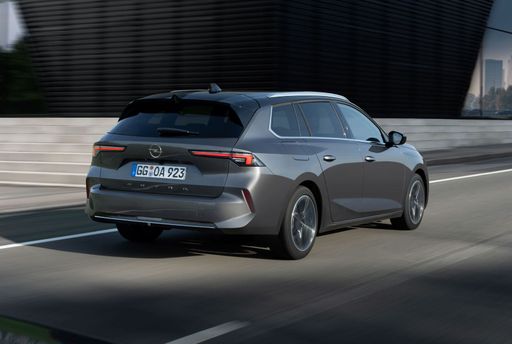
Astra Sports Tourer

The automotive market is bustling with competing brands and models, offering consumers a plethora of options to choose from. This article takes a detailed look at two popular models in the wagon segment: the Opel Astra Sports Tourer and the Skoda Octavia Combi. Both vehicles come loaded with features, innovative technology, and a variety of powertrains. But how do they stack up against each other?
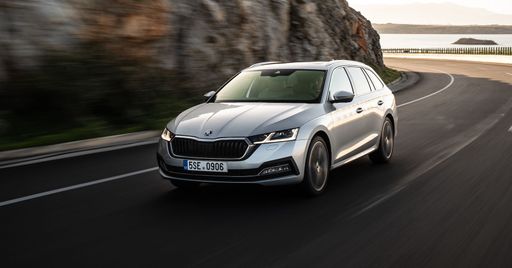
Octavia Combi

Design and Dimensions

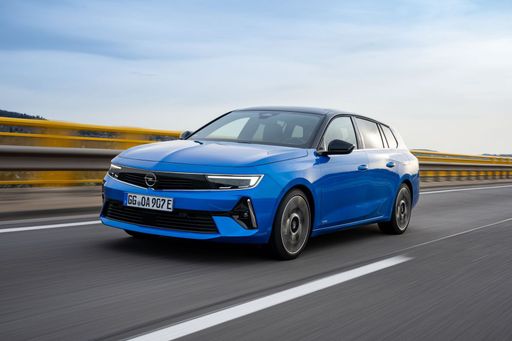
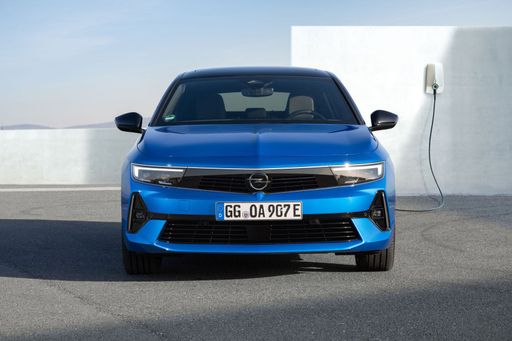
In terms of design, both the Astra Sports Tourer and the Octavia Combi boast sleek and modern aesthetics. The Astra Sports Tourer measures 4,642 mm in length, 1,860 mm in width, and has a modest height of 1,443 mm. Its streamlined profile not only enhances its appearance but also contributes to improved aerodynamics.

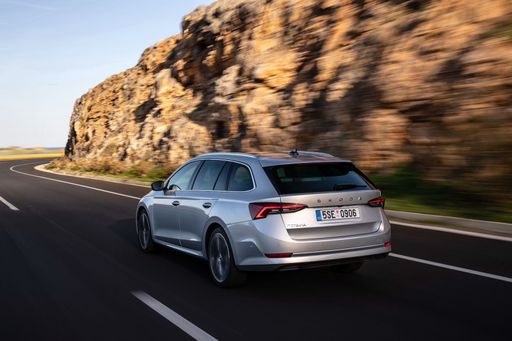
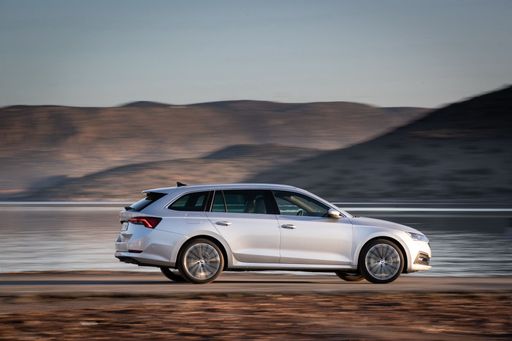
On the other hand, the Skoda Octavia Combi is slightly larger, measuring between 4,698 mm and 4,709 mm in length, with a width of 1,829 mm and a height ranging from 1,455 mm to 1,491 mm. The additional length translates to a more spacious interior and a larger trunk capacity of 640 liters compared to the Astra's maximum trunk space of 597 liters.

Astra Sports Tourer

Powertrains and Performance

When it comes to powertrains, the Astra Sports Tourer offers a broader range, with options that include petrol, diesel, plug-in hybrid, and even electric variants. Engine outputs range from 110 HP to a robust 225 HP with acceleration times varying significantly. The Astra's top electric range is impressive at 413 km, making it a competitive option for eco-conscious drivers.

In contrast, the Skoda Octavia Combi focuses primarily on petrol and diesel engines, delivering power outputs from 116 HP up to a remarkable 265 HP. The Octavia provides excellent acceleration options, particularly with its higher-powered models, achieving 0-100 km/h in as little as 6.5 seconds. Its all-wheel drive option further enhances its performance in varying driving conditions.

Octavia Combi

Fuel Efficiency and Emissions

Fuel efficiency is crucial for many consumers, and here the Astra Sports Tourer makes an impressive statement with consumption figures as low as 1.3 L/100 km for its plug-in hybrid variant. This is a significant advantage for those looking to minimize running costs and environmental impact. Conversely, the Skoda Octavia Combi offers efficient engines as well, with consumption figures that range around 4.4 to 6.9 L/100 km, depending on the engine variant. Both models exhibit reasonable CO2 emissions, although the Astra’s hybrids lead in this aspect, achieving as low as 30 g/km.

Astra Sports Tourer

Interior Comfort and Technology

Inside, both cars are designed with comfort and user-friendliness in mind. The Astra Sports Tourer features a contemporary interior with a focus on digital connectivity and driver assistance technologies. Advanced infotainment systems and comfortable seating for five ensure a pleasant driving experience.

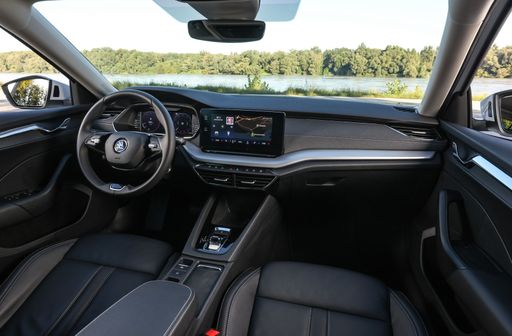
The Octavia Combi is equally impressive, showcasing a spacious and well-designed cabin with high-quality materials. It also emphasizes technology, with a user-friendly infotainment system and ample legroom for front and rear passengers. With a larger trunk space, it's an excellent choice for families or those requiring more cargo capacity.

Octavia Combi

Safety Features and Innovations

Both models prioritize safety, equipped with advanced safety features and driver-assistance technologies to mitigate risk on the road. The Astra Sports Tourer includes functionalities like automated emergency braking and blind-spot monitoring. Additionally, the Skoda Octavia Combi boasts an array of safety systems, including adaptive cruise control and lane-keeping assistance, making driving stress-free and safe.

Conclusion

Ultimately, choosing between the Opel Astra Sports Tourer and the Skoda Octavia Combi boils down to personal preferences and priorities. The Astra shines with its varied powertrains, particularly in hybrid and electric options, while the Octavia offers a spacious interior and excellent performance, especially in its higher trims. Both vehicles are sure to satisfy the demands of modern drivers, blending functionality with innovation in the ever-competitive automotive market.

Vauxhall Astra Sports Tourer

Skoda Octavia Combi

Here’s where it gets real: The technical differences in detail

Costs and Efficiency:

Price and efficiency are often the first things buyers look at. Here it becomes clear which model has the long-term edge – whether at the pump, the plug, or in purchase price.

Skoda Octavia Combi has a distinct advantage in terms of price – it starts at 24400 £ , while the Vauxhall Astra Sports Tourer costs 30000 £ . That’s a price difference of around 5571 £.

Fuel consumption also shows a difference: Vauxhall Astra Sports Tourer manages with 2.30 L and is therefore convincingly more efficient than the Skoda Octavia Combi with 4.40 L. The difference is about 2.10 L per 100 km.

Engine and Performance:

Power, torque and acceleration are the classic benchmarks for car enthusiasts – and here, some clear differences start to show.

When it comes to engine power, the Skoda Octavia Combi has a noticeable edge – offering 265 HP compared to 196 HP. That’s roughly 69 HP more horsepower.

In acceleration from 0 to 100 km/h, the Skoda Octavia Combi is somewhat quicker – completing the sprint in 6.50 s, while the Vauxhall Astra Sports Tourer takes 7.70 s. That’s about 1.20 s faster.

There’s also a difference in torque: Skoda Octavia Combi pulls barely noticeable stronger with 370 Nm compared to 360 Nm. That’s about 10 Nm difference.

Space and Everyday Use:

Whether family car or daily driver – which one offers more room, flexibility and comfort?

Both vehicles offer seating for 5 people.

In curb weight, Skoda Octavia Combi is hardly perceptible lighter – 1366 kg compared to 1438 kg. The difference is around 72 kg.

In terms of boot space, the Skoda Octavia Combi offers barely noticeable more room – 640 L compared to 597 L. That’s a difference of about 43 L.

When it comes to payload, Skoda Octavia Combi barely noticeable takes the win – 534 kg compared to 502 kg. That’s a difference of about 32 kg.

Who wins the race in the data check?

The Vauxhall Astra Sports Tourer is clearly ahead overall in the objective data comparison.
This result only shows which model scores more points on paper – not which of the two cars feels right for you.

Vauxhall Astra Sports Tourer
Skoda Octavia Combi

Costs and Consumption

View detailed analysis

Engine and Performance

View detailed analysis

Dimensions and Body

View detailed analysis
from about £30,000
Astra Sports Tourer

Vauxhall Astra Sports Tourer

  • Engine Type : Petrol MHEV, Plugin Hybrid, Diesel, Electric
  • Transmission : Automatic
  • Drive Type : Front-Wheel Drive
  • Power HP : 130 - 196 HP
  • Consumption L/100km : 2.3 - 5 L
  • Consumption kWh/100km : 15.60 kWh
  • Electric Range : 82 - 445 km

Vauxhall Astra Sports Tourer

The Opel Astra Sports Tourer blends family-friendly practicality with a sleek, grown-up wagon silhouette that manages to be both useful and unexpectedly stylish. It’s an easy car to live with — comfortable, well put together and clever with space — a sensible choice for buyers who want everyday versatility without fuss.

details

Skoda Octavia Combi

The Skoda Octavia Combi is the sensible family wagon that somehow turns grocery runs and long trips into a pleasant, unshowy experience — spacious, practical and built like it prefers reliability over flash. With smart touches, clever storage and a cabin that feels grown-up rather than frugal, it’s an easy recommendation for buyers who want maximum utility without sacrificing comfort or style.

details
Vauxhall Astra Sports Tourer
Skoda Octavia Combi

Costs and Consumption

Price
30000 - 39600 £
Price
24400 - 42300 £
Consumption L/100km
2.3 - 5 L
Consumption L/100km
4.4 - 6.9 L
Consumption kWh/100km
15.60 kWh
Consumption kWh/100km
-
Electric Range
82 - 445 km
Electric Range
-
Battery Capacity
-
Battery Capacity
-
co2
0 - 132 g/km
co2
113 - 157 g/km
Fuel tank capacity
-
Fuel tank capacity
45 - 55 L

Dimensions and Body

Body Type
Estate
Body Type
Estate
Seats
5
Seats
5
Doors
-
Doors
5
Curb weight
1438 - 1765 kg
Curb weight
1366 - 1553 kg
Trunk capacity
466 - 597 L
Trunk capacity
640 L
Length
-
Length
4698 - 4709 mm
Width
1859 mm
Width
1829 mm
Height
-
Height
1455 - 1468 mm
Max trunk capacity
-
Max trunk capacity
1700 L
Payload
434 - 502 kg
Payload
471 - 534 kg

Engine and Performance

Engine Type
Petrol MHEV, Plugin Hybrid, Diesel, Electric
Engine Type
Petrol, Petrol MHEV, Diesel
Transmission
Automatic
Transmission
Automatic, Manuel
Transmission Detail
Dual-Clutch Automatic, Automatic Gearbox, Reduction Gearbox
Transmission Detail
Dual-Clutch Automatic, Manual Gearbox
Drive Type
Front-Wheel Drive
Drive Type
Front-Wheel Drive, All-Wheel Drive
Power HP
130 - 196 HP
Power HP
116 - 265 HP
Acceleration 0-100km/h
7.7 - 10.6 s
Acceleration 0-100km/h
6.5 - 10.7 s
Max Speed
-
Max Speed
203 - 250 km/h
Torque
230 - 360 Nm
Torque
220 - 370 Nm
Number of Cylinders
3 - 4
Number of Cylinders
4
Power kW
96 - 144 kW
Power kW
85 - 195 kW
Engine capacity
1199 - 1598 cm3
Engine capacity
1498 - 1984 cm3

General

Model Year
2026
Model Year
2024 - 2025
CO2 Efficiency Class
C, B, D, A
CO2 Efficiency Class
E, F, D, C
Brand
Vauxhall
Brand
Skoda
What drive types are available for the Vauxhall Astra Sports Tourer?

Available configurations include Front-Wheel Drive.

The prices shown are estimates based on German list prices, adjusted for local VAT. Local registration taxes (e.g. NoVA, BPM or CO2 malus) are not included. This information is not legally binding.