
 Deutschland
 France
 Nederland
 Great Britain
 Sverige
 Norge
Norge Danmark
 Suomi
Suomi Italia
 Polska
 España
VS
Vauxhall Astra vs SsangYong Tivoli - Differences and prices compared
Compare performance (225 HP vs 163 HP), boot space and price (25200 £ vs 21400 £ ) at a glance. Find out which car is the better choice for you – Vauxhall Astra or SsangYong Tivoli?
Astra
Costs and Efficiency:
Looking at overall running costs, both models reveal some interesting differences in everyday economy.
SsangYong Tivoli has a a bit advantage in terms of price – it starts at 21400 £ , while the Vauxhall Astra costs 25200 £ . That’s a price difference of around 3771 £.
Fuel consumption also shows a difference: Vauxhall Astra manages with 2.20 L and is therefore significantly more efficient than the SsangYong Tivoli with 7 L. The difference is about 4.80 L per 100 km.
Tivoli
Engine and Performance:
Power, torque and acceleration are the classic benchmarks for car enthusiasts – and here, some clear differences start to show.
When it comes to engine power, the Vauxhall Astra has a distinct edge – offering 225 HP compared to 163 HP. That’s roughly 62 HP more horsepower.
In terms of top speed, the Vauxhall Astra performs clearly perceptible better – reaching 235 km/h, while the SsangYong Tivoli tops out at 181 km/h. The difference is around 54 km/h.
There’s also a difference in torque: Vauxhall Astra pulls evident stronger with 360 Nm compared to 280 Nm. That’s about 80 Nm difference.
Ad · Affiliate

As an Amazon Associate, we earn from qualifying purchases.
Astra
Space and Everyday Use:
Cabin size, boot volume and payload all play a role in everyday practicality. Here, comfort and flexibility make the difference.
Both vehicles offer seating for 5 people.
In curb weight, Vauxhall Astra is minimal lighter – 1341 kg compared to 1375 kg. The difference is around 34 kg.
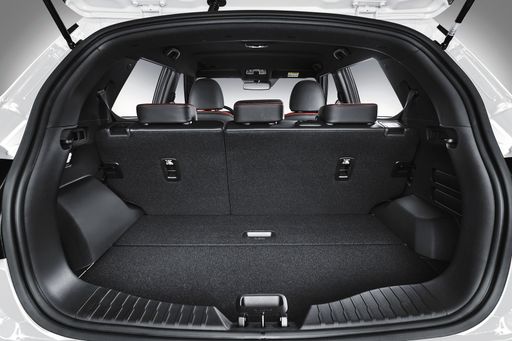
In terms of boot space, the SsangYong Tivoli offers convincingly more room – 720 L compared to 422 L. That’s a difference of about 298 L.
In maximum load capacity, the SsangYong Tivoli performs slight better – up to 1440 L, which is about 101 L more than the Vauxhall Astra.
When it comes to payload, Vauxhall Astra slightly takes the win – 509 kg compared to 455 kg. That’s a difference of about 54 kg.
Who wins the race in the data check?
The Vauxhall Astra sits well ahead of its rival in the objective data comparison.
This result only shows which model scores more points on paper – not which of the two cars feels right for you.
Vauxhall Astra
SsangYong Tivoli
Costs and Consumption
View detailed analysis
View detailed analysis
Engine and Performance
View detailed analysis
View detailed analysis
Dimensions and Body
View detailed analysis
View detailed analysis
from about £25,200
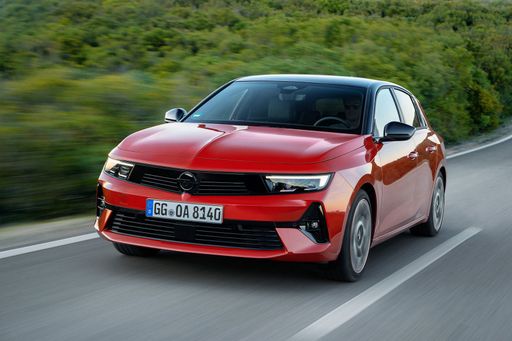
Vauxhall Astra
Vauxhall Astra
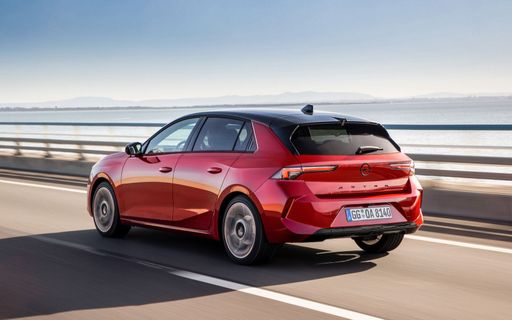
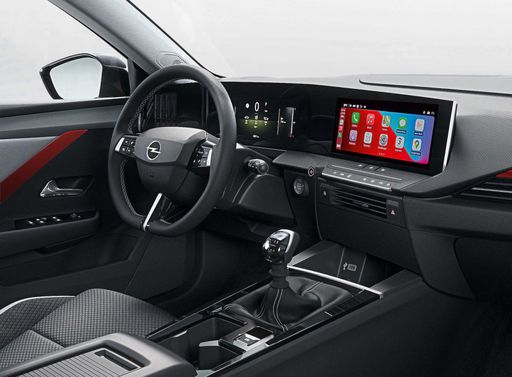
The Opel Astra strikes a neat balance between everyday practicality and engaging handling, so the daily grind suddenly feels a bit less dull. Inside it's intelligently packaged with modern kit and comfortable seating, making it a very sensible pick for buyers who want a dependable hatchback that doesn't take itself too seriously.
details
SsangYong Tivoli
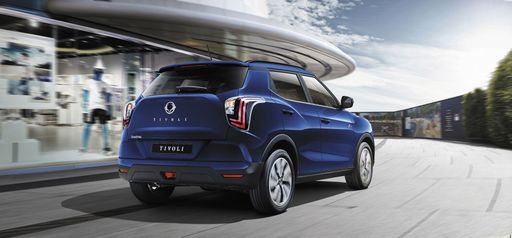
The SsangYong Tivoli is an unpretentious small crossover that surprises with a roomy, well-finished cabin and an agreeable ride that suits everyday life. It won't win any beauty contests, but it's a smart, economical choice for buyers who value practicality, comfort and a bit of cheeky character.
details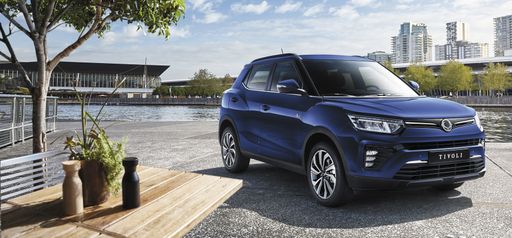
Vauxhall Astra
SsangYong Tivoli
Costs and Consumption |
|
|---|---|
|
Price
25200 - 40500 £
|
Price
21400 - 30300 £
|
|
Consumption L/100km
2.2 - 6 L
|
Consumption L/100km
7 - 8.3 L
|
|
Consumption kWh/100km
15.40 kWh
|
Consumption kWh/100km
-
|
|
Electric Range
82 - 419 km
|
Electric Range
-
|
|
Battery Capacity
51 kWh
|
Battery Capacity
-
|
|
co2
0 - 135 g/km
|
co2
161 - 191 g/km
|
|
Fuel tank capacity
42 - 52 L
|
Fuel tank capacity
50 L
|
Dimensions and Body |
|
|---|---|
|
Body Type
Hatchback
|
Body Type
SUV
|
|
Seats
5
|
Seats
5
|
|
Doors
5
|
Doors
5
|
|
Curb weight
1341 - 1736 kg
|
Curb weight
1375 - 1492 kg
|
|
Trunk capacity
352 - 422 L
|
Trunk capacity
395 - 720 L
|
|
Length
4374 mm
|
Length
4225 - 4480 mm
|
|
Width
1860 mm
|
Width
1810 mm
|
|
Height
1432 - 1488 mm
|
Height
1613 - 1646 mm
|
|
Max trunk capacity
1268 - 1339 L
|
Max trunk capacity
1115 - 1440 L
|
|
Payload
414 - 509 kg
|
Payload
425 - 455 kg
|
Engine and Performance |
|
|---|---|
|
Engine Type
Petrol, Diesel, Electric, Petrol MHEV, Plugin Hybrid
|
Engine Type
Petrol
|
|
Transmission
Manuel, Automatic
|
Transmission
Manuel, Automatic
|
|
Transmission Detail
Manual Gearbox, Automatic Gearbox, Reduction Gearbox, Dual-Clutch Automatic
|
Transmission Detail
Manual Gearbox, Automatic Gearbox
|
|
Drive Type
Front-Wheel Drive
|
Drive Type
Front-Wheel Drive, All-Wheel Drive
|
|
Power HP
130 - 225 HP
|
Power HP
163 HP
|
|
Acceleration 0-100km/h
7.5 - 10.6 s
|
Acceleration 0-100km/h
-
|
|
Max Speed
170 - 235 km/h
|
Max Speed
175 - 181 km/h
|
|
Torque
230 - 360 Nm
|
Torque
260 - 280 Nm
|
|
Number of Cylinders
3 - 4
|
Number of Cylinders
4
|
|
Power kW
96 - 165 kW
|
Power kW
120 kW
|
|
Engine capacity
1199 - 1598 cm3
|
Engine capacity
1497 cm3
|
General |
|
|---|---|
|
Model Year
2023 - 2025
|
Model Year
2021 - 2024
|
|
CO2 Efficiency Class
D, A, C, B
|
CO2 Efficiency Class
F, G
|
|
Brand
Vauxhall
|
Brand
SsangYong
|
What drive types are available for the Vauxhall Astra?
Available configurations include Front-Wheel Drive.
The prices shown are estimates based on German list prices, adjusted for local VAT. Local registration taxes (e.g. NoVA, BPM or CO2 malus) are not included. This information is not legally binding.