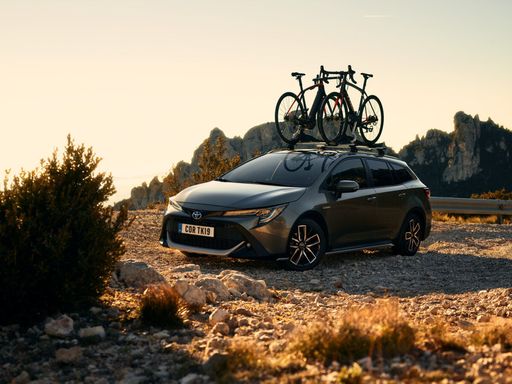
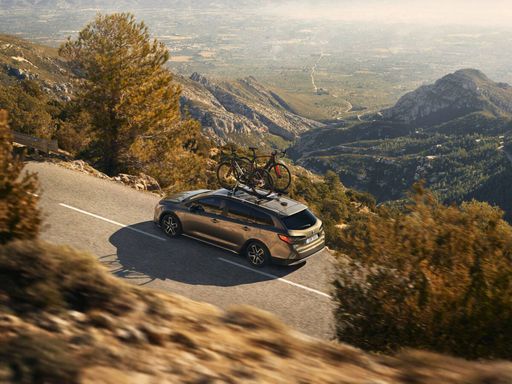
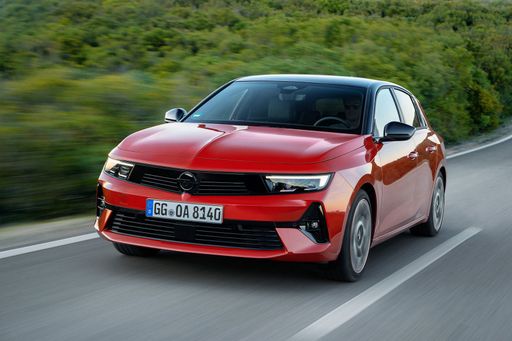
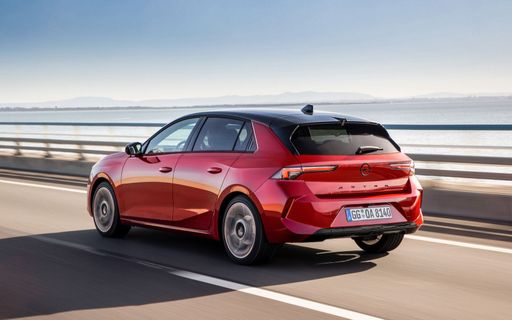
VS

Vauxhall Astra vs Toyota Corolla comparison

Compare performance (196 HP vs 178 HP), boot space and price (28,300 £ vs 28,600 £ ) at a glance. Find out which car is the better choice for you – Vauxhall Astra or Toyota Corolla?

Vauxhall Astra vs Toyota Corolla: Key differences

Vauxhall Astra

4.6 (2 Reviews)
rate
  • only slightly cheaper
  • only slightly more power
  • clearly more efficient
  • slightly more trunk space
details

Toyota Corolla

5 (1 Reviews)
rate
  • very slightly quicker 0–100 km/h
  • marginally lighter
details

By Achim Sedelmaier

Astra

Vauxhall Astra VS Toyota Corolla: quick take

Vauxhall Astra VS Toyota Corolla are compact rivals that push different everyday priorities: the Astra leans into quiet, long-distance comfort and clear, pragmatic ergonomics, while the Corolla emphasizes hybrid efficiency and low running costs. The Astra shows its strengths on A‑roads and motorways with supportive seats and a calm cabin; the Corolla shines in stop/start commuting and in its Touring Sports form for hauling family gear. In hatch form both feel compact to drive around town, but the Corolla's estate variant makes the practical differences stark for buyers who carry bulky loads. This preview frames the hands‑on contrasts — character, comfort, usability and cabin feel — so you can see which car suits your routine before we get into the numbers.
Corolla

Character and driving feel

Driving personality is a clear divider: the Vauxhall Astra is composed and neutral, tuned to steady, untroubled progress rather than excitement, while the Toyota Corolla presents as an economical, easygoing car that rewards urban and mixed‑use driving. Astra's setup favours lane stability and a settled feel at speed, so it rarely surprises but also rarely thrills; Corolla’s hybrid system and lighter controls make city manoeuvres effortless but reveal their limits when you demand brisk acceleration. That trade‑off means Astra sacrifices immediacy for serenity, whereas Corolla trades some refinement and sonic calm for efficiency and everyday ease. Choose based on how much of your mileage is long motorway stints versus short hops and urban errands.

Astra

Comfort and long‑distance behavior

Where long journeys matter, the Vauxhall Astra stands out thanks to very supportive front seats and strong wind‑noise suppression that reduce fatigue over hours behind the wheel. The drawback is that Astra's suspension can feel firmer over short, sharp imperfections, so city cobbles and expansion joints expose a harsher side than its motorway composure suggests. The Toyota Corolla leans softer in daily use and benefits from hybridised low‑speed smoothness, making it particularly relaxing in congested commutes, though the drivetrain can become noticeably vocal under heavy acceleration. In plain terms: Astra is the better companion for long runs; Corolla is kinder in stop‑start life and mixed driving, with a caveat on noise when you push it.

Corolla

Usability and practicality

Practical differences are situation‑dependent — the Astra hatch offers a clever, usable boot with a variable floor that makes day‑to‑day loading straightforward, while the Corolla's Touring Sports estate converts the Corolla into a genuinely more capacious family tool. The Astra remains very functional for most weekly shopping and luggage, but plug‑in variants reduce underfloor options, making the compromise more relevant for buyers needing maximal cargo flexibility. Conversely, the Corolla hatch can feel tight for rear passengers and luggage, so families or frequent carriers will want the Touring Sports to avoid constant compromise. Both are compact and easy to park in the city, but pick the body style that matches how often you really need space rather than assuming hatch equals family practicality.

Astra

Cabin feel, perceived quality and tech

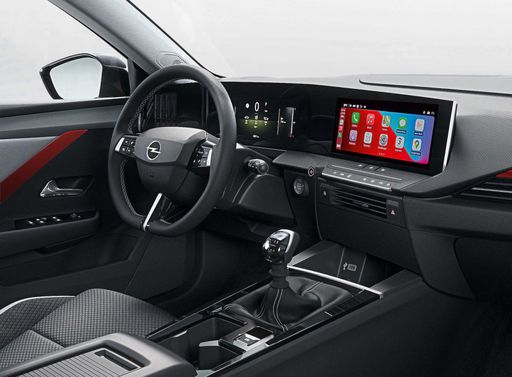
Inside, the Vauxhall Astra favours a clean, user‑friendly cockpit with real climate controls and a logical layout that reduces distraction, though some plastics and joins can feel a touch budget compared with class leaders. The Toyota Corolla projects a robust, conservative quality that speaks to durability and low‑fuss ownership; materials and assembly give a reassuring sense of longevity. Infotainment-wise Astra's system often feels quicker to operate but owners report occasional phone‑mirroring glitches, while Corolla's screens are steadier and less flashy but sometimes lag behind in responsiveness. Warranty and ownership perception also differ: Corolla's extended service‑backed coverage reduces long‑term anxiety, while Astra sells on ergonomic clarity and a more immediately intuitive cockpit.

Corolla

Who should pick which — buyer fit and trade‑offs

If your routine is heavy motorway miles, two‑up long runs and you prize supportive seats and low intrusion at speed, the Vauxhall Astra will likely feel like the wiser, more relaxing daily companion. If you live in town, want the lowest real operating costs without plugging in, or need the extra load room of a Corolla Touring Sports for family duties, the Toyota Corolla fits those needs better. Both cars ask you to accept compromises: Astra over comfort on tight city surfaces and occasional infotainment quirks, Corolla over drivetrain noise under load and tighter hatchback rear space. Below this editorial comparison we move into the technical section so you can map these practical impressions to fuel economy, boot volume and performance figures that will finalise which compromise you’re willing to live with.

Here’s where it gets real: The technical differences in detail

Astra

Costs and Efficiency:

Price and efficiency are often the first things buyers look at. Here it becomes clear which model has the long-term edge – whether at the pump, the plug, or in purchase price.

Vauxhall Astra is only slightly cheaper – starting at 28,300 £ , while the Toyota Corolla costs 28,600 £ . That’s a price difference of around 300 £.

Fuel consumption also shows a difference: the Vauxhall Astra uses 2.2 L/100km and is clearly more efficient than the Toyota Corolla with 4.4 L/100km. The difference is about 2.2 L/100km.

Corolla

Engine and Performance:

Power, torque and acceleration say a lot about how a car feels on the road. This is where you see which model delivers more driving dynamics.

When it comes to engine power, the Vauxhall Astra offers only slightly more power – delivering 196 HP compared to 178 HP. That’s roughly 18 HP more horsepower.

When accelerating from 0 to 100 km/h, the Toyota Corolla is very slightly quicker – completing the sprint in 7.5 s, while the Vauxhall Astra takes 7.6 s. That’s about 0.1 s quicker.

Astra

Space and Everyday Use:

Beyond pure performance, interior space and usability matter most in daily life. This is where you see which car is more practical and versatile.

Both vehicles offer seating for 5 people.

In terms of curb weight, Toyota Corolla is marginally lighter – 1,420 kg compared to 1,438 kg. The difference is around 18 kg.

Looking at boot space, the Vauxhall Astra offers slightly more boot space – 422 L compared to 361 L. That’s a difference of about 61 L.

When it comes to payload, the Vauxhall Astra carries moderately more – 502 kg compared to 450 kg. That’s a difference of about 52 kg.

Who wins the race in the data check?

The Vauxhall Astra is decisively ahead in the objective data comparison.
This result only shows which model scores more points on paper – not which of the two cars feels right for you.

from £28,300
Astra

Vauxhall Astra

  • Engine Type : Petrol MHEV, Plugin Hybrid, Diesel, Electric
  • Transmission : Automatic
  • Drive Type : Front-Wheel Drive
  • Power HP : 130 - 196 HP
  • Consumption L/100km : 2.2 - 4.9 L/100km
  • Consumption kWh/100km : 15.3 kWh/100km
  • Electric Range : 83 - 454 km
Vauxhall Astra
Toyota Corolla

Costs and Consumption

View detailed analysis

Engine and Performance

View detailed analysis

Dimensions and Body

View detailed analysis

Vauxhall Astra

The Opel Astra strikes a neat balance between everyday practicality and engaging handling, so the daily grind suddenly feels a bit less dull. Inside it's intelligently packaged with modern kit and comfortable seating, making it a very sensible pick for buyers who want a dependable hatchback that doesn't take itself too seriously.

details

Toyota Corolla

The Corolla is a reliable, no-nonsense compact car known for its practicality and composed ride. It’s economical to run, easy to maintain, and suits daily commuting while holding its value well.

details
Vauxhall Astra
Toyota Corolla

Costs and Consumption

Price
28,300 - 37,900 £
Price
28,600 - 34,900 £
Consumption L/100km
2.2 - 4.9 L/100km
Consumption L/100km
4.4 L/100km
Consumption kWh/100km
15.3 kWh/100km
Consumption kWh/100km
-
Electric Range
83 - 454 km
Electric Range
-
Battery Capacity
-
Battery Capacity
-
co2
0 - 130 g/km
co2
100 g/km
Fuel tank capacity
-
Fuel tank capacity
43 L

Dimensions and Body

Body Type
Hatchback
Body Type
Hatchback
Seats
5
Seats
5
Doors
-
Doors
5
Curb weight
1,438 - 1,733 kg
Curb weight
1,420 - 1,460 kg
Trunk capacity
310 - 422 L
Trunk capacity
313 - 361 L
Length
-
Length
4,370 mm
Width
1,859 mm
Width
1,790 mm
Height
-
Height
1,435 mm
Max trunk capacity
-
Max trunk capacity
1,004 - 1,052 L
Payload
438 - 502 kg
Payload
400 - 450 kg

Engine and Performance

Engine Type
Petrol MHEV, Plugin Hybrid, Diesel, Electric
Engine Type
Full Hybrid
Transmission
Automatic
Transmission
Automatic
Transmission Detail
Dual-Clutch Automatic, Automatic Gearbox, Reduction Gearbox
Transmission Detail
CVT
Drive Type
Front-Wheel Drive
Drive Type
Front-Wheel Drive
Power HP
130 - 196 HP
Power HP
140 - 178 HP
Acceleration 0-100km/h
7.6 - 10.6 s
Acceleration 0-100km/h
7.5 - 9.2 s
Max Speed
-
Max Speed
180 km/h
Torque
230 - 360 Nm
Torque
-
Number of Cylinders
3 - 4
Number of Cylinders
4
Power kW
96 - 144 kW
Power kW
103 - 131 kW
Engine capacity
1,199 - 1,598 cm3
Engine capacity
1,798 - 1,987 cm3

General

Model Year
2026
Model Year
2025
CO2 Efficiency Class
C, B, D, A
CO2 Efficiency Class
C
Brand
Vauxhall
Brand
Toyota
DriveDuel uses data analysis and artificial intelligence to evaluate vehicle data and create content. Content is regularly reviewed and improved. The displayed prices are estimates based on German list prices, adjusted to the respective country’s VAT. Country-specific registration taxes are not included. This information is not legally binding.