VS

Renault Rafale vs Mercedes GLC comparison

Compare performance (300 HP vs 489 HP), boot space and price (37,700 £ vs 50,300 £ ) at a glance. Find out which car is the better choice for you – Renault Rafale or Mercedes GLC?

Renault Rafale vs Mercedes GLC: Key differences

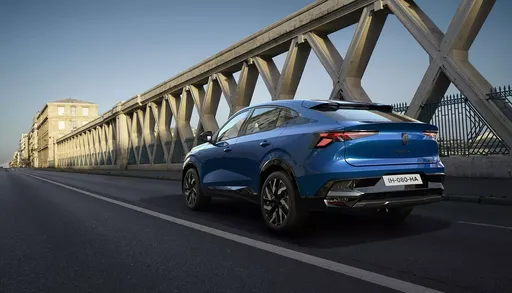
Renault Rafale

4.9 (8 Reviews)
rate
  • visibly cheaper
  • somewhat lighter
  • marginally more trunk space
details

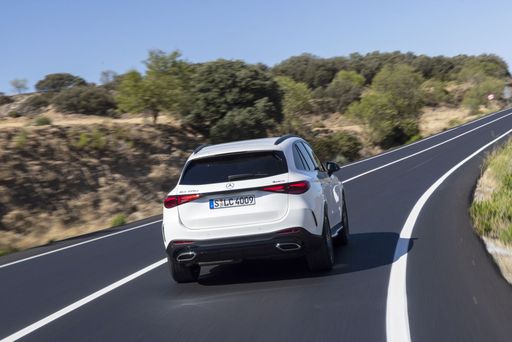
Mercedes GLC

4.4 (11 Reviews)
rate
  • visibly more power
  • visibly more efficient
  • considerably more electric range
  • substantially quicker 0–100 km/h
details

All details on performance, efficiency, range and trunk space can be found in the technical comparison below – including user reviews for both models.

By Achim Sedelmaier

Rafale

The automotive world is abuzz with comparisons, but few rivalries ignite the sparks of debate quite like that of the Mercedes GLC and the Renault Rafale. These two SUVs stand out with their distinctive engineering and technological innovations. In this article, we will delve into the technical aspects and features that make each vehicle a compelling option for different types of drivers.
GLC

Design and Dimensions

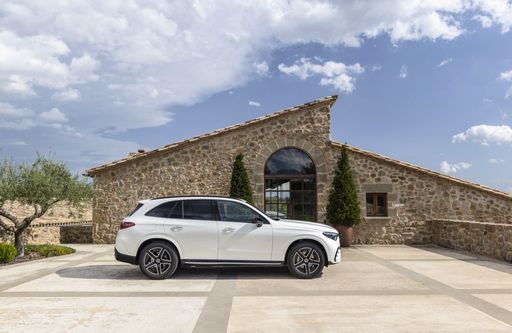
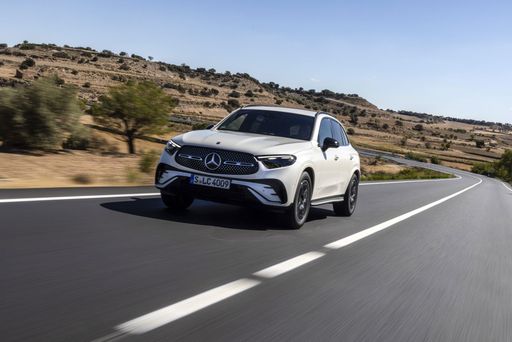
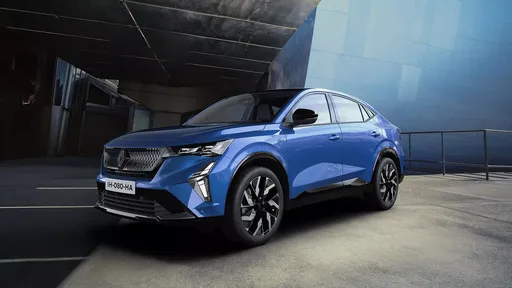
Both the Mercedes GLC and the Renault Rafale showcase contemporary designs that cater to modern aesthetics, yet they each adopt unique design languages. The GLC measures 4716 mm in length, 1890 mm in width, and rises 1640 mm high, projecting a robust and dynamic silhouette. Contrarily, the Rafale is slightly shorter at 4710 mm long, with a width of 1886 mm and a height of 1613 mm, offering a more compact feel.

Rafale

Performance and Powertrains

Under the hood, the GLC offers a range of engine choices, including petrol and diesel mild-hybrid options, as well as plugin hybrids, with power outputs ranging from 186 HP to a staggering 680 HP. This versatile lineup allows drivers to select models that fit their needs, whether it's efficiency or exhilarating performance. The GLC boasts an all-wheel-drive system and impressive acceleration, with top models reaching 0-100 km/h in just 3.5 seconds.

On the other hand, the Renault Rafale impresses with its full hybrid and plugin hybrid engines, offering 200 HP and up to 300 HP in its most powerful variant. While its front-wheel-drive system may seem less aggressive than the GLC's, the Rafale delivers commendable efficiency, consuming as low as 4.7 L/100 km. For drivers more focused on eco-friendliness, the Rafale's electric range of 97 km expands its appeal.

GLC

Interior and Technology

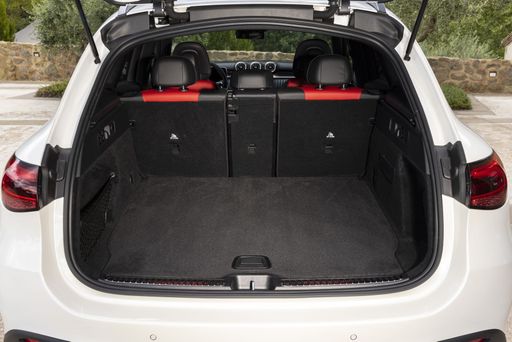
Step inside the GLC, and you're greeted by a luxurious interior that Mercedes-Benz is famous for. High-quality materials, a spacious cabin, and cutting-edge technology—such as advanced infotainment systems—enhance the driving experience. The rear trunk capacity of 620 L ensures ample storage for trips and daily commuting alike.

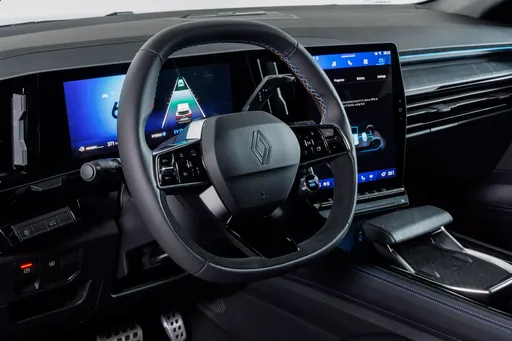
The Renault Rafale, while less luxurious than its German counterpart, doesn't skimp on tech features. It includes a user-friendly infotainment system and a surprising trunk capacity of 627 L. The emphasis here is practicality and comfort, making it an excellent companion for families.

Rafale

Fuel Efficiency and Environmental Impact

In the realm of fuel efficiency, the GLC presents a mixed bag depending on the variant chosen. The mild-hybrid engines offer competitive consumption figures, with some models as efficient as 5.1 L/100 km. However, its higher-performance models do eat into efficiency with up to 10.3 L/100 km.

In stark contrast, the Renault Rafale shines with its eco-friendly capabilities, with some variants achieving as low as 0.6 L/100 km in hybrid mode, and an impressive CO2 emissions rating of 14 g/km for the plugin hybrid version, appealing to the environmentally-conscious consumer.

GLC

Conclusion: Which SUV Reigns Supreme?

Ultimately, the choice between the Mercedes GLC and the Renault Rafale boils down to personal preferences. If you're seeking luxury, advanced technology, and extreme power, the GLC may be your best bet. However, if you prioritize fuel efficiency, practicality, and a reasonable price point, the Rafale makes a compelling argument. Both vehicles represent a growing trend towards hybridization and smarter, more sustainable driving options in the SUV market.

Here’s where it gets real: The technical differences in detail

Rafale

Costs and Efficiency:

Price and efficiency are often the first things buyers look at. Here it becomes clear which model has the long-term edge – whether at the pump, the plug, or in purchase price.

Renault Rafale is visibly cheaper – starting at 37,700 £ , while the Mercedes GLC costs 50,300 £ . That’s a price difference of around 12,613 £.

Fuel consumption also shows a difference: the Mercedes GLC uses 1.6 L/100km and is visibly more efficient than the Renault Rafale with 2 L/100km. The difference is about 0.4 L/100km.

As for electric range, the Mercedes GLC offers considerably more range – reaching up to 714 km, about 617 km more than the Renault Rafale.

GLC

Engine and Performance:

Power, torque and acceleration say a lot about how a car feels on the road. This is where you see which model delivers more driving dynamics.

When it comes to engine power, the Mercedes GLC offers visibly more power – delivering 489 HP compared to 300 HP. That’s roughly 189 HP more horsepower.

When accelerating from 0 to 100 km/h, the Mercedes GLC is substantially quicker – completing the sprint in 4.2 s, while the Renault Rafale takes 6.4 s. That’s about 2.2 s quicker.

Rafale

Space and Everyday Use:

Cabin size, boot volume and payload all play a role in everyday practicality. Here, comfort and flexibility make the difference.

Both vehicles offer seating for 5 people.

In terms of curb weight, Renault Rafale is somewhat lighter – 1,734 kg compared to 1,985 kg. The difference is around 251 kg.

Looking at boot space, the Renault Rafale offers marginally more boot space – 627 L compared to 620 L. That’s a difference of about 7 L.

When it comes to payload, the Mercedes GLC carries markedly more – 575 kg compared to 444 kg. That’s a difference of about 131 kg.

Who wins the race in the data check?

The Mercedes GLC is clearly superior overall in the objective data comparison.
This result only shows which model scores more points on paper – not which of the two cars feels right for you.

from £50,300
GLC

Mercedes GLC

  • Engine Type : Diesel MHEV, Plugin Hybrid, Electric, Petrol MHEV
  • Transmission : Automatic
  • Drive Type : All-Wheel Drive
  • Power HP : 186 - 489 HP
  • Consumption L/100km : 1.6 - 9.4 L/100km
  • Consumption kWh/100km : 14.9 - 16.6 kWh/100km
  • Electric Range : 122 - 714 km
Renault Rafale
Mercedes GLC

Costs and Consumption

View detailed analysis

Engine and Performance

View detailed analysis

Dimensions and Body

View detailed analysis

Renault Rafale

The Renault Rafale dresses bold coupé-inspired lines around a practical crossover body, turning heads without trying too hard. Inside it serves up a comfortable, well-equipped cabin and engaging driving manners, making it a clever choice for buyers who want a bit of panache with their daily commute.

details

Mercedes GLC

The Mercedes GLC blends plush cabin comfort and composed road manners into an SUV that feels more grown-up than it looks. It won’t shout for attention, but will quietly please buyers who want refinement, usable space and a touch of luxury without the drama.

details
Renault Rafale
Mercedes GLC

Costs and Consumption

Price
37,700 - 49,700 £
Price
50,300 - 82,100 £
Consumption L/100km
2 - 5 L/100km
Consumption L/100km
1.6 - 9.4 L/100km
Consumption kWh/100km
-
Consumption kWh/100km
14.9 - 16.6 kWh/100km
Electric Range
97 km
Electric Range
122 - 714 km
Battery Capacity
-
Battery Capacity
-
co2
43 - 109 g/km
co2
0 - 214 g/km
Fuel tank capacity
-
Fuel tank capacity
-

Dimensions and Body

Body Type
SUV
Body Type
SUV
Seats
5
Seats
5
Doors
-
Doors
-
Curb weight
1,734 - 2,025 kg
Curb weight
1,985 - 2,535 kg
Trunk capacity
539 - 627 L
Trunk capacity
390 - 620 L
Length
-
Length
-
Width
1,886 mm
Width
1,890 - 1,920 mm
Height
-
Height
-
Max trunk capacity
-
Max trunk capacity
-
Payload
415 - 444 kg
Payload
475 - 575 kg

Engine and Performance

Engine Type
Full Hybrid, Plugin Hybrid
Engine Type
Diesel MHEV, Plugin Hybrid, Electric, Petrol MHEV
Transmission
Automatic
Transmission
Automatic
Transmission Detail
Automatic Gearbox
Transmission Detail
Automatic Gearbox, Reduction Gearbox
Drive Type
Front-Wheel Drive, All-Wheel Drive
Drive Type
All-Wheel Drive
Power HP
200 - 300 HP
Power HP
186 - 489 HP
Acceleration 0-100km/h
6.4 - 8.9 s
Acceleration 0-100km/h
4.2 - 9 s
Max Speed
-
Max Speed
-
Torque
-
Torque
380 - 800 Nm
Number of Cylinders
3
Number of Cylinders
4 - 6
Power kW
147 - 221 kW
Power kW
137 - 360 kW
Engine capacity
1,199 cm3
Engine capacity
1,993 - 2,999 cm3

General

Model Year
2025
Model Year
2,025 - 2,026
CO2 Efficiency Class
C, B
CO2 Efficiency Class
D, B, E, F, A, G
Brand
Renault
Brand
Mercedes-Benz
DriveDuel uses data analysis and artificial intelligence to evaluate vehicle data and create content. Content is regularly reviewed and improved. The displayed prices are estimates based on German list prices, adjusted to the respective country’s VAT. Country-specific registration taxes are not included. This information is not legally binding.