VS

SEAT Arona vs Skoda Fabia comparison

Compare performance (150 HP vs 177 HP), boot space and price (20,700 £ vs 17,300 £ ) at a glance. Find out which car is the better choice for you – SEAT Arona or Skoda Fabia?

SEAT Arona vs Skoda Fabia: Key differences

SEAT Arona

4.9 (2 Reviews)
rate
  • only slightly more trunk space

Skoda Fabia

4.9 (2 Reviews)
rate
  • moderately cheaper
  • somewhat more power
  • only slightly more efficient
  • slightly quicker 0–100 km/h
  • marginally lighter

All details on performance, efficiency, range and trunk space can be found in the technical comparison below – including user reviews for both models.

Arona

Introducing the Contenders: SEAT Arona vs. Skoda Fabia

In the growing landscape of compact cars, consumers are continually faced with the choice of which model truly fits their lifestyle. The SEAT Arona and Skoda Fabia are two strong contenders that cater to different preferences but share a common ground in performance and utility. This comparison will delve into their technical features, innovations, and overall driving experience, giving you a clearer picture of which could be the ideal vehicle for you.

Fabia

Body and Design: SUV Versus Hatchback

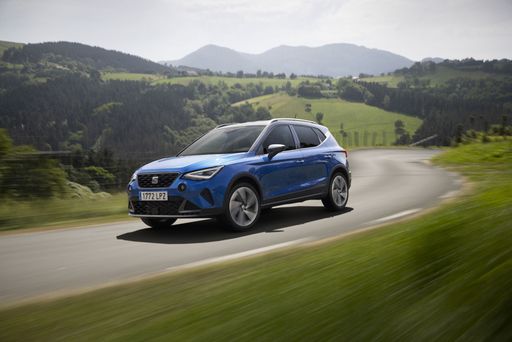
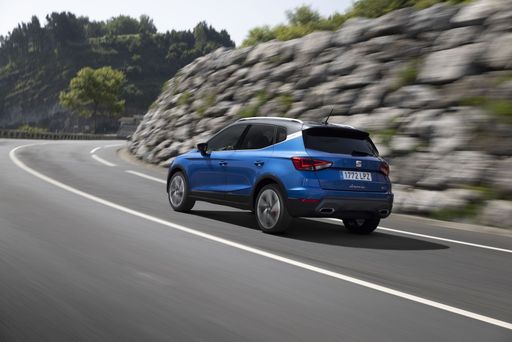
The SEAT Arona emerges as a stylish SUV, boasting a height of 1537 mm and an assertive stance on the road. With a length of 4153 mm and a width of 1780 mm, it offers ample interior space for passengers and cargo alike. A trunk capacity of 400 liters ensures that road trips and shopping sprees can be accommodated with ease.

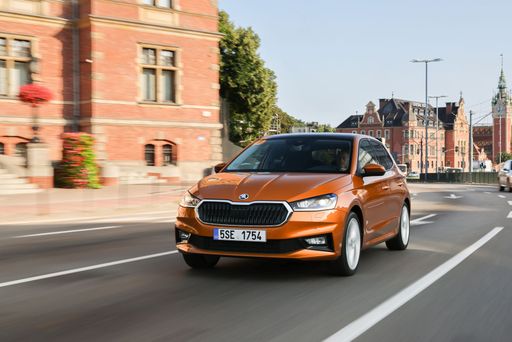
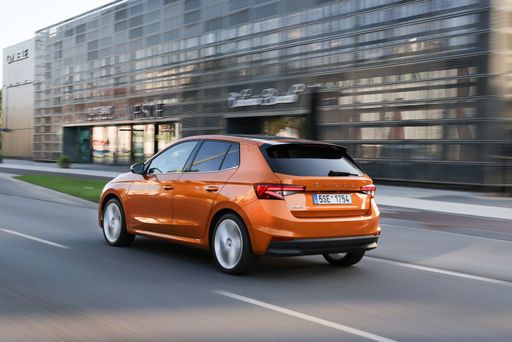
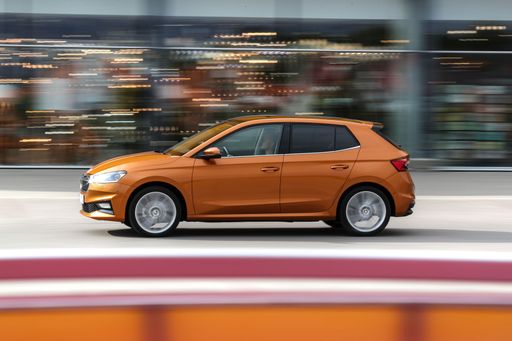
In contrast, the Skoda Fabia presents itself as a more compact hatchback. At 4108 mm in length and a height ranging from 1459 mm to 1479 mm, it remains a nimble option for urban driving. While its trunk capacity measures a respectable 380 liters, it slightly trails the Arona in cargo space but makes up for it with its efficient design.

Arona

Engine Options and Performance

Under the hood, the SEAT Arona offers a range of petrol engines, delivering power from 95 to 150 HP. Notably, its most powerful variant achieves 0-100 km/h in just 8.4 seconds, showcasing its sporty character. The vehicle's torque ranges from 175 Nm to a robust 250 Nm, optimizing its performance on the road. Fuel consumption stands at an efficient 5.4 L/100 km, balancing power with economy.

The Skoda Fabia—orchestrated more for efficiency—provides engine options spanning from 80 to 150 HP. The high-performance variant outpaces the Arona, hitting 0-100 km/h in 8 seconds. Additionally, the Fabia’s fuel economy is slightly better than the Arona, registering 5.0 L/100 km for certain configurations. It offers similar torque figures, providing a comparable driving experience.

Fabia

Transmission and Driving Experience

Both models come equipped with versatile transmission options. The SEAT Arona can be paired with a manual gearbox or a dual-clutch automatic transmission for smoother shifts—particularly appealing for those who prefer a more engaging drive. Coupled with front-wheel drive, the Arona promises a confident drive in various conditions.

The Skoda Fabia likewise offers a choice between manual and automatic dual-clutch transmissions, promoting a seamless transition between gears. Its smaller dimensions provide enhanced maneuverability, making it an excellent option for city driving, while still delivering comfort on longer journeys.

Arona

Technological Innovations

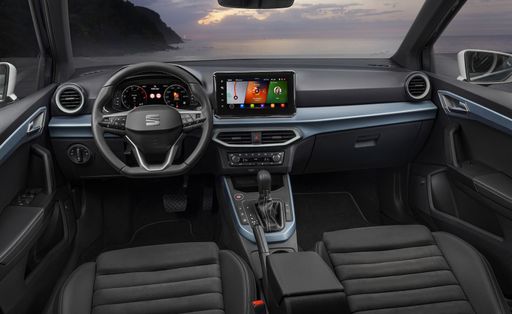
As is standard for modern vehicles, both cars come loaded with technological innovations designed to enhance the driving experience. The SEAT Arona features the latest infotainment system, integrating smartphone connectivity and offering advanced driver-assistance features to ensure safety on the road.

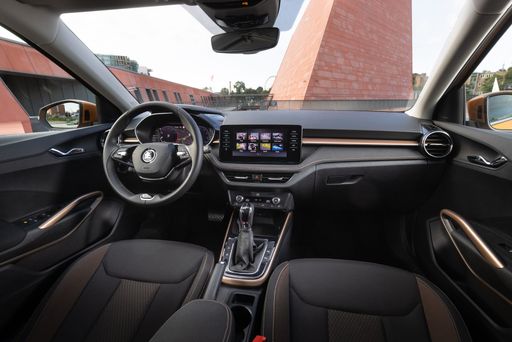
Similarly, the Skoda Fabia showcases an intuitive infotainment unit, complete with a user-friendly interface. The Fabia excelled in safety ratings, incorporating multiple driver-assistance features which help in navigating crowded streets and long highways alike, adding peace of mind to drivers.

Fabia

Sustainability and Efficiency

Regarding environmental considerations, the Arona and Fabia are committed to lower emissions. Both vehicles fall within a comparable CO2 efficiency class, with the SEAT Arona ranging from 122 g/km to 128 g/km, while the Skoda Fabia offers a range from 112 g/km to 124 g/km. This makes both options sustainable choices in their respective categories.

Arona

Conclusion: Which Car is Right for You?

Ultimately, the choice between the SEAT Arona and Skoda Fabia depends on your personal needs. If you prefer a compact SUV with a spacious interior and sporty aesthetics, the Arona may be your best bet. However, for those who desire a nimble hatchback offering efficiency and practicality, the Fabia stands out as a worthy competitor. With both vehicles showcasing impressive technical features and modern innovations, the decision boils down to the type of driving experience you're after.

Here’s where it gets real: The technical differences in detail

Arona

Costs and Efficiency:

Price and efficiency are often the first things buyers look at. Here it becomes clear which model has the long-term edge – whether at the pump, the plug, or in purchase price.

Skoda Fabia is moderately cheaper – starting at 17,300 £ , while the SEAT Arona costs 20,700 £ . That’s a price difference of around 3,395 £.

Fuel consumption also shows a difference: the Skoda Fabia uses 4.9 L/100km and is only slightly more efficient than the SEAT Arona with 5.3 L/100km. The difference is about 0.4 L/100km.

Fabia

Engine and Performance:

Under the bonnet, it becomes clear which model is tuned for sportiness and which one takes the lead when you hit the accelerator.

When it comes to engine power, the Skoda Fabia offers somewhat more power – delivering 177 HP compared to 150 HP. That’s roughly 27 HP more horsepower.

When accelerating from 0 to 100 km/h, the Skoda Fabia is slightly quicker – completing the sprint in 7.4 s, while the SEAT Arona takes 8.3 s. That’s about 0.9 s quicker.

Both models offer the same torque – 250 Nm.

Arona

Space and Everyday Use:

Cabin size, boot volume and payload all play a role in everyday practicality. Here, comfort and flexibility make the difference.

Both vehicles offer seating for 5 people.

In terms of curb weight, Skoda Fabia is marginally lighter – 1,143 kg compared to 1,188 kg. The difference is around 45 kg.

Looking at boot space, the SEAT Arona offers only slightly more boot space – 400 L compared to 380 L. That’s a difference of about 20 L.

When it comes to payload, the SEAT Arona carries moderately more – 522 kg compared to 437 kg. That’s a difference of about 85 kg.

Who wins the race in the data check?

The Skoda Fabia is clearly superior overall in the objective data comparison.
This result only shows which model scores more points on paper – not which of the two cars feels right for you.

from £17,300
Fabia

Skoda Fabia

  • Engine Type : Petrol
  • Transmission : Manuel, Automatic
  • Drive Type : Front-Wheel Drive
  • Power HP : 80 - 177 HP
  • Consumption L/100km : 4.9 - 5.6 L/100km
SEAT Arona
Skoda Fabia

Costs and Consumption

View detailed analysis

Engine and Performance

View detailed analysis

Dimensions and Body

View detailed analysis

SEAT Arona

The SEAT Arona is a cheeky urban crossover that mixes sharp styling with sensible practicality, making it an appealing choice for buyers who want personality without fuss. It’s zippy in traffic, comfortable enough for daily driving, and brings enough character to make routine journeys feel a little more fun.

details

Skoda Fabia

The Skoda Fabia is a clever, no-nonsense small car that turns everyday chores into a breeze thanks to smart packaging and a surprisingly roomy cabin. It won’t set your pulses racing, but it’s a consistently sensible choice — reliable, easy to live with and blessed with a few neat tricks that make city life less faff.

details
SEAT Arona
Skoda Fabia

Costs and Consumption

Price
20,700 - 30,500 £
Price
17,300 - 30,500 £
Consumption L/100km
5.3 - 5.8 L/100km
Consumption L/100km
4.9 - 5.6 L/100km
Consumption kWh/100km
-
Consumption kWh/100km
-
Electric Range
-
Electric Range
-
Battery Capacity
-
Battery Capacity
-
co2
120 - 132 g/km
co2
112 - 126 g/km
Fuel tank capacity
-
Fuel tank capacity
40 L

Dimensions and Body

Body Type
SUV
Body Type
Hatchback
Seats
5
Seats
5
Doors
-
Doors
5
Curb weight
1,188 - 1,268 kg
Curb weight
1,143 - 1,278 kg
Trunk capacity
400 L
Trunk capacity
380 L
Length
-
Length
4,108 - 4,137 mm
Width
1,780 mm
Width
1,780 mm
Height
-
Height
1,458 - 1,459 mm
Max trunk capacity
-
Max trunk capacity
1,190 L
Payload
502 - 522 kg
Payload
402 - 437 kg

Engine and Performance

Engine Type
Petrol
Engine Type
Petrol
Transmission
Manuel, Automatic
Transmission
Manuel, Automatic
Transmission Detail
Manual Gearbox, Dual-Clutch Automatic
Transmission Detail
Manual Gearbox, Dual-Clutch Automatic
Drive Type
Front-Wheel Drive
Drive Type
Front-Wheel Drive
Power HP
95 - 150 HP
Power HP
80 - 177 HP
Acceleration 0-100km/h
8.3 - 11.1 s
Acceleration 0-100km/h
7.4 - 15.7 s
Max Speed
-
Max Speed
175 - 228 km/h
Torque
175 - 250 Nm
Torque
93 - 250 Nm
Number of Cylinders
3 - 4
Number of Cylinders
3 - 4
Power kW
70 - 110 kW
Power kW
59 - 130 kW
Engine capacity
999 - 1,498 cm3
Engine capacity
999 - 1,498 cm3

General

Model Year
2,025
Model Year
2,025
CO2 Efficiency Class
D
CO2 Efficiency Class
D, C
Brand
SEAT
Brand
Skoda
DriveDuel uses data analysis and artificial intelligence to evaluate vehicle data and create content. Content is regularly reviewed and improved. The displayed prices are estimates based on German list prices, adjusted to the respective country’s VAT. Country-specific registration taxes are not included. This information is not legally binding.