VS

Volvo V60 vs VW Golf Variant comparison

Compare performance (455 HP vs 333 HP), boot space and price (41,600 £ vs 26,100 £ ) at a glance. Find out which car is the better choice for you – Volvo V60 or VW Golf Variant?

Volvo V60 vs VW Golf Variant: Key differences

Volvo V60

5 (1 Reviews)
rate
  • markedly more power
  • considerably more efficient
  • barely quicker 0–100 km/h

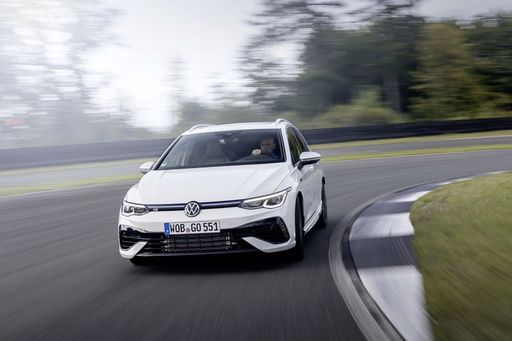
VW Golf Variant

  • substantially cheaper
  • visibly lighter
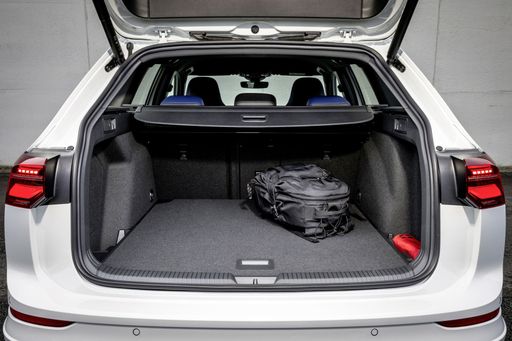
  • somewhat more trunk space

All details on performance, efficiency, range and trunk space can be found in the technical comparison below – including user reviews for both models.

V60

Volvo V60 vs VW Golf Variant: A Comprehensive Comparison

In the competitive world of compact wagons, the Volvo V60 and VW Golf Variant stand out as two prominent choices for those seeking a versatile and stylish ride. Let's dive into a detailed comparison of these two models, focusing on their technical specifications, innovations, and overall appeal.

Golf Variant

Performance and Engine Options

The Volvo V60 offers a range of engine options, including petrol mild-hybrid, plug-in hybrid, and diesel mild-hybrid variants. The power output varies from 197 HP to an impressive 455 HP for the top-performing model. This range allows buyers to select the level of performance that best suits their needs, whether it's the economical option or high-performance driving.

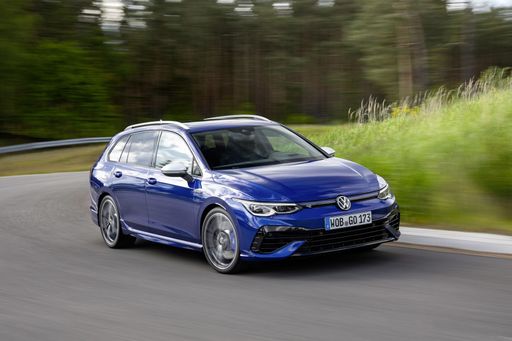
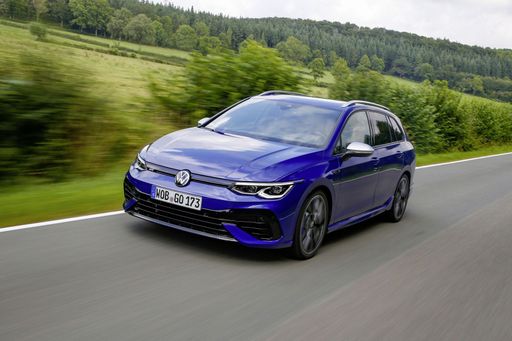
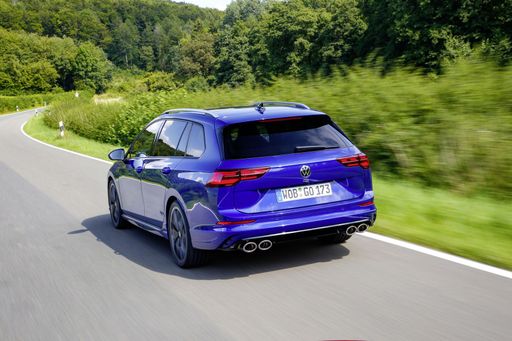
On the other hand, the VW Golf Variant is equipped with petrol, petrol mild-hybrid, and diesel engines, with power outputs ranging from 116 HP to a robust 333 HP. The Golf's highest-performing variant, similar to the V60, caters to power enthusiasts, making it an attractive option in the segment.

Both models come with either automatic transmissions or manual selections, with the Volvo primarily featuring a dual-clutch automatic, while the Golf offers more flexibility with both options.


V60

Fuel Efficiency and Consumption

When it comes to fuel efficiency, the VW Golf Variant shines with consumption figures as low as 4.4 L/100km. This makes it particularly appealing for those concerned with economy and environmental impact. Its CO2 emissions are notable as well, with figures starting around 115 g/km, placing it favorably within the eco-friendly bracket.

The Volvo V60, while slightly higher in consumption (starting around 5.9 L/100km for hybrid models), still presents competitive CO2 emissions starting at 140 g/km. The addition of its plug-in hybrid option allows for an electric range of 92 km, which can significantly enhance daily usability for urban drivers.

Golf Variant

Dimensions and Interior Space

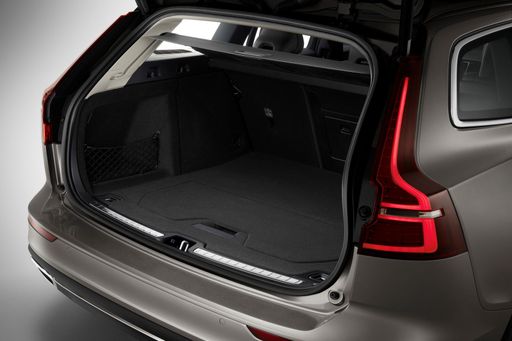
In terms of size, the Volvo V60 measures 4,778 mm in length with a width of 1,850 mm, while the VW Golf Variant is slightly shorter at 4,631 mm and 1,789 mm wide. The V60's interior offers a trunk capacity of 519 liters, which is spacious for families or active lifestyles. However, the Golf Variant excels with a larger trunk capacity of 611 liters, allowing for extra versatility when transporting cargo.

Both vehicles accommodate five passengers comfortably, making them excellent choices for families or those needing to transport friends and luggage.

V60

Safety and Innovations

Volvo has long been synonymous with safety, and the V60 continues that legacy. The car is equipped with a suite of advanced safety features, including adaptive cruise control, lane-keeping assist, and collision avoidance systems. Notably, Volvo's emphasis on safety extends into intelligent driver support systems, which help reduce the risk of accidents on the road.

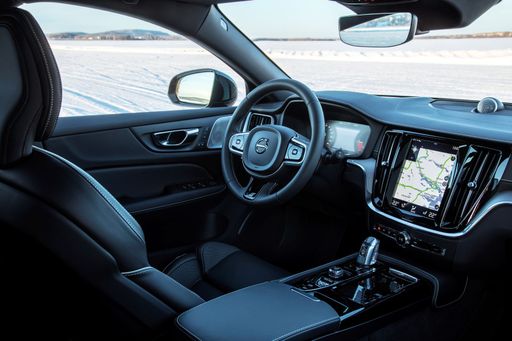
Meanwhile, the VW Golf Variant also boasts a plethora of safety technologies, including front assist, blind-spot monitoring, and emergency braking. Both models feature high-quality infotainment systems, with the V60 leaning towards a sleek, minimalist design, and the Golf Variant offering user-friendly functionalities and connectivity options such as Apple CarPlay and Android Auto.

Golf Variant

The Verdict: Which Should You Choose?

Ultimately, choosing between the Volvo V60 and VW Golf Variant depends on your priorities. If performance and safety are your top concerns, the V60's robust engine lineup and advanced safety features are hard to beat. Conversely, for those seeking efficiency, flexibility, and a spacious interior, the VW Golf Variant stands out with its proven reliability and practicality.

As the automotive landscape continues to evolve with a focus on sustainability and innovation, both the Volvo V60 and VW Golf Variant offer compelling options for modern drivers looking for a blend of style, performance, and utility.

Here’s where it gets real: The technical differences in detail

V60

Costs and Efficiency:

Price and efficiency are often the first things buyers look at. Here it becomes clear which model has the long-term edge – whether at the pump, the plug, or in purchase price.

VW Golf Variant is substantially cheaper – starting at 26,100 £ , while the Volvo V60 costs 41,600 £ . That’s a price difference of around 15,510 £.

Fuel consumption also shows a difference: the Volvo V60 uses 2.4 L/100km and is considerably more efficient than the VW Golf Variant with 4.3 L/100km. The difference is about 1.9 L/100km.

Golf Variant

Engine and Performance:

Power, torque and acceleration say a lot about how a car feels on the road. This is where you see which model delivers more driving dynamics.

When it comes to engine power, the Volvo V60 offers markedly more power – delivering 455 HP compared to 333 HP. That’s roughly 122 HP more horsepower.

When accelerating from 0 to 100 km/h, the Volvo V60 is barely quicker – completing the sprint in 4.6 s, while the VW Golf Variant takes 4.8 s. That’s about 0.2 s quicker.

Looking at top speed, the VW Golf Variant is noticeably faster – reaching 250 km/h, while the Volvo V60 tops out at 180 km/h. The difference is around 70 km/h.

There’s also a difference in torque: the Volvo V60 delivers considerably more torque with 709 Nm compared to 420 Nm. That’s about 289 Nm more.

V60

Space and Everyday Use:

Cabin size, boot volume and payload all play a role in everyday practicality. Here, comfort and flexibility make the difference.

Both vehicles offer seating for 5 people.

In terms of curb weight, VW Golf Variant is visibly lighter – 1,366 kg compared to 1,734 kg. The difference is around 368 kg.

Looking at boot space, the VW Golf Variant offers somewhat more boot space – 611 L compared to 519 L. That’s a difference of about 92 L.

For maximum load capacity, the VW Golf Variant offers slightly more capacity – up to 1,642 L, about 211 L more than the Volvo V60.

When it comes to payload, the VW Golf Variant carries marginally more – 547 kg compared to 506 kg. That’s a difference of about 41 kg.

Who wins the race in the data check?

The Volvo V60 is clearly superior overall in the objective data comparison.
This result only shows which model scores more points on paper – not which of the two cars feels right for you.

from £41,600
V60

Volvo V60

  • Engine Type : Petrol MHEV, Plugin Hybrid
  • Transmission : Automatic
  • Drive Type : Front-Wheel Drive, All-Wheel Drive
  • Power HP : 197 - 455 HP
  • Consumption L/100km : 2.4 - 6.2 L/100km
  • Electric Range : 93 km
Volvo V60
VW Golf Variant

Costs and Consumption

View detailed analysis

Engine and Performance

View detailed analysis

Dimensions and Body

View detailed analysis

Volvo V60

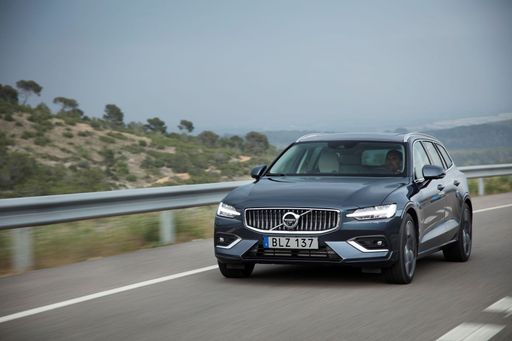
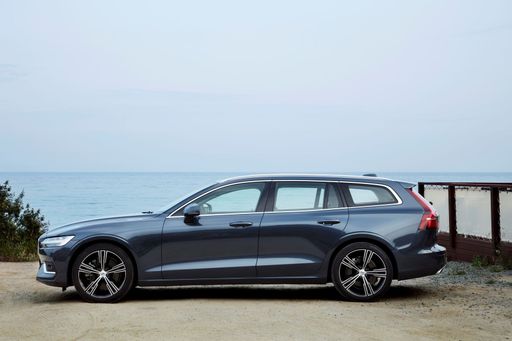
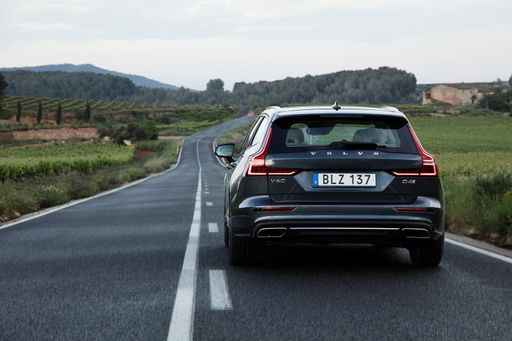
The Volvo V60 blends elegant Scandinavian design with a practical estate layout, making it a composed and sensible choice for buyers who want style without sacrifice. Inside, a serene cabin, clever safety features and a supple ride turn daily commutes and weekend getaways into effortless, grown-up motoring.

details

VW Golf Variant

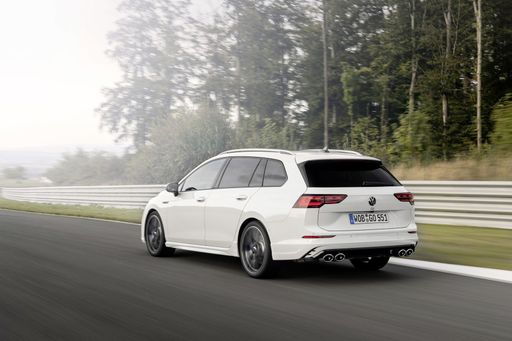
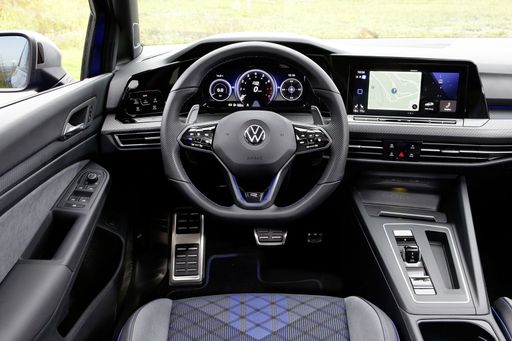
The Golf Estate packs Volkswagen's familiar poise into a practical, grown-up estate that quietly makes everyday life easier without shouting for attention. It's clever, comfortable and roomy enough for weekend kit or family chaos, offering smart packaging and refined manners that make it a sensible and surprisingly stylish choice for buyers who need space but don't want a van.

details
Volvo V60
VW Golf Variant

Costs and Consumption

Price
41,600 - 65,000 £
Price
26,100 - 48,700 £
Consumption L/100km
2.4 - 6.2 L/100km
Consumption L/100km
4.3 - 8.2 L/100km
Consumption kWh/100km
-
Consumption kWh/100km
-
Electric Range
93 km
Electric Range
-
Battery Capacity
-
Battery Capacity
-
co2
54 - 140 g/km
co2
114 - 185 g/km
Fuel tank capacity
60 L
Fuel tank capacity
45 - 55 L

Dimensions and Body

Body Type
Estate
Body Type
Estate
Seats
5
Seats
5
Doors
5
Doors
5
Curb weight
1,734 - 2,064 kg
Curb weight
1,366 - 1,621 kg
Trunk capacity
519 L
Trunk capacity
611 L
Length
4,778 mm
Length
4,631 - 4,651 mm
Width
1,850 mm
Width
1,789 mm
Height
1,432 mm
Height
1,462 - 1,487 mm
Max trunk capacity
1,431 L
Max trunk capacity
1,624 - 1,642 L
Payload
466 - 506 kg
Payload
489 - 547 kg

Engine and Performance

Engine Type
Petrol MHEV, Plugin Hybrid
Engine Type
Petrol MHEV, Petrol, Diesel
Transmission
Automatic
Transmission
Automatic, Manuel
Transmission Detail
Dual-Clutch Automatic, Automatic Gearbox
Transmission Detail
Dual-Clutch Automatic, Manual Gearbox
Drive Type
Front-Wheel Drive, All-Wheel Drive
Drive Type
Front-Wheel Drive, All-Wheel Drive
Power HP
197 - 455 HP
Power HP
116 - 333 HP
Acceleration 0-100km/h
4.6 - 7.6 s
Acceleration 0-100km/h
4.8 - 10.5 s
Max Speed
180 km/h
Max Speed
203 - 250 km/h
Torque
300 - 709 Nm
Torque
220 - 420 Nm
Number of Cylinders
4
Number of Cylinders
4
Power kW
145 - 335 kW
Power kW
85 - 245 kW
Engine capacity
1,969 cm3
Engine capacity
1,498 - 1,984 cm3

General

Model Year
2,024 - 2,025
Model Year
2,024 - 2,025
CO2 Efficiency Class
E, B
CO2 Efficiency Class
D, G, F, C
Brand
Volvo
Brand
VW
DriveDuel uses data analysis and artificial intelligence to evaluate vehicle data and create content. Content is regularly reviewed and improved. The displayed prices are estimates based on German list prices, adjusted to the respective country’s VAT. Country-specific registration taxes are not included. This information is not legally binding.