VS

VW Arteon vs Volvo V60 comparison

Compare performance (320 HP vs 350 HP), boot space and price (43,300 £ vs 51,400 £ ) at a glance. Find out which car is the better choice for you – VW Arteon or Volvo V60?

VW Arteon vs Volvo V60: Key differences

VW Arteon

5 (1 Reviews)
rate
  • slightly cheaper
  • moderately quicker 0–100 km/h
  • very slightly lighter
  • slightly more trunk space
details

Volvo V60

5 (1 Reviews)
rate
  • only slightly more power
  • significantly more efficient
details

All details on performance, efficiency, range and trunk space can be found in the technical comparison below – including user reviews for both models.

By Achim Sedelmaier

Arteon

Battle of the Wagons: Volvo V60 vs. VW Arteon

As automakers push the boundaries of design and engineering, wagons are once again finding their place in the automotive spotlight. Two notable contenders in this category are the Volvo V60 and the VW Arteon. Both are praised for their innovation, performance, and practicality. Let’s delve into how these vehicles stack up against each other on several key fronts.
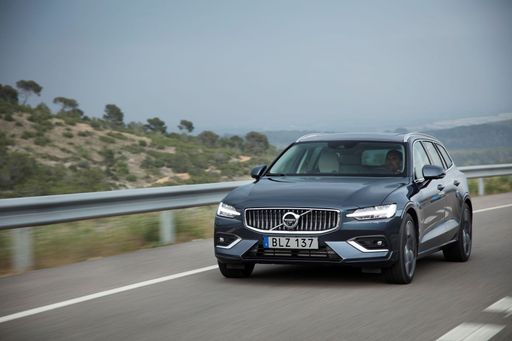
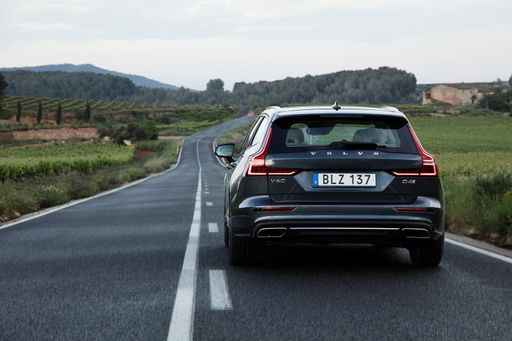
V60

Power and Performance

The Volvo V60 is available with a range of engine options to suit various preferences, including petrol MHEV, plug-in hybrid, and diesel MHEV. It provides a generous power output ranging from 197 to 455 horsepower. The impressive plug-in hybrid variant can accelerate from 0 to 100 km/h in 4.6 seconds, making it a strong contender for those seeking swift, yet efficient, performance. The V60 has a capped top speed of 180 km/h, which aligns with Volvo’s emphasis on safety.

On the other hand, the VW Arteon offers engines in petrol and diesel, with horsepower options between 150 and 320. It accelerates from 0 to 100 km/h in as little as 4.9 seconds with the most powerful engine configuration. Offering a top speed of up to 250 km/h, the Arteon is designed for those who crave speed and dynamism.

Arteon

Fuel Efficiency and Eco-Friendliness

When it comes to fuel economy, the V60 is available with some of the most efficient powertrains in its class, with a fuel consumption as low as 0.7 L/100km for the plug-in hybrid variant. This model also boasts an electric range of up to 92 km, ideal for urban commutes with minimal emissions. With CO2 emissions starting at 17 g/km, it positions itself as an eco-conscious choice.

In contrast, the Arteon's most efficient engine offers a fuel consumption of 5.1 L/100km. Its CO2 emissions start at 133 g/km, demonstrating a reasonable environmental footprint, especially for a non-hybrid model. However, it lacks an electric range, which may be a consideration for eco-minded consumers.

V60

Interior and Cargo Space

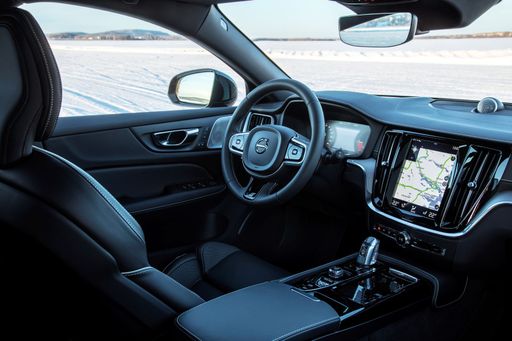
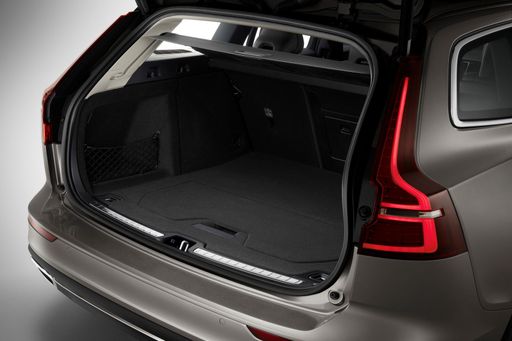
Space and practicality are essential in wagons, and both contenders offer abundant room for passengers and cargo. The V60’s trunk capacity is 519 liters, which is ample for everyday needs. With its Scandinavian design philosophy, the interior is elegant, functional, and filled with high-end materials and intuitive technology interfaces.

The Arteon, with its cavernous 590-liter trunk, caters to those who require additional cargo space. Its interior exudes a more sporty vibe but does not compromise on comfort or technology, providing a refined driving experience with a user-friendly infotainment system.

Arteon

Innovation and Technology

Volvo is synonymous with safety, and the V60 is no exception, equipped with an array of advanced safety features and driver assistance systems. It includes semi-autonomous driving capabilities, advanced air purification systems, and a touch-based infotainment system that supports Android Auto and Apple CarPlay.

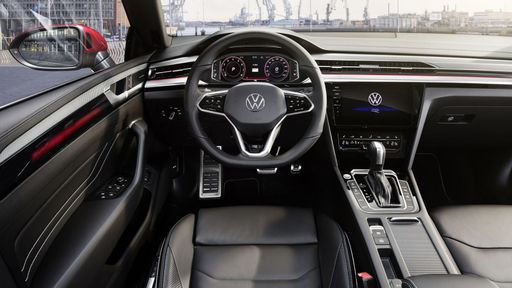
The Arteon embraces innovation with its digital cockpit and advanced driver-assist features, making each drive both safer and smarter. Besides, its available head-up display and cutting-edge sound system turn the cabin into a haven for tech enthusiasts.

V60

Final Verdict

The Volvo V60 and VW Arteon both offer unique strengths that cater to different consumer preferences, from the V60’s eco-conscious hybrid options to the Arteon’s higher performance capabilities. Ultimately, the better choice depends on whether you prioritize advanced hybrid technology and safety or prefer a high-speed performance coupled with expansive cargo capacity.

Both vehicles stand at the forefront of modern wagon design, ensuring a satisfying experience for any driver prioritizing space, style, and advanced technological features. Whichever you lean towards, rest assured that you are investing in innovative engineering and design excellence.

Here’s where it gets real: The technical differences in detail

Arteon

Costs and Efficiency:

Looking at overall running costs, both models reveal some interesting differences in everyday economy.

VW Arteon is slightly cheaper – starting at 43,300 £ , while the Volvo V60 costs 51,400 £ . That’s a price difference of around 8,139 £.

Fuel consumption also shows a difference: the Volvo V60 uses 2 L/100km and is significantly more efficient than the VW Arteon with 5.1 L/100km. The difference is about 3.1 L/100km.

V60

Engine and Performance:

Power, torque and acceleration say a lot about how a car feels on the road. This is where you see which model delivers more driving dynamics.

When it comes to engine power, the Volvo V60 offers only slightly more power – delivering 350 HP compared to 320 HP. That’s roughly 30 HP more horsepower.

When accelerating from 0 to 100 km/h, the VW Arteon is moderately quicker – completing the sprint in 4.9 s, while the Volvo V60 takes 5.4 s. That’s about 0.5 s quicker.

There’s also a difference in torque: the Volvo V60 delivers markedly more torque with 589 Nm compared to 420 Nm. That’s about 169 Nm more.

Arteon

Space and Everyday Use:

Beyond pure performance, interior space and usability matter most in daily life. This is where you see which car is more practical and versatile.

Both vehicles offer seating for 5 people.

In terms of curb weight, VW Arteon is very slightly lighter – 1,607 kg compared to 1,734 kg. The difference is around 127 kg.

Looking at boot space, the VW Arteon offers slightly more boot space – 590 L compared to 519 L. That’s a difference of about 71 L.

When it comes to payload, the VW Arteon carries a bit more – 569 kg compared to 506 kg. That’s a difference of about 63 kg.

Who wins the race in the data check?

The Volvo V60 holds a decisive overall lead in the objective data comparison.
This result only shows which model scores more points on paper – not which of the two cars feels right for you.

from £51,400
V60

Volvo V60

  • Engine Type Petrol MHEV, Plugin Hybrid
  • Transmission Automatic
  • Drive Type Front-Wheel Drive, All-Wheel Drive
  • Power HP 197 - 350 HP
  • Consumption L/100km 2 - 6.2 L/100km
  • Electric Range 99 km
VW Arteon
Volvo V60

Costs and Consumption

View detailed analysis

Engine and Performance

View detailed analysis

Dimensions and Body

View detailed analysis

VW Arteon

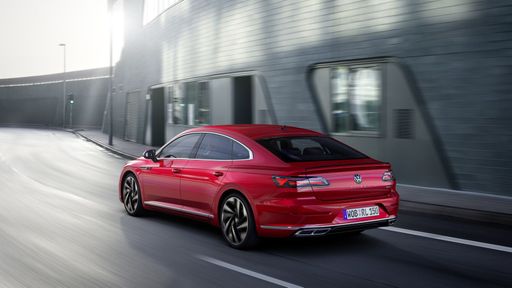
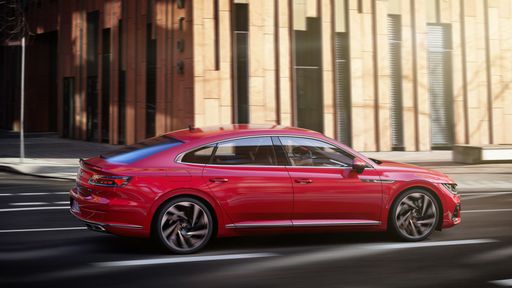
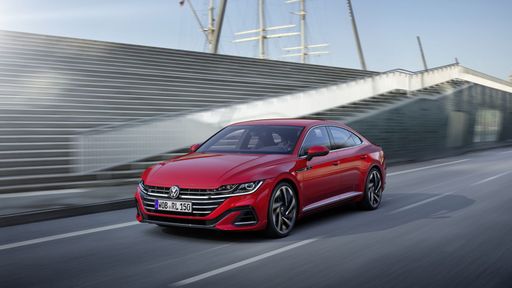
The VW Arteon cuts a fastback silhouette that manages to look more expensive than it is, with a cabin that feels calm, roomy and smartly finished. It blends relaxed long distance comfort with a touch of sporting poise, making it a clever choice for buyers who want grand touring polish without shouting for attention.

details

Volvo V60

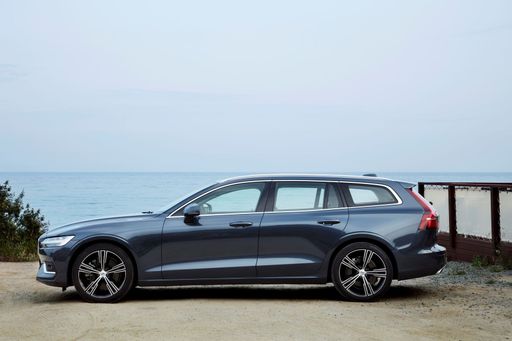
The Volvo V60 blends elegant Scandinavian design with a practical estate layout, making it a composed and sensible choice for buyers who want style without sacrifice. Inside, a serene cabin, clever safety features and a supple ride turn daily commutes and weekend getaways into effortless, grown-up motoring.

details
VW Arteon
Volvo V60

Costs and Consumption

Price
43,300 - 60,800 £
Price
51,400 - 62,500 £
Consumption L/100km
5.1 - 8.6 L/100km
Consumption L/100km
2 - 6.2 L/100km
Consumption kWh/100km
-
Consumption kWh/100km
-
Electric Range
-
Electric Range
99 km
Battery Capacity
-
Battery Capacity
-
co2
133 - 195 g/km
co2
45 - 141 g/km
Fuel tank capacity
66 L
Fuel tank capacity
-

Dimensions and Body

Body Type
Estate
Body Type
Estate
Seats
5
Seats
5
Doors
5
Doors
-
Curb weight
1,607 - 1,773 kg
Curb weight
1,734 - 2,070 kg
Trunk capacity
590 L
Trunk capacity
519 L
Length
4,866 mm
Length
-
Width
1,871 mm
Width
1,850 mm
Height
1,434 - 1,451 mm
Height
-
Max trunk capacity
1,632 L
Max trunk capacity
-
Payload
467 - 569 kg
Payload
460 - 506 kg

Engine and Performance

Engine Type
Diesel, Petrol
Engine Type
Petrol MHEV, Plugin Hybrid
Transmission
Automatic
Transmission
Automatic
Transmission Detail
Dual-Clutch Automatic
Transmission Detail
Dual-Clutch Automatic, Automatic Gearbox
Drive Type
Front-Wheel Drive, All-Wheel Drive
Drive Type
Front-Wheel Drive, All-Wheel Drive
Power HP
150 - 320 HP
Power HP
197 - 350 HP
Acceleration 0-100km/h
4.9 - 9.4 s
Acceleration 0-100km/h
5.4 - 7.6 s
Max Speed
216 - 250 km/h
Max Speed
-
Torque
320 - 420 Nm
Torque
300 - 589 Nm
Number of Cylinders
4
Number of Cylinders
4
Power kW
110 - 235 kW
Power kW
145 - 247 kW
Engine capacity
1,968 - 1,984 cm3
Engine capacity
1,969 cm3

General

Model Year
2024
Model Year
2,024 - 2,026
CO2 Efficiency Class
D, E, F, G
CO2 Efficiency Class
E, B
Brand
VW
Brand
Volvo
DriveDuel uses data analysis and artificial intelligence to evaluate vehicle data and create content. Content is regularly reviewed and improved. The displayed prices are estimates based on German list prices, adjusted to the respective country’s VAT. Country-specific registration taxes are not included. This information is not legally binding.