VS

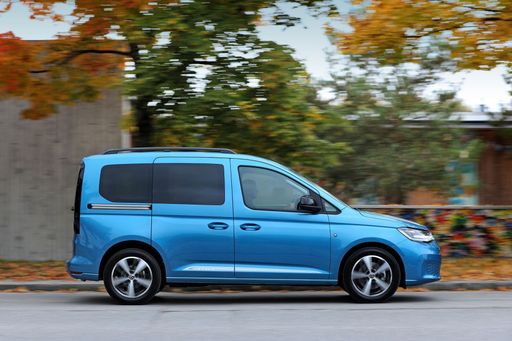
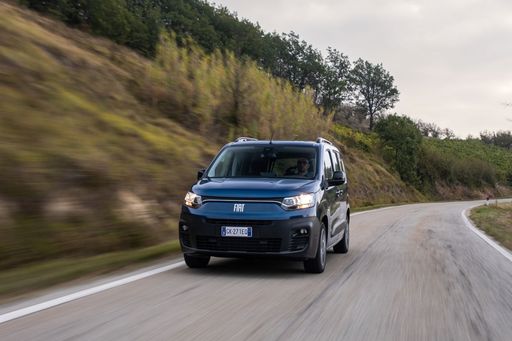
VW Caddy vs Fiat Doblò Van comparison

Compare performance (150 HP vs 136 HP), boot space and price (27,800 £ vs 21,300 £ ) at a glance. Find out which car is the better choice for you – VW Caddy or Fiat Doblò Van?

VW Caddy vs Fiat Doblò Van: Key differences

VW Caddy

  • only slightly more power
  • clearly more efficient
details

Fiat Doblò Van

  • clearly cheaper
  • considerably more electric range
  • moderately lighter
details

By Achim Sedelmaier

Caddy

Fiat Doblò Van vs. VW Caddy: A Van Comparison Worth Your Attention

In the realm of versatile utility vehicles, the Fiat Doblò Van and the VW Caddy have long been popular choices for businesses and individuals alike. Both models have undergone several updates, boasting technological advancements and improved performance. Let's dive into the technical prowess and innovative features of these two stalwarts of the van segment.
Doblò Van

Engine Options and Performance

The Fiat Doblò Van offers a wide array of engine types, including petrol, diesel, and electric variations. With power outputs ranging from 102 to 136 HP, this van accommodates diverse driving needs. The electric model stands out with an impressive range of up to 354 km. Meanwhile, its torque spans from 205 to 300 Nm, ensuring robust performance for different payloads.

VW Caddy, on the other hand, provides petrol, diesel, and plugin hybrid engines. The power output for the Caddy varies from 102 to 150 HP, complemented by torque figures of 220 to 320 Nm. Notably, the plugin hybrid version showcases an electric range between 116 and 121 km, catering to eco-conscious users while maintaining the van's trademark reliability.

Caddy

Transmission and Drive Type

The Fiat Doblò offers both manual and automatic transmissions, including a reduction gearbox for specialized driving conditions. All variants are front-wheel drive, which is ideal for typical urban and suburban routes. The Caddy also provides manual and dual-clutch automatic choices. Moreover, it expands versatility with options for either front-wheel or all-wheel drive, giving it an edge in handling varied terrains.

Doblò Van

Dimensions and Payload

Size-wise, the Fiat Doblò measures between 4403 mm and 4753 mm in length, with a consistent width of 1848 mm and height options up to 1812 mm. It supports a payload capacity ranging from 611 kg to 1033 kg, making it highly adaptable for commercial purposes.

The VW Caddy is slightly longer, with lengths between 4500 mm and 4853 mm. It maintains a width of 1855 mm and stands taller with a height ranging up to 1860 mm. Its payload capacity varies from 501 kg to 710 kg, providing flexibility for transporting various types of cargo.

Caddy

Interior and Comfort

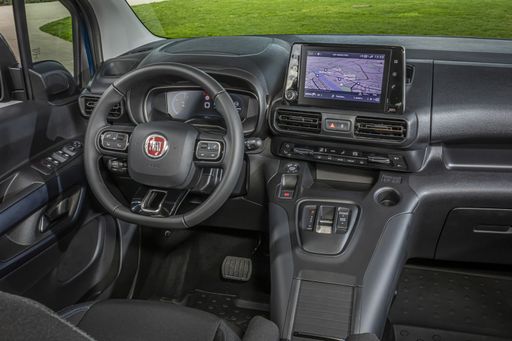
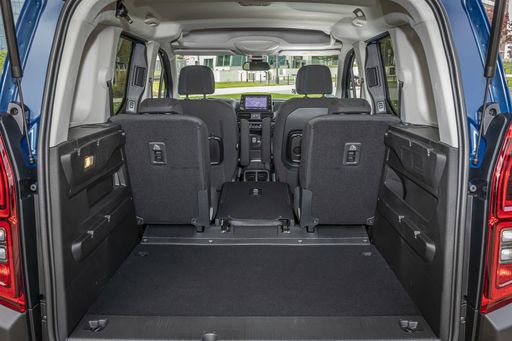
The Fiat Doblò Van is available in configurations with either 2 or 5 seats, catering to different passenger and cargo needs. It is designed to offer a practical, no-nonsense interior focused on utility.

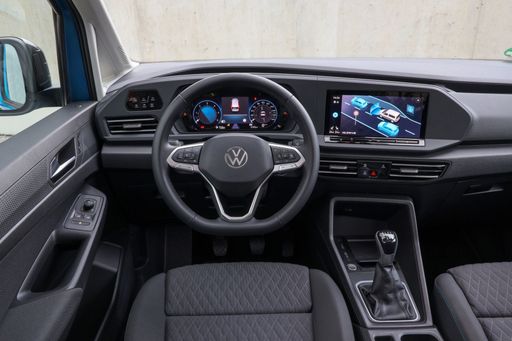
VW Caddy elevates the comfort level with options for 5 or 7 seats, accommodating larger groups without compromising on passenger space. The Caddy also emphasizes a more refined interior environment, making it suitable for family outings or executive transport.

Doblò Van

Environmentally Friendly Features

In terms of eco-friendliness, both vans hold their ground. The Fiat Doblò boasts a CO2 efficiency class from A to F, offering options that significantly reduce emissions. On the other hand, the VW Caddy presents a range of B to F, with its plugin hybrid model emitting as low as 11 g/km of CO2, setting a benchmark for sustainability in this segment.

Caddy

Conclusion

Choosing between the Fiat Doblò Van and the VW Caddy largely depends on specific needs and preferences. The Doblò offers exceptional versatility with its range of engine types and configurations, catering to those who prioritize practicality and choice. Meanwhile, the Caddy impresses with its additional features such as all-wheel drive and superior seating options, ideal for those seeking a blend of comfort and capability. Both vehicles are solid investments that continue to innovate and adapt to contemporary demands, ensuring they remain formidable contenders in the van market. Whether you lean towards Fiat's legacy of flexibility or VW's reputation for craftsmanship, both options promise reliability and modernity on the road.

Here’s where it gets real: The technical differences in detail

Caddy

Costs and Efficiency:

When it comes to price and running costs, the biggest differences usually appear. This is often where you see which car fits your budget better in the long run.

Fiat Doblò Van is clearly cheaper – starting at 21,300 £ , while the VW Caddy costs 27,800 £ . That’s a price difference of around 6,441 £.

Fuel consumption also shows a difference: the VW Caddy uses 0.5 L/100km and is clearly more efficient than the Fiat Doblò Van with 5.2 L/100km. The difference is about 4.7 L/100km.

As for electric range, the Fiat Doblò Van offers considerably more range – reaching up to 354 km, about 233 km more than the VW Caddy.

Doblò Van

Engine and Performance:

Power, torque and acceleration are the classic benchmarks for car enthusiasts – and here, some clear differences start to show.

When it comes to engine power, the VW Caddy offers only slightly more power – delivering 150 HP compared to 136 HP. That’s roughly 14 HP more horsepower.

There’s also a difference in torque: the VW Caddy delivers marginally more torque with 320 Nm compared to 300 Nm. That’s about 20 Nm more.

Caddy

Space and Everyday Use:

Whether family car or daily driver – which one offers more room, flexibility and comfort?

Seats: VW Caddy offers more seats – 7 vs 5.

In terms of curb weight, Fiat Doblò Van is moderately lighter – 1,329 kg compared to 1,575 kg. The difference is around 246 kg.

When it comes to payload, the Fiat Doblò Van carries markedly more – 991 kg compared to 710 kg. That’s a difference of about 281 kg.

Who wins the race in the data check?

The VW Caddy is decisively ahead in the objective data comparison.
This result only shows which model scores more points on paper – not which of the two cars feels right for you.

from £27,800
Caddy

VW Caddy

  • Engine Type : Petrol, Diesel, Plugin Hybrid
  • Transmission : Manuel, Automatic
  • Drive Type : Front-Wheel Drive, All-Wheel Drive
  • Power HP : 102 - 150 HP
  • Consumption L/100km : 0.5 - 6.9 L/100km
  • Electric Range : 116 - 121 km
VW Caddy
Fiat Doblò Van

Costs and Consumption

View detailed analysis

Engine and Performance

View detailed analysis

Dimensions and Body

View detailed analysis

VW Caddy

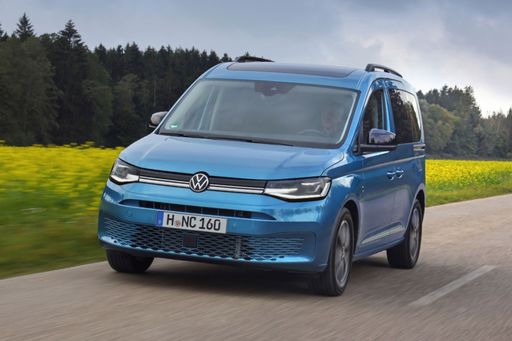
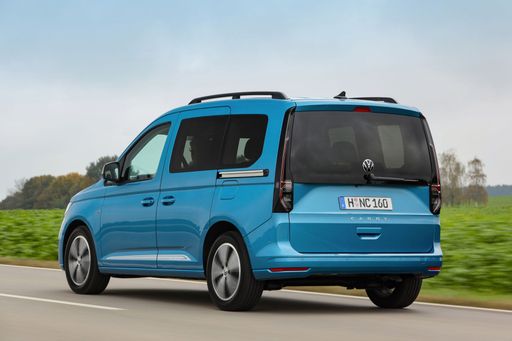
The VW Caddy is the Swiss-army knife of compact vans — practical, surprisingly refined, and ready to swap a weekend adventure for a grocery run without breaking a sweat. It’s user-friendly, comfortable enough for daily driving, and sensible for buyers who want utility with a dash of style and no drama.

details

Fiat Doblò Van

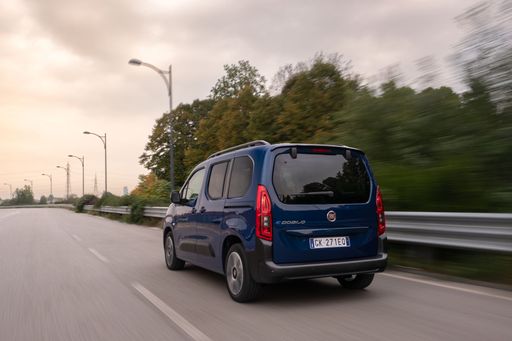
The Fiat Doblò is a no-nonsense workhorse that blends surprising cabin comfort with sensible practicality, turning long days on the road into something tolerable rather than torturous. Clever packaging and steady, uncomplicated manners make it a smart pick for small businesses and weekend warriors who want function without fuss.

details
VW Caddy
Fiat Doblò Van

Costs and Consumption

Price
27,800 - 45,900 £
Price
21,300 - 33,800 £
Consumption L/100km
0.5 - 6.9 L/100km
Consumption L/100km
5.2 - 6.3 L/100km
Consumption kWh/100km
-
Consumption kWh/100km
17.4 kWh/100km
Electric Range
116 - 121 km
Electric Range
354 km
Battery Capacity
19.7 kWh
Battery Capacity
-
co2
10 - 165 g/km
co2
0 - 143 g/km
Fuel tank capacity
50 L
Fuel tank capacity
-

Dimensions and Body

Body Type
High Roof Estate
Body Type
Cargo Van
Seats
5 - 7
Seats
2 - 5
Doors
5
Doors
-
Curb weight
1,575 - 1,998 kg
Curb weight
1,329 - 1,813 kg
Trunk capacity
-
Trunk capacity
-
Length
4,500 - 4,853 mm
Length
-
Width
1,855 mm
Width
1,848 mm
Height
1,819 - 1,860 mm
Height
-
Max trunk capacity
2,556 - 3,700 L
Max trunk capacity
-
Payload
501 - 710 kg
Payload
611 - 991 kg

Engine and Performance

Engine Type
Petrol, Diesel, Plugin Hybrid
Engine Type
Petrol, Diesel, Electric
Transmission
Manuel, Automatic
Transmission
Manuel, Automatic
Transmission Detail
Manual Gearbox, Dual-Clutch Automatic
Transmission Detail
Manual Gearbox, Automatic Gearbox, Reduction Gearbox
Drive Type
Front-Wheel Drive, All-Wheel Drive
Drive Type
Front-Wheel Drive
Power HP
102 - 150 HP
Power HP
102 - 136 HP
Acceleration 0-100km/h
11.4 - 14 s
Acceleration 0-100km/h
-
Max Speed
173 - 186 km/h
Max Speed
-
Torque
220 - 320 Nm
Torque
205 - 300 Nm
Number of Cylinders
4
Number of Cylinders
3 - 4
Power kW
75 - 110 kW
Power kW
75 - 100 kW
Engine capacity
1,498 - 1,968 cm3
Engine capacity
1,199 - 1,499 cm3

General

Model Year
2024
Model Year
2024
CO2 Efficiency Class
E, F, B
CO2 Efficiency Class
E, A
Brand
VW
Brand
Fiat
DriveDuel uses data analysis and artificial intelligence to evaluate vehicle data and create content. Content is regularly reviewed and improved. The displayed prices are estimates based on German list prices, adjusted to the respective country’s VAT. Country-specific registration taxes are not included. This information is not legally binding.