VS

VW Caddy vs Nissan Townstar comparison

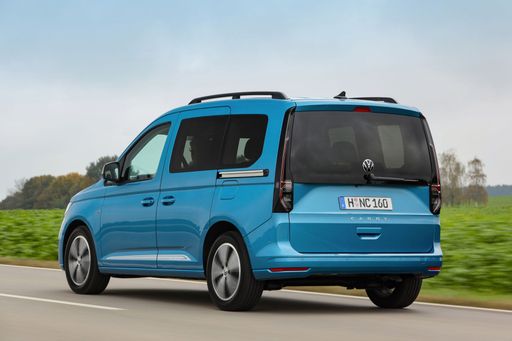
Compare performance (150 HP vs 130 HP), boot space and price (27,800 £ vs 25,700 £ ) at a glance. Find out which car is the better choice for you – VW Caddy or Nissan Townstar?

VW Caddy vs Nissan Townstar: Key differences

VW Caddy

  • a bit more power
  • considerably more efficient
  • somewhat quicker 0–100 km/h
details

Nissan Townstar

5 (1 Reviews)
rate
  • only slightly cheaper
  • considerably more electric range
  • marginally lighter
details

All details on performance, efficiency, range and trunk space can be found in the technical comparison below – including user reviews for both models.

By Achim Sedelmaier

Caddy

The Showdown: Nissan Townstar vs VW Caddy

When it comes to versatile high roof wagons, the Nissan Townstar and VW Caddy are among the top contenders. Both vehicles are loaded with features designed to meet the multifaceted needs of families and businesses alike. In this article, we dive into a detailed comparison of these two models, focusing on their technical aspects and innovations.
Townstar

Performance and Power

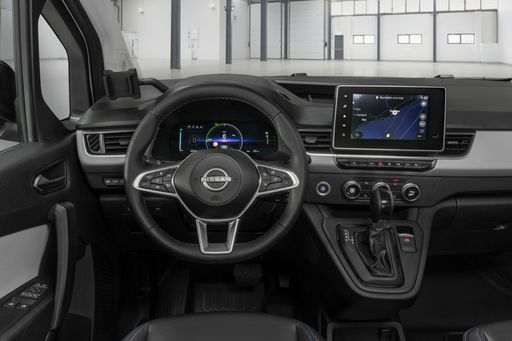
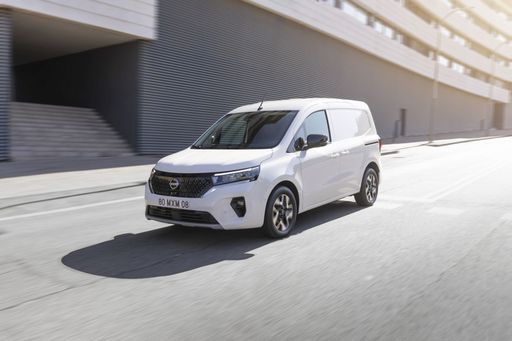
The Nissan Townstar offers multiple powertrain options, including an electric version with 122 HP and two petrol variants producing 130 HP. This provides a choice between sustainability and traditional internal combustion power. The electric version stands out with a 45 kWh battery and an impressive range of 285 km for those looking to minimize their carbon footprint.

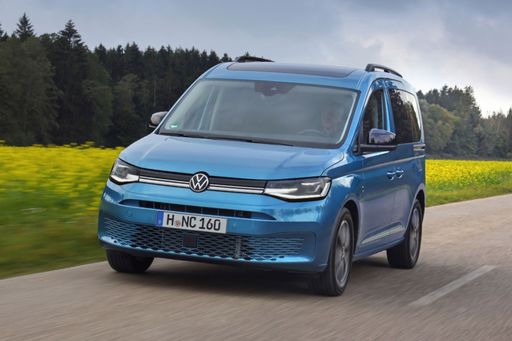
In contrast, the VW Caddy comes with a diverse selection of petrol, diesel, and plug-in hybrid engines, offering up to 150 HP. This makes it an excellent choice for drivers seeking flexibility between fuel types. Its hybrid model offers an electric range of up to 120 km, making it a viable choice for eco-conscious urban travel.

Caddy

Transmission and Drive Type

Both the Townstar and Caddy provide several transmission options. The Townstar features automatic, manual, and dual-clutch automatic transmissions, while the Caddy mirrors these offerings but adds a notable advantage with the availability of both front-wheel and all-wheel drive options, broadening its appeal to those who may face diverse driving conditions.

Townstar

Efficiency and Consumption

The Nissan Townstar’s electric edition boasts a consumption rate of 19.2 kWh/100 km and a CO2 efficiency class ranging from A to F for its non-electric models. Its petrol version consumes between 6.7 and 7 L/100 km, depending on the specific configuration.

The Caddy, with its broader range of engine options, sees fuel consumption figures between 5.3 and 6.9 L/100 km for its combustion engines. Its hybrid model is particularly efficient, offering a combined consumption of only 0.5 L/100 km when used primarily in electric mode, classified within efficiency classes E to B.

Caddy

Interior and Cargo Capacity

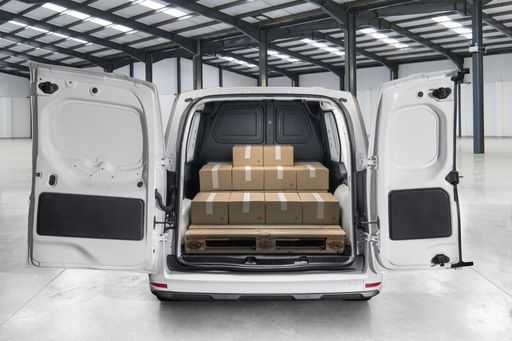
With both vehicles offering five doors, they provide easy access to spacious interiors designed to accommodate between five and seven passengers, as available in the Caddy. The Townstar provides a trunk capacity of up to 775 liters, slightly more than the Caddy’s maximum of 703 liters. This makes the Townstar particularly appealing for those who prioritize cargo space.

Townstar

Dimensions and Practicality

While the Townstar measures between 4488 mm and 4911 mm in length, the Caddy spans from 4500 mm to 4853 mm. Both have similar widths and heights, providing comparable space and headroom for passengers and cargo. Given its payload capacities range from 498 kg to 641 kg for the Townstar and 501 kg to 710 kg for the Caddy, the Caddy may serve better for those needing higher payloads.

Caddy

Conclusion: Which One for You?

The choice between the Nissan Townstar and VW Caddy ultimately hinges on individual needs. If maximizing cargo space and preferring an all-electric option are high on your checklist, the Townstar makes a compelling case. However, if a wider array of engine choices and the option for all-wheel drive are decisive factors, the Caddy might just edge out the competition. Regardless of choice, both vehicles deliver excellent value and flexibility, catering to the modern driver's needs.

Here’s where it gets real: The technical differences in detail

Caddy

Costs and Efficiency:

Price and efficiency are key factors when choosing a car – and this is often where the real differences emerge.

Nissan Townstar is only slightly cheaper – starting at 25,700 £ , while the VW Caddy costs 27,800 £ . That’s a price difference of around 2,054 £.

Fuel consumption also shows a difference: the VW Caddy uses 0.5 L/100km and is considerably more efficient than the Nissan Townstar with 6.7 L/100km. The difference is about 6.2 L/100km.

As for electric range, the Nissan Townstar offers considerably more range – reaching up to 281 km, about 160 km more than the VW Caddy.

Townstar

Engine and Performance:

Power, torque and acceleration are the classic benchmarks for car enthusiasts – and here, some clear differences start to show.

When it comes to engine power, the VW Caddy offers a bit more power – delivering 150 HP compared to 130 HP. That’s roughly 20 HP more horsepower.

When accelerating from 0 to 100 km/h, the VW Caddy is somewhat quicker – completing the sprint in 11.4 s, while the Nissan Townstar takes 12.6 s. That’s about 1.2 s quicker.

Looking at top speed, the VW Caddy is marginally faster – reaching 186 km/h, while the Nissan Townstar tops out at 183 km/h. The difference is around 3 km/h.

There’s also a difference in torque: the VW Caddy delivers noticeably more torque with 320 Nm compared to 245 Nm. That’s about 75 Nm more.

Caddy

Space and Everyday Use:

Beyond pure performance, interior space and usability matter most in daily life. This is where you see which car is more practical and versatile.

Both vehicles offer seating for 7 people.

In terms of curb weight, Nissan Townstar is marginally lighter – 1,509 kg compared to 1,575 kg. The difference is around 66 kg.

For maximum load capacity, the VW Caddy offers somewhat more capacity – up to 3,700 L, about 650 L more than the Nissan Townstar.

When it comes to payload, the VW Caddy carries only slightly more – 710 kg compared to 641 kg. That’s a difference of about 69 kg.

Who wins the race in the data check?

The VW Caddy is far ahead overall in the objective data comparison.
This result only shows which model scores more points on paper – not which of the two cars feels right for you.

from £27,800
Caddy

VW Caddy

  • Engine Type : Petrol, Diesel, Plugin Hybrid
  • Transmission : Manuel, Automatic
  • Drive Type : Front-Wheel Drive, All-Wheel Drive
  • Power HP : 102 - 150 HP
  • Consumption L/100km : 0.5 - 6.9 L/100km
  • Electric Range : 116 - 121 km
VW Caddy
Nissan Townstar

Costs and Consumption

View detailed analysis

Engine and Performance

View detailed analysis

Dimensions and Body

View detailed analysis

VW Caddy

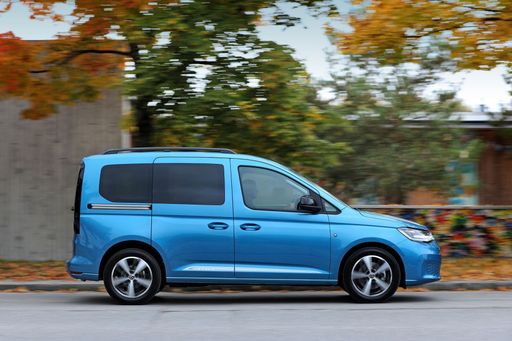
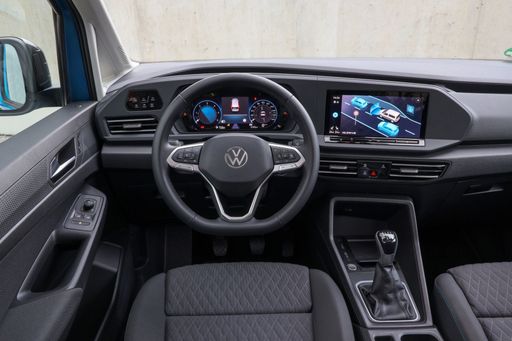
The VW Caddy is the Swiss-army knife of compact vans — practical, surprisingly refined, and ready to swap a weekend adventure for a grocery run without breaking a sweat. It’s user-friendly, comfortable enough for daily driving, and sensible for buyers who want utility with a dash of style and no drama.

details

Nissan Townstar

The Nissan Townstar is a pragmatic city companion that blends clever packaging with a calm, easygoing drive, making it ideal for urban errands and small-business hauls. It won't win any style contests, but its tidy interior, sensible features and no-nonsense character make it a genuinely useful buy for people who value practicality over pizzazz.

details
VW Caddy
Nissan Townstar

Costs and Consumption

Price
27,800 - 45,900 £
Price
25,700 - 37,700 £
Consumption L/100km
0.5 - 6.9 L/100km
Consumption L/100km
6.7 - 7 L/100km
Consumption kWh/100km
-
Consumption kWh/100km
19.3 - 20.7 kWh/100km
Electric Range
116 - 121 km
Electric Range
265 - 281 km
Battery Capacity
19.7 kWh
Battery Capacity
45 kWh
co2
10 - 165 g/km
co2
0 - 157 g/km
Fuel tank capacity
50 L
Fuel tank capacity
54 L

Dimensions and Body

Body Type
High Roof Estate
Body Type
High Roof Estate
Seats
5 - 7
Seats
5 - 7
Doors
5
Doors
5
Curb weight
1,575 - 1,998 kg
Curb weight
1,509 - 2,041 kg
Trunk capacity
-
Trunk capacity
0 - 775 L
Length
4,500 - 4,853 mm
Length
4,488 - 4,911 mm
Width
1,855 mm
Width
1,859 - 1,860 mm
Height
1,819 - 1,860 mm
Height
1,838 - 1,869 mm
Max trunk capacity
2,556 - 3,700 L
Max trunk capacity
2,800 - 3,050 L
Payload
501 - 710 kg
Payload
506 - 641 kg

Engine and Performance

Engine Type
Petrol, Diesel, Plugin Hybrid
Engine Type
Petrol, Electric
Transmission
Manuel, Automatic
Transmission
Manuel, Automatic
Transmission Detail
Manual Gearbox, Dual-Clutch Automatic
Transmission Detail
Manual Gearbox, Dual-Clutch Automatic, Reduction Gearbox
Drive Type
Front-Wheel Drive, All-Wheel Drive
Drive Type
Front-Wheel Drive
Power HP
102 - 150 HP
Power HP
122 - 130 HP
Acceleration 0-100km/h
11.4 - 14 s
Acceleration 0-100km/h
12.6 - 13.3 s
Max Speed
173 - 186 km/h
Max Speed
135 - 183 km/h
Torque
220 - 320 Nm
Torque
240 - 245 Nm
Number of Cylinders
4
Number of Cylinders
4
Power kW
75 - 110 kW
Power kW
90 - 96 kW
Engine capacity
1,498 - 1,968 cm3
Engine capacity
1,332 cm3

General

Model Year
2024
Model Year
2,023 - 2,025
CO2 Efficiency Class
E, F, B
CO2 Efficiency Class
E, F, A
Brand
VW
Brand
Nissan
DriveDuel uses data analysis and artificial intelligence to evaluate vehicle data and create content. Content is regularly reviewed and improved. The displayed prices are estimates based on German list prices, adjusted to the respective country’s VAT. Country-specific registration taxes are not included. This information is not legally binding.