
VS

VW Crafter vs Renault Master Bus comparison

Compare performance (177 HP vs 180 HP), boot space and price (47,100 £ vs 36,600 £ ) at a glance. Find out which car is the better choice for you – VW Crafter or Renault Master Bus?

VW Crafter vs Renault Master Bus: Key differences

VW Crafter

  • very slightly more efficient
  • only slightly lighter
details

Renault Master Bus

  • noticeably cheaper
  • marginally more power
details

By Achim Sedelmaier

Crafter

Renault Master Bus vs. VW Crafter: A Comprehensive Comparison

In the world of commercial vehicles, the Renault Master Bus and VW Crafter stand out as two of the most popular choices for businesses requiring reliable transport solutions. Both vehicles offer distinct features, technical specifications, and innovative aspects that cater to different needs. This article takes a closer look at these two giants, examining their performance, design, and innovative technologies.
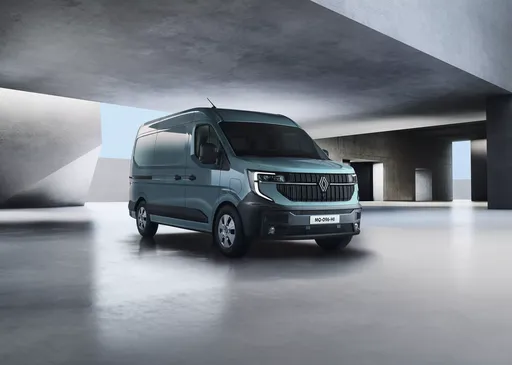
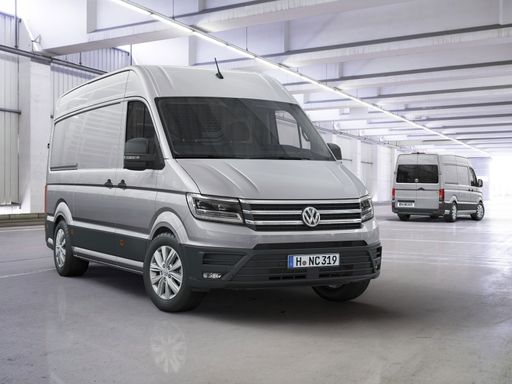
Master Bus

Engine and Performance: Power Meets Efficiency

The Renault Master Bus primarily offers a range of powerful diesel engines, presenting options with horsepower ratings of 135, 150, 165, and up to a robust 180 HP. This range ensures that operators can choose the level of power that best suits their operational demands. On the other hand, the VW Crafter features slightly less horsepower, with options of 140, 163, and 177 HP, yet provides exceptional driving experience and torque levels peaking at 410 Nm.

In terms of fuel efficiency, the Master Bus presents a consumption rate between 8.7 to 10.7 L/100km, depending on the engine variant, offering competitive running costs. The Crafter, however, excels in efficiency, achieving consumption as low as 8.4 L/100km. This makes the Crafter a more economical choice for businesses with intensive daily routes.

Transmission and Driving Experience

Both vehicles provide flexible transmission options, including manual and automatic systems. The Renault Master Bus features a manual gearbox and an automated manual transmission, allowing drivers to select their preferred driving style. The VW Crafter, with its Schaltgetriebe and Automatikgetriebe, also offers superb flexibility, enhancing the overall driving experience.

When it comes to drive types, the Crafter boasts a more varied selection including rear-wheel drive, front-wheel drive, and even all-wheel drive, accommodating diverse operational needs – from urban deliveries to off-road capabilities. In contrast, the Master Bus is solely front-wheel drive, which offers good traction and handling in most conditions but lacks the versatility present in the Crafter.

Dimensions and Cargo Capacity

Dimensionally, the Renault Master Bus offers a moderate length ranging from 5075 mm to 5575 mm and a height of up to 2486 mm, comfortably accommodating between 6 and 9 seats. Meanwhile, the VW Crafter stands larger, measuring up to 7391 mm in length and 2830 mm in height, but typically offers only 2 seats as it is designed more as a cargo van than a passenger bus.

Payload capacity is another key element in the comparison. The Master Bus supports payloads of up to 1254 kg, while the Crafter has a significantly higher maximum payload, reaching as much as 2994 kg. This makes the Crafter a more suitable choice for businesses that rely on larger cargo loads.

Technological Innovations: Features That Stand Out

Both vehicles are equipped with a host of technological features that enhance safety and driving comfort. The Renault Master Bus comes with modern safety systems, including advanced braking aids and stability controls, ensuring a secure ride under various conditions.

On the innovation front, the VW Crafter has taken significant strides with its array of driver assistance systems, including adaptive cruise control, lane assist, and parking sensors. These modern features serve to improve overall driver convenience and enhance safety levels during transit.

Conclusion: Choosing the Right Vehicle for Your Needs

In the comparison between the Renault Master Bus and VW Crafter, the choice ultimately comes down to specific business needs. The Master Bus is ideal for those seeking a reliable passenger transport solution, combining adequate power and a comfortable ride. However, for businesses focused on cargo transport and requiring exceptional payload capabilities combined with advanced technology, the VW Crafter stands out as the more practical option.

Each vehicle brings its own unique strengths to the table, making both worthy contenders in the commercial vehicle market. By understanding the specifications and innovations of each, businesses can make a more informed decision tailored to their operational requirements.

Here’s where it gets real: The technical differences in detail

Crafter

Costs and Efficiency:

Price and efficiency are often the first things buyers look at. Here it becomes clear which model has the long-term edge – whether at the pump, the plug, or in purchase price.

Renault Master Bus is noticeably cheaper – starting at 36,600 £ , while the VW Crafter costs 47,100 £ . That’s a price difference of around 10,537 £.

Fuel consumption also shows a difference: the VW Crafter uses 8.4 L/100km and is very slightly more efficient than the Renault Master Bus with 8.7 L/100km. The difference is about 0.3 L/100km.

Master Bus

Engine and Performance:

Under the bonnet, it becomes clear which model is tuned for sportiness and which one takes the lead when you hit the accelerator.

When it comes to engine power, the Renault Master Bus offers marginally more power – delivering 180 HP compared to 177 HP. That’s roughly 3 HP more horsepower.

There’s no difference in top speed – both reach 165 km/h.

There’s also a difference in torque: the VW Crafter delivers only slightly more torque with 410 Nm compared to 400 Nm. That’s about 10 Nm more.

Space and Everyday Use:

Whether family car or daily driver – which one offers more room, flexibility and comfort?

Seats: Renault Master Bus offers more seats – 9 vs 2.

In terms of curb weight, VW Crafter is only slightly lighter – 2,072 kg compared to 2,189 kg. The difference is around 117 kg.

For maximum load capacity, the VW Crafter offers considerably more capacity – up to 18,400 L, about 13,560 L more than the Renault Master Bus.

When it comes to payload, the VW Crafter carries clearly more – 2,994 kg compared to 1,254 kg. That’s a difference of about 1,740 kg.

Who wins the race in the data check?

The Renault Master Bus is narrowly ahead in the objective data comparison.
This result only shows which model scores more points on paper – not which of the two cars feels right for you.

from £36,600
Master Bus

Renault Master Bus

  • Engine Type : Diesel
  • Transmission : Manuel, Automatic
  • Drive Type : Front-Wheel Drive
  • Power HP : 135 - 180 HP
  • Consumption L/100km : 8.7 - 10.7 L/100km
VW Crafter
Renault Master Bus

Costs and Consumption

View detailed analysis

Engine and Performance

View detailed analysis

Dimensions and Body

View detailed analysis

VW Crafter

The VW Crafter is a no-nonsense workhorse that makes hauling and running a mobile business feel almost civilized, with a cabin built for long days and smart storage where you need it. It may not turn heads for glamour, but its sturdy build, straightforward tech and reliable manners mean fewer headaches for owners — a van that prefers to earn your trust rather than demand attention.

details

Renault Master Bus

The Renault Master Bus is a no-nonsense people carrier that trades flash for practicality, offering generous space for passengers and luggage with a sensible, robust feel. It’s a smart pick for buyers who want comfort and reliability over glamour — think dependable transport with a dash of French charm and a wry smile.

details
VW Crafter
Renault Master Bus

Costs and Consumption

Price
47,100 - 68,800 £
Price
36,600 - 43,200 £
Consumption L/100km
8.4 - 13.1 L/100km
Consumption L/100km
8.7 - 10.7 L/100km
Consumption kWh/100km
-
Consumption kWh/100km
-
Electric Range
-
Electric Range
-
Battery Capacity
-
Battery Capacity
-
co2
220 - 342 g/km
co2
227 - 280 g/km
Fuel tank capacity
75 L
Fuel tank capacity
105 L

Dimensions and Body

Body Type
Cargo Van
Body Type
Bus
Seats
2
Seats
6 - 9
Doors
4
Doors
4
Curb weight
2,072 - 2,810 kg
Curb weight
2,189 - 2,361 kg
Trunk capacity
-
Trunk capacity
-
Length
5,986 - 7,391 mm
Length
5,075 - 5,575 mm
Width
2,040 - 2,069 mm
Width
2,070 mm
Height
2,355 - 2,830 mm
Height
2,290 - 2,486 mm
Max trunk capacity
9,300 - 18,400 L
Max trunk capacity
2,840 - 4,840 L
Payload
1,037 - 2,994 kg
Payload
939 - 1,254 kg

Engine and Performance

Engine Type
Diesel
Engine Type
Diesel
Transmission
Manuel, Automatic
Transmission
Manuel, Automatic
Transmission Detail
Manual Gearbox, Automatic Gearbox
Transmission Detail
Manual Gearbox, Automated Manual
Drive Type
Rear-Wheel Drive, Front-Wheel Drive, All-Wheel Drive
Drive Type
Front-Wheel Drive
Power HP
140 - 177 HP
Power HP
135 - 180 HP
Acceleration 0-100km/h
-
Acceleration 0-100km/h
-
Max Speed
90 - 165 km/h
Max Speed
150 - 165 km/h
Torque
360 - 410 Nm
Torque
360 - 400 Nm
Number of Cylinders
4
Number of Cylinders
4
Power kW
103 - 130 kW
Power kW
99 - 132 kW
Engine capacity
1,968 cm3
Engine capacity
2,299 cm3

General

Model Year
2,017 - 2,023
Model Year
2023
CO2 Efficiency Class
G
CO2 Efficiency Class
G
Brand
VW
Brand
Renault
DriveDuel uses data analysis and artificial intelligence to evaluate vehicle data and create content. Content is regularly reviewed and improved. The displayed prices are estimates based on German list prices, adjusted to the respective country’s VAT. Country-specific registration taxes are not included. This information is not legally binding.








