VS

VW Grand California vs Ford Transit Bus comparison

Compare performance (163 HP vs 150 HP), boot space and price (70,200 £ vs 50,500 £ ) at a glance. Find out which car is the better choice for you – VW Grand California or Ford Transit Bus?

VW Grand California vs Ford Transit Bus: Key differences

VW Grand California

  • only slightly more power
details

Ford Transit Bus

  • clearly cheaper
  • noticeably lighter
details

By Achim Sedelmaier

Grand California

Ford Transit Bus vs VW Grand California: A Battle of Versatile Vans

When it comes to choosing a reliable, versatile van for both transporting passengers and tackling long road trips, the Ford Transit Bus and the VW Grand California often come to mind. Each offers unique features catering to different needs and preferences. In this comparison, we explore the technical aspects and innovations of these two contenders to help you decide which one suits your lifestyle best.
Transit Bus

Under the Hood: Power and Performance

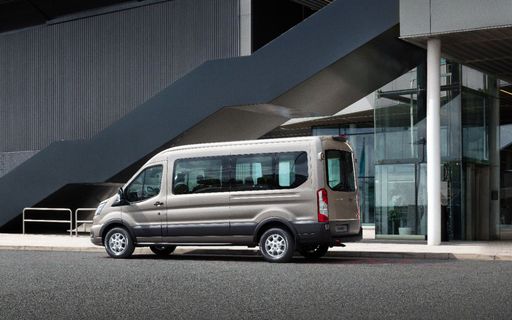
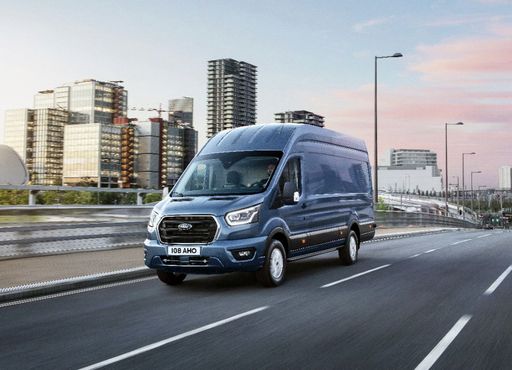
The Ford Transit Bus makes a strong impression with its robust diesel engine options, offering power outputs of 130 HP and 150 HP (96 kW and 110 kW). With a torque of up to 390 Nm and a curb weight ranging from 2311 to 2385 kg, this front-wheel-drive van is engineered to deliver solid performance on various terrains.

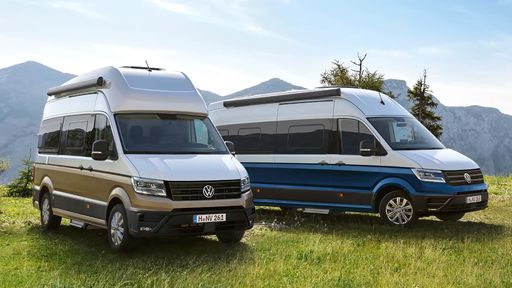
In contrast, the VW Grand California steps up with a slightly more potent 163 HP (120 kW) diesel engine. It provides the added flexibility of front-wheel drive and optional all-wheel drive. Although heavier, with curb weights starting at 3052 kg, the Grand California compensates with enhanced traction and stability, particularly advantageous for adventurous trips.

Fuel Efficiency and Capacity

On the fuel efficiency front, the Ford Transit Bus maintains a moderate average consumption of around 9.4 to 9.5 L/100km. Its fuel tank capacity sits at 70 liters, allowing for decent range between fill-ups.

Meanwhile, VW's Grand California offers a slightly larger fuel tank at 75 liters. While specific consumption figures aren't provided, VW's diesel engines are generally respected for efficiency, hinting at fewer stops during long hauls.

Interior Comfort and Space

The Ford Transit Bus is designed with practicality in mind, accommodating up to nine passengers. Despite its larger passenger capacity, the Transit Bus maintains a compact, maneuverable frame, with lengths between 5531 mm and 5981 mm, making it a versatile option for urban environments.

Conversely, the VW Grand California focuses more on leisure travel. With seating for four, its interior is crafted for comfort, featuring amenities that transform the van into a mobile living space, perfect for road trips and camping. Its longer body, ranging from 5986 mm to 6836 mm, and heights up to 2971 mm mean it may require strategic planning for city parking, yet it excels in offering a spacious traveling haven.

Payload and Versatility

Ford's Transit Bus shines with a robust payload capacity, able to handle between 789 kg and 1162 kg. This advantageous feature makes it ideal for transporting equipment or as a shuttle van.

In comparison, the Grand California offers a lower payload capacity, topping out at 448 kg. However, its strength lies in its innovative use of space for recreational purposes, including integrated camping features, thus appealing more to leisure seekers than commercial users.

Conclusion: Choosing Your Champion

In the end, your choice between the Ford Transit Bus and the VW Grand California will largely depend on your specific needs. If you're looking for a practical workhorse capable of ferrying multiple passengers efficiently, the Ford Transit Bus stands as a reliable choice. On the other hand, for wanderers seeking adventure and comfort on the open road, the VW Grand California offers an attractive blend of livability and performance. Each brings its own set of strengths, ensuring that either van would be a valuable companion in its own right.

Here’s where it gets real: The technical differences in detail

Grand California

Costs and Efficiency:

Price and efficiency are often the first things buyers look at. Here it becomes clear which model has the long-term edge – whether at the pump, the plug, or in purchase price.

Ford Transit Bus is clearly cheaper – starting at 50,500 £ , while the VW Grand California costs 70,200 £ . That’s a price difference of around 19,736 £.

Transit Bus

Engine and Performance:

Power, torque and acceleration are the classic benchmarks for car enthusiasts – and here, some clear differences start to show.

When it comes to engine power, the VW Grand California offers only slightly more power – delivering 163 HP compared to 150 HP. That’s roughly 13 HP more horsepower.

Space and Everyday Use:

Beyond pure performance, interior space and usability matter most in daily life. This is where you see which car is more practical and versatile.

Seats: Ford Transit Bus offers more seats – 9 vs 4.

In terms of curb weight, Ford Transit Bus is noticeably lighter – 2,338 kg compared to 3,052 kg. The difference is around 714 kg.

Boot capacity is identical – both offer 0 L of storage.

When it comes to payload, the Ford Transit Bus carries clearly more – 1,162 kg compared to 448 kg. That’s a difference of about 714 kg.

Who wins the race in the data check?

The Ford Transit Bus is far ahead overall in the objective data comparison.
This result only shows which model scores more points on paper – not which of the two cars feels right for you.

from £50,500
Transit Bus

Ford Transit Bus

  • Engine Type Diesel
  • Transmission Automatic
  • Drive Type Front-Wheel Drive
  • Power HP 130 - 150 HP
  • Consumption L/100km 9.4 - 9.5 L/100km
VW Grand California
Ford Transit Bus

Costs and Consumption

View detailed analysis

Engine and Performance

View detailed analysis

Dimensions and Body

View detailed analysis

VW Grand California

The Grand California is Volkswagen's remarkable take on the camper van, blending practicality with comfort for the ultimate road trip experience. With ample space for both living and storage, it's designed for adventure seekers who don't want to compromise on amenities. Whether you're exploring coastal roads or setting up camp in the mountains, the Grand California offers a perfect home away from home.

details

Ford Transit Bus

The Ford Transit is the reliable people-mover operators turn to when they need space, stamina and sensible running costs without fuss. It doesn't try to be glamorous, but its practical interior, flexible layouts and honest character make it a smart, stress-free choice for shuttle services and group transport.

details
VW Grand California
Ford Transit Bus

Costs and Consumption

Price
70,200 - 77,900 £
Price
50,500 - 52,900 £
Consumption L/100km
-
Consumption L/100km
9.4 - 9.5 L/100km
Consumption kWh/100km
-
Consumption kWh/100km
-
Electric Range
-
Electric Range
-
Battery Capacity
-
Battery Capacity
-
co2
-
co2
245 - 248 g/km
Fuel tank capacity
75 L
Fuel tank capacity
70 L

Dimensions and Body

Body Type
Bus
Body Type
Bus
Seats
4
Seats
9
Doors
4
Doors
4
Curb weight
3,052 - 3,354 kg
Curb weight
2,338 - 2,385 kg
Trunk capacity
0 L
Trunk capacity
0 L
Length
5,986 - 6,836 mm
Length
5,531 - 5,981 mm
Width
2,040 mm
Width
2,059 mm
Height
2,839 - 2,971 mm
Height
2,530 - 2,533 mm
Max trunk capacity
-
Max trunk capacity
-
Payload
146 - 448 kg
Payload
1,115 - 1,162 kg

Engine and Performance

Engine Type
Diesel
Engine Type
Diesel
Transmission
Automatic
Transmission
Automatic
Transmission Detail
Automatic Gearbox
Transmission Detail
Automatic Gearbox
Drive Type
Front-Wheel Drive, All-Wheel Drive
Drive Type
Front-Wheel Drive
Power HP
163 HP
Power HP
130 - 150 HP
Acceleration 0-100km/h
-
Acceleration 0-100km/h
-
Max Speed
-
Max Speed
-
Torque
-
Torque
360 - 390 Nm
Number of Cylinders
4
Number of Cylinders
4
Power kW
120 kW
Power kW
96 - 110 kW
Engine capacity
1,968 cm3
Engine capacity
1,996 cm3

General

Model Year
2024
Model Year
2024
CO2 Efficiency Class
-
CO2 Efficiency Class
G
Brand
VW
Brand
Ford
DriveDuel uses data analysis and artificial intelligence to evaluate vehicle data and create content. Content is regularly reviewed and improved. The displayed prices are estimates based on German list prices, adjusted to the respective country’s VAT. Country-specific registration taxes are not included. This information is not legally binding.