VS

VW Polo vs Mazda 2 comparison

Compare performance (207 HP vs 115 HP), boot space and price (17,300 £ vs 14,200 £ ) at a glance. Find out which car is the better choice for you – VW Polo or Mazda 2?

VW Polo vs Mazda 2: Key differences

VW Polo

4.2 (4 Reviews)
rate
  • considerably more power
  • markedly quicker 0–100 km/h
  • noticeably more trunk space
details

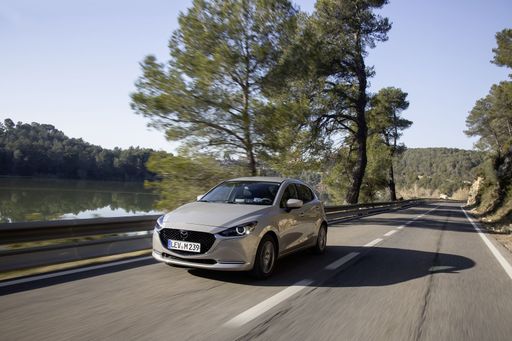
Mazda 2

3.7 (1 Reviews)
rate
  • markedly cheaper
  • marginally more efficient
  • only slightly lighter
details

All details on performance, efficiency, range and trunk space can be found in the technical comparison below – including user reviews for both models.

By Achim Sedelmaier

Polo

Quick take: Mazda 2 and VW Polo in one glance

Mazda 2 and VW Polo sit on the shortlist for anyone wanting a small, sensible European hatch — and they approach that brief very differently. The matchup of Mazda 2 VS VW Polo is really about trade-offs: a light, driver-focused Mazda that rewards manual control versus a Polo that trades a bit of sparkle for composure and space. Mazda 2 feels more analog and economical in everyday use, while the VW Polo aims for a quieter, more grown-up experience. For buyers the question is simple: do you value sparing running costs and nimble steering, or do you prefer more room, refinement and a sturdier long‑distance companion?
2

Driving character and on-road behavior

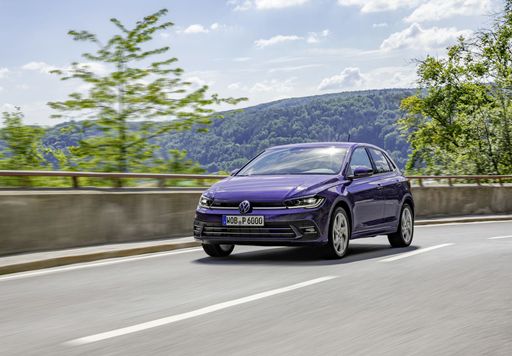
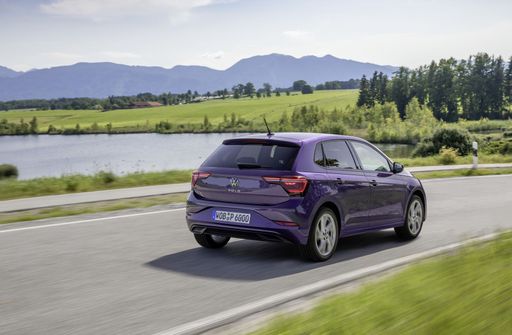
On twisty B‑roads the Mazda 2 comes alive with its light weight and a crisp manual gearbox that invites short, enthusiastic shifts, making traffic and country lanes engaging. The VW Polo, by contrast, is more relaxed and composed: a stronger engine and greater torque make overtaking and motorway cruising feel effortless and less demanding. That calmness in the Polo reduces driver workload on long trips, but it also makes the Polo less playful than the Mazda 2 for someone who enjoys hustling through corners. Choosing between them means deciding whether you want a car that rewards sporty input (Mazda 2) or one that buffers you from it with steady power delivery (Polo).

Polo

Comfort and cabin feel on longer runs

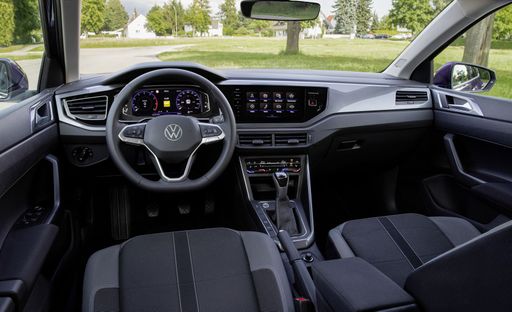
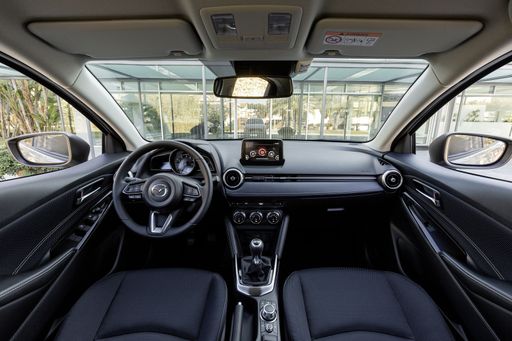
The Polo builds a noticeably more mature cabin atmosphere with softer surfaces and better noise insulation, so long motorway stretches are easier on the ears and the back. The Mazda 2 offers a tidy, driver-centric cockpit that feels well put together up front, yet its firmer suspension and earlier wind/road noise become more obvious on extended journeys. If you frequently do motorway miles, the Polo’s refinement will feel like a real advantage; if your trips are short, the Mazda 2’s supportive seating and direct controls will feel more immediate. Both interiors are cleanly executed, but the Polo leans into premium calm while the Mazda 2 doubles down on engagement and simplicity.

2

City friendliness, parking and everyday usability

For urban drivers the Mazda 2’s compact footprint and quick steering make it the easier car to place in tight spaces and navigate narrow streets, delivering a more playful and confidence‑boosting city experience. The VW Polo remains easy to drive in town too, with comfortable steering and good visibility, but it feels a touch larger and heavier when threading through tight spots. Visibility quirks differ: Mazda 2’s slim rear glazing and A‑pillars can make close parking more nerve‑wracking without camera/sensors, whereas the Polo’s proportions and rear glass give a clearer view. In short, Mazda 2 is the sharper city scalpel; Polo is the steadier, more reassuring urban companion.

Polo

Practicality, infotainment and everyday chores

The Polo takes the lead where space and luggage matter — its rear seats and boot are more accommodating, so small families or anyone who hauls a buggy or regular shopping will notice the difference. The Mazda 2’s boot is smaller and the loading lip higher, which turns bulky items into a small struggle, and the rear seats are visibly tighter for adults. Infotainment is another split: Mazda 2 keeps things simpler and more tactile up front, while the Polo offers a more modern screen-first layout that can be handy but sometimes demands more attention to operate. Those who prize pure usability and rear space will lean Polo; those who prefer straightforward controls and low running costs will lean Mazda 2.

2

Who should pick which car — clear buyer fit

If you’re a city commuter or a driver who enjoys a hands‑on feel and wants low running costs, the Mazda 2 is the smarter, more economical choice and it rewards manual drivers with a lively small‑car character. If your priority is comfortable long-distance driving, rear-seat practicality for kids or a cabin that masks road noise, the VW Polo fits better despite a higher purchase price and more complex option menus. Both make sense for sensible hatch buyers, but the decision boils down to lifestyle: Mazda 2 for thrift and engagement, Polo for space and serenity. The technical comparison below will map those subjective differences to engines, boot volumes and equipment so you can match figures to real‑world needs.

Here’s where it gets real: The technical differences in detail

Polo

Costs and Efficiency:

Price and efficiency are often the first things buyers look at. Here it becomes clear which model has the long-term edge – whether at the pump, the plug, or in purchase price.

Mazda 2 is markedly cheaper – starting at 14,200 £ , while the VW Polo costs 17,300 £ . That’s a price difference of around 3,038 £.

Fuel consumption also shows a difference: the Mazda 2 uses 4.7 L/100km and is marginally more efficient than the VW Polo with 5.1 L/100km. The difference is about 0.4 L/100km.

2

Engine and Performance:

Under the bonnet, it becomes clear which model is tuned for sportiness and which one takes the lead when you hit the accelerator.

When it comes to engine power, the VW Polo offers considerably more power – delivering 207 HP compared to 115 HP. That’s roughly 92 HP more horsepower.

When accelerating from 0 to 100 km/h, the VW Polo is markedly quicker – completing the sprint in 6.5 s, while the Mazda 2 takes 9.1 s. That’s about 2.6 s quicker.

There’s also a difference in torque: the VW Polo delivers substantially more torque with 320 Nm compared to 151 Nm. That’s about 169 Nm more.

Polo

Space and Everyday Use:

Beyond pure performance, interior space and usability matter most in daily life. This is where you see which car is more practical and versatile.

Both vehicles offer seating for 5 people.

In terms of curb weight, Mazda 2 is only slightly lighter – 1,099 kg compared to 1,143 kg. The difference is around 44 kg.

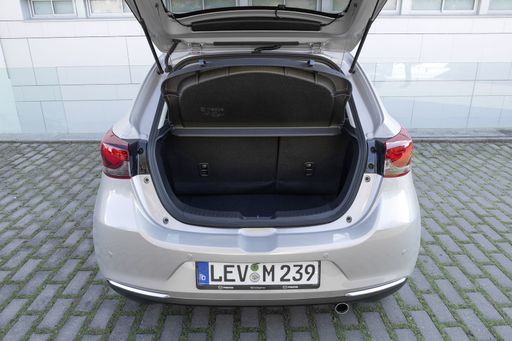
Looking at boot space, the VW Polo offers noticeably more boot space – 351 L compared to 280 L. That’s a difference of about 71 L.

When it comes to payload, the VW Polo carries marginally more – 457 kg compared to 437 kg. That’s a difference of about 20 kg.

Who wins the race in the data check?

The VW Polo is decisively ahead in the objective data comparison.
This result only shows which model scores more points on paper – not which of the two cars feels right for you.

from £17,300
Polo

VW Polo

  • Engine Type Petrol
  • Transmission Manuel, Automatic
  • Drive Type Front-Wheel Drive
  • Power HP 80 - 207 HP
  • Consumption L/100km 5.1 - 6.5 L/100km
VW Polo
Mazda 2

Costs and Consumption

View detailed analysis

Engine and Performance

View detailed analysis

Dimensions and Body

View detailed analysis

VW Polo

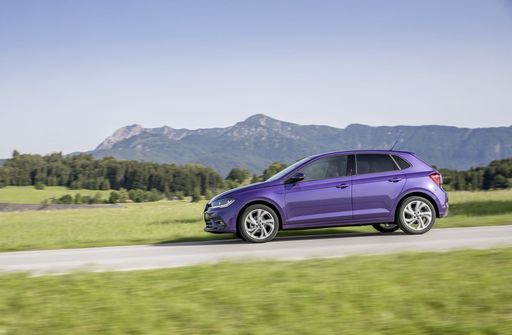
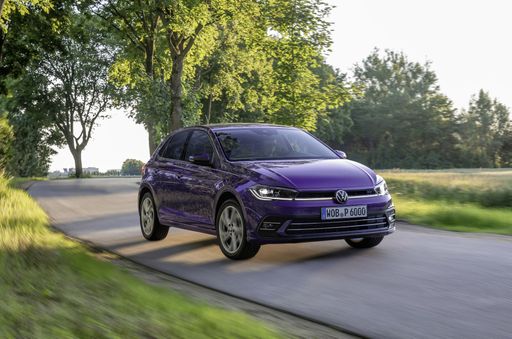
The Polo is a well-built, comfortable hatchback that blends a refined cabin and composed manners into a compact package. It's easy to live with day to day, offering sensible space, tidy controls and reassuring quality that make it a practical choice for city or longer trips.

details

Mazda 2

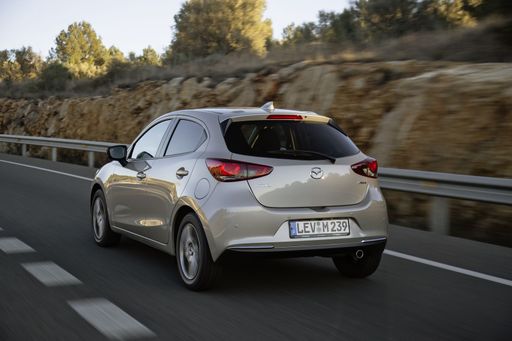
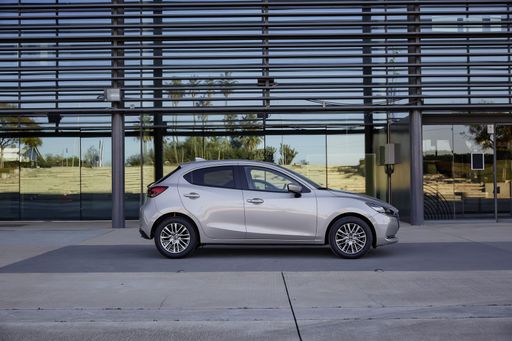
The Mazda 2 is a pocket-sized charmer that makes city driving feel light and lively, wrapped in sleek styling that looks right at home on trendy streets. Buyers who want an economical, fun-to-drive hatch with surprisingly grown-up cabin quality will find it hard to resist — it’s the kind of everyday companion that puts a grin on your face every time you head out.

details
VW Polo
Mazda 2

Costs and Consumption

Price
17,300 - 30,800 £
Price
14,200 - 21,700 £
Consumption L/100km
5.1 - 6.5 L/100km
Consumption L/100km
4.7 - 5.4 L/100km
Consumption kWh/100km
-
Consumption kWh/100km
-
Electric Range
-
Electric Range
-
Battery Capacity
-
Battery Capacity
-
co2
116 - 148 g/km
co2
107 - 122 g/km
Fuel tank capacity
-
Fuel tank capacity
44 L

Dimensions and Body

Body Type
Hatchback
Body Type
Hatchback
Seats
5
Seats
5
Doors
-
Doors
5
Curb weight
1,143 - 1,378 kg
Curb weight
1,099 - 1,120 kg
Trunk capacity
351 L
Trunk capacity
280 L
Length
-
Length
4,080 mm
Width
1,751 mm
Width
1,695 mm
Height
-
Height
1,515 mm
Max trunk capacity
-
Max trunk capacity
950 L
Payload
432 - 457 kg
Payload
420 - 437 kg

Engine and Performance

Engine Type
Petrol
Engine Type
Petrol MHEV, Petrol
Transmission
Manuel, Automatic
Transmission
Manuel, Automatic
Transmission Detail
Manual Gearbox, Dual-Clutch Automatic
Transmission Detail
Manual Gearbox, Automatic Gearbox
Drive Type
Front-Wheel Drive
Drive Type
Front-Wheel Drive
Power HP
80 - 207 HP
Power HP
75 - 115 HP
Acceleration 0-100km/h
6.5 - 15.6 s
Acceleration 0-100km/h
9.1 - 12.1 s
Max Speed
-
Max Speed
171 - 200 km/h
Torque
93 - 320 Nm
Torque
143 - 151 Nm
Number of Cylinders
3 - 4
Number of Cylinders
4
Power kW
59 - 152 kW
Power kW
55 - 85 kW
Engine capacity
999 - 1,984 cm3
Engine capacity
1,496 cm3

General

Model Year
2,024 - 2,025
Model Year
2023
CO2 Efficiency Class
D, E
CO2 Efficiency Class
C, D
Brand
VW
Brand
Mazda
DriveDuel uses data analysis and artificial intelligence to evaluate vehicle data and create content. Content is regularly reviewed and improved. The displayed prices are estimates based on German list prices, adjusted to the respective country’s VAT. Country-specific registration taxes are not included. This information is not legally binding.