VS

VW Tiguan vs Renault Rafale comparison

Compare performance (272 HP vs 300 HP), boot space and price (33,600 £ vs 37,700 £ ) at a glance. Find out which car is the better choice for you – VW Tiguan or Renault Rafale?

VW Tiguan vs Renault Rafale: Key differences

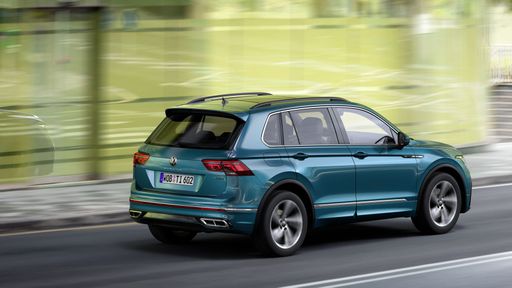
VW Tiguan

4.1 (9 Reviews)
rate
  • somewhat cheaper
  • clearly more efficient
  • clearly more electric range
  • very slightly quicker 0–100 km/h
  • only slightly lighter
  • very slightly more trunk space
details

Renault Rafale

4.9 (8 Reviews)
rate
  • only slightly more power
details

All details on performance, efficiency, range and trunk space can be found in the technical comparison below – including user reviews for both models.

By Achim Sedelmaier

Tiguan

Renault Rafale vs. VW Tiguan: A Comprehensive Comparison

The SUV segment is highly competitive, with many models vying for the top spot in the hearts of consumers. In this article, we’ll explore the Renault Rafale and the VW Tiguan, two distinct contenders that have captured significant attention for their blend of technology, efficiency, and performance. While both vehicles aim to cater to a modern audience, they approach engineering and innovation from different angles.
Rafale

Powertrain and Performance

The Renault Rafale boasts an impressive lineup of hybrid engines, including both full hybrid and plug-in hybrid options, with power outputs of 200 HP and 300 HP respectively. It features a front-wheel drive system and comes equipped with an automatic gearbox, ensuring smooth transitions and an enjoyable driving experience. One of its key highlights is the remarkable fuel consumption, at just 4.7 L/100 km, alongside a CO2 output of only 106 g/km.

On the other hand, the VW Tiguan offers a broader selection of engines, including petrol, diesel, and hybrid options. Power outputs range from 130 HP up to a whopping 272 HP, catering to a diverse range of drivers. Unlike the Rafale, the Tiguan features both front-wheel drive and all-wheel drive configurations, enhancing its versatility. The Tiguan's consumption rates vary but generally hover around 6.1 L/100 km for petrol variants.

Tiguan

Electric and Hybrid Capabilities

An intriguing detail of the Rafale is its electric range, which extends up to 97 km when utilizing the hybrid modes, coupled with a seamless transition between electric and combustion power. This makes it a great choice for urban commutes and short trips without relying on fuel.

The Tiguan, however, defines modern hybrid capability with an electric range of up to 113 km on its plug-in hybrid models. With a battery capacity of 19.7 kWh and comprehensive driving options, the Tiguan provides flexibility for drivers who seek an eco-friendlier option without sacrificing performance.

Rafale

Design and Interior Comfort

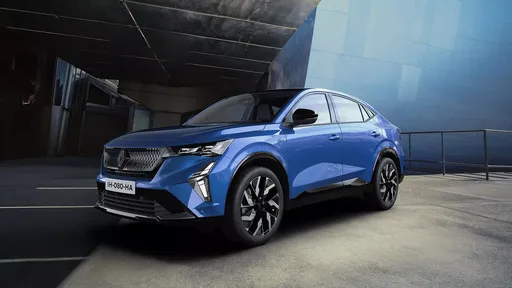
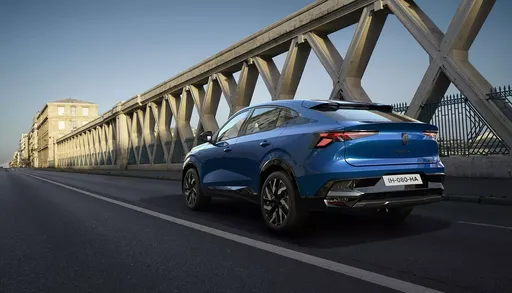
When it comes to design, both SUVs present unique aesthetics and functionalities. The Renault Rafale stands at 4710 mm in length, with a width of 1886 mm and a height of 1613 mm. Its bold silhouette and contemporary styling make it an eye-catcher on the road. Inside, it comfortably accommodates five passengers and offers a notable trunk capacity of 627 liters, which can be a strong selling point for families or those needing extra cargo space.

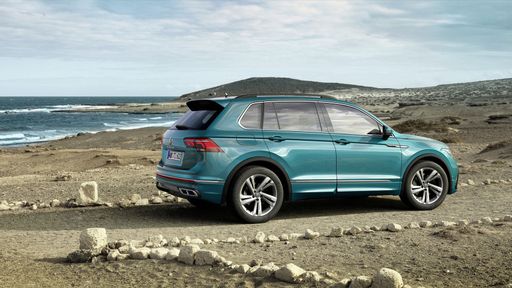
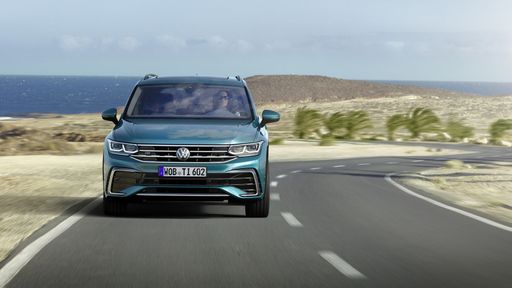
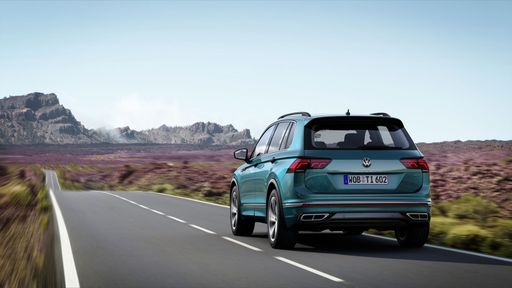
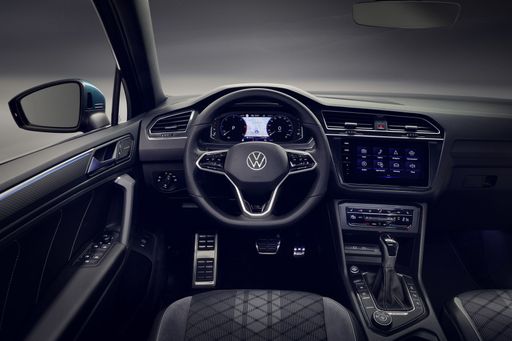
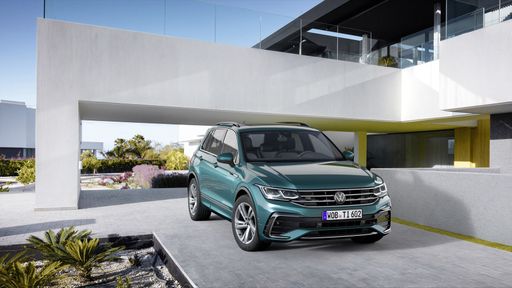
In contrast, the VW Tiguan has slightly more compact dimensions, measuring 4539 mm long, 1842 mm wide, and 1658 mm high. Nonetheless, it doesn’t compromise on interior space, offering a trunk capacity of 652 liters. The interior design focuses on sophistication and practicality, akin to many VW models, and the quality of materials used stands out in its class.

Tiguan

Driving Experience and Technology

Acceleration is another noteworthy aspect of consideration. The Rafale accelerates from 0 to 100 km/h in just 8.9 seconds for the hybrid model, while the more potent variant can achieve this in 6.4 seconds. This performance caters to more dynamic drivers who value quick responses and exhilarating drives.

On the other hand, the Tiguan impresses with its nimbleness, particularly in its sportier configurations, achieving 0-100 km/h in as little as 5.9 seconds. It provides an exceptional driving experience equipped with advanced driving assist technologies, ensuring safety and comfort on every journey.

Rafale

Conclusion: Which SUV Reigns Supreme?

Choosing between the Renault Rafale and VW Tiguan ultimately comes down to individual preferences and needs. The Rafale shines with its hybrid efficiency and stylish design, making it an attractive option for eco-conscious buyers. Meanwhile, the Tiguan’s broader engine lineup, all-wheel drive options, and outstanding performance metrics cater to a segment that values versatility and power. Both models have carved their niche in the competitive SUV market, and prospective buyers would do well to assess their specific requirements against the strengths of each.

Here’s where it gets real: The technical differences in detail

Tiguan

Costs and Efficiency:

When it comes to price and running costs, the biggest differences usually appear. This is often where you see which car fits your budget better in the long run.

VW Tiguan is somewhat cheaper – starting at 33,600 £ , while the Renault Rafale costs 37,700 £ . That’s a price difference of around 4,136 £.

Fuel consumption also shows a difference: the VW Tiguan uses 1.4 L/100km and is clearly more efficient than the Renault Rafale with 2 L/100km. The difference is about 0.6 L/100km.

As for electric range, the VW Tiguan offers clearly more range – reaching up to 126 km, about 29 km more than the Renault Rafale.

Rafale

Engine and Performance:

Under the bonnet, it becomes clear which model is tuned for sportiness and which one takes the lead when you hit the accelerator.

When it comes to engine power, the Renault Rafale offers only slightly more power – delivering 300 HP compared to 272 HP. That’s roughly 28 HP more horsepower.

When accelerating from 0 to 100 km/h, the VW Tiguan is very slightly quicker – completing the sprint in 5.9 s, while the Renault Rafale takes 6.4 s. That’s about 0.5 s quicker.

Tiguan

Space and Everyday Use:

Beyond pure performance, interior space and usability matter most in daily life. This is where you see which car is more practical and versatile.

Both vehicles offer seating for 5 people.

In terms of curb weight, VW Tiguan is only slightly lighter – 1,599 kg compared to 1,734 kg. The difference is around 135 kg.

Looking at boot space, the VW Tiguan offers very slightly more boot space – 652 L compared to 627 L. That’s a difference of about 25 L.

When it comes to payload, the VW Tiguan carries somewhat more – 544 kg compared to 444 kg. That’s a difference of about 100 kg.

Who wins the race in the data check?

The VW Tiguan holds a decisive overall lead in the objective data comparison.
This result only shows which model scores more points on paper – not which of the two cars feels right for you.

from £33,600
Tiguan

VW Tiguan

  • Engine Type : Petrol MHEV, Petrol, Diesel, Plugin Hybrid
  • Transmission : Automatic
  • Drive Type : Front-Wheel Drive, All-Wheel Drive
  • Power HP : 130 - 272 HP
  • Consumption L/100km : 1.4 - 8.4 L/100km
  • Electric Range : 118 - 126 km
VW Tiguan
Renault Rafale

Costs and Consumption

View detailed analysis

Engine and Performance

View detailed analysis

Dimensions and Body

View detailed analysis

VW Tiguan

The VW Tiguan is a calm, family‑first compact SUV that impresses with cavernous rear room, a versatile boot and sofa‑like seats that make motorway miles feel effortless, while its revamped infotainment is quicker and cleaner than before. It does demand a healthy budget and some compromises — the cabin leans heavily on touch controls for climate and the limited rear child‑seat anchoring and wide mirrors can frustrate buyers who prize simplicity or maximal flexibility.

details

Renault Rafale

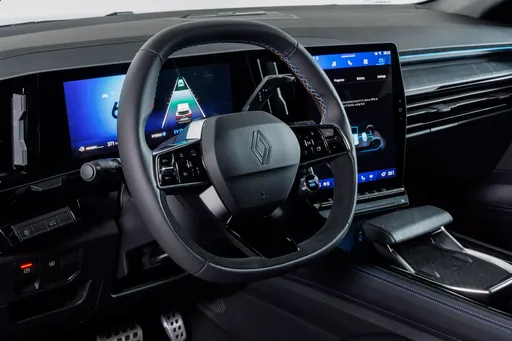
The Renault Rafale dresses bold coupé-inspired lines around a practical crossover body, turning heads without trying too hard. Inside it serves up a comfortable, well-equipped cabin and engaging driving manners, making it a clever choice for buyers who want a bit of panache with their daily commute.

details
VW Tiguan
Renault Rafale

Costs and Consumption

Price
33,600 - 54,600 £
Price
37,700 - 49,700 £
Consumption L/100km
1.4 - 8.4 L/100km
Consumption L/100km
2 - 5 L/100km
Consumption kWh/100km
-
Consumption kWh/100km
-
Electric Range
118 - 126 km
Electric Range
97 km
Battery Capacity
-
Battery Capacity
-
co2
32 - 190 g/km
co2
43 - 109 g/km
Fuel tank capacity
-
Fuel tank capacity
-

Dimensions and Body

Body Type
SUV
Body Type
SUV
Seats
5
Seats
5
Doors
-
Doors
-
Curb weight
1,599 - 1,879 kg
Curb weight
1,734 - 2,025 kg
Trunk capacity
490 - 652 L
Trunk capacity
539 - 627 L
Length
-
Length
-
Width
1,842 - 1,859 mm
Width
1,886 mm
Height
-
Height
-
Max trunk capacity
-
Max trunk capacity
-
Payload
460 - 544 kg
Payload
415 - 444 kg

Engine and Performance

Engine Type
Petrol MHEV, Petrol, Diesel, Plugin Hybrid
Engine Type
Full Hybrid, Plugin Hybrid
Transmission
Automatic
Transmission
Automatic
Transmission Detail
Dual-Clutch Automatic
Transmission Detail
Automatic Gearbox
Drive Type
Front-Wheel Drive, All-Wheel Drive
Drive Type
Front-Wheel Drive, All-Wheel Drive
Power HP
130 - 272 HP
Power HP
200 - 300 HP
Acceleration 0-100km/h
5.9 - 10.6 s
Acceleration 0-100km/h
6.4 - 8.9 s
Max Speed
-
Max Speed
-
Torque
220 - 400 Nm
Torque
-
Number of Cylinders
4
Number of Cylinders
3
Power kW
96 - 200 kW
Power kW
147 - 221 kW
Engine capacity
1,498 - 1,984 cm3
Engine capacity
1,199 cm3

General

Model Year
2,024 - 2,026
Model Year
2025
CO2 Efficiency Class
D, E, F, B, G
CO2 Efficiency Class
C, B
Brand
VW
Brand
Renault
DriveDuel uses data analysis and artificial intelligence to evaluate vehicle data and create content. Content is regularly reviewed and improved. The displayed prices are estimates based on German list prices, adjusted to the respective country’s VAT. Country-specific registration taxes are not included. This information is not legally binding.