VS

VW Touareg vs BMW X5 comparison

Compare performance (462 HP vs 625 HP), boot space and price (64,300 £ vs 77,100 £ ) at a glance. Find out which car is the better choice for you – VW Touareg or BMW X5?

VW Touareg vs BMW X5: Key differences

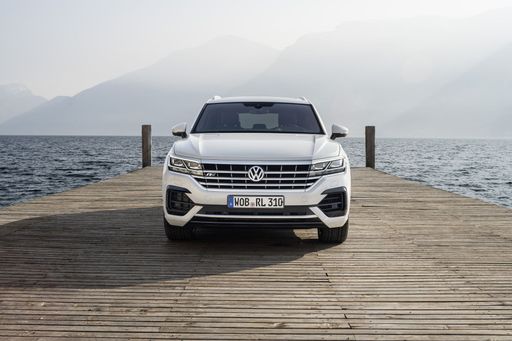
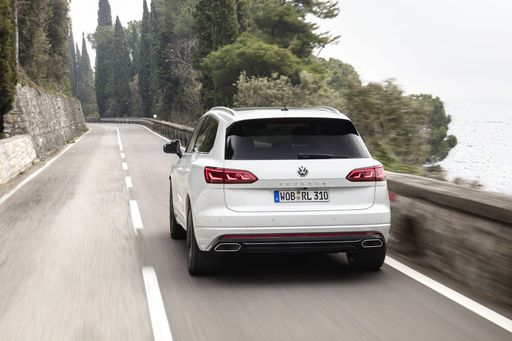
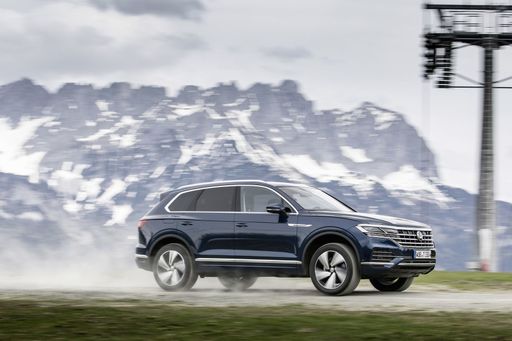
VW Touareg

4.9 (3 Reviews)
rate
  • moderately cheaper
  • very slightly lighter
  • a bit more trunk space

BMW X5

  • noticeably more power
  • significantly more efficient
  • clearly more electric range
  • clearly quicker 0–100 km/h

All details on performance, efficiency, range and trunk space can be found in the technical comparison below – including user reviews for both models.

Touareg

Introduction: A Battle of Titans

SUV enthusiasts often find themselves at a crossroads when choosing between the BMW X5 and the VW Touareg. Both vehicles promise a blend of luxury, performance, and advanced technology. Let's delve into a detailed comparison to assist prospective buyers in making an informed decision.
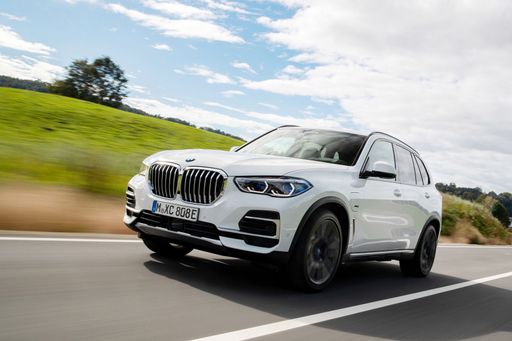
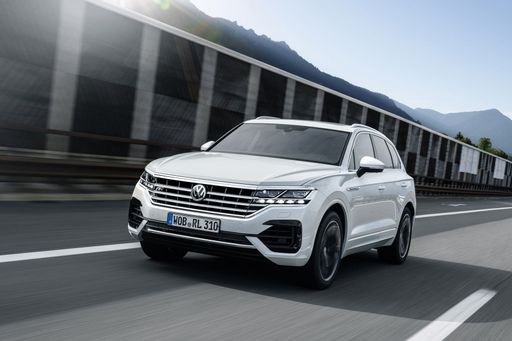
X5

Engine and Performance

The BMW X5 offers a wide range of engine options, including Diesel, Petrol, and Plug-in Hybrid varieties. The power output ranges from 298 HP to a majestic 625 HP in its top-tier performance model. Acceleration from 0 to 100 km/h varies between 6.1 seconds in the entry-level variants and an exhilarating 3.9 seconds for the high-performance models.

On the other hand, the VW Touareg is available with Diesel, Petrol, and Plug-in Hybrid engines. Its power ranges between 231 HP and 462 HP. The acceleration from 0 to 100 km/h starts at 7.7 seconds and climbs to a spirited 5.1 seconds in the high-performance versions. While both models deliver significant power, the X5 edges out a lead with its top-end power capabilities and faster acceleration times.

Touareg

Fuel Efficiency and Electric Range

The BMW X5 showcases impressive variability in fuel consumption, with figures ranging from 7.4 L/100km to 12.9 L/100km. Its Plug-in Hybrid model boasts a notable electric range of 97 km thanks to a battery capacity of 25.7 kWh.

In contrast, the VW Touareg's fuel consumption ranges from 8 L/100km to 11 L/100km. Its Plug-in Hybrid variant offers an electric range between 48 km and 51 km due to a 14.3 kWh battery. The X5's Plug-in Hybrid provides a better range, enhancing its usability for city dwellers eager to benefit from electric efficiency.

X5

Dimensions and Practicality

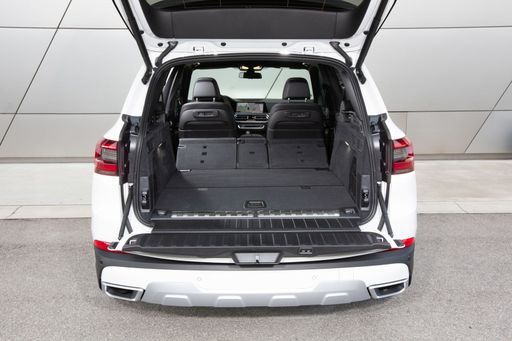
The BMW X5 is slightly larger, with dimensions measuring up to 4948 mm in length, 2015 mm in width, and 1765 mm in height. It provides a trunk capacity of 650 litres, which can be reduced to 500 litres in some configurations.

The VW Touareg, on the other hand, measures 4902 mm in length, 1984 mm in width, and 1712 mm in height. It offers a larger standard trunk capacity of 810 litres or 665 litres on specific models, giving it an edge in cargo flexibility.

Touareg

Advanced Features and Innovations

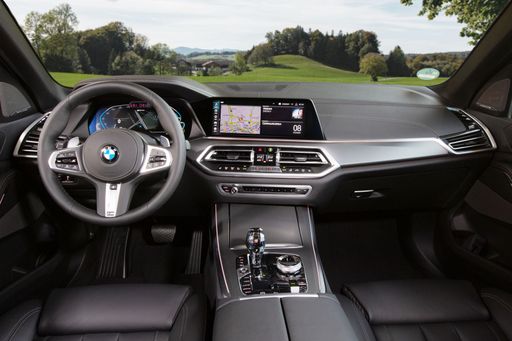
Both SUVs are equipped with the latest technological innovations and safety features. The BMW X5 is renowned for its advanced driver-assistance systems, cutting-edge infotainment, and luxurious interiors crafted with premium materials.

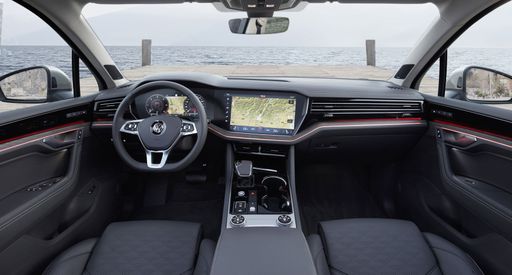
The VW Touareg is not left behind, featuring an impressively extensive infotainment system known as the 'Innovision Cockpit.' This system combines a digital dashboard with a large control screen, providing intuitive operation for tech-savvy drivers.

X5

Concluding Thoughts

The choice between the BMW X5 and the VW Touareg largely hinges on personal priorities. Buyers seeking superior performance and extended electric range might lean towards the BMW X5, while those prioritizing trunk capacity and innovative infotainment may find the VW Touareg to be a more attractive option.

As technology continues to evolve, both vehicles stand as icons of innovation and engineering prowess in the luxury SUV market, each offering distinct strengths and amenities tailored to diverse driver needs.

Here’s where it gets real: The technical differences in detail

Touareg

Costs and Efficiency:

Price and efficiency are often the first things buyers look at. Here it becomes clear which model has the long-term edge – whether at the pump, the plug, or in purchase price.

VW Touareg is moderately cheaper – starting at 64,300 £ , while the BMW X5 costs 77,100 £ . That’s a price difference of around 12,750 £.

Fuel consumption also shows a difference: the BMW X5 uses 3 L/100km and is significantly more efficient than the VW Touareg with 5.2 L/100km. The difference is about 2.2 L/100km.

As for electric range, the BMW X5 offers clearly more range – reaching up to 105 km, about 56 km more than the VW Touareg.

X5

Engine and Performance:

Power, torque and acceleration are the classic benchmarks for car enthusiasts – and here, some clear differences start to show.

When it comes to engine power, the BMW X5 offers noticeably more power – delivering 625 HP compared to 462 HP. That’s roughly 163 HP more horsepower.

When accelerating from 0 to 100 km/h, the BMW X5 is clearly quicker – completing the sprint in 3.9 s, while the VW Touareg takes 5.1 s. That’s about 1.2 s quicker.

There’s no difference in top speed – both reach 250 km/h.

There’s also a difference in torque: the BMW X5 delivers very slightly more torque with 750 Nm compared to 700 Nm. That’s about 50 Nm more.

Touareg

Space and Everyday Use:

Beyond pure performance, interior space and usability matter most in daily life. This is where you see which car is more practical and versatile.

Both vehicles offer seating for 5 people.

In terms of curb weight, VW Touareg is very slightly lighter – 2,059 kg compared to 2,240 kg. The difference is around 181 kg.

Looking at boot space, the VW Touareg offers a bit more boot space – 810 L compared to 650 L. That’s a difference of about 160 L.

For maximum load capacity, the BMW X5 offers barely more capacity – up to 1,870 L, about 70 L more than the VW Touareg.

When it comes to payload, the VW Touareg carries barely more – 751 kg compared to 705 kg. That’s a difference of about 46 kg.

Who wins the race in the data check?

The BMW X5 is far ahead overall in the objective data comparison.
This result only shows which model scores more points on paper – not which of the two cars feels right for you.

from £77,100
X5

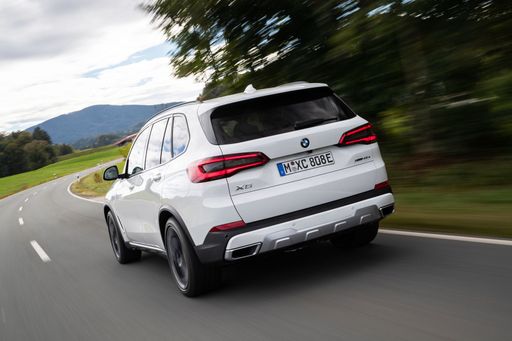
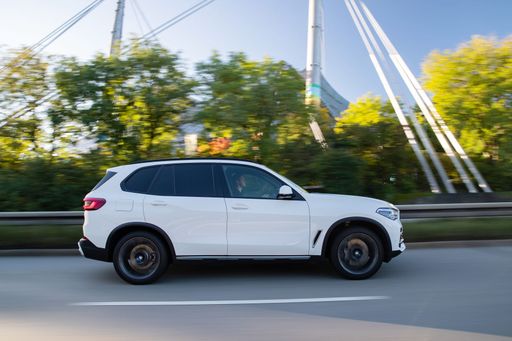
BMW X5

  • Engine Type : Petrol MHEV, Diesel MHEV, Plugin Hybrid
  • Transmission : Automatic
  • Drive Type : All-Wheel Drive
  • Power HP : 298 - 625 HP
  • Consumption L/100km : 3 - 12.8 L/100km
  • Electric Range : 105 km
VW Touareg
BMW X5

Costs and Consumption

View detailed analysis

Engine and Performance

View detailed analysis

Dimensions and Body

View detailed analysis

VW Touareg

Volkswagen Touareg wraps a grown-up presence in a classy, well-appointed cabin that feels more like a premium saloon than an SUV. It glides with quiet composure, devours long journeys and tucks away clever tech that makes life easier whether you’re stuck in town or nipping off the beaten track.

details

BMW X5

The BMW X5 blends athletic handling with a roomy, premium interior, feeling equally at home on twisty country roads and the school-run car park. Its executive-lounge cabin and confident road presence make it a tempting choice for buyers who want comfort, capability and just a little bit of bragging rights.

details
VW Touareg
BMW X5

Costs and Consumption

Price
64,300 - 88,300 £
Price
77,100 - 143,500 £
Consumption L/100km
5.2 - 10.5 L/100km
Consumption L/100km
3 - 12.8 L/100km
Consumption kWh/100km
-
Consumption kWh/100km
-
Electric Range
47 - 49 km
Electric Range
105 km
Battery Capacity
14.3 kWh
Battery Capacity
25.7 kWh
co2
119 - 239 g/km
co2
68 - 289 g/km
Fuel tank capacity
75 L
Fuel tank capacity
69 - 83 L

Dimensions and Body

Body Type
SUV
Body Type
SUV
Seats
5
Seats
5
Doors
5
Doors
5
Curb weight
2,059 - 2,470 kg
Curb weight
2,240 - 2,495 kg
Trunk capacity
665 - 810 L
Trunk capacity
500 - 650 L
Length
4,878 - 4,902 mm
Length
4,935 mm
Width
1,984 mm
Width
2,004 - 2,015 mm
Height
1,693 - 1,712 mm
Height
1,755 - 1,765 mm
Max trunk capacity
1,675 - 1,800 L
Max trunk capacity
1,720 - 1,870 L
Payload
550 - 751 kg
Payload
565 - 705 kg

Engine and Performance

Engine Type
Petrol, Plugin Hybrid, Diesel
Engine Type
Petrol MHEV, Diesel MHEV, Plugin Hybrid
Transmission
Automatic
Transmission
Automatic
Transmission Detail
Automatic Gearbox
Transmission Detail
Automatic Gearbox
Drive Type
All-Wheel Drive
Drive Type
All-Wheel Drive
Power HP
231 - 462 HP
Power HP
298 - 625 HP
Acceleration 0-100km/h
5.1 - 7.7 s
Acceleration 0-100km/h
3.9 - 6.1 s
Max Speed
222 - 250 km/h
Max Speed
250 km/h
Torque
450 - 700 Nm
Torque
540 - 750 Nm
Number of Cylinders
6
Number of Cylinders
6 - 8
Power kW
170 - 340 kW
Power kW
219 - 460 kW
Engine capacity
2,967 - 2,995 cm3
Engine capacity
2,993 - 4,395 cm3

General

Model Year
2,025
Model Year
2,025
CO2 Efficiency Class
G, D
CO2 Efficiency Class
G, B
Brand
VW
Brand
BMW
DriveDuel uses data analysis and artificial intelligence to evaluate vehicle data and create content. Content is regularly reviewed and improved. The displayed prices are estimates based on German list prices, adjusted to the respective country’s VAT. Country-specific registration taxes are not included. This information is not legally binding.